Mulberry trees are illegal in the city of El Paso in Texas, and were later joined by cities like Las Vegas, Tucson, and Albuquerque. This was due to the unpleasant allergy symptoms from pollen and the rapid tree growth.
Mulberry Tree: Taxonomy, How to Grow, Propagate, and Care Tips I Followed
Author
Rashika GuptaReviewed By
Cody Allison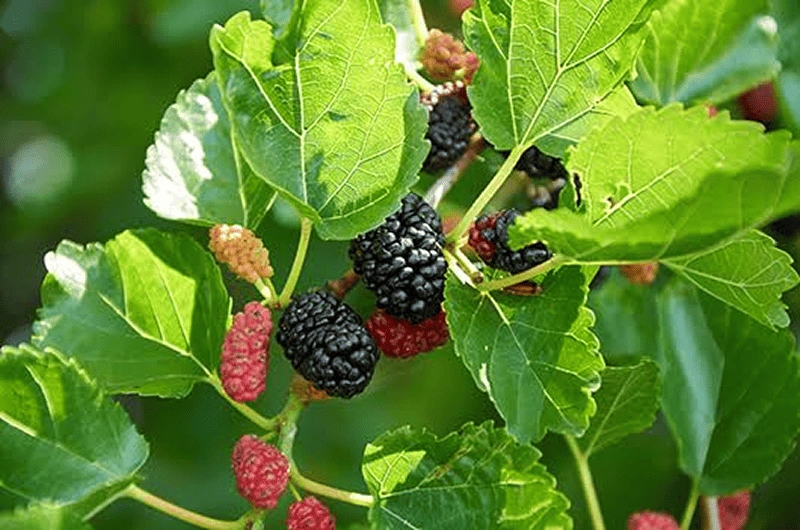
Mulberry trees are popularly known for their berries (mulberry fruit), which are available for a short time period of around 6 to 8 weeks during the summer season. It is also known to attract birds and is beneficial to insects.
The tree has 5 species, out of which 3 are commonly seen in North America. They are Morus alba (white mulberry), M. australis (Korean mulberry), and M. nigra (black mulberry). The other two species are M. rubra (red mulberry) and M. celtidifolia (Texas mulberry), native to eastern Canada and the US, and the Southwest, respectively.
Let us now further dive into the taxonomy, ideal growing conditions, care tips, and much more information related to mulberry trees.
Table of Contents:
Taxonomy and Ideal Growing Conditions For the Mulberry Tree
Mulberry trees offer mulberries in two varieties: red mulberry (M. rubus) and white mulberry (Morus alba). These trees usually bloom in spring, around May. For more general information, here is the taxonomic overview and ideal growing conditions of the plant:
| Botanical name | Morus spp. |
| Common names | Mulberry tree, red mulberry, white mulberry, berries |
| Kingdom | Plantae |
| Order | Rosales |
| Family | Moraceae (Mulberry family) |
| Genus | Morus L. |
| Native area | North America, Asia |
| Bloom period | Spring |
| Hardiness | 4 to 8 USDA zones |
| Light Requirements | Full to partial sunlight |
| Maintenance | Low |
| Type | Deciduous trees |
| Soil | Well-drained, rich, moist soil with good moisture retention and pH levels varying from acidic to neutral. |
| Flower colour | Green, yellow |
| Water Requirements | Deeply water the plant during the growing years. |
| Mature size | 30 to 60 ft. tall and 20 to 40 ft. wide |
| Fertilizers | Fertilise a mulberry tree once a year in late winter. |
| Toxicity | Although mulberries are considered safe for consumption, the sap, leaves, and unripe fruit can be mildly toxic to humans. |
Read more: Peace Lily: Special Features, Care Measures, and Common Problems
Popular Mulberry Tree Varieties
There are five species of mulberry tree that are commonly found in North America and Asia. Here are the images of these species along with their descriptions:
- Morus alba (white mulberry)
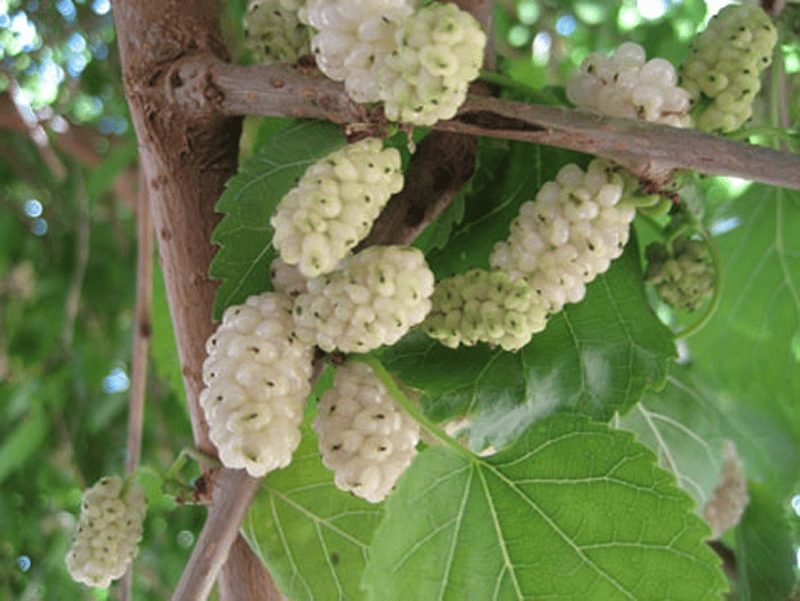
White mulberries originate in China and are the most commonly found species in North America. It is distinguished from the other species of mulberry by its blackberry-shaped fruit, which is white but darkens to purplish red.
- M. australis (Korean mulberry)
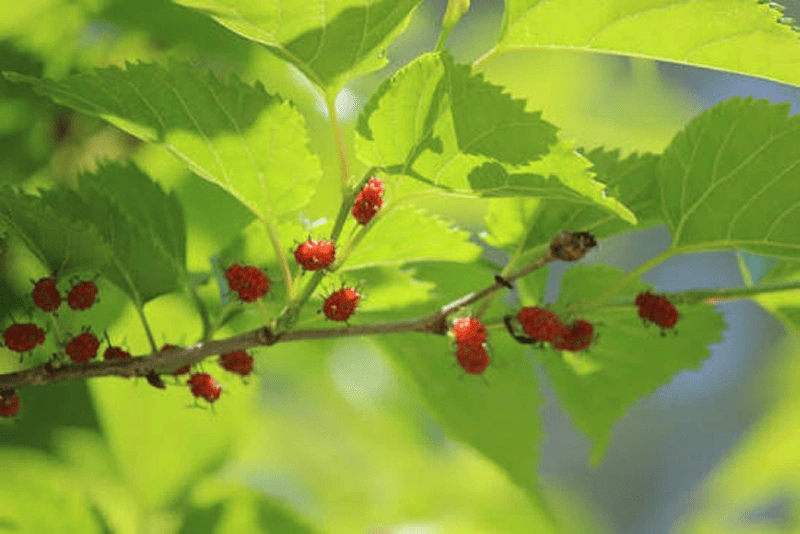
Korean mulberries are small species that grow up to 30 ft. tall at maturity. The tree offers light green, glossy foliage with fruit that ranges from red to purple.
- M. nigra (black mulberry)
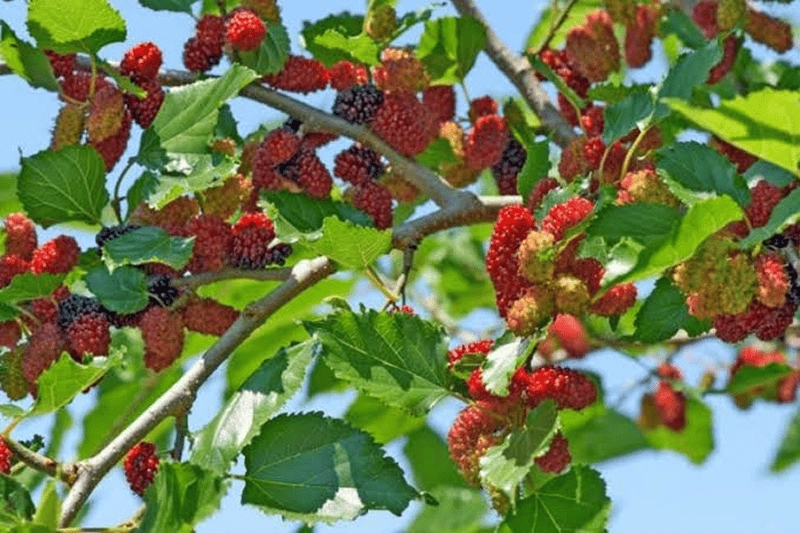
Black mulberries are average-height trees that bear large berries in a dark purple colour. It is native to Asia and is not commonly found in North America.
- M. rubra (red mulberry)
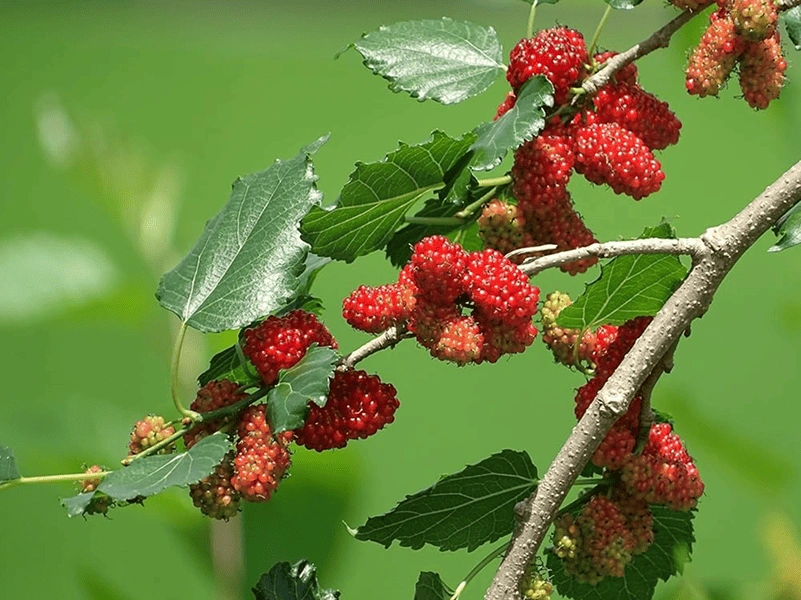
Red mulberries have rough leaves with fruit that is green but later ripens into red or purple colour. It grows in eastern Canada and the US, and grows up to 60 ft. tall and 40 ft. wide.
- M. celtidifolia (Texas mulberry)
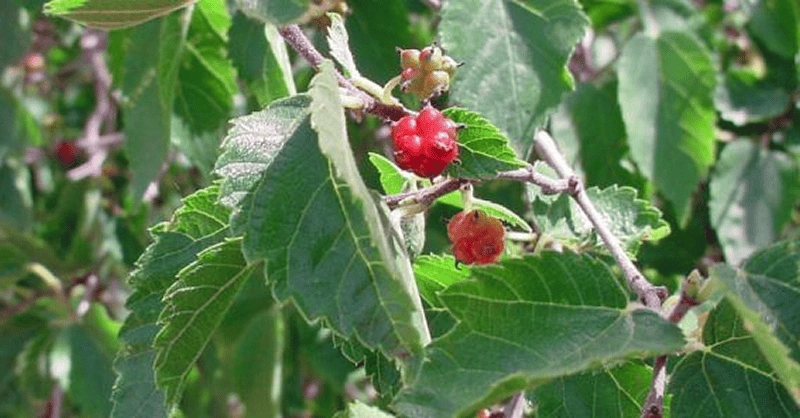
Texas mulberries are native to the Southwest, growing up to 25 ft. tall. The plant offers sweet fruit in red, purple, or black colours that are favored by wildlife and birds.
Read more: How to Grow Dragon Fruit? Learn to Grow this Unique Tropical Fruit
How to Grow a Mulberry Tree?
Growing a mulberry tree involves a few simple steps. It can be done with seeds indoors by chilling and germinating the seeds. Here is the step-by-step process:

- Get plenty of mulberry fruits. You can directly pluck them from the tree or use the shed ones.
- Soak them in water for around 1 to 2 days.
- Place the seeds on a damp paper towel and store them inside the plastic bag.
- Place this plastic bag into the refrigerator for around 3 months. Add a new damp paper towel every week to maintain the moisture.
- If you notice any germination while the seeds are in the refrigerator, plant them outside the bag.
- Plant the seeds in fresh potting soil with lower pH levels.
- Place the container in a warm area.
- Once the seeds sprout, replant them in a location with full sun and keep the soil moist for good plant growth.
Steps for Propagating Mulberry Trees
Like planting, propagating the mulberry tree is an easy process that can be followed in spring or early summer by rooting semi-hardwood branch cuttings. Here are a few steps that can be followed:

- In spring, use sharp pruners to cut 6 to 8 inches long segments from the tips of half-inch-diameter branches of the mulberry tree.
- Dip the cutting’s bottom into rooting hormone and plant it in small pots filled with potting soil.
- Water the soil and then place them inside 1-gallon plastic bags.
- Place the pots in a full shade location until the roots form.
- Moist the soil from time to time for better growth.
- When the cuttings have rooted, transplant them to the garden.
Read more: Lyposingrass or Lemongrass: A Herbaceous Perennial Guide
Mulberry Tree Care Tips
Being a low-maintenance plant, the main growing requirements for the mulberry plant are as follows:
- Choose a location with full to partial sunlight.
- Deeply water the plant once a week during the growing period.
- Fertilize the plant once a year in late winter for good growth and blooms.
- Avoid pruning the tree with damaged or crossed branches.
- After the bloom, the mulberry tree does not require deadheading of the flowers. All you need to do is use mulberry tree fertilizer on the plant and water it properly.
Read more: Pravi Celer Guide: Taxonomy, Ideal Growing Conditions, & Much More
Common Pests and Problems With Mullberry Tree
The common pests and problems associated with the mulberry tree occur during the growing stage. One needs to be aware of the same and check the mulberry plant every once in a while. Here is the list of common pests and problems associated with the young plant:
| Pests and Problems | Solution |
| Whiteflies | Whiteflies can be removed with a strong water spray or by using neem oil. |
| Scale insects | The adult scales can be handpicked. Ensure to remove their eggs. Using insecticidal soaps several times a week is fruitful in maintaining plants’ health. |
| Mealybugs | They can be easily removed by rubbing with isopropyl alcohol. Mix it with water in the ratio 1:1. |
| Bacterial blights and fungal leaf spot diseases | Remove diseased parts of the plant. For fungal disease, treatment is usually not required as they are rarely fatal. |
Read more: Tradescantia Plant Guide: Taxonomic Overview, Ideal Growing Conditions, Care Tips, & Much More!
Takeaways
Mulberry trees can be easily grown in warm temperatures. It is a deciduous tree that naturally turns its leaves yellow in autumn and regrows fresh leaves in the spring. The tree comes in different varieties, which makes it easier for you to choose the most suitable one according to your location.
If you want to grow a mulberry tree, you can plant it this summer, and within a few years, your plant will not only provide you with aesthetic shade to sit and chill but also sweet fruit. Happy planting.
FAQs
Why are mulberry trees illegal?
What are the different species of mulberry?
There are 5 recognised varieties of mulberry: red mulberry, white mulberry, black mulberry, Texas mulberry, and Korean mulberry.
When do mulberries bloom?
Mulberries bloom for a short time period between spring and summer for 6 to 8 weeks.
Can a mulberry tree be grown from seeds?
Yes, seeds are the safest option to grow a mulberry tree. People also propagate mulberry trees by stem cuttings, but it is a relatively less reliable method.
Sources
Why Are Some Mulberry Trees Illegal To Grow?: Yahoo Life
Mulberry: Britannica