Room temperature holds importance because it directly affects your comfort and sleep quality. If you sleep hot, heavy bedding and poor airflow can make any mattress feel a lot less comfortable.
How to Choose a Mattress Without Buyer’s Regret
Author
Rashika Gupta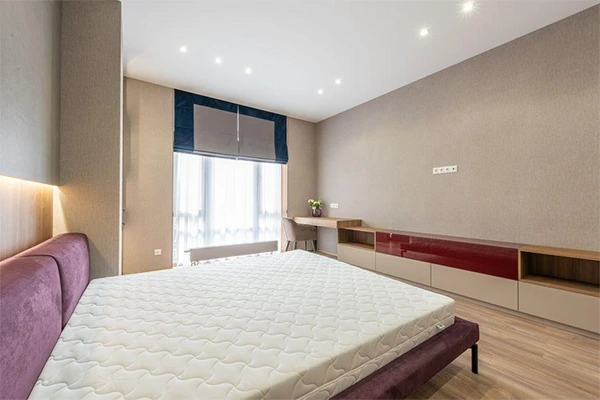
Buying a mattress sure sounds simple until you’re standing there wondering why one bed feels like a cloud and another like a wooden slab.
If your sleep has been rough lately, your back keeps aching, or you wake up feeling more tired than when you went to bed, your choice of mattress may be the problem. This is why you must first know about a few smart ways that allow you to make an informed choice.
Here are some tips that’ll help you compare your options, decode mattress materials, avoid common shopping mistakes, and help make the right decision.
Key Takeaways
- The way you sleep changes what feels comfortable at night. That’s why a mattress that your friend may prefer might make you miserable by morning
- Mattress materials may sound fancy, but the fundamentals are a lot easier than they seem. What matters most is how the bed feels when you lie on it and how it seems over time
- The mattress doesn’t work alone. It’s part of a whole sleep setup, and small details can change how comfortable your bed feels
- A mattress should match your style, comfort preferences, and daily life precisely. When you take this into account, you’re far more likely to end up with a bed that helps you rest better
Table of Contents:
Start with Sleep Needs
Before you compare brands, start with the boring but useful question: what’s actually wrong with your current bed? Maybe you wake up stiff. Maybe you roll into a dip in the middle like a marble in a cereal bowl. Maybe your partner moves, and the whole bed acts as if it got hit by a tiny earthquake.
This information holds a lot of importance as it tells you what to look for next. If the mattress feels too hard, there may be a need for more pressure relief. If it sags, more support is what you should focus on.
If online reviews all sound the same, it can help to check out a Nectar mattress showroom so you can feel the difference yourself instead of guessing from photos.
You should also think about how long you’ve had your mattress. Most don’t stay comfortable forever. If yours is old, lumpy, noisy, or clearly losing shape, your body has probably already filed a complaint.
Know Your Sleep Style

The way you sleep changes what feels comfortable at night. That’s why a mattress that your friend may prefer might make you miserable by morning. Your sleep position entirely affects where your body puts pressure and how much support the spine requires to stay comfortable.
If you’re a side-sleeper, your shoulders and hips press harder into the bed, which is why you’ll usually want a mattress that feels softer on top so those areas can sink in comfortably without facing much pressure.
If you sleep on your back, you’d require balanced support that keeps the lower back from dipping too much.
Stomach sleepers usually do better on a firmer surface. If the mattress is too soft, your middle can sink, and your back may end up bent weirdly. Combo sleepers, who switch around all night, often prefer a mattress that is easy to move on.
Your body size can matter too. A firmer bed might feel softer to a heavier person and much harder to someone lighter.
Decode Mattress Materials
Mattress materials may sound fancy, but the fundamentals are a lot easier than they seem. What matters most is how the bed feels when you lie on it and how it seems over time.
Memory foam provides you with that slow-sink feeling. It’s great when you want pressure relief and less motion transfer. In simple words, if your partner tosses and turns often, you’re less likely to get disturbed by them. Some people love the hug. Others feel like they’re sleeping in warm cake batter.
Hybrid mattresses mix foam with coils. These usually feel a lot more balanced, with enough softness on top and better bound underneath. They also feel easier to move around on, which many individuals like.
Traditional innerspring mattresses tend to feel springier and less contouring. Some sleepers enjoy that lifted feel, especially if they don’t like sinking into the bed.
You should also notice heat, firmness, and edge support. These everyday details often matter more than marketing words with ten syllables.
Fun Fact
Memory foam wasn’t invented for sleeping. It was originally developed by NASA in the 1960s to improve aircraft cushion safety and absorb shock for astronauts.
Test Before You Commit
A quick lie-down in a store can tell you more than an hour of scrolling reviews. Still, many people test a mattress for about eight seconds, smile politely, and leave with no real clue. That’s not enough time for your body to settle.
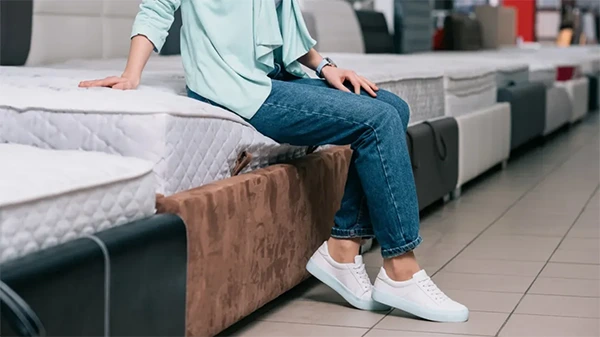
When you try a mattress, lie down in your usual sleep position for a few minutes. If you’re a side sleeper, stay on your side. Note how your shoulders and hips feel on the mattress, and if they feel cramped or cushioned. If you sleep on your back, pay attention to whether your lower back is supported or not.
Sit on the edge, too. If it collapses too much, getting in and out of bed may be annoying. Roll a little and change positions. If moving feels like escaping wet sand, that’s worth noting.
If you shop with a partner, test the bed together. One person’s perfect mattress can be another person’s nightly grumble. The goal isn’t finding the fanciest option. It’s finding the one your body complains about the least.
Think Beyond the Mattress
A mattress doesn’t work alone. It’s part of a whole sleep setup, and small details can change how comfortable your bed feels. Sometimes people blame the mattress when the real issue is everything around it.
Your pillow matters a lot. If it’s too high or too flat, your neck can feel off, even on a good mattress. Your bed frame matters too, because some mattresses need a certain type of support to perform the way they should.
Room temperature is another tricky factor. If you sleep hot, heavy bedding and poor airflow can make any mattress feel a lot less comfortable. If you share a bed, your partner’s sleep habits count too. One may want supreme comfort while the others prefer a firmer surface.
That’s where compromise comes in. You’re not choosing a couch for a waiting room. You’re picking something you’ll spend a big chunk of your life on. The best choice usually fits your routine, your body, and your bedroom setup all at once.
Avoid Common Shopping Mistakes
One of the biggest mistakes is making a selection solely based on the price. The cheapest option can end up costing you more if the mattress wears out quickly or leaves you waking up sore.
On the other hand, the most expensive mattress isn’t automatically the best one for you.
Another common mistake is rushing. A sale countdown can make you feel like you need to decide in ten minutes, but sleep is not a game show. Take your time. Compare how different mattresses feel and ask practical questions.
Watch out for trial periods and return policies too. A mattress may feel fine in a showroom but different after a week at home. It helps to know your options before you buy, not after your back starts sending angry messages.
It’s also wise to ignore the hype and focus on fit. A mattress should match your style, comfort preferences, and daily life precisely. When you take this into account, you’re far more likely to end up with a bed that helps you rest better instead of one that turns bedtime into a nightmare.
FAQs
How does room temperature matter?
How do hybrid mattresses feel?
Hybrid mattresses mix foam with coils. These usually feel a lot more balanced, with enough softness on top and better bound underneath. They also feel easier to move around on, which many individuals like.
What type of mattress should I select if I’m a side-sleeper?
If you’re a side-sleeper, your shoulders and hips press harder into the bed, which is why you’ll usually want a mattress that feels softer on top so those areas can sink in comfortably without facing much pressure.
What is the biggest mistake made by people while shopping for mattresses?
One of the biggest mistakes is making a selection solely based on the price. The cheapest option can end up costing you more if the mattress wears out quickly or leaves you waking up sore. On the other hand, the most expensive mattress isn’t automatically the best one for you.
Latest Blog