The different types of pipelines are gathering pipelines, feeder pipelines, steel pipelines, and plastic pipelines.
How Large-Diameter Pipeline Repairs Can Be Completed With Less Surface Damage
Author
Terri SanderLast Update
September 22, 2026
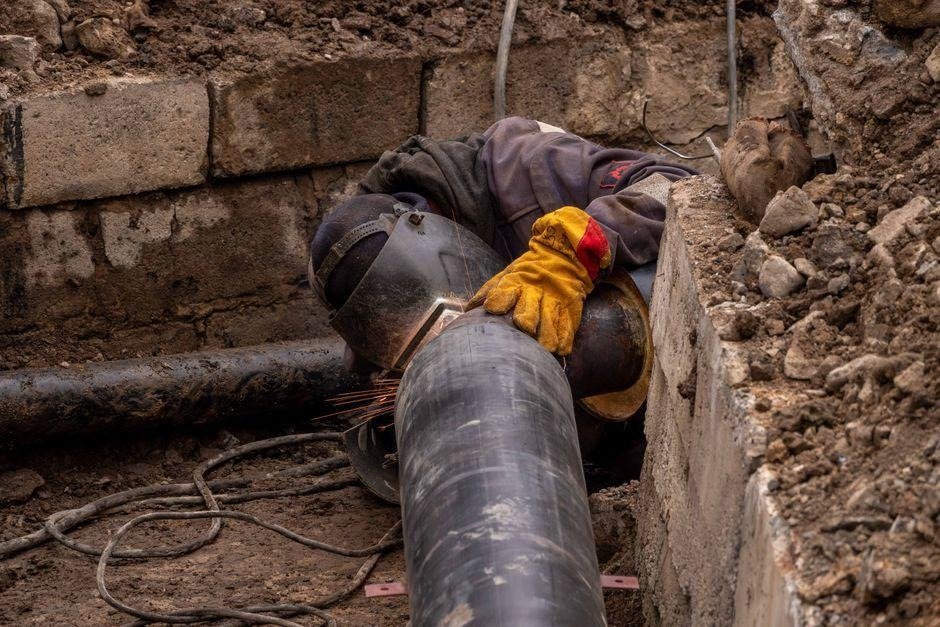
When a problem arises in any water, sewer, or stormwater system, it goes unnoticed until something goes wrong. They sit silently under roads, parking areas, rail crossings, and industrial yards, moving enormous volumes every day without any inspection. And the problem is not only about the pipe but also includes everything that has to stop while crews reach it.
This is the main reason why owners of large systems judge repair options along with energy cost and durability. The decision should therefore include everything from below ground; the disruption above ground is part of the same decision.
Table of Contents:
- Why the Largest Lines Are the Hardest to Reach
- The True Cost of Opening the Ground
- Knowing the Condition of the Line Before Choosing a Fix
- Coordinating Around Traffic, Utilities, and Daily Life
- Keeping the System in Service During the Work
- Planning Repairs Before Failure Forces the Issue
- Protecting the Surface and the System at the Same Time
- FAQs
Why the Largest Lines Are the Hardest to Reach
Deep, high-volume lines have the heaviest demands in a system, and age, chemical attack, and constant flow slowly wear away at the walls until the structure starts breaking up. A pipe at the upper end of the size range is a particularly complex thing to get to, because the depth, the weight of the surrounding soil, and the surface built over it all work against a conventional dig.
This is where trenchless repair comes in, a part of work that rebuilds the pipe wall from the inside through existing access points, so no trench is cut along the length of the line. At the largest diameters, that strategy restores structural strength while the ground above stays intact. Look up trenchless repair for 100-inch pipe to find a reliable contractor for work at this scale.
The True Cost of Opening the Ground
Excavation looks simple on a budget sheet and hardly stays that way. Once the surface is opened, the project takes on traffic control, shoring, soil management, dewatering, protection of nearby utilities, and full restoration of whatever was eliminated. Pavement, curbs, landscaping, rail ballast, and concrete slabs all have to be rebuilt to a standard that satisfies the owner and whoever has the right of way.
There are lesser costs as well. Businesses lose access. Residents lose parking and quiet. Plant operators lose the use of a yard or a roadway they rely on. None of this appears as a line item, but all of it shapes how a project is thought to be once the crews leave.
Knowing the Condition of the Line Before Choosing a Fix
Good decisions begin with a clear picture of what is actually happening inside the pipe. Video inspection, flow observation, and an accurate review of maintenance history show where the wall is thinning, where joints have changed, where roots or debris have taken hold, and where the damage is superficial instead of structural.
This is important because not every defect calls for the same response. A line with isolated trouble spots is a different project from a line that has deteriorated along its complete length. Skipping the assessment almost always leads to one of two results: a repair sized too small that fails again within a few years, or a repair sized far beyond what the pipe required. Both are expensive in their own way.
Coordinating Around Traffic, Utilities, and Daily Life
Large lines tend to run under the busiest ground present. Above them sit arterial roads, freight routes, loading areas, and a crowded field of gas, power, and communication lines that were put in at different times by many parties. Every one of those has to be located, protected, and in many cases coordinated with before anyone begins work.
Experienced crews treat this coordination as part of the repair instead of a formality. They talk to the road authority early, notify affected businesses before equipment arrives, plan around delivery windows and shift changes, and keep a realistic routine in front of everyone involved. Keep an eye on the drainage system as well.
Keeping the System in Service During the Work
A large line cannot just be switched off. Flow has to go somewhere, and managing that flow is usually the most technically demanding part of the task. Bypass arrangements, temporary pumping, and careful sequencing let the system keep functioning while the repair moves forward.
The scale of the bypass depends mostly on how much of the line is out of service at once and for how long. Repairs that keep the working area contained put far less stress on temporary arrangements, which in turn eliminates the risk of an overflow, a backup, or an unplanned interruption to the people the system serves.
Planning Repairs Before Failure Forces the Issue
There is a big difference between work that is scheduled and work that is forced. An emergency response on a major line happens under the worst possible conditions. The failure sets the timeline, the location, the weather, and usually the budget. Crews mobilize under pressure, the surface takes whatever damage the situation demands, and the owner has little room to weigh options.
Planned work is something different. Inspections can be scheduled during quieter months. Options can be compared correctly. Notifications can go out with real lead time. Owners who build regular condition assessment into their maintenance schedule tend to spend less over the life of a system and disturb far less ground doing it.
Protecting the Surface and the System at the Same Time
The objective on a major line is never just to stop a leak. It is to return the pipe to dependable service without leaving a scar across the ground above it, and without asking the surrounding society to absorb weeks of disruption for an issue they cannot see.
That balance is achievable with good information, honest planning, and a contractor who knows both halves of the job. Owners who strategize large-diameter work this way end up with stronger infrastructure and surroundings that look much the same as they did before the crews arrived, which is often the clearest sign that the repair was handled properly.
FAQs
What are the different types of pipelines?
What are the 5 stages of a pipeline?
The 5 stages of a pipeline are instruction fetch, instruction decode, execute, memory access, and write back.
What is the typical diameter of an oil pipeline?
The typical diameter of an oil pipeline is 16 inches to 48 inches.
Latest Blog