Some common mimosa care tips include regular watering, selection of a proper location that receives indirect, bright sunlight, and highly humid weather conditions.
Sensitive Plant Mimosa Pudica: Taxonomy, Propagation Process, Care Tips and Common Pests
Author
Rashika GuptaLast Update
September 23, 2026
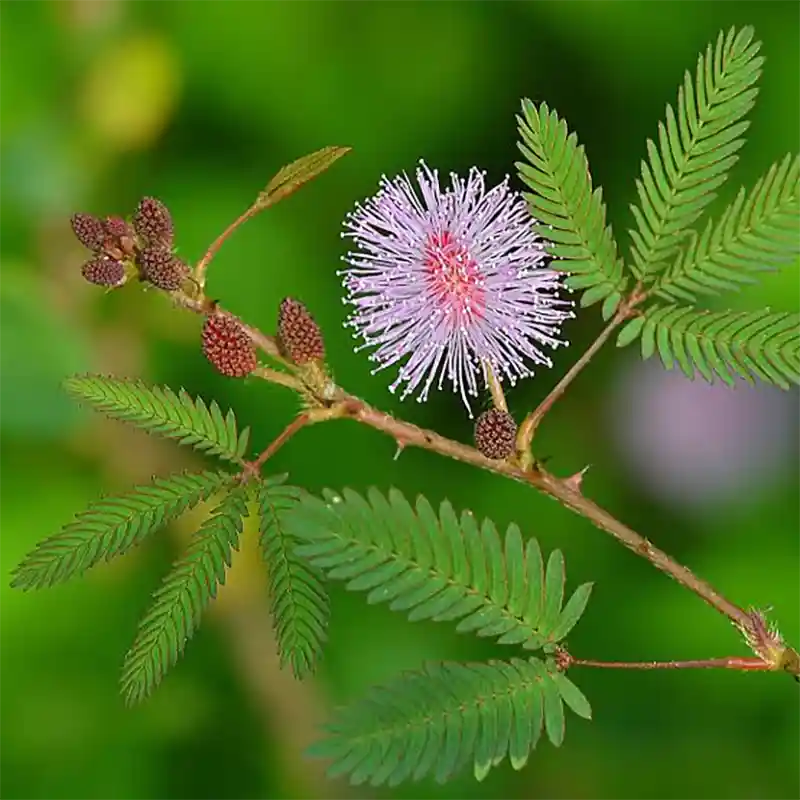
Sensitive plant or Mimosa pudica is famously known as the touch-me-not plant. It is a perennial shrub that is extremely responsive to touch and other stimuli and closes its leaves as soon as someone touches them.
This defence mechanism of the plant is known as thigmomorphogenesis, which also helps the plant to fold its leaves at night.
The touch me not is best considered a whimsical houseplant and has successfully captivated people’s attention for centuries. Read the article to learn more about this short-lived evergreen perennial that exhibits creeping or trailing with the passing time.
Table of Contents:
Taxonomy and Ideal Growing Conditions For the Mimosa pudica Sensitive Plant
Mimosa pudica, or touch-me-not, prefers warmer temperatures and loves highly humid areas. The plant can grow in cooler areas if grown indoors and properly looked after. This sensitive grass can become invasive in some tropical and subtropical regions, dominating native plants; it is an invasive species in Tanzania, South and Southeast Asia, and many Pacific islands. For more general information, here is the taxonomic overview and ideal growing conditions of the plant:
| Botanical Name | Mimosa pudica |
| Common Names | Touch me not, shame plant, shy plant, sensitive plant, and sleepy plant |
| Kingdom | Plantae |
| Order | Fabales |
| Family | Fabaceae |
| Genus | Mimosa |
| Species | Mimosa pudica L. |
| Native Area | Central America and South America |
| Bloom Period | Summer |
| Hardiness Zone | 7 to 13 USDA Zones |
| Light Requirements | Full sunlight with partial shades |
| Maintenance | Low |
| Type | Annual, shrub, herbaceous, perennial |
| Characteristics | Showy plant |
| Soil | Rich, moist, well-drained loamy soil with acidic to neutral pH levels |
| Flower Colour | Pink and purple |
| Water Requirements | Water the plant appropriately. Overwatering or underwatering can harm the plant. |
| Mature Size | Up to 18 inches tall and between 1 and 5 ft. wide |
| Fertilizers | Requires minimal fertilisation. |
| Toxicity | Not highly toxic but can cause trouble like indigestion if consumed by pets or humans |
Read more: Areca Palm Guide: Taxonomy, Ideal Growing Conditions, Care Tips, & Much More
How to Propagate Sensitive Plants From Seed?
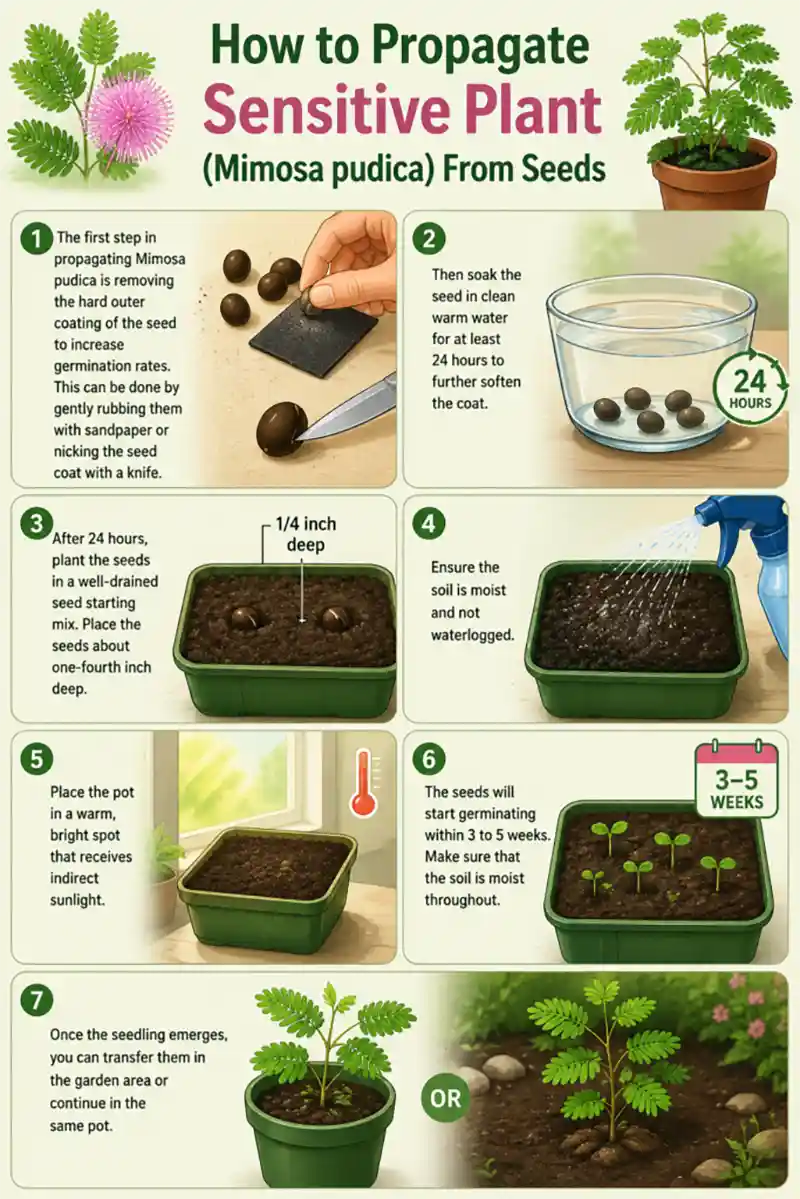
People believe in propagating the shame plant more than growing it. Propagating it is a fun process that can be done both from seeds and by stem cutting. Looking at one of the widely used methods, below are the steps involved in propagating sensitive plant from seeds:
- The first step in propagating Mimosa pudica is removing the hard outer coating of the seed to increase germination rates. This can be done by gently rubbing them with sandpaper or nicking the seed coat with a knife.
- Then soak the seed in clean warm water for at least 24 hours to further soften the coat.
- After 24 hours, plant the seeds in a well-drained seed starting mix. Place the seeds about one-fourth inch deep.
- Ensure the soil is moist and not waterlogged.
- Place the pot in a warm, bright spot that receives indirect sunlight.
- The seeds will start germinating within 3 to 5 weeks. Make sure that the soil is moist throughout.
- Once the seedling emerges, you can transfer them in the garden area or continue in the same pot.
Propagating Mimosa Pudica by Stem Cutting
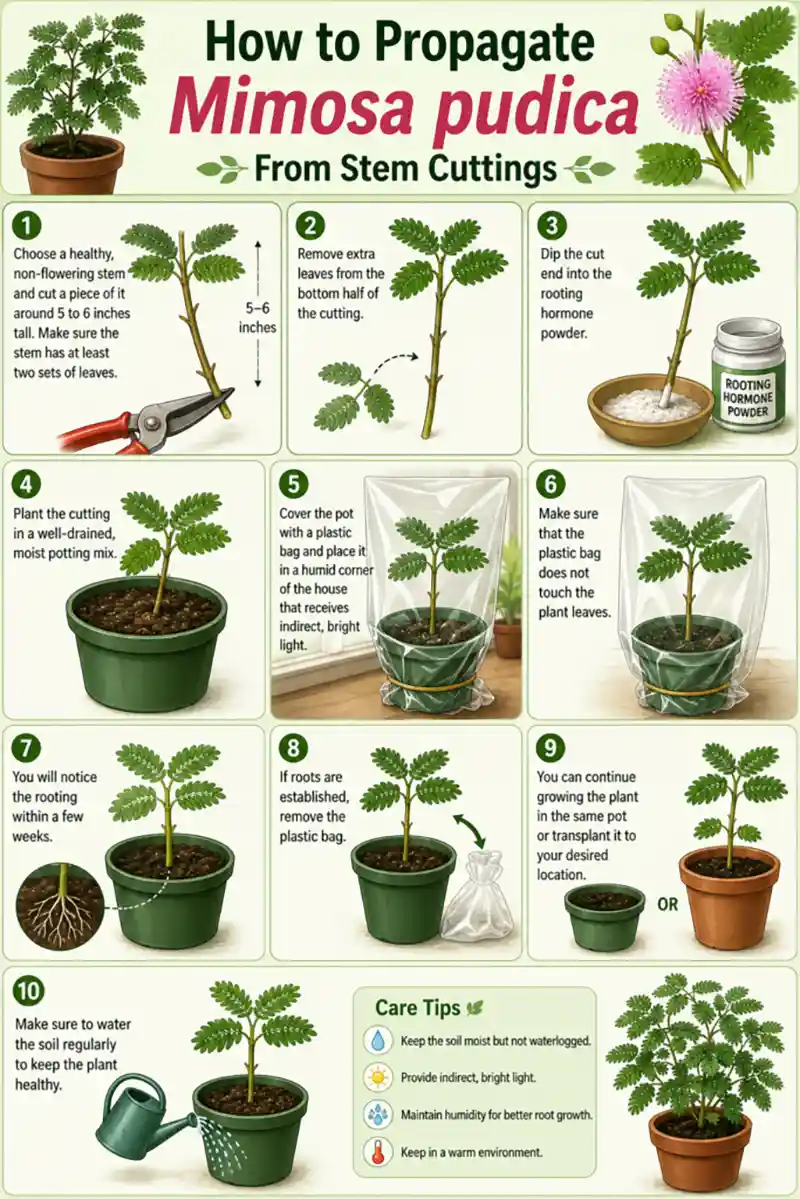
Another way to propagate the shy plant is by stem cutting. Here are some common steps that you can follow to plant your Mimosa pudica plant:
- Choose a healthy, non-flowering stem and cut a piece of it around 5 to 6 inches tall. Make sure the stem has at least two sets of leaves.
- Remove extra leaves from the bottom half of the cutting.
- Dip the cut end into the rooting hormone powder.
- Plant the cutting in a well-drained, moist potting mix.
- Cover the pot with a plastic bag and place it in a humid corner of the house that receives indirect, bright light.
- Make sure that the plastic bag does not touch the plant leaves.
- You will notice the rooting within a few weeks.
- If roots are established, remove the plastic bag.
- You can continue growing the plant in the same pot or transplant it to your desired location.
- Make sure to water the soil regularly to keep the plant healthy.
Read more: Essential Aloe Plant Care Tips to Keep Your Plant Green, Plump, and Problem-Free
Mimosa Pudica Care Tips
Caring for touch sensitive plant Mimosa pudica requires understanding its needs. Since the plant thrives both indoors and outdoors, the care varies. Here are some care tips for the sensitive plant Mimosa pudica indoors:
- Place the plant in a location that receives bright, indirect light. Too much direct sunlight can scorch the leaves.
- Use well-drained, rich, moist soil with slightly acidic pH levels.
- Water the plant regularly but ensure that you don’t overwater it. Overwatering can cause problems such as root rot or fungal infections, leading to the plant’s death.
- Touch me not loves high humidity; therefore, make sure to mist the plant regularly or place it on a tray with clean water. This can help the plant meet its humidity requirements.
Outdoor Care Tips
The essential outdoor care tips for the sensitive plant are as follows:
- Plant the sensitive plant in 10 to 12 USDA Zones.
- In cooler areas, consider planting the mimosa pudica in a pot so that it can be carried indoors on cooler days.
- Trim the plant to encourage healthy and bushier growth.
Read more: Tulip Tree: How to Grow, Care Tips, and Common Pests and Solutions
Common Pests and Diseases Associated with M. pudica
The sensitive plant is generally not prone to attracting pests, yet several pests like spider mites, mealybugs, and aphids can attack your plant. To keep your plant protected from these pests, regularly check the plant. If you catch any hint of the pests, use neem oil, strong water spray, or insecticidal soaps to remove them.
The common problems and diseases associated with the sensitive plant include root rot, powdery mildew, yellow leaves, and leaf closure failure. Here are some of the ways that can help you avoid the listed problems:
- To avoid root rot and yellow leaves, do not overwater the plant. Also, ensure that the container has a proper drainage hole to remove the excess water.
- For powdery mildew, improve air circulation, reduce overhead watering of the plant, and use essential fungicides if required.
- If leaf closure failure occurs, make sure to place the plant under the recommended lighting area and reduce or increase the watering period of the plant. Leaves also stop responding to touch because the plant has grown older.
Read more: How to Grow Basil? Learn How to Plant This Culinary Herb in your Garden
Takeaways
Sensitive plants are not hard to keep alive if their basic needs are met. The plant requires humid weather conditions, indirect, bright sunlight, and regular watering to thrive for years. The best part about mimosa pudica is that it can survive both indoors and outdoors, making the plant more reliable throughout the year.
Though this fascinating plant requires little more care, it can be used for enhancing indoor aesthetics and does not cause any harm when touched. If you are planning to plant a sensitive plant, today is the perfect day. Happy and safe planting!
FAQs
What are some mimosa pudica care tips?
Is mimosa touch me not plant?
Yes, Mimosa pudica is also known as the touch-me-not plant.
What are the other names of sensitive plants?
The sensitive plant is also known as touch-me-not plant, shame plant, shy plant, and sleeping plant.
Sources:
Sensitive plant: Britannica
Sensitive Plant Mimosa pudica: iNaturalist
Latest Blog