The tulip tree blooms during the spring season.
Tulip Tree: How to Grow, Care Tips, and Common Pests and Solutions
Author
Rashika GuptaReviewed By
Cody Allison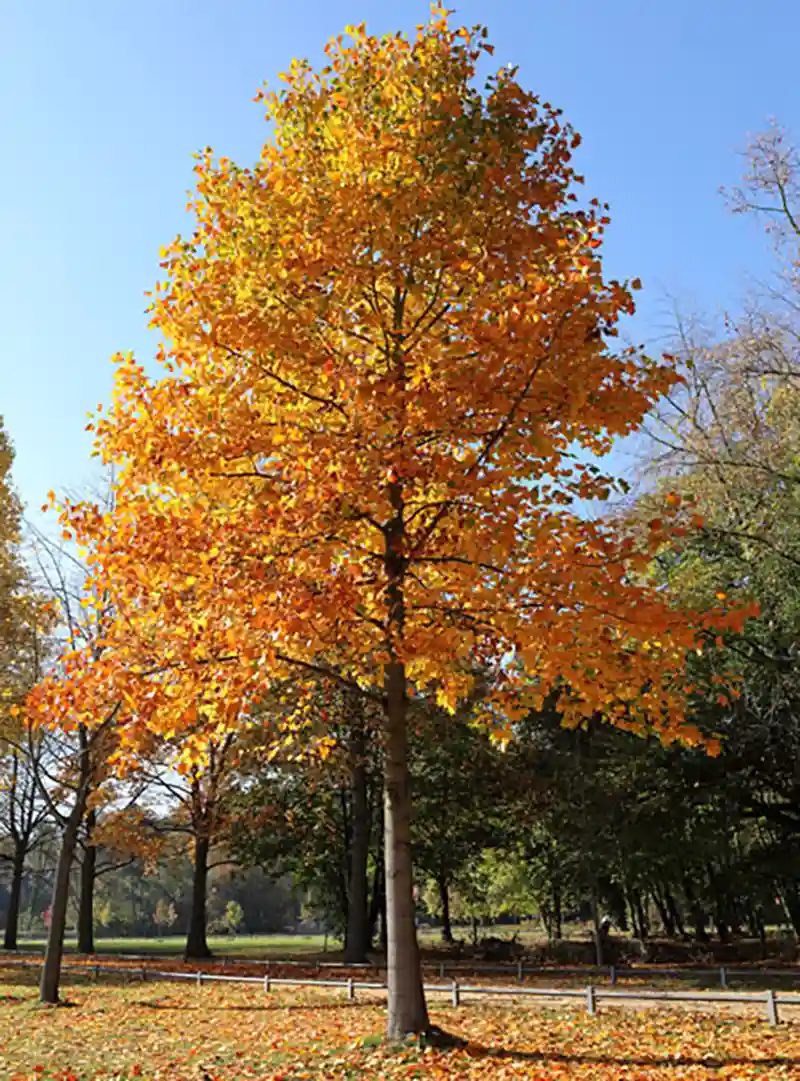
The tulip tree is a North American ornamental and timber tree that belongs to the magnolia family and occurs in mixed-hardwood stands in eastern North America. The plant is widely known for its cup-shaped, tulip flowers that bloom throughout spring. Although these flowers are tiny and can sometimes go unnoticed in a large tree, their beautiful colour might attract you.
The plant is best used in a yard or park as a shade tree, and if provided enough space, it can also be used in a boulevard. One of the major characteristics of the tulip tree is that it attracts pollinators and is a good food source for Sapsuckers, Songbirds, and small mammals.
Let us now dive deeper into the taxonomic overview, ideal growing conditions, care tips, and growing process of the tulip poplar trees.
Table of Contents:
Taxonomy and Ideal Growing Conditions For the Tulip Tree
Tulips are native to most of the eastern United States and can thrive up to 300 to 400 years in ideal conditions. The plant prefers fertile soil and does poorly in very dry or waterlogged sites.
For more general information, here is the taxonomic overview and ideal growing conditions of the plant:
| Botanical name | Liriodendron tulipfera |
| Common names | Tulip tree, tulip poplar, yellow poplar, canary whitewood, canoewood |
| Kingdom | Plantae |
| Order | Magnoliales |
| Family | Magnoliaceae (Magnolia family) |
| Genus | Liriodendron (Greek for “lily tree”) |
| Species | L. tulipifera (American tulip tree) |
| Native area | North America |
| Bloom period | Spring |
| Hardiness | 4 to 9 USDA Zones |
| Light Requirements | Full direct light |
| Maintenance | Low |
| Type | Fast-growing deciduous tree |
| Soil | Well-drained, rich, moist soil with neutral, alkaline, and acidic pH levels. |
| Flower colour | Orange, yellow, green |
| Water Requirements | Require deep weekly watering during their first 3–5 years Note: Do not overwater or underwater the tree, as it leads to fungal infection or root rot that reduces its lifespan. |
| Mature size | 70 to 130 ft. tall and 30 to 60 ft. wide |
| Fertilizers | Little to no fertilizers |
| Toxicity | Tulip trees are generally considered safe for both humans and pets. |
Read more: Peace Lily: Special Features, Care Measures, and Common Problems
How to Grow a Tulip Tree?
If you are planning to plant a tulip tree, it is an easy process if you can provide it with consistent moisture. Tulip trees are fast-growing and long-living deciduous trees that provide constant shade, abundant food, and shelter for wildlife.
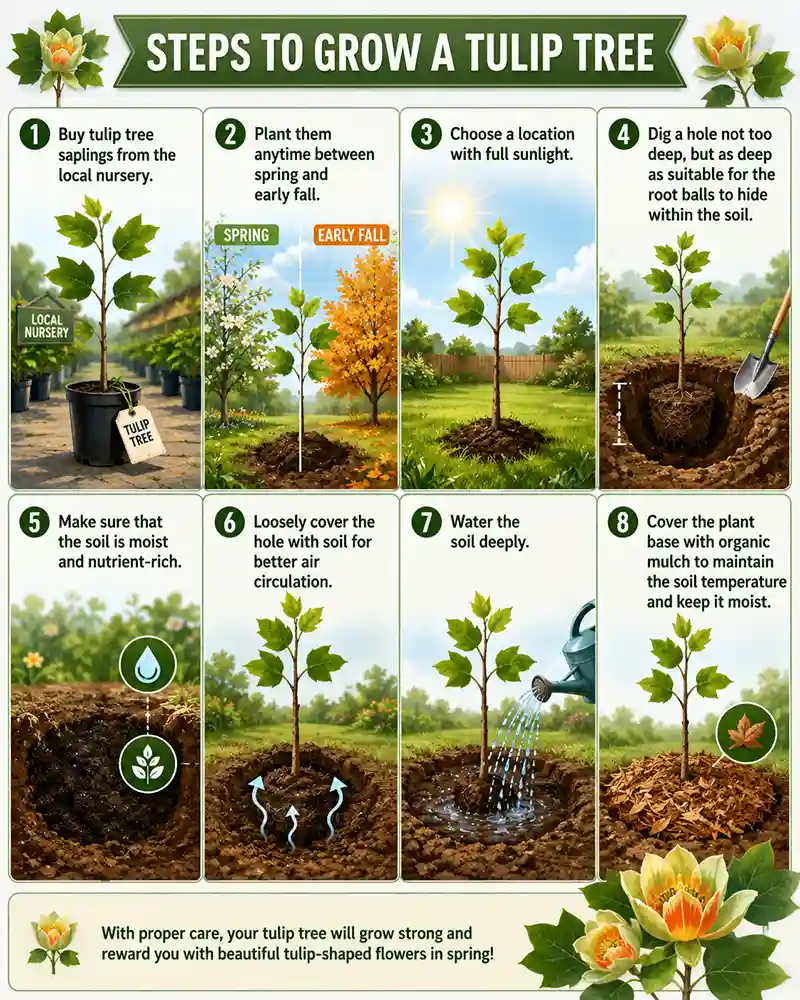
Here are some simple steps that you need to follow for planting a tulip tree:
- Buy tulip tree saplings from the local nursery.
- Plant them anytime between spring and early fall.
- Choose a location with full sunlight.
- Dig a hole not too deep, but as deep as is suitable for the root balls to hide within the soil.
- Make sure that the soil is moist and nutrient-rich. Loosely cover the hole with soil for better air circulation.
- Water the soil deeply.
- Cover the plant base with organic mulch to maintain the soil temperature and keep it moist.
Read more: Philodendron Prince of Orange: Benefits, Growing Process, and Care Tips
Tulip Tree Care Tips
Though a tulip tree is known to be a low-maintenance deciduous tree, for it to survive for around 300 to 400 years, it requires a certain amount of care and attention. Here are some essential care tips for the tulip tree that have commonly been helpful:
- Choosing the right location with full sunlight and enough space around is non-negotiable. Enough space around ensures that the tree can spread widely.
- Avoid planting the tulip trees under power lines or in proximity to buildings, as a mature tree can grow from 60 to 80 ft. tall. In some cases, it might grow much more than this.
- Plant the tulip flowering tree in spring or fall when the temperatures are moderate, and the soil is moist for good plant growth.
- Watering tulip poplar trees plays an important role during the developing years of the tree, and further, watering helps the tree to thrive in hot weather conditions.
- Applying a layer of organic mulch helps retain soil moisture and regulates the temperature, which helps the plant to thrive consistently.
- Tulip poplars require very little to no fertilizer. So avoid fertilising or over-fertilising the tree, as it can encourage weak, overly lush growth and reduce the overall resilience of the tree.
Did you know?
The tulip tree is the state tree of Kentucky, Tennessee, and Indiana.
Read more: Dracaena Lemon Lime: Growing Conditions, Care Measures and Common Pests and Diseases
Common Pests and Problems With Tulip Tree
Tulip trees are generally tough, but some pests can attack your plant during the growing years. These pests are spider mites, aphids, tent caterpillars, and scale. In order to get rid of them, use insecticidal soap or neem oil spray.
The environmental issues that can cause trouble to your plant include drought, poor soil, nutrient deficiencies, and wind damage. To avoid drought, apply a layer of mulch around the tree base and use nutrient-rich soil to avoid any deficiencies. If the tree still suffers from yellowing leaves, use a nitrogen-rich fertilizer once a year in a moderate quantity.
The common diseases that can cause trouble to your tulip trees are listed below with their solutions:
| Common disease | Solution |
| Leaf spot | Various fungi or bacteria can cause leaf spot. It might lead to early leaf drop. To avoid such situations, ensure proper air circulation. |
| Powdery mildew | This might not be very dangerous for your tulip trees, but it can be avoided by choosing a proper location with full sunlight. |
| Cankers | Cankers are areas of dead bark and wood, caused by fungi. They cannot be avoided, but ignoring them can cause damage to the plant. To reduce them, remove the already existing cankers. |
Read more: Foenegriek: Benefits, Growing Tips, and Ideal Growing Conditions
Takeaways
Tulip trees are admired for their aesthetic value, but the plant offers food and shelter to wildlife, which makes it much more worthy. Choosing the right location while planting the tulip trees becomes a non-negotiable task as the plant can thrive for around 300 to 400 years in the right conditions. They aren’t heavy feeders, so avoid fertilising the plant unnecessarily.
If you are someone who lives in warm and moist weather conditions, tulip trees can be your go-to planting tree, which will not only provide you with a shaded area on a bright sunny day to sit and chill in a park or in your lawn, but will also be an environmental healer.
FAQs
When does tulip tree bloom?
How to grow a tulip tree?
While growing the tulip tree, you need to be aware of certain points, which include choosing a location with proper, direct, full sunlight. Make sure that there is sufficient space between the two trees, which will help the trees to spread widely. Water the plant twice or thrice a week during the summer and once or twice a week in winter.
Which pests can attack the tulip tree?
Spider mites, aphids, tent caterpillars, and scales are the common pests that can attack your tulip tree.
What are the common diseases associated with the tulip tree?
The common diseases associated with the tulip trees are verticillium wilt, cankers, leaf spot disease, and powdery mildew.
Are a tulip tree and a tulip poplar, or a yellow tulip poplar, the same?
Yes, a tulip tree and a tulip poplar, or a yellow tulip poplar, are the same. They are the common names for the Liriodendron tulipifera species.
Sources
American Tuliptree Liriodendron tulipifera: iNaturalist
tulip tree: Britannica
Latest Blog