Spring to early fall is the best time to plant an Areca Palm plant.
Areca Palm Guide: Taxonomy, Ideal Growing Conditions, Care Tips, & Much More
Author
Rashika GuptaReviewed By
Cody Allison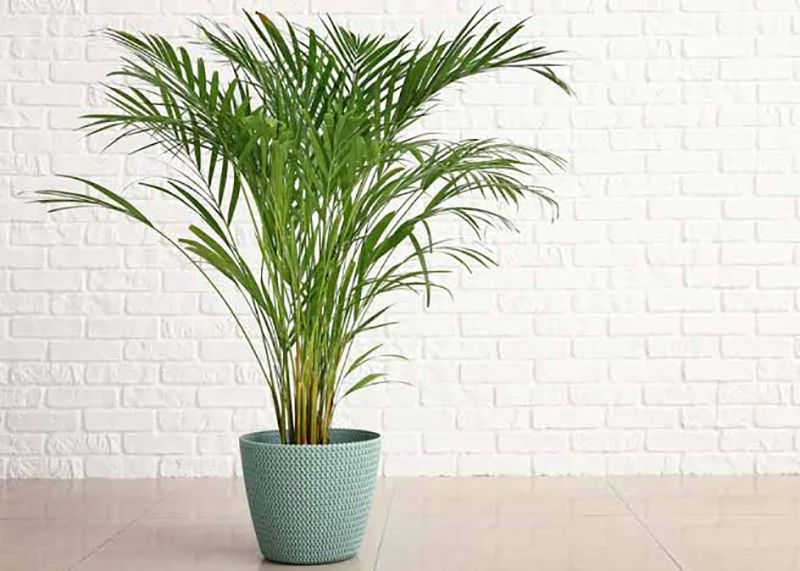
Areca palms are easily grown, low-maintenance air-purifying plants that can be planted both indoors and outdoors. If properly cared for, the plant can thrive for up to 10 years. In summer, bright yellow flowers grow from below the fronds of the plant and enhance the aesthetic value of the plant.
The areca palms are commonly spotted in outdoor plantings in the United States in warm-weather areas, often lining the street or used as a privacy screen.
To know about the Areca palm’s taxonomy, ideal growing conditions, care tips, and much more, read the article.
Table of Contents:
Taxonomy and Ideal Growing Conditions For the Areca Palm
The areca palm is a popular houseplant that originates from Madagascar. It thrives best in warm, tropical environments and has gained popularity among people over the decades. The plant is characterised by its thin yellow-green leaves and dense foliage, which makes it both ornamental and functional.
Areca palm’s growth rate is moderate to fast in bright, indirect light, and it is known for not only purifying but also humidifying the indoor air. The plant is non-toxic to both humans and pets.
For more general information, here is the taxonomic overview and ideal growing conditions of the plant:
| Botanical Name | Dypsis lutescens (formerly Chrysalidocarpus lutescens) |
| Common Names | Areca palm, bamboo palm, golden cane palm, yellow palm, butterfly palm |
| Kingdom | Plantae |
| Order | Arecales |
| Family | Arecaceae (Palm family) |
| Genus | Dypsis (formerly Chrysalidocarpus) |
| Species | D. lutescens (syn. Chrysalidocarpus lutescens) |
| Native area | Madagascar, Africa |
| Bloom period | Summer |
| Hardiness Zone | 10 to 11 USDA Zone |
| Light Requirements | Bright, indirect sunlight in warm temperatures of 65 degrees Fahrenheit to 75 degrees Fahrenheit. |
| Maintenance | Low |
| Type | Perennial |
| Characteristics | Showy, air-purifying plant |
| Soil | Constantly moist, rich, well-drained soil with neutral to acidic pH levels. |
| Flower colour | Yellow |
| Water Requirements | Moderate Note: Do not underwater the areca palms because they do not like the soil to dry out completely between the two watering sessions. |
| Mature size | Indoors 6 to 7 ft. tall and 3 to 4 ft wide; outdoors 15 to 30 ft. tall and 8 to 10 ft. wide. |
| Fertilizers | Areca palm is a heavy feeder that requires fertilising from spring to early fall. |
Read more: Mandevilla Plant Guide: Taxonomic Overview, Ideal Growing Conditions, Care Tips, & Much More!
Indoor Areca Palm vs Outdoor Areca Palm
Areca palm can be planted both indoors and outdoors. There are certain features that can be looked at while planting the Areca Palm in both conditions. These are:
| Feature | Indoor | Outdoor |
| Light requirement | Bright indirect light | Partial sun/shade |
| Growth rate | Moderate | Fast |
| Size | 4 to 7 ft. tall | Can grow up to 20 ft. |
| Temperature | 18 to 30 degrees Celsius | Cannot tolerate more sunlight. It might lead to leaf browning. |
| Container | Planters or pots | Large planters or ground |
| Air circulation | Place near a window for better air circulation. | There is proper air circulation. |
| Watering frequency | Only water when the top layer is slightly dry. | Water once every two to three days in summer. Reduce the watering frequency during winter as needed. |
Read more: How to Grow and Care for Yucca Plants in Indoor and Outdoor Conditions?
How to Propagate an Areca Palm?
Growing an areca palm by using seed germination is considered to be a lengthy and unreliable way to plant.
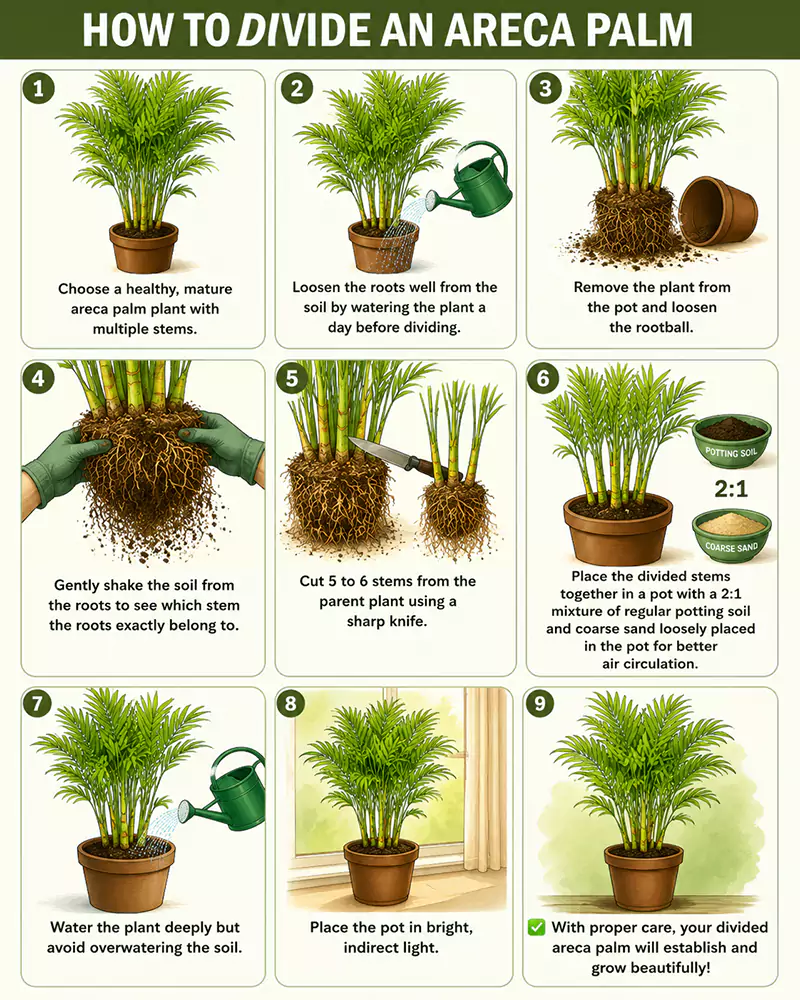
Therefore, the most preferred way to propagate the areca palm is by root division. There are a few simple steps involved in propagating the Areca palm plant:
- Choose a healthy, mature areca palm plant with multiple stems.
- Loosen the roots well from the soil by watering the plant a day before dividing.
- Remove the plant from the pot and loosen the rootball.
- Gently shake the soil from the roots to see which stem the roots exactly belong to.
- Cut 5 to 6 stems from the parent plant using a sharp knife.
- Place the divided stems together in a pot with a 2:1 mixture of regular potting soil and coarse sand loosely placed in the pot for better air circulation.
- Water the plant deeply but avoid overwatering the soil.
- Place the pot in bright, indirect light.
Read more: Dieffenbachia Plant: Varieties, Growing Conditions & Caring Tips
Areca Palm Care Tips
Caring for the plant actually makes all the difference in how long your plant will survive. Here are a few things that you need to keep in mind while and after planting the areca palm plant:
- Choose a location with bright, indirect sunlight.
- Water the soil as soon as it starts drying out.
- Use well-drained, slightly acidic soil.
- Fertilise the plant regularly during the spring and summer because the areca palm is a heavy feeder.
- To keep the palm leaves clean from dust, pop the plant in the shower and spray it down with the shower nozzle.
- Indoors, place the plant near the window for good air circulation and sunlight.
- Rotate the plant every few weeks for equal growth from all sides.
- Areca palms do not require much trimming or pruning as they are self-cleaning plants.
Read more: 10 Flowers That Bloom in Late Winter Nyt – Care Guide, Planting Tips and Common Challenges
Common Pests and Problems With the Areca Palm
The common pests that can attack your Areca palm plant are mites, aphids, mealybugs, scales, and whiteflies. They can cause foliage damage and discoloration. Treat these pests using any organic pesticide soap or spray neem oil every week.
Tip
If you want to recognise aphids on your plant, you will notice ants on your plant. Ants attack to feast on honeydew secretions left behind by aphids.
Though there are not many problems associated with the Areca palm plant, some problems that you might witness are leaf browning, which might occur due to too much exposure to the sun. To avoid such a situation, place your plant in a partially shaded area.
Another problem that you might witness with your Areca palm plant is the tips and leaves turning yellow. This might happen because of poor soil conditions or overwatering. Avoid overwatering the plant; it might help your plant thrive longer.
Read more: Tuberous Begonia Guide: Everything From Taxonomy to Care Tips
Takeaways
Areca palm plant is a low-maintenance plant with easy propagation steps and some care tips. Something you need to be careful about after planting an Areca palm is watering it, as overwatering can cause fungal disease or root rot, and underwatering can cause plant death.
If you are looking for a low-maintenance, pet-friendly plant with air-purifying qualities that also enhances your house corners, the Areca palm is the best choice.
Get yours today!
FAQs
What is the best time to plant an Areca Palm?
Is an areca palm toxic to pets?
No, the areca palm is not toxic for either pets or humans. This is one of the reasons why pet parents love to keep this plant in their place.
How long do areca palms live?
If properly cared for, the areca palm plant can thrive for up to 10 years.
Source
Arecales: Britannica
Latest Blog