Lupines can be planted in early to mid-spring or fall.
Lupine Taxonomy, Care Tips, Ideal Growing Conditions, & Much More
Author
Rashika GuptaReviewed By
Cody Allison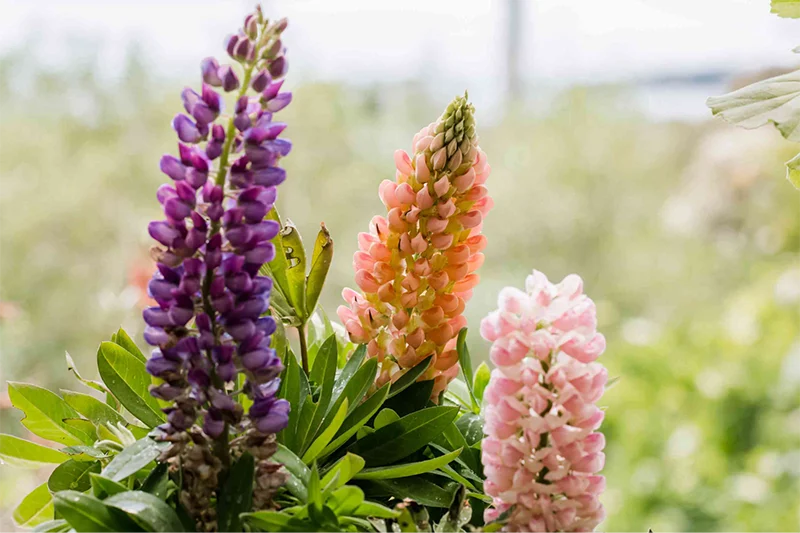
Lupine, lupin, or bluebonnet, is a fast-growing perennial plant, often recognised for its tall spire of colourful blooms. These blooms can be seen from spring till midsummer and are known to attract pollinators. The plant has an expected lifespan of around two to five years if properly cared for.
This long-day plant requires direct sunlight, prefers moist, well-drained soil with slightly acidic pH levels, and is commonly considered low-maintenance.
Read the article to learn about popular varieties of lupin, its taxonomy, ideal growing conditions, care tips, pests and problems associated with it, and more.
Table of Contents:
How to Grow Lupine?
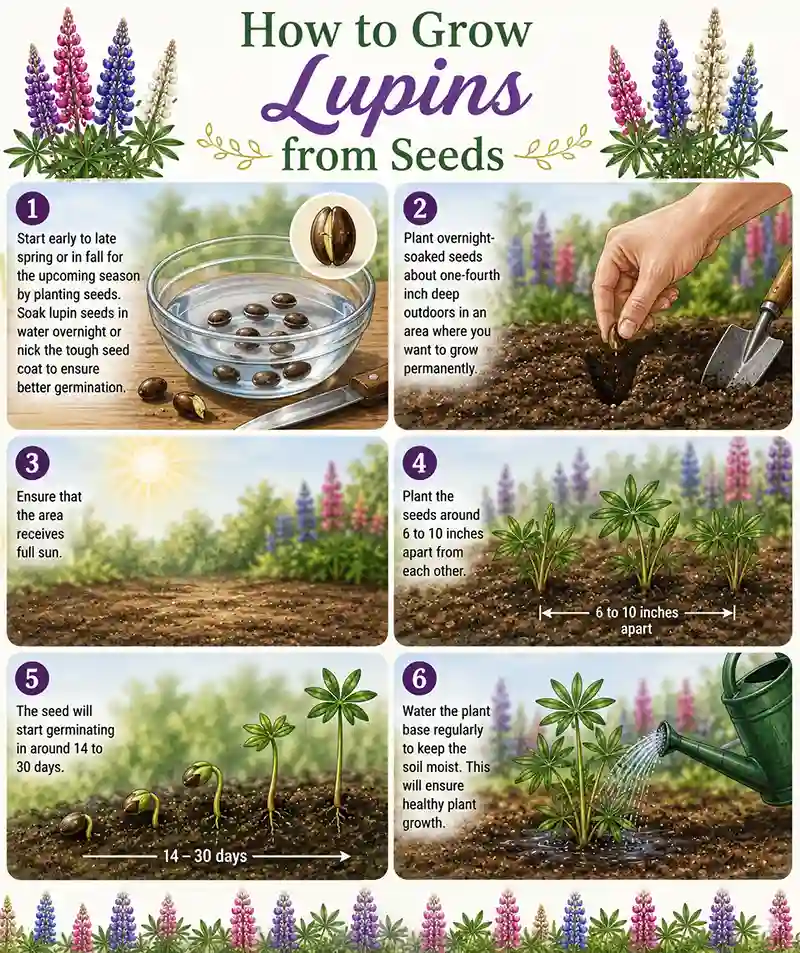
Lupines are easy-to-grow perennials. They can be grown using seeds, but it takes around two years to bloom using this method. You can follow the steps mentioned below to grow lupine using seeds:
- Start early to late spring or in fall for the upcoming season by planting seeds. Soak lupin seeds in water overnight or nick the tough seed coat to ensure better germination.
- Plant overnight-soaked seeds about one-fourth inch deep outdoors in an area where you want to grow permanently.
- Ensure that the area receives full sun.
- Plant the seeds around 6 to 10 inches apart from each other.
- The seeds will start germinating in around 14 to 30 days.
- Water the plant base regularly to keep the soil moist. This will ensure healthy plant growth.
Propagating Lupine

Lupines tend to sprout easily from seed, but this process takes longer. Lupines can also be easily propagated using the stem cutting method. Here are a few steps to propagate lupines:
- Choose a healthy lupine stem in the early spring before the plant starts actively growing.
- Using a sharp knife, take a segment of the crown and roots from the parent plant.
- Transplant the new segment to a location with full and direct sunlight.
- Mulch around the plant base to maintain soil moisture and temperature.
Tip
Propagate lupine every two to three years because they are short living plants.
Read more: 20 Stunning Flowers That Start With the Letter P (With Pictures & Facts)
Lupin Plant Taxonomy and Ideal Growing Conditions
The genus Lupinus comprises around 200 herbaceous and partly woody plant species in the family Fabaceae that grow worldwide. While the plant is widely grown for its ornamental qualities, it is one of the best pollinator-friendly flowering plants. Though the plant can tolerate cold weather and poor sandy soil to some extent, it does not like waterlogged and soggy soil.
Refer to the table below for a quick taxonomic overview and ideal growing conditions:
| Botanical name | Lupinus x hybrida |
| Common names | Lupine, lupin, bluebonnet |
| Kingdom | Plantae |
| Order | Fabales |
| Family | Fabaceae (peas, beans, and legumes) |
| Genus | Lupinus L. |
| Native area | North America |
| Hardiness | 4 to 8 USDA Zones |
| Light Requirements | Full sunlight |
| Maintenance | Low |
| Plant type | Perennial, herbaceous, annual |
| Bloom period | Spring to midsummer |
| Flower colours | Pink, red, white, purple, yellow, and blue |
| Soil | Well-drained, moist chalk, loam, clay soil with acidic or neutral pH levels between 5.5 and 7.0 |
| Water Requirements | Low to average |
| Mature size | 3 to 4 ft. tall and 1 to 1.5 ft. wide |
| Fertilizers | Not a heavy feeder |
| Toxicity | Toxic to pets and humans if consumed |
| Tolerance | Poor and acidic soil and cold winter temperatures |
Fact
The name Lupine is derived from Latin for wolf because this plant was mistaken for one that depleted soil minerals. But contrary to this, the plant aids soil fertility by fixing nitrogen from the air in the soil for other plants.
Read more: Everything You Need to Know About Cosmos Flower: From Ideal Growing Conditions to Pests & Problems
Essential Lupine Care Tips
For every plant to thrive, there is an important step: plant care. Since lupines are short-lived plants, here are some essential care tips, like the perfect location, best suitable soil, watering, and fertilisation, that can help your plant grow healthily:
- Ensure that your plant receives around 6 hours of direct sunlight. Growing them in partial shade might help them grow, but their flowering will diminish over time.
- Use organically rich soil or loose sandy soil with slightly acidic pH levels.
- Water the lupine plant only when the soil begins to dry out. Ensure that you do not overwater the plant. This can cause soggy roots that may further lead to plant death.
- Lupin does not require much fertilisation. Instead, use an acidifying agent to soil for maintaining pH level.
- Cut off the faded flowers to promote more blooms.
- You can save the seeds when pods turn yellow.
- Ensure that mulch or any other matter does not touch the plant crown.
Did you know?
- The lupin flowers are not edible, but their seeds are. These seeds were long ago used as a munching snack for a long journey in Europe.
- Back in time, in Europe, lupin seeds were ground and used in baking by mixing them with flour.
Read more: Impatiens Flower Guide: Everything From Taxonomy to Care Tips
Popular Lupin Flower Planting Varieties
There are around 200 lupine species to choose from, but here is the list of the most popular and easily available varieties of lupine with their description:
| Plant variety | Description |
Dwarf lulu  | As the name suggests, dwarf lulu is a small-growing variety of lupines that reaches a maximum height of 2 ft. It blooms in hues of rainbows and features unusually dense racemes. |
Minarette 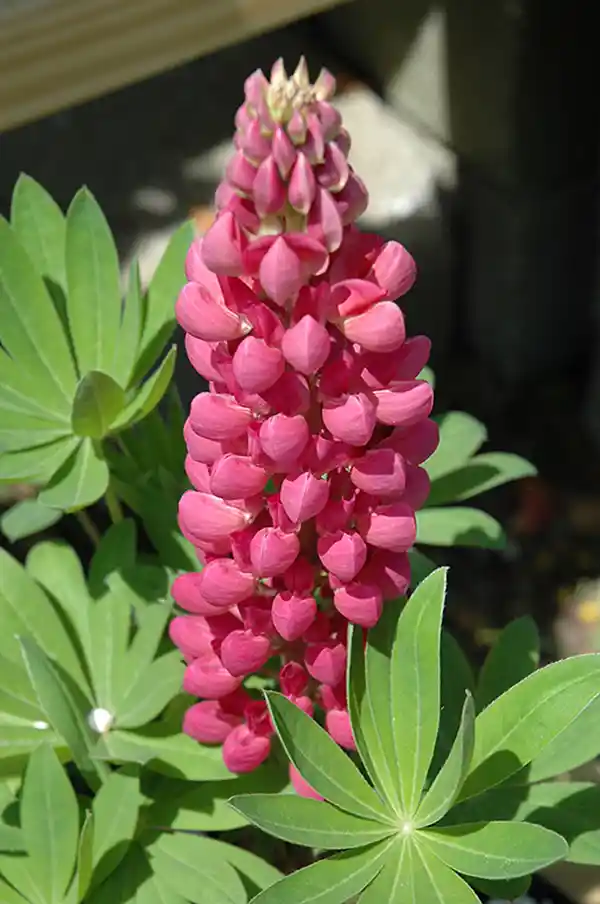 | Minarette grows around 18 inches tall and is perfect for the border’s edge or can be grown in containers and placed on balconies. |
Lupinus angustifolius (blue lupine) | Blue lupine is also known as narrowleaf lupine. This is a taller variety of the plant that grows to 5 feet tall and has beautiful blue blooms. This variety of lupine is more cultivated for agricultural purposes than for gardens. |
Lupinus albifrons (silver lupine)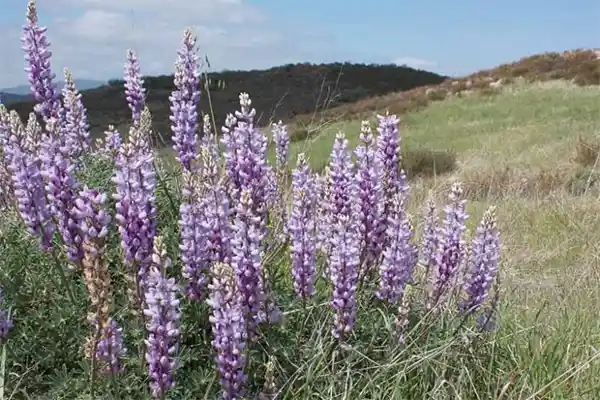 | Silver lupine grows between 3 to 5 ft. tall and has silver-green leaves with different hues of purple to blue flowers. |
Lupinus albus (white lupine)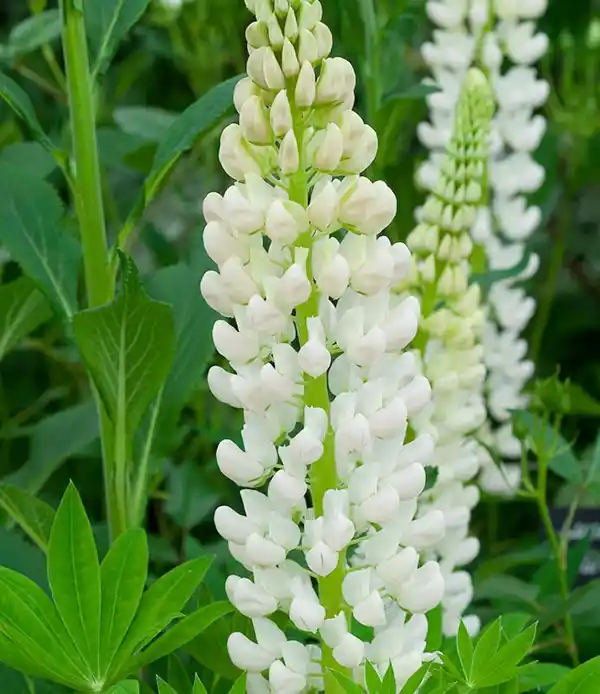 | White lupine is one of the people’s favourite varieties of lupin with white blooms. The plant grows up to 4 ft tall. |
Read more: Pink Paradise: 30 Beautiful Flowers to Embellish Every Garden
Pests and Problems With Lupine
The most common problem with lupin plants is that it requires proper growing conditions, like proper air circulation, balanced soil that is not overly wet, and direct sunlight for 6 hours a day. If any of these are missing, the plant starts to rot and eventually dies.
There are certain pests and diseases, like snails, slugs, and many more, that might attack your plant. Here is the list of pests and diseases associated with growing lupine:
| Pests and diseases | Solution |
| Aphids and thrips | Aphids and thrips can damage foliage by feeding on the plant sap. On a mature plant, they can be seen on the underside of the leaves. You can remove them by using a strong water spray or an organic pesticide like neem oil. |
| Slugs and snails | Slugs and snails generally feed on the plant leaves and chew holes. They usually attack the plant in damp conditions. To get rid of them, you can either handpick them or use a strong water spray. |
| Lupine anthracnose | It is a disease that causes leaf blight and brown spots. The best way to get rid of this is by removing the affected plants and avoiding using the area to grow lupines for a year or two. |
| Powdery mildew | Powdery mildew is caused by poor air circulation. While planting lupin, ensure that there is proper spacing between two saplings. To save the affected plant, cut the foliage with white patches and wait for regrowth. |
Read more: 15 Beautiful Hawaiian Flowers and Their Unique Features
Takeaways
Lupine plants are one of the most aesthetically pleasing plants that can be added to your outdoor spaces. These plants are also known as pollinator-friendly and attract different pollinators with their beautiful blooms in various hues of pink, white, blue, red, lavender, and yellow.
You can grow lupine using the stem-cutting method or directly by sowing its seed, but the stem-cutting method turns out to be more effective, and the plant blooms more quickly.
The plant also grows in various varieties, which lets you choose your favourite type of lupine plant. So, next spring or fall, if you are planning to grow some beautiful, flowing plants, lupine might be one on your list.
Happy planting!
FAQs
When to plant lupine?
Where to plant lupins?
The best place to plant lupine is the one that receives maximum sunlight and has rich soil with slightly acidic pH levels.
How to grow lupine?
Lupine can be grown using seeds and also by the stem-cutting method. When growing seeds, it takes longer for blooms to appear, so people often prefer the stem-cutting method.
What does a lupine look like?
Lupines are tall, upright, colourful spikes with pea-like flowers and unique finger-like leaves.
Sources
Lupines: iNaturalist
Lupine: Britannica
Latest Blog