Some of the Hawaiian plants are Bird of Paradise, Blue Ginger, Naupaka, Hawaiian Hibiscus, and Heliconias.
15 Beautiful Hawaiian Flowers and Their Unique Features
Author
Cerina TriglavcaninLast Update
September 30, 2026
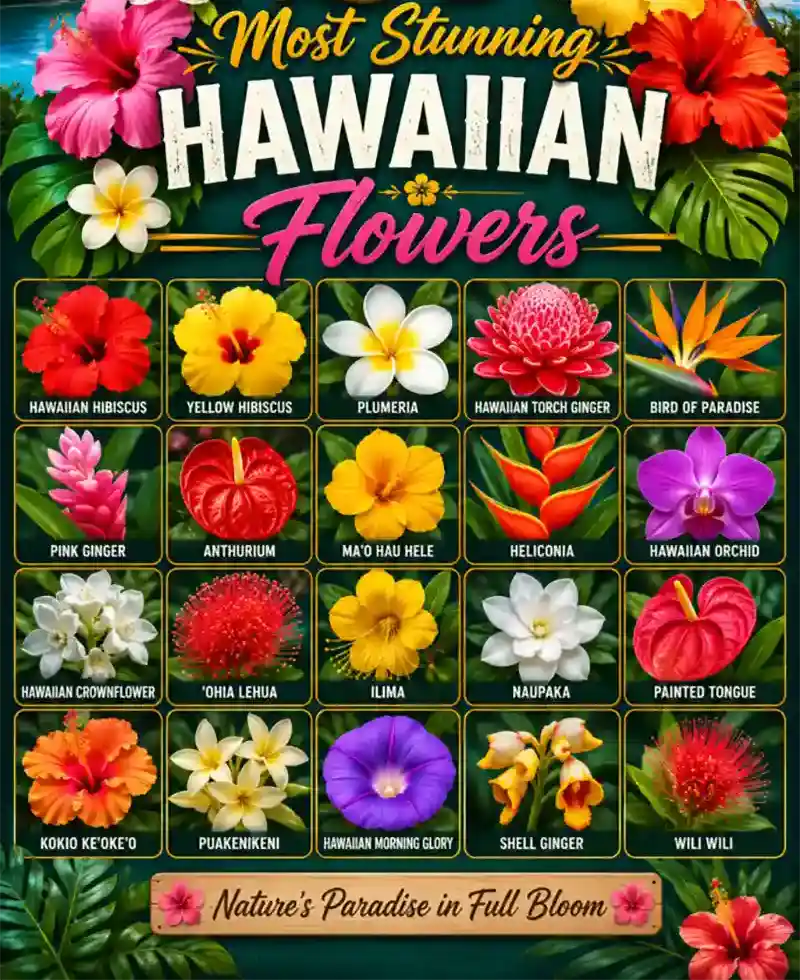
Hawaii is full of flora and fauna with stunning beaches, verdant rainforests, and waterfalls. Around 1000 plant species are native to Hawaii, and half of them are found nowhere else in the world. Some of them are also considered to be endangered or are under threat of extinction due to their habitat loss. But the best part is that some of these flowers can be grown in your own gardens.
Some of the beautiful Hawaiian flowers are the striking Anthurium, Bird of Paradise, Pikake, Hawaiian Gardenia, and Blue Ginger. They contribute to the bliss and add to the island’s magic. Read the article to learn about 15 beautiful Hawaiian plants, their taxonomy, ideal growing conditions, and fun facts.
Table of Contents:
10 Hawaiian Flowers: Names, Images, and Descriptions
Hawaii has a wide variety of flowering plants that attract thousands of visitors every year. These flowers include perennials, annuals, trees, shrubs, and herbaceous plants. Here are 10 Hawaiian flowers with names, their description, and ideal growing conditions:
1. Bird of Paradise
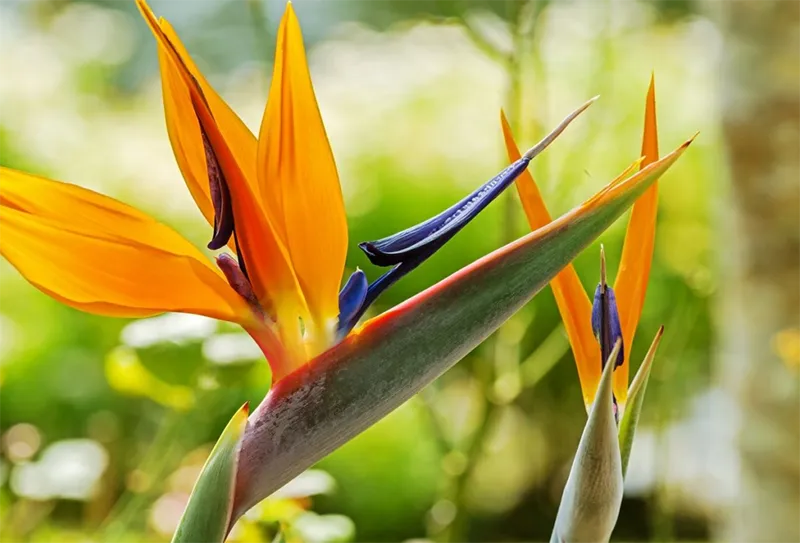
Bird of Paradise is a tropical perennial known for its rare, structured flower that resembles a bird. It is commonly grown outdoors but can also be planted indoors if brought outside during the summer.
The plant is unlikely to bloom if kept indoors for a longer period. This easy-to-grow plant is a heavy feeder and can grow 3 to 5 ft. tall and wide. For more general information, here is the taxonomic overview and ideal growing conditions of the plant:
| Botanical Name | Strelitzia spp. |
| Common Name | Crane flower |
| Kingdom | Plantae |
| Family | Strelitziaceae (Bird-of-paradise family) |
| Genus | Strelitzia Banks |
| Native Area | South Africa |
| Hardiness Zone | 10 to 12 USDA Zones |
| Light Requirements | Full light with partial shade |
| Soil | The plant requires rich, well-drained, moist soil with compost or other rich organic matter. It prefers neutral to slightly acidic pH levels ranging between 5.5 and 7.5. |
| Water Requirements | Keep the soil moist but not overwatered or dry. Note: Bird of Paradise becomes drought-tolerant once established. |
2. Dwarf Poinciana
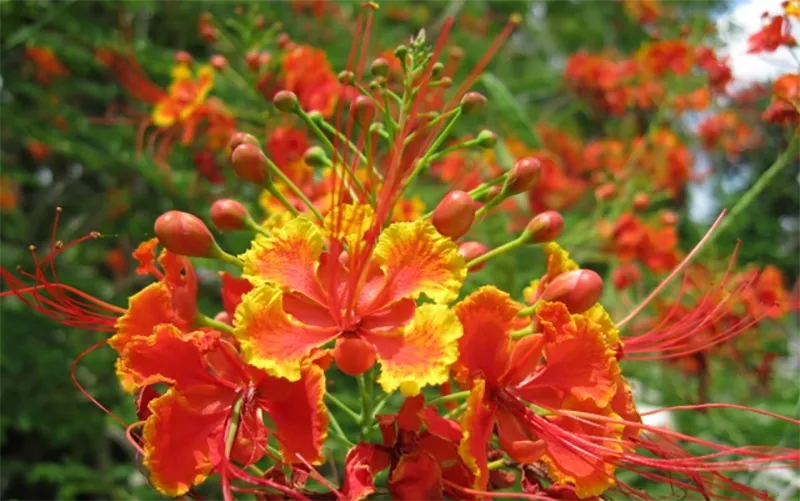
Dwarf Poinciana, or peacock flower, is an evergreen shrub with beautiful flowers that bloom in various hues of red, orange, and yellow. In Hawaii, these flowers are often used in preparing leis. Peacock flower is also known to attract pollinators like butterflies and hummingbirds. The plant grows from 8 to 12 ft. tall and around 6 to 12 ft. wide. For more general information, here is the taxonomic overview and ideal growing conditions of the plant:
| Botanical Name | Caesalpinia pulcherrima |
| Kingdom | Plantae |
| Family | Fabaceae |
| Genus | Caesalpinia |
| Native area | Tropics and subtropics of America |
| Hardiness Zone | 9 to 11 USDA Zones |
| Light Requirements | Full, bright sunlight |
| Soil | Well-drained, moist loamy soil |
| Water Requirements | During the growing season, water the plant twice or thrice a week (as required). |
3. Pikake
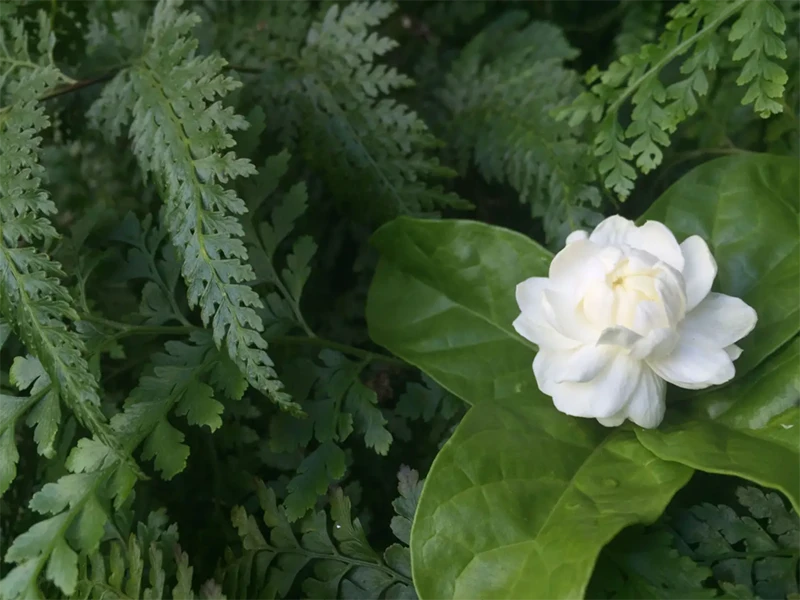
Pikake is the Hawaiian name for Arabian jasmine. The pikake plants are widely used for their flowers, which are used to make leis and perfumes. The plant grows 6 to 10 ft tall and wide, depending on ideal growing conditions and pruning. For more general information, here is the taxonomic overview and ideal growing conditions of the plant:
| Botanical Name | Jasminum sambac |
| Common names | Arabian jasmine and Sampaguita |
| Kingdom | Plantae |
| Family | Oleaceae (Olive family) |
| Genus | Jasminum or Jasmine |
| Native area | South and Southeast Asia; it was introduced to Hawaii in the 19th century |
| Hardiness Zone | 9 to 11 USDA Zones |
| Light Requirements | Full, direct sunlight for 6 to 8 hours daily for maximum blooms |
| Soil | Moist, well-drained, rich soil with slightly acidic pH levels and regular monthly feeding during the growing season. |
| Water Requirements | Once or twice a week during the growing season, and reduce it during winter. |
4. Hawaiian Gardenia
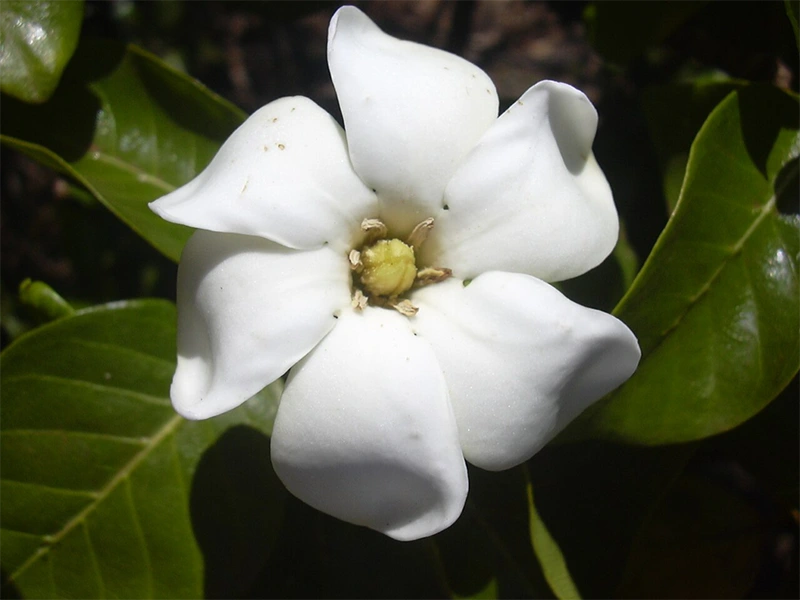
Gardenia is a fragrant beauty that can be grown in your garden. Due to its flowery fragrance and beautiful blooms, Hawaiian Gardenia is known as pollinator-friendly. This beautiful shrub can also be grown indoors in cooler climates. The plant blooms from late spring till early summer and requires fertilizers and mulching for a healthy plant. For more general information, here is the taxonomic overview and ideal growing conditions of the plant:
| Botanical Name | Gardenia jasminoides |
| Kingdom | Plantae |
| Family | Coffee family (Rubiaceae) |
| Genus | Gardenia |
| Native area | Tropical and subtropical regions of Africa, Asia, Madagascar, Australia, and Pacific Islands. |
| Hardiness Zone | 7 to 11 USDA Zones |
| Light Requirements | Partial sun |
| Soil | Organic, rich, well-drained soil with slightly acidic pH levels between 5.0 and 6.5 |
| Water Requirements | Average. Keep the soil moist but avoid overwatering |
5. Hawaiian Hibiscus
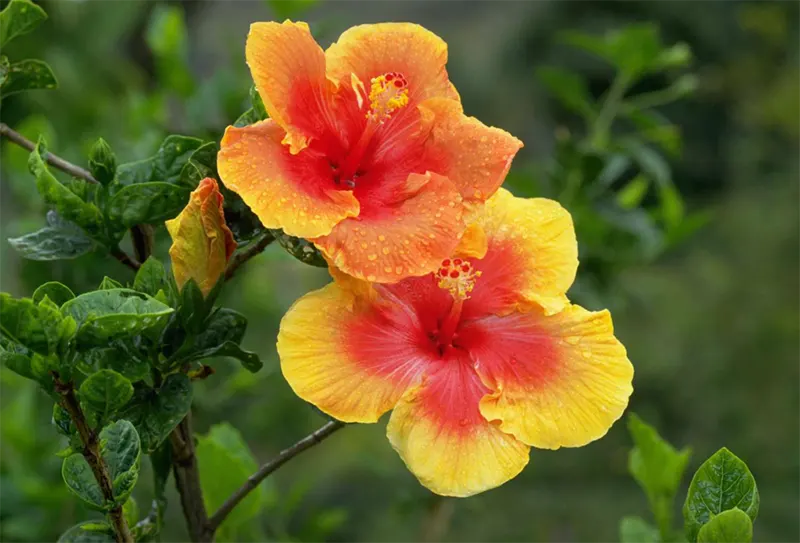
Hawaiian hibiscus is known for its dramatic, vibrant flowers that bloom in different shades of red, yellow, white, pink, orange, and purple but last only for a day. This fast-growing shrub grows from 4 to 10 ft tall and 3 to 6 ft wide and can add up to 24 inches per year in ideal conditions.
Did you know? The state flower of Hawaii is the native yellow hibiscus (Hibiscus brackenridgei), also known as ma‘o hau hele or pua aloalo.
For more general information about hibiscus, here is the taxonomic overview and ideal growing conditions of the plant:
| Botanical Name | Hibiscus rosa-sinensis |
| Common names | Chinese hibiscus, China rose, tropical hibiscus. |
| Kingdom | Plantae |
| Family | Malvaceae |
| Genus | Hibiscus |
| Native area | Asia |
| Hardiness Zone | 9 to 12 USDA Zones |
| Light Requirements | Full sunlight to partial shades |
| Soil | Well-drained, moist soil with acidic pH levels |
| Water Requirements | Frequently up to 2 inches deep |
6. Blue Ginger
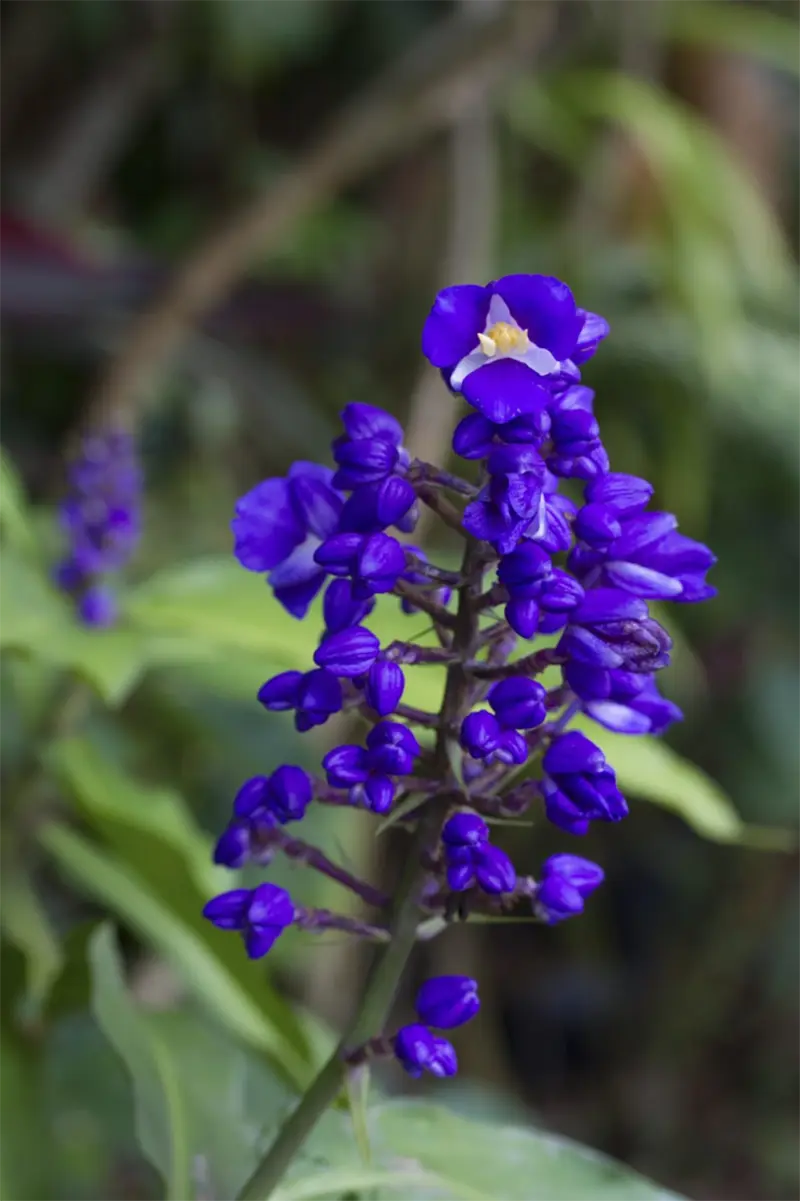
Blue ginger gets its name from its resemblance to the ginger plant; however, it is not a true ginger. The blue ginger is a tropical perennial plant known for its vibrant coloured blue flower clusters.
It can be grown both indoors and outdoors and easily propagated by stem cuttings. For more general information, here is the taxonomic overview and ideal growing conditions of the plant:
| Botanical Name | Dichorisandra thyrsiflora |
| Kingdom | Plantae |
| Family | Commelinaceae (Spiderwort family) |
| Genus | Dichorisandra |
| Native area | Shady woodlands of Brazil |
| Hardiness Zone | 9 to 11 USDA Zones |
| Light Requirements | Partial shade and indirect, bright sunlight |
| Soil | Well-drained, moist soil |
| Water Requirements | Frequently during summer and reduce it in winter. |
7. Naupaka
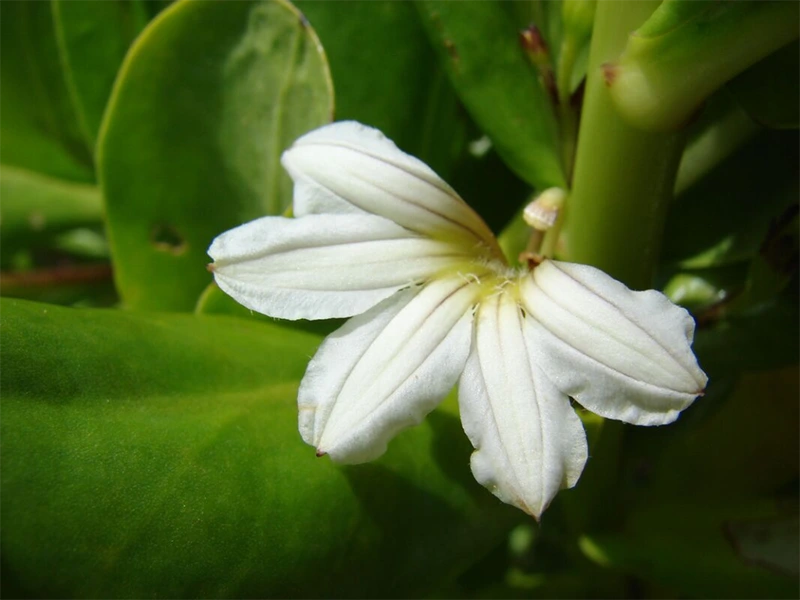
Naupaka or beach naupaka is a flowering plant found in mangrove swamps and rocky or sandy coastal areas.
It grows as a large bush that grows around 3 to 10 meters tall and wide. Naupaka blooms throughout the year in unique fan-like clusters, which attract pollinators like bees, butterflies, and hummingbirds. The plant grows 2 to 6 ft tall with oval leaves. For more general information, here is the taxonomic overview and ideal growing conditions of the plant:
| Botanical Name | Scaevola taccada |
| Kingdom | Plantae |
| Family | Goodeniaceae |
| Genus | Scaevola |
| Hardiness Zone | 10 to 12 USDA Zones |
| Light Requirements | Full, direct sun for 6 to 8 hours |
| Soil | Well-drained, loose, rocky, or sandy soil |
| Water Requirements | Water the plant regularly during the growing period; gradually reduce watering the plant as it becomes drought-tolerant once established. |
8. Plumeria
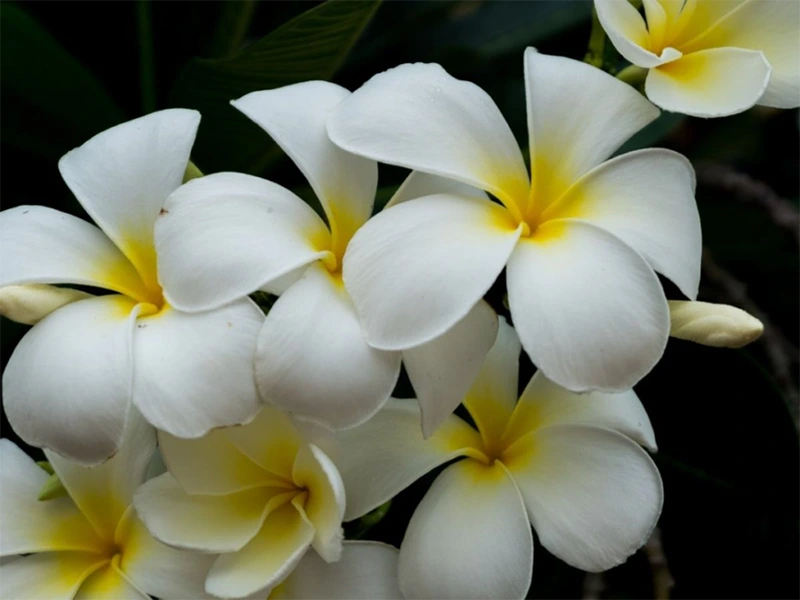
White plumeria or white champa is a tropical tree known for its sweet-scented flowers. This slow-growing plant can reach up to 30 ft. tall, often forming an umbrella shape, and can be planted outdoors. Its flowers bloom with a soft yellow center that fades to white near the flower tips. For more general information, here is the taxonomic overview and ideal growing conditions of the plant:
| Botanical Name | Plumeria alba |
| Kingdom | Plantae |
| Family | Apocynaceae |
| Genus | Plumeria |
| Native area | North and South America, Caribbean |
| Hardiness Zone | 10 to 11 USDA Zones |
| Light Requirements | Full, direct sunlight for at least 6 hours a day |
| Soil | Fast-draining, loamy or sandy soil mixed with organic compost or gravel |
| Water Requirements | Allow the soil to completely dry out between two watering sessions |
9. Heliconias
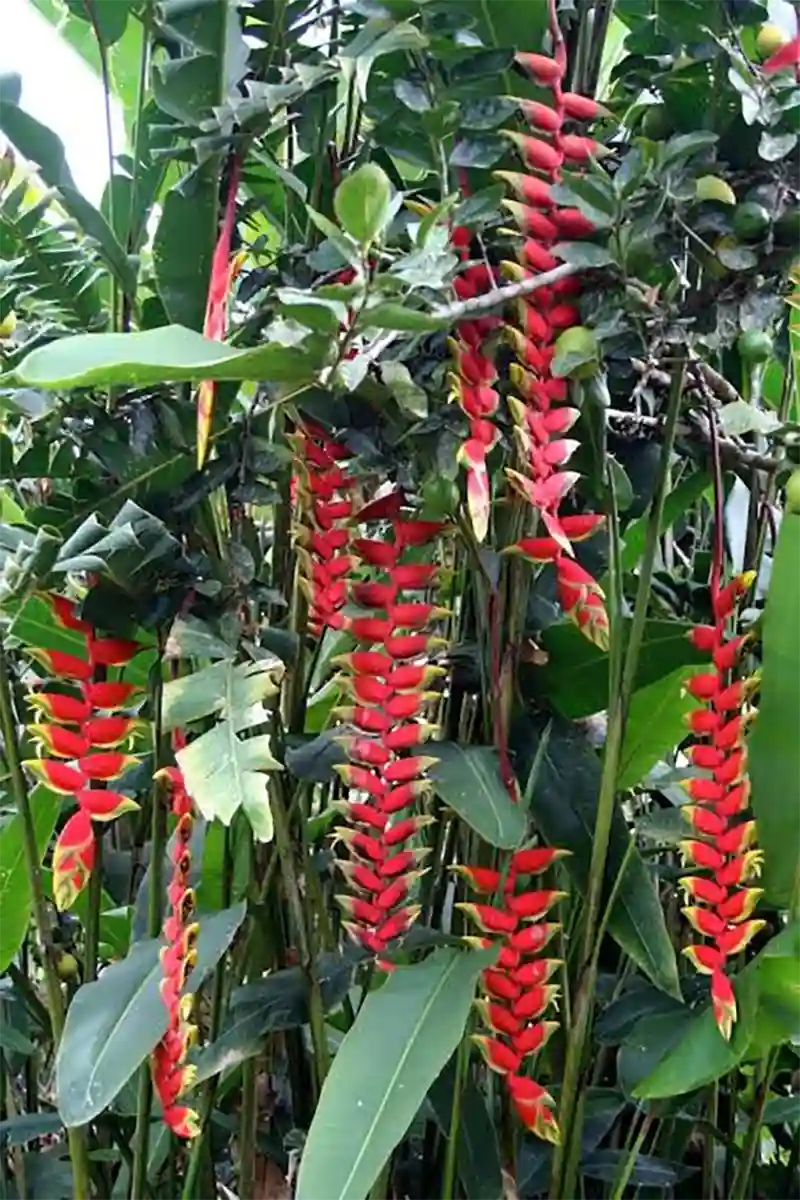
Heliconias are commonly known as lobster claws adds up an exotic touch to your landscape. This beautiful, showy, and ornamental plant grows upright with a tall stem that features lush, dark green, paddle-shaped foliage and bright red flowers. This cluster of flowers stays for a week before exhausting completely. For more general information, here is the taxonomic overview and ideal growing conditions of the plant:
| Botanical Name | Heliconia rostrata |
| Common names | False bird of paradise, lobster-claw, hanging lobster claw, hanging heliconia |
| Kingdom | Plantae |
| Family | Heliconiaceae |
| Genus | Heliconia |
| Native area | South America |
| Hardiness Zone | 8 to 11 USDA Zones |
| Light Requirements | Bright, indirect sunlight with partial shades |
| Soil | Moist, fertile soil with neutral to acidic pH levels |
| Water Requirements | Water the plant regularly, but avoid overwatering |
10. Flowering Maple – Ko’oloa ‘ula
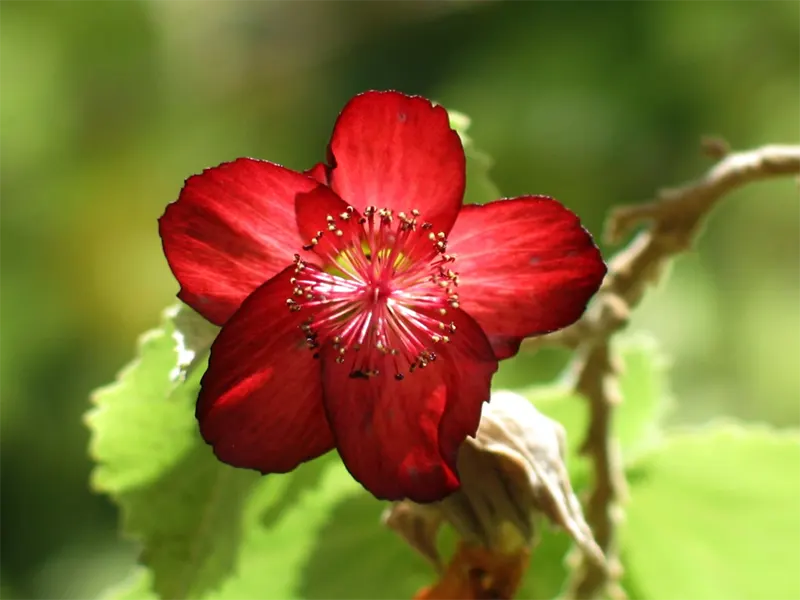
Ko’oloa ‘ula is an aesthetically appealing shrub that is an endangered species of flowering shrub and is endemic to Hawaii. The most appealing feature is its flowers, which range from dark maroon to bright yellow. This native Hawaiian plant grows from 6.6 ft to 8.2 ft tall. For more general information, here is the taxonomic overview of the Ko’oloa’ula plant:
| Botanical Name | Abutilon menziesii |
| Kingdom | Plantae |
| Family | Malvaceae |
| Genus | Abutilon |
| Native area | Only found in Hawaii’s dry forest regions |
| Hardiness Zone | 10 to 12 USDA Zones |
Read more: 20 Beautiful Flowers That Starts With A: Add Aesthetics to Your Garden
5 Additional Hawaii Plants That Represent the Spirit of Hawaii
The bonus list of five Hawaiian Flowers with names, images, and descriptions is as follows:
| Flower name and image | Description |
Frangipani 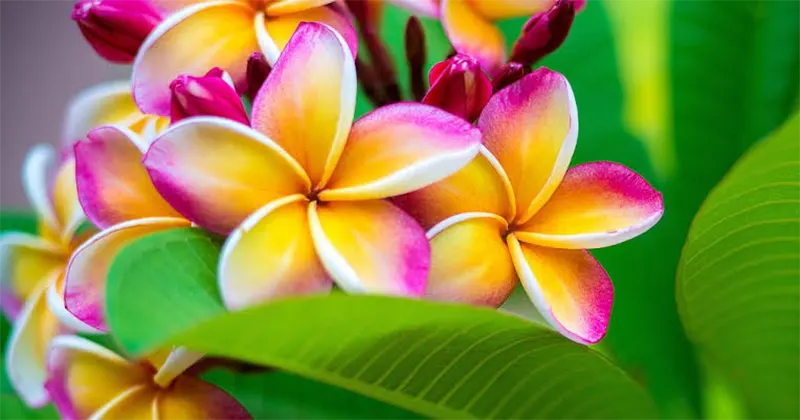 |
|
Mamane 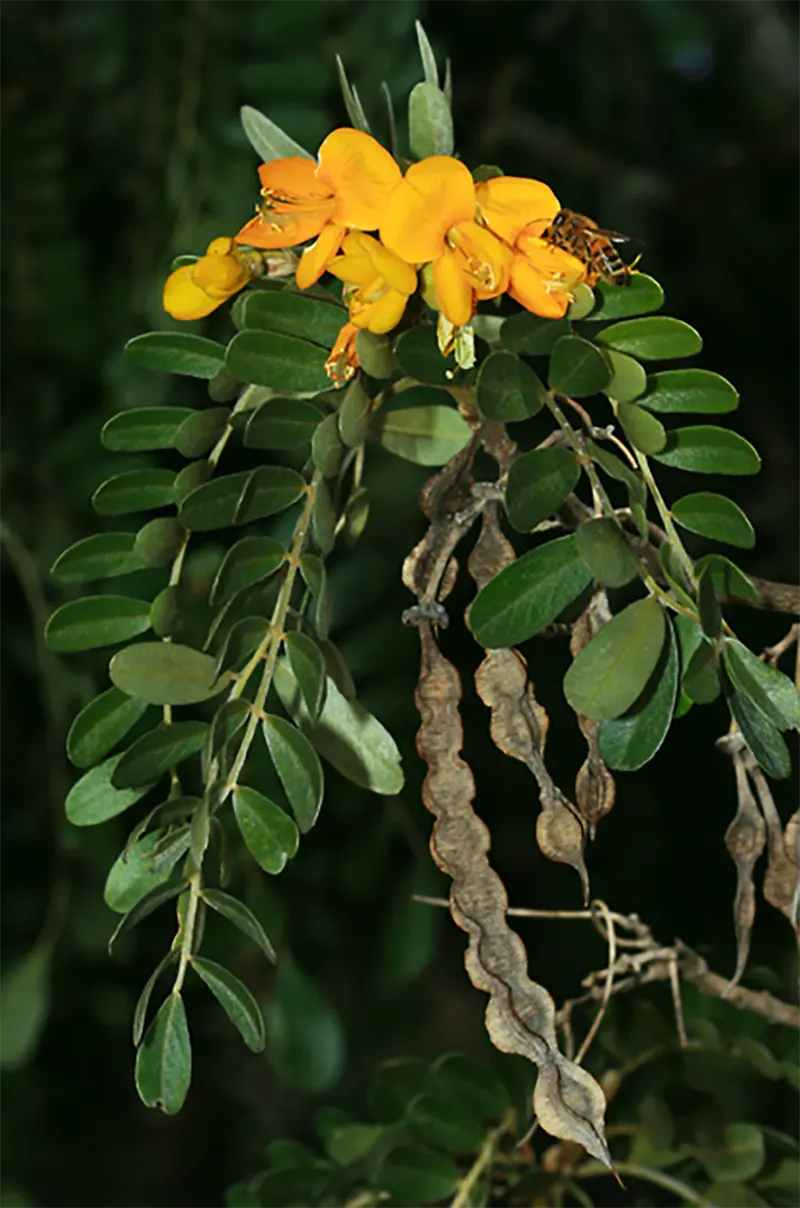 |
|
Flamingo Lily 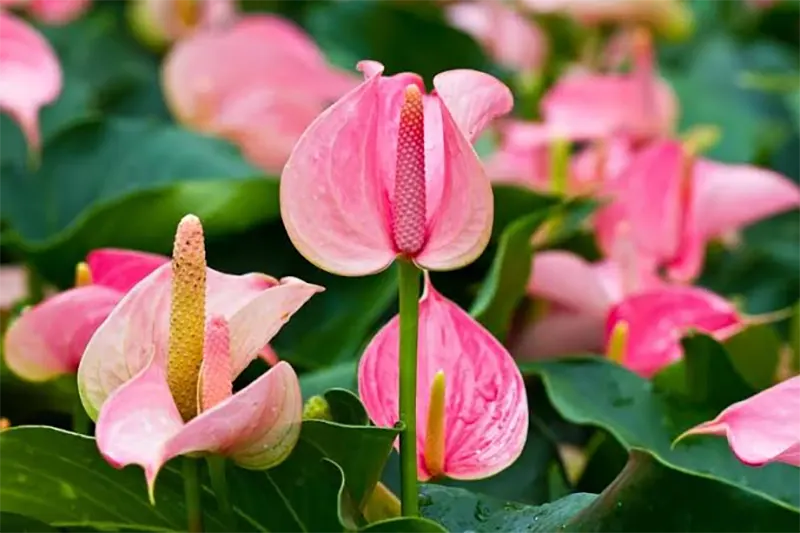 |
|
White Ginger Lily 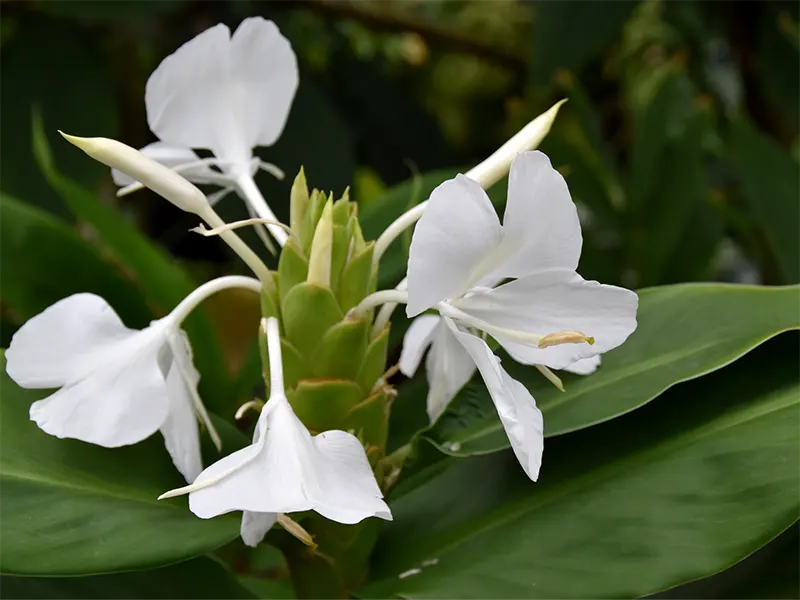 |
|
Fringed Orchid 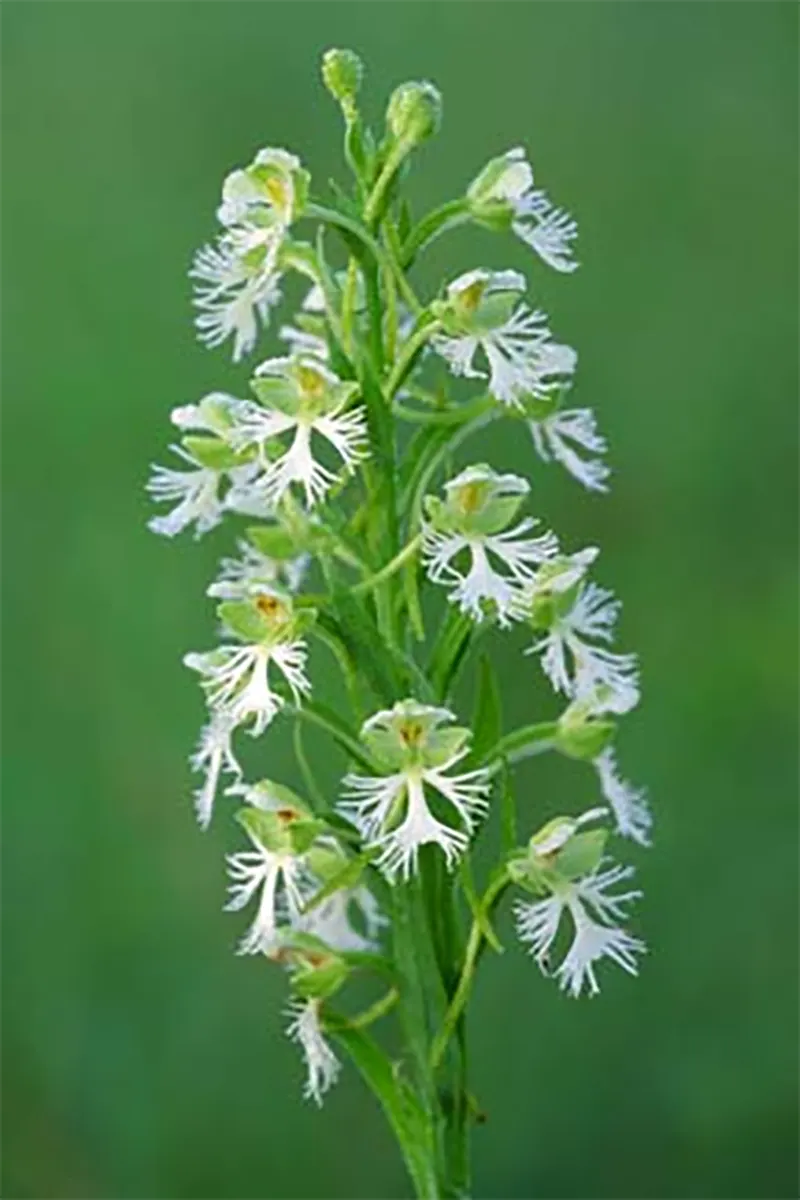 |
|
Read more: 20 Stunning Flowers That Start With the Letter P (With Pictures & Facts)
Conclusion
The most famous Hawaiian flowers include Bird of Paradise, Hibiscus, Plumeria, and blue ginger. These bright, tropical flowers not only fill the islands with bright colours and a sweet smell, but are also known as pollinator-friendly. Hawaii has a number of non-natives that get along well with the local plants and have been embraced by the local culture. They are used for their ornamental value, lei making, and medicinal properties.
Don’t let this list of 15 flowers limit your imagination about how beautiful the Hawaiian landscape must be. It has many more interesting and beautiful flowers. Next time you are planning a trip to Hawaii, do explore its flora and fauna!
FAQs
Name some of the Hawaiian plants.
Which Hawaiian Flowers are considered to be endangered?
Hawaiian flowers like yellow hibiscus, Haleakala silversword, and Moloka’i white hibiscus are considered to be endangered.
Can Hawaiian flowers be planted at home?
Yes, Hawaiian flowers like dendrobium orchids, bromeliads, and hibiscus can be planted at home.
Is it illegal to take flowers from Hawaii?
Yes, picking flowers from Hawaii is considered illegal due to strict agricultural quarantine laws.
Latest Blog