Dogwoods are fast-growing shrubs that grow throughout the year. The plant blooms in spring and attracts pollinators.
Red Twig Dogwood Care Tips, Growing Process, Taxonomy, Ideal Growing Conditions, & Much More
Author
Nicola Baldwin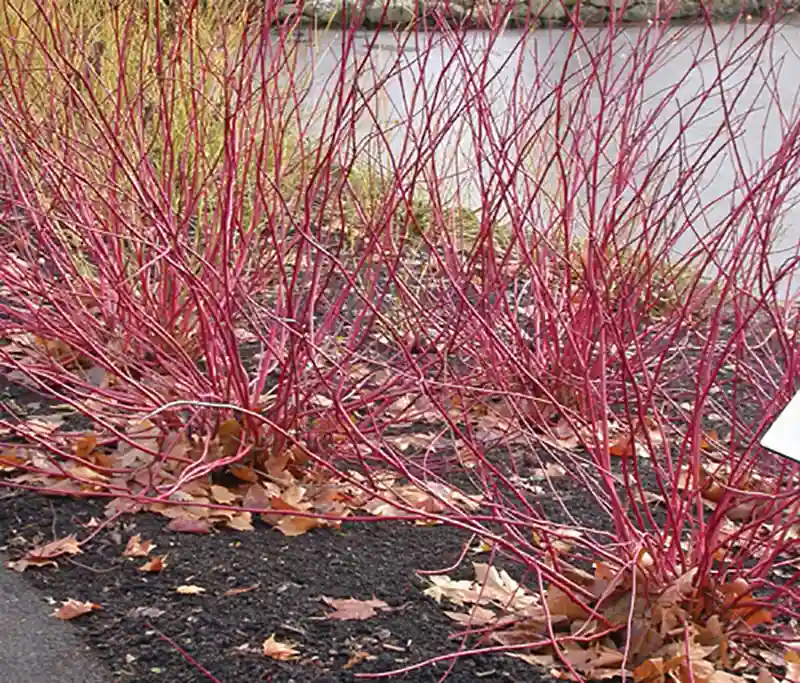
Red osier dogwood or red twig dogwood are medium to tall deciduous shrubs that typically grow around 9 to 18 ft wide and 4 to 15 ft tall, spreading readily by underground stolons to make dense thickets. Its branches grow dark red over time. The plant’s leaves grow around 5 inches long and 3 inches wide with an oblong shape. In fall, the leaves turn bright red to purple.
They commonly grow well in the wild with poorly draining soil that is rich in nutrients and receives more than 150 mm of annual precipitation. Red osier dogwood is food for various mammals and birds in such regions and is also important for nesting habitat and cover for a great variety of animals.
Read the article to learn about red twig dogwood taxonomy, ideal growing conditions, the growing process, care tips, pests and problems associated, and much more.
Table of Contents:
Taxonomy and Ideal Growing Conditions For Red Twig Dogwood
Red twig dogwood, also commonly known as red osier dogwood, belongs to the Cornaceae family and is native to North America. This shrub is known for its showy characteristics and blooms white flowers in spring. The plant requires moist soil, direct sunlight, and regular watering with minimal fertilisers to thrive.
Read the table below to learn about red osier dogwood’s taxonomy and ideal growing conditions:
| Botanical name | Cornus sericea |
| Common name | Red twig dogwood, red osier, or red-osier dogwood, tatarian dogwood |
| Kingdom | Plantae |
| Order | Cornales |
| Family | Cornaceae |
| Genus | Cornus L. |
| Native area | North America |
| Season of interest | Spring |
| Hardiness | 3 to 8 USDA Zones |
| Light Requirements | Full sunlight with partial shades |
| Maintenance | Low |
| Type | Shrub |
| Flower colour | White |
| Soil | Constantly moist soil with an acidic pH level between 5.5 and 6.5 |
| Water Requirements | Regular |
| Mature size | 6 to 9 ft. tall and 8 to 12 ft. wide |
| Fertilizers | Low feeders |
| Toxicity | Toxic for pets if ingested in large quantities. |
| Tolerant | Drought tolerant once fully established |
Read more: Heuchera: Taxonomy, Care Tips, Ideal Growing Conditions, Pests and Diseases & Much More
How to Propagate Red Osier Dogwood?

The best way to grow red twig dogwood is by propagating it in late fall using hardwood cuttings. Here are some simple steps that you need to follow to propagate a dogwood plant:
- From a healthy red twig dogwood plant, take a hardwood stem of around 6 to 9 inches long with a bud near either end of the cutting.
- Take off side branches and leaves and dip each segment in rooting hormone.
- Plant the cutting in a pot and place it in a sheltered area. Ensure you keep the soil moist throughout.
- In spring, move the pot in the open and let it continue growing.
- It can take a full year for the cutting to form roots.
- Once the roots are established, you can transplant the saplings in an area of your choice that receives direct sunlight with partial shade.
Read more: Spirea: Taxonomy, Care Tips, Ideal Growing Conditions, & Much More
Essential Redwood Twig Dogwood Care Tips
Red twig dogwood thrives in light and is tolerant of most soils. Here are some of the care tips for red twig dogwoods:
- Plant dogwood in a location that has support around it and receives direct sunlight with partial shade, especially during winter.
- You can also choose a location on steep banks to control soil erosion.
- Ensure you remove the old stems every year to keep the best colour on the new stems.
- Trim the roots around the plant base to keep the shrub from spreading too much.
- Make sure that you use soil that is rich and consistently moist.
- If you are planting multiple red osier dogwoods, ensure you place them around 8 to 10 ft apart from each other. This helps with good air circulation.
- Dogwoods prefer moist soil and thrive in low spots or along ponds or streams. If there is not a lot of rain, water the plant weekly for the first few months. Later, when the plant matures, only water it during the dry spells when there is no rainfall for more than a week.
- Avoid fertilising the plant because it is not a heavy feeder. Instead, use organic compost in early spring.
Tip
Pair red twig dogwood with plant varieties that can tolerate full sun to partial shade and consistent moisture. Some of the best companions for dogwoods are honeysuckle, lily, chokeberry, and black-eyed susans.
Read more: Oakleaf Hydrangea: Growing Process, Care Tips, Taxonomy, Ideal Growing Conditions & Much More
Pests and Diseases Associated With Red Twig Dogwood
Red osier dogwood is generally a robust, easy-care shrub when grown under the right conditions. But it can attract several pests and diseases like aphids, scale insects, leaf spots, etc. Below is the list of pests and diseases associated with the red twig dogwood, along with the solutions to treat them:
| Pests and diseases | Solution |
| Aphids and scale insects | Pests like aphids and scale insects can occasionally appear on your plant. To get rid of them, use a strong water spray or insecticidal soaps. |
| Leaf spots and cankers | They are fungal diseases more likely to attack the plant in hot summer climates and in sites with poor air circulation. To treat them, ensure that there is proper air circulation and avoid overhead watering. |
| Weak growth or sparse foliage | This can be an indication of nutrient-poor, dry soil. To avoid this, ensure that soil is moist throughout and add compost to provide nutrients to the soil. Mulching also helps in maintaining soil temperature. |
Read more: Pink Paradise: 30 Beautiful Flowers to Embellish Every Garden
Takeaways
Red twig dogwood or red osier dogwood are showy shrubs that thrive under direct sunlight and require constantly moist soil. The plant is native to North America and grows in various varieties.
Red osier dogwood grows throughout the year, but blooms in spring in hues of white and pink. The plant can be propagated using hardwood cuttings in late fall. If you want to plant it, next fall is the perfect time to propagate the plant in moist soil.
Happy Planting!
FAQs
Which is the season of interest for red twig dogwood?
Is red twig dogwood toxic?
Yes, red twig dogwood is considered to be toxic to pets if consumed. In such a situation, take your pet to the vet as soon as possible.
What is the best soil to grow red twig dogwood?
Red twig dogwood has good tolerance for most soil. They are among a few shrubs that thrive in boggy, woodland conditions.
Sources
Red Osier Dogwood: iNaturalist
Red twig dogwood: Britannica
Latest Blog