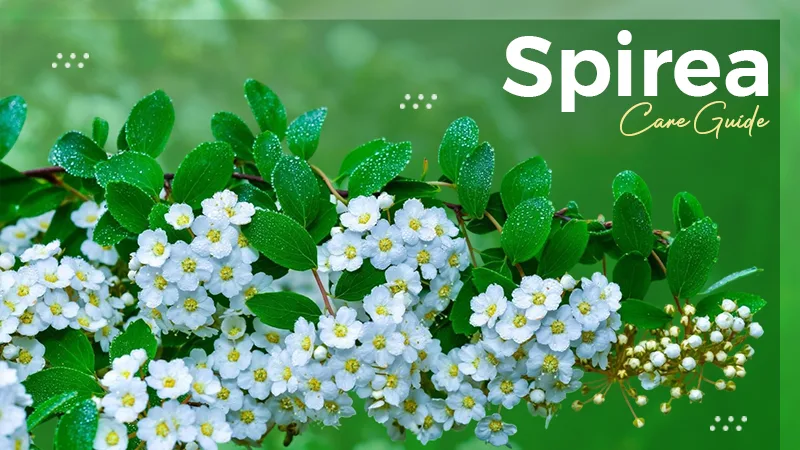
The best time to prune spirea depends on the variety. Usually, the best time to prune spirea is right after flowers fade, in spring or early summer.
Spirea: Taxonomy, Care Tips, Ideal Growing Conditions, & Much More
Author
Annette HirdLast Update
September 30, 2026
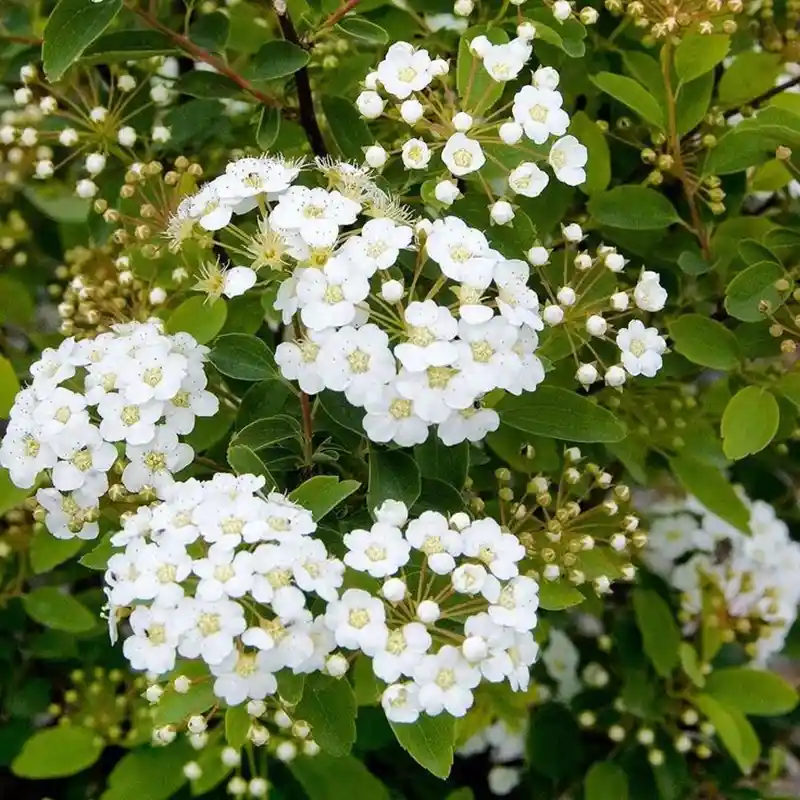
Spiraea genus has around 80 species that are easy to grow and require low maintenance. This genus is popular for its distinct physical features, like each deciduous plant having oval-shaped leaves that are known as lanceolate, and each flower cluster has five sepals and five petals.
Spirea is also popular among gardeners for its beautiful blooms in various hues of pink, white, yellow, and red that create beautiful landscapes and also attract pollinators.
Read the article to learn more about spiraea spirea taxonomy, care tips, growing process, ideal growing conditions, and much more.
Table of Contents:
Spirea Taxonomy and Ideal Growing Conditions
Spirea belongs to the Rosaceae family and is native to North America and Europe. The plant thrives under full sun and requires moderate watering. The plant creates pleasing foliage combinations with clusters of flowers that bloom in shades of white, pink, red, and purple. This perennial shrub grows up to 20 ft tall, depending on the species.
Have a glance at the table below for a quick taxonomic overview and ideal growing conditions required for spirea to thrive:
| Botanical name | Spiraea spp. |
| Common name | Spirea |
| Kingdom | Plantae |
| Order | Rosales |
| Family | Rosaceae |
| Genus | Spiraea |
| Native area | Europe, North America |
| Season of interest | Spring and summer |
| Hardiness | 4 to 8 USDA Zones |
| Light Requirements | Full, direct sunlight |
| Maintenance | Low |
| Type | Showy, perennial shrub |
| Flower colour | White, pink, red, and purple |
| Soil | Well-drained, rich loamy soil with neutral pH levels |
| Water Requirements | Moderate |
| Mature size | 1 to 20 ft tall, depending on species |
| Fertilizers | Once a year |
| Toxicity | Generally non-toxic to both humans and pets |
| Tolerant | Hardy survivor: can survive in a wide range of soil conditions |
Read more: 20 Stunning Flowers That Start With the Letter P (With Pictures & Facts)
How to Care for Spirea?
It’s essential to research the specific variety you plan to plant, including its care needs and required conditions. Here are some common care tips that can be helpful for the healthy growth of all varieties:
- Choose a location that receives full sunlight.
- The plant must be grown in soil with a neutral pH level.
- Feed spirea with fertilisers in early spring every year. The most suitable ones are slow-release fertilisers.
- Ensure that the soil dries out evenly between two watering sessions, once established. During the growing season, water the soil regularly to keep it moist and not soggy.
- Prune the old wood after flowering finishes for the season. This improves air circulation around the plant.
Did you know?
S. japonica is considered invasive in North Carolina, New Jersey, Tennessee, Virginia, Kentucky, Pennsylvania, and Maryland. The plant is known to be a threat to native plants because it can easily take over the natural landscape, preventing the natives from thriving.
Read more: Everything You Need to Know About Cosmos Flower: From Ideal Growing Conditions to Pests & Problems
How to Grow Spirea?
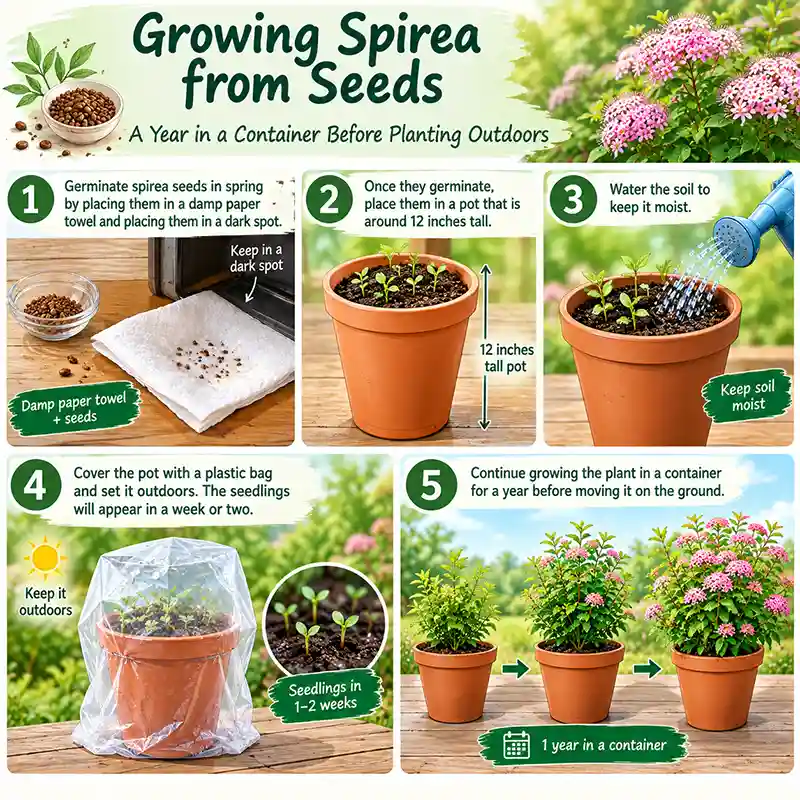
Growing spirea from seeds can take up to a year of growing in a container before moving the plant to the ground. Here are the steps involved in planting spirea from seed:
- Germinate spirea seeds in spring by placing them in a damp paper towel and placing them in a dark spot.
- Once they germinate, place them in a pot that is around 12 inches tall.
- Water the soil to keep it moist.
- Cover the pot with a plastic bag and set it outdoors. The seedlings will appear in a week or two.
- Continue growing the plant in a container for a year before moving it on the ground.
Propagating Spiraea by Ground Layering

To propagate spirea by the ground layering method, here are some simple steps involved:
- Select a long stem that is flexible enough to lie flat on the ground. Ensure that it is attached to the mother plant.
- Scrape the stem around 3 inches to open it a bit and remove the leaves around it.
- Gently bend the stem and pin it to the ground.
- Cover the scraped part with soil and water it.
- Within a few months, the roots will establish.
- Once the roots are established, you can remove it from that area and transplant it to a new location with direct sunlight and neutral soil.
Propagating Spiraea by Hardwood Cuttings
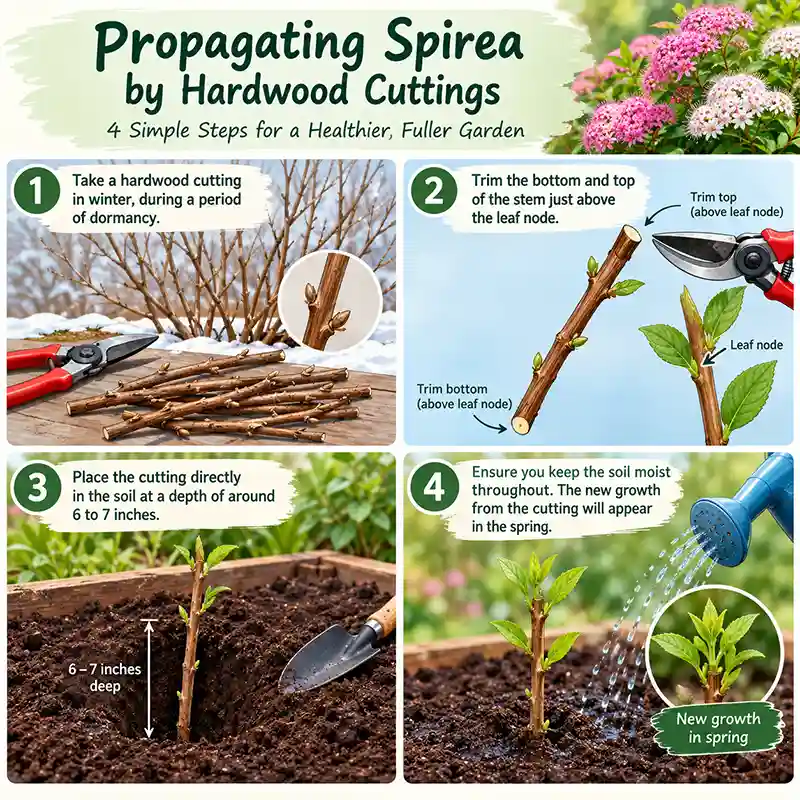
To propagate spirea by hardwood cuttings involves 4 simple steps. These are:
- Take a hardwood cutting in winter, during a period of dormancy.
- Trim the bottom and top of the stem just above the leaf node.
- Place the cutting directly in the soil at a depth of around 6 to 7 inches.
- Ensure you keep the soil moist throughout. The new growth from the cutting will appear in the spring.
Read more: 15 Beautiful Hawaiian Flowers and Their Unique Features
Popular Varieties of Spirea
Spiraea has around 80 species that not only naturally make your garden appealing, but also help attract pollinators like bees, hummingbirds, and butterflies. Below is a list of the most popular varieties among gardeners, along with their image and description:
| Variety and image | Description |
Vanhoutte spirea 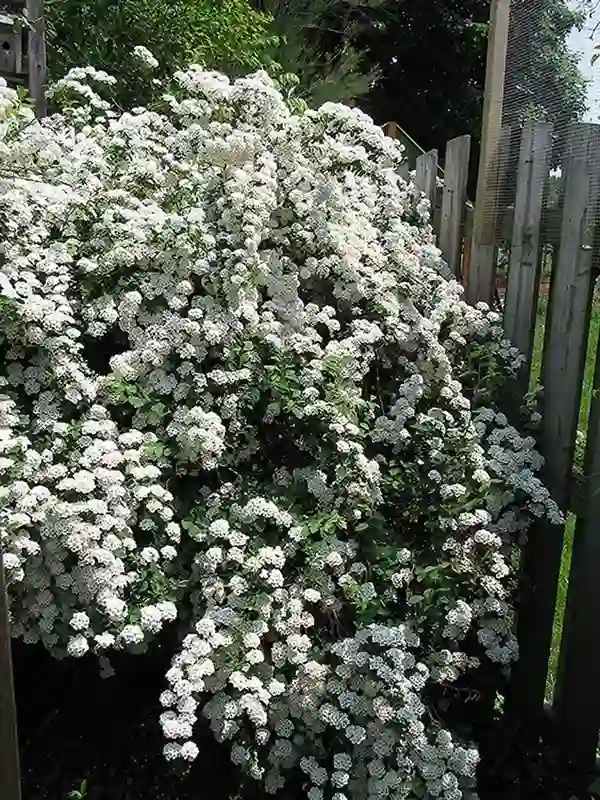 | Vanhoutte spirea is also known as bridal wreath. The plant grows up to 6 ft tall and produces beautiful branches full of white flowers. |
Scalloped spirea 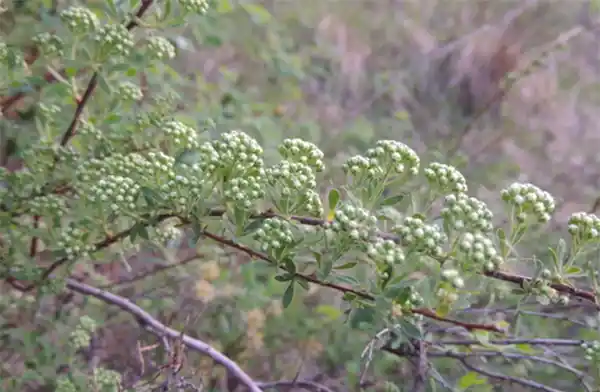 | Scalloped spirea (S. crenata) is a small, tough, deciduous flowering shrub that grows around 2 to 4 ft tall with upright, spreading habit and slender, reddish-brown branches. The plant requires around 6 hours of direct sunlight. |
Japanese spirea 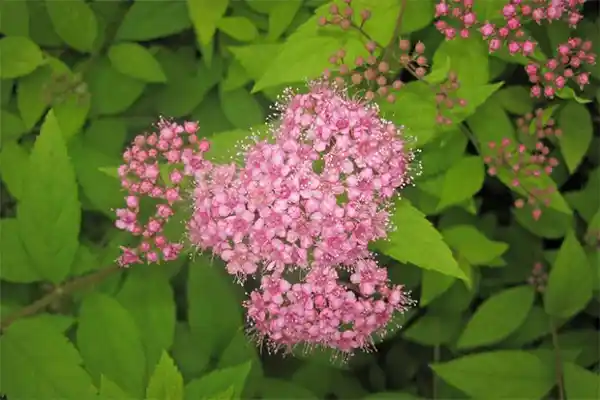 | Japanese spirea (S. japonica) has variable sizes. It typically grows from 2 to 3 ft. tall. It is native to Japan, China, and Korea. |
Asian meadowsweet 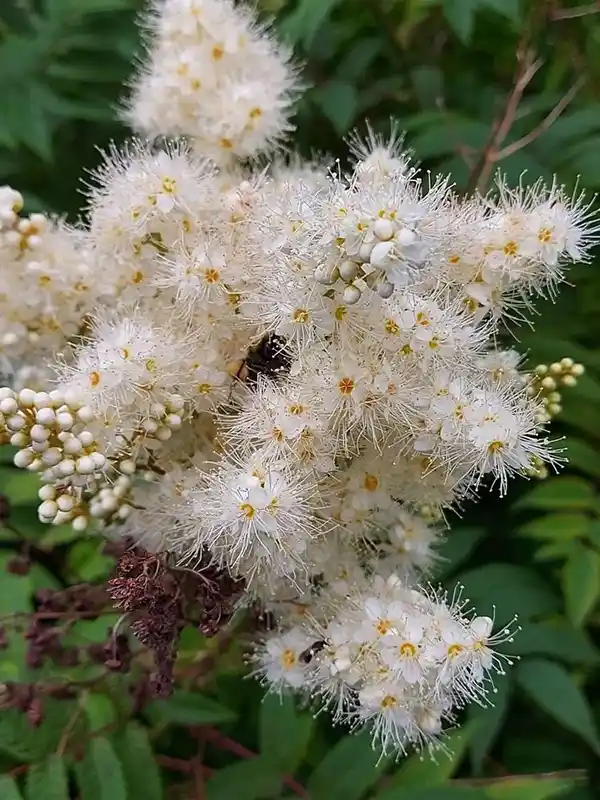 | Asian meadowsweet (S. trilobata) is also known as a three-lobed spirea. It is a woody deciduous shrub that grows around 3 to 4 ft. tall. The plant loves full sun and is easily grown in average, acidic medium to wet soil. |
Did you know?
- Spirea shrubs can thrive for many years under the right conditions and can become a long-term garden friend.
- ‘Bridal wreath’ got its name from its cascading white flowers.
- Spirea is known to be one of the erosion controllers. The plant can develop strong, fibrous root systems that help in keeping the land stable while anchoring the soil on slopes.
Read more: Pink Paradise: 30 Beautiful Flowers to Embellish Every Garden
Pests and Problems Associated With Spirea
Aphids and spider mites are the two common pests that might attack your plant. They can be removed using a spray of neem oil or any horticultural oil. Further, the plant can also get attacked by powdery mildew if it is not planted in direct sunlight. The best way to get rid of powdery mildew is by planting them in sunlight.
There are two common problems that are associated with the spirea plant: root rot and white spots on leaves. To cure root rot, avoid overwatering the plant, improve drainage, and let the soil dry out between two watering sessions.
White spots on leaves can signal poor air circulation, humid conditions, and too much shade. Improve the plant’s environment and treat the plant with a fungicide.
Read more: Best Companion Plants for Peppers, Peppers Growing Process, Care Tips, & Much More
Takeaways
Spirea is a perennial shrub that can live for years with minimal care and an easy growing process. The plant blooms in various hues that help attract pollinators. This plant is native to Europe and North America and should be planted just after the last frost in spring or right before the first frost in fall by using seeds, hardwood cuttings, or the ground layering method.
The plant offers around 80 species to choose from according to your location and weather conditions. Next time, if you are planning to plant spirea, make sure to choose the one that is suitable for your location.
Happy planting!
FAQs
When to prune spirea?
How to care for Spirea?
One of the most essential spirea care tips involves the location of planting. Plant spirea in a location that receives direct sunlight.
Does spirea prefer sun or shade?
Spirea thrives under full sun.
How long does spirea bloom?
Depending on the variety, spirea blooms from 2 weeks to several months.
Sources
Spiraea L.: Plants of the World Online (Kew Science)
Spirea: Britannica
Latest Blog