It can live for about 10 years if kept in the proper growing conditions.
Creeping Jenny (Moneywort): Planting, Care, Propagation, and Types Explained
Author
Annette Hird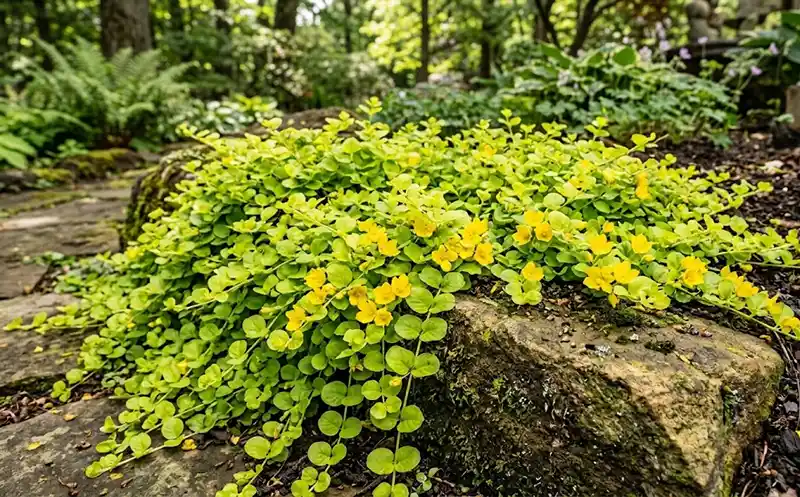
Creeping Jenny, also known as moneywort, is a low-growing perennial. It has bright, small yellow flowers and leaves that are shaped like coins. As a member of the primrose family, this plant is considered invasive, as it can quickly take up a large area in the garden. Therefore, it is better to grow it in pots to control its growth.
If you are looking to elevate the look of your gardens, pots, or even aquariums with this plant, keep reading this article to understand its planting, propagation, and care measures.
Table of Contents:
Creeping Jenny at a Glance: Quick Information Table
The creeping jenny plant is an evergreen groundcover that is native to Europe and temperate regions of Asia. Belonging to the Primrose family, the plant can grow up to 2-4 inches tall and 12-18 inches wide.
Here is information about this groundcover, including its taxonomy and native range:
| Scientific name | Lysimachia nummularia |
| Common names | Creeping Jenny, moneywort, herb twopence, twopenny grass |
| Kingdom | Plantae |
| Order | Ericales |
| Family | Primulaceae (Primrose family) |
| Genus | Lysimachia (Loosestrife) |
| Plant type | Evergreen ground cover |
| Mature size | 2 to 4 inches tall and 12 to 18 inches wide |
| Hardiness zones | USDA zones 4-9 |
| Native range | Asia and Europe |
Did you know?
According to Invasive.org, creeping jenny is an invasive species in Massachusetts, New Hampshire, Michigan, Connecticut, Wisconsin, Kentucky, Oregon, Virginia, West Virginia, Rhode Island, and Maryland.
Planting Steps of Creeping Jenny
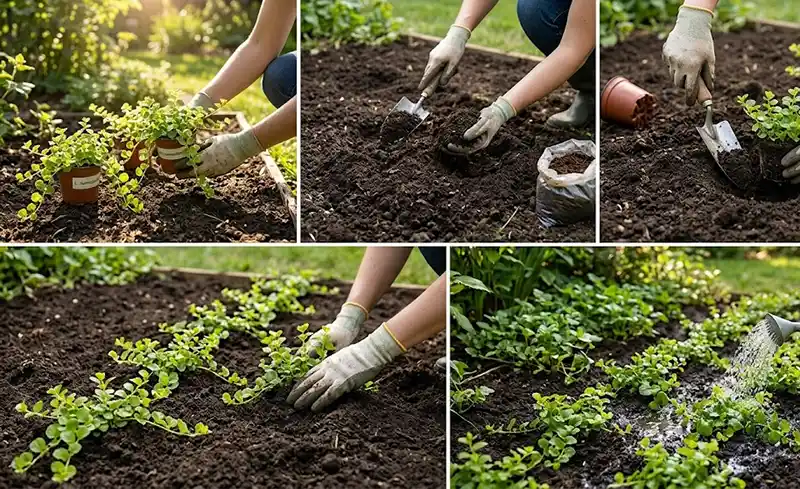
Planting Lysimachia Moneywort is simple and beginner-friendly. It is great to start a garden from scratch due to its fast coverage. For this, you can buy the nursery plants and plant them in a location that receives partial shade to full sun. Space them properly to create ground cover and ensure adequate moisture until the roots develop.
Here are the planting steps to follow:
- Choose the right location: Select a spot that gets partial shade to full sun. If you live in a hotter climate, ensure a bit of afternoon shade to prevent leaf scorching.
- Prepare the soil: Lysimachia nummularia is not very picky about the soil type, but it does best in rich, moist, and well-draining soil. If you have heavy clay soil, consider mixing it with compost.
- Dig a hole: Next, dig a hole twice as big as the plant’s root ball and set the plant in it. Match the same depth it was growing at before.
- Space properly: Space the plants about 12-18 inches apart if you want to grow a ground cover. Fill the remaining space with soil and tap gently.
- Water thoroughly: Water thoroughly after planting. Keep the spot well moist until the roots settle.
Extra Tip
Lysimachia creeping jenny is considered invasive in several places. It is possible that it won’t be available in the nurseries. However, its “Aurea” variety that have chartreuse foliage is not as invasive as the green one.
Creeping Jenny Care Essentials
Creeping jenny is a lovely ornamental plant for backyard design, water gardens, and even containers. The groundcover can thrive in partial shade to full sun and needs adequate watering. It is low maintenance and is adaptable to regional humidity and moderate temperatures. Though the main problem the gardens still face is that it spreads rapidly.
Let’s see the essential measures to care for creeping jenny:
Sunlight Requirements
Creeping Jenny Lysimachia can grow well in both direct sunlight and partial shade. Interestingly, the leaf colour differs depending on the sun exposure. It stays golden yellow in full sun and turns chartreuse green in partial shade. The afternoon shade can also lead to leaves blanching.
Watering Needs
Nummularia Lysimachia is a water-loving evergreen ground cover. Keep the soil well moist and don’t let it dry out. If planning to plant it in the garden, you can select a spot that receives rainwater, but make sure to avoid soggy conditions.
You can also plant it in a container and water it two to three times a week. In a hot climate, consider watering the plant daily.
Extra Tip
Always ensure that the water that is naturally collected in the garden does not contain any hard chemicals. It can cause damage to the plant.
Soil Preference
Creeping Jenny ground cover prefers moist but well-draining soil. This is the reason it is commonly found along the wet riverbanks. Avoid using sandy soil and rocky ground if planted outside. If planting in a container, you can use the regular potting mix and mix in some peat moss to enhance moisture retention.
Temperature and Humidity
Moneywort creeping jenny thrives best in 15°C to 24°C. The plant is a perennial in USDA zones 4-9. It may die out in colder climates but returns to life in the spring season. If it is watered properly, the hot climate does not cause any harm to the plant. Also, it can adapt well to the regional humidity levels without any worries as long as it is kept well moist.
Fertilizer
When the plant is well established, you can fertilize it in the spring with a 10-10-10 solution. For the right usage, refer to the amount stated on the product label.
Pruning
As this plant spreads fast, you will have to prune it to control its growth. Before winter, cut back any dead vines and don’t let them get too dense. Trimming will help maintain the airflow and keep the pests away.
After every blooming season, deadhead the yellow flowers to prevent the seeds from spreading wildly and leading to unwanted growth.
Extra Tip
Creeping Jenny is usually aggressive enough to crowd out most of the weeds. However, it’s better to remove it to minimize the competition for nutrients and water.
Propagation of Creeping Jenny
Creeping jenny is easy to propagate by stem cuttings and the root division method. You can propagate the cuttings in water or soil. In the root division method, lift the entire plant and divide it into smaller sections. Plant them in different locations. This plant can also naturally spread by seeds and rhizomes.
Here are the steps for the stem cuttings and root division method:
By Stem Cuttings
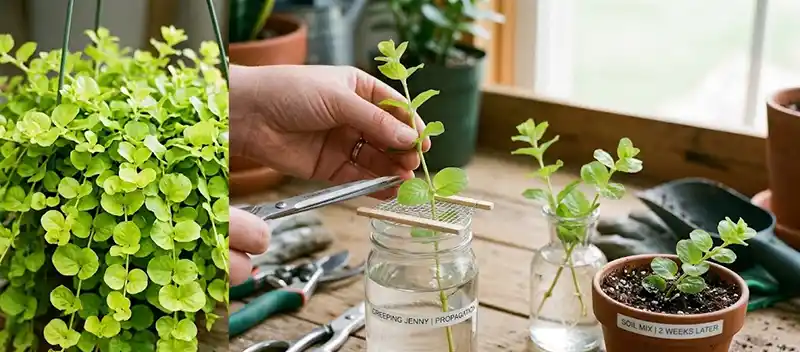
- Take a 2-inch-long cutting by snipping it with sterilised scissors or pruners below a bud or a leaf.
- Put that cutting in water or the potting soil.
- If you are rooting it in water, use filtered water at room temperature. Use a clear glass container to monitor the root development. Keep it in bright indirect light for about two weeks. As the roots form, transfer it to the moist soil.
- On the other hand, if you are rooting it in soil, dip the end in rooting hormone. Put the cutting in moist potting soil. Cover it with plastic and keep the pot in bright indirect light. Remove the plastic once there is new growth.
By Division
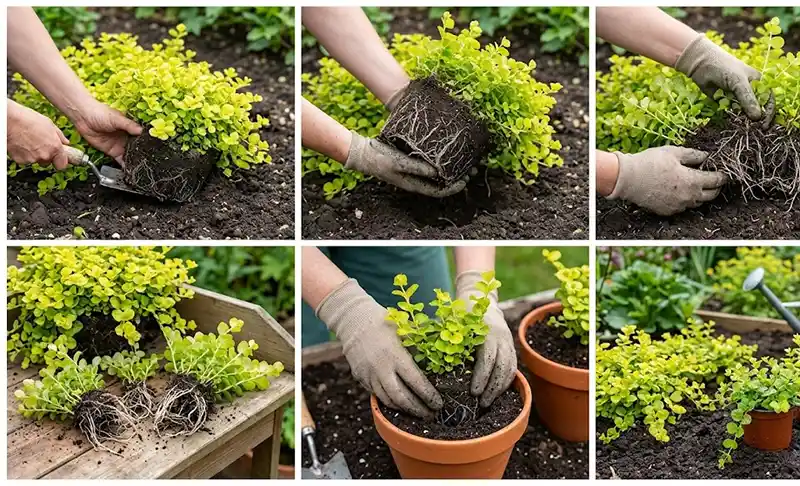
- Using a garden trowel or spade, lift the mature plant, keeping the root ball intact.
- Separate the stems with your hands. Ensure that every new portion has a good portion of roots and growing shoots.
- Transplant the divided sections in the new area or a container with potting mix.
- Keep the soil well moist, and within 3-6 weeks the new growth will appear.
You can also propagate the plant by sowing creeping jenny seeds, though it is not the preferred method as it provides slower results.
Did you know?
As mentioned in the book Gerard’s Herbal (first published in 1597), creeping jenny was used to treat children with “Chin-cough”, which is known as whooping cough in today’s context. The phrase “chin-cough” or “chinnie” is believed to have evolved into its name “jenny”.
Types of Creeping Jenny Plants
Creeping Jenny plants have a few different varieties based on the leaf colour and growth habit. Aurea and Goldilocks creeping jenny plant are the only commonly grown species.
Take a look below to understand its types:
| Type | Key Points |
Golden Creeping Jenny (Lysimachia nummularia ‘Aurea’)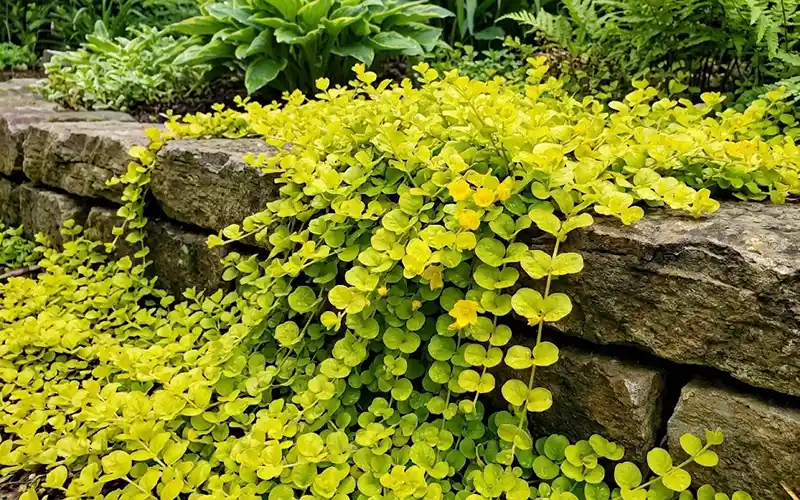 |
|
Standard Green Creeping Jenny (Lysimachia nummularia)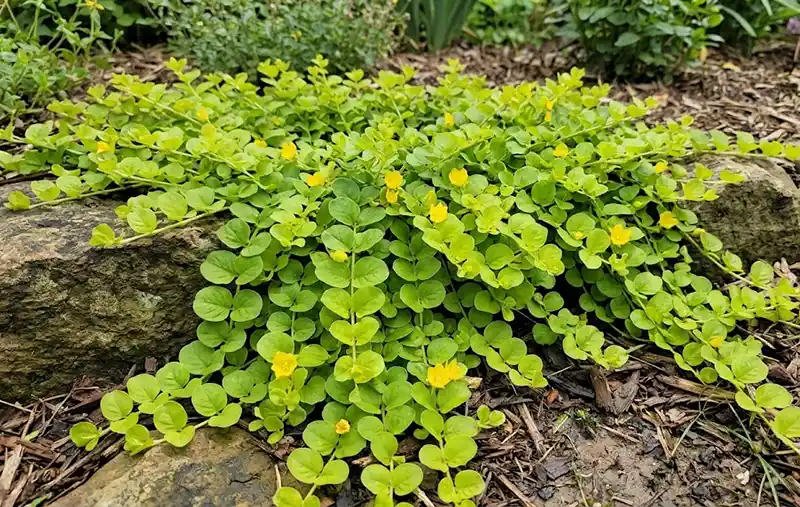 |
|
Goldilocks Creeping Jenny (Lysimachia nummularia ‘Goldilocks’)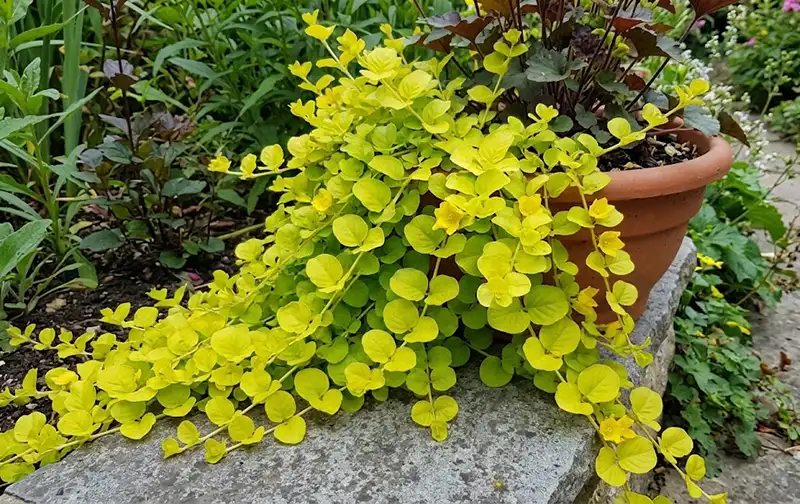 |
|
Golden Globes Creeping Jenny (Lysimachia congestiflora)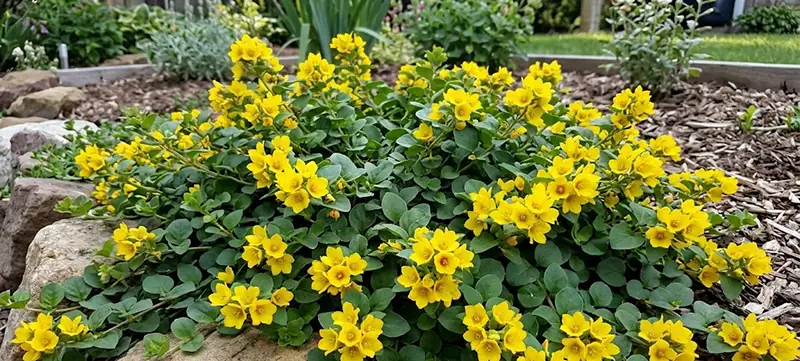 |
|
Pests and Diseases in Creeping Jenny
Creeping Jenny groundcover is usually disease- and pest-free. However, when located in improper conditions, it can suffer from aphids, caterpillars, and snails. It is also susceptible to fungal diseases like southern blight and Phyllosticta leaf spot.
Pest Infestations in Moneywort
| Pests | Signs and Treatment |
Aphids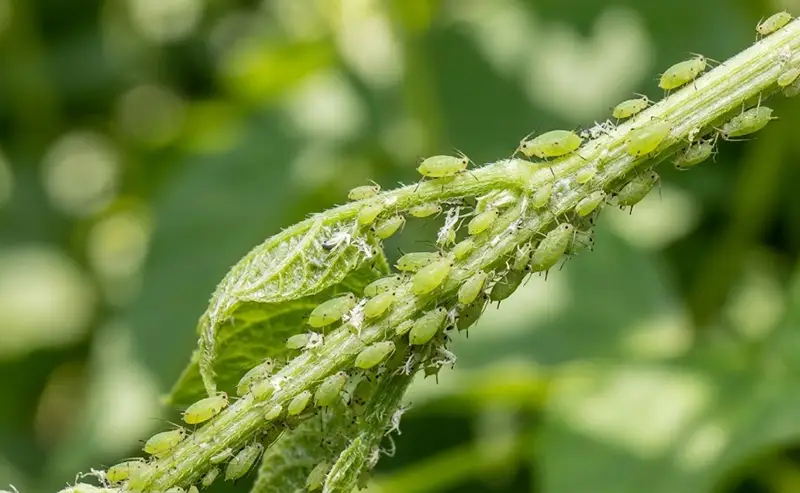 |
|
Caterpillars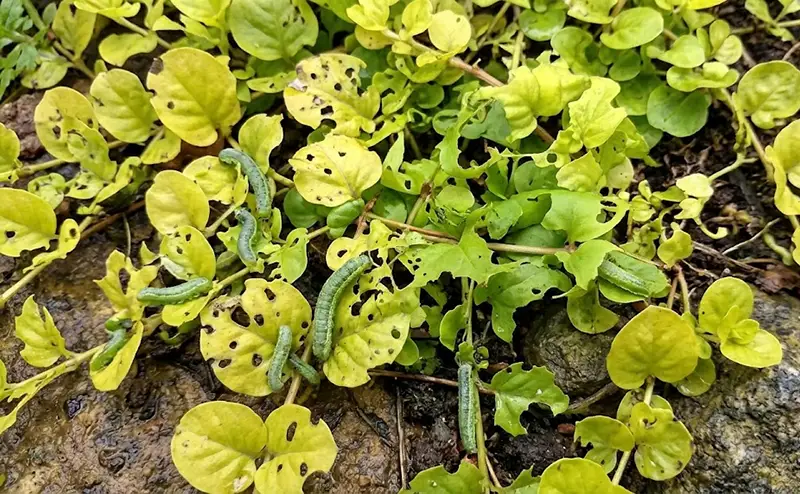 |
|
Slugs and snails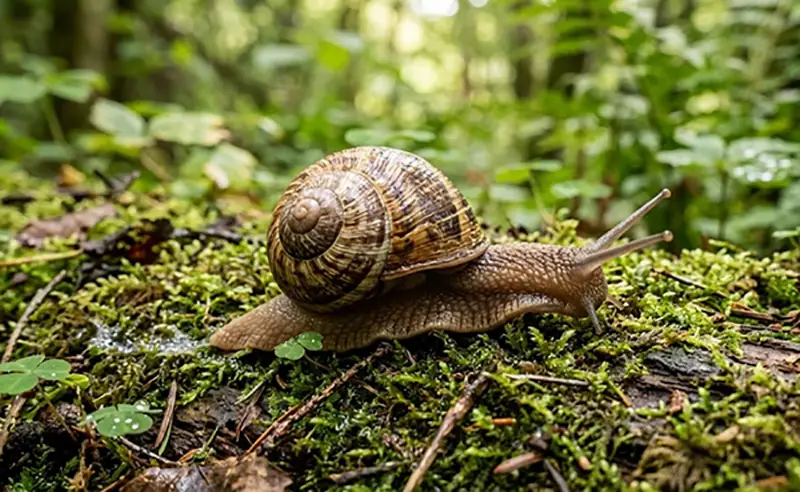 |
|
Diseases in Moneywort
| Diseases | Signs and Treatment |
| Southern blight |
|
| Botrytis blight |
|
| Phyllosticta leaf spot |
|
Creeping Jenny Companion Plants
You can grow companion plants alongside the creeping jenny to enhance the beauty of the landscape. The best companion plants include hosta, sedum, hydrangea, and coral bells that add structure and colour to the gardens.
- Tuberous Begonia: Both plants prefer moist soil and partial shade to full sun. The lime green foliage of moneywort goes well with the rose-like bold blooms of this plant.
- Hosta Plant: The contrasting leaves and structure of this plant and moneywort are great to create visually appealing garden look.
- Sedum Plant: These vibrant succulents can be planted with moneywort for year-round colour.
- Hydrangea: Hydrangea is ideal to add a pop of colour to the landscape when planted with creeping jenny.
- Coral Bells: Coral bells, or heuchera, have vibrant pink and red stalks and flowers. As a result, they are great to add colour and structure to the creeping jenny.
Conclusion
Creeping jenny is a loved ornamental to add a cozy, gathered feel to the outdoors. It’s ideal for busy individuals who want to add greenery to their home with fast growth and easy-to-care-for nature. You may also use it as a spiller plant in hanging baskets or containers. Pair it with the tall flowers to smother this low-growing perennial and elevate the beauty of your garden.
FAQs
How long can creeping jenny live?
Are hostas good companion plants for creeping jenny?
Yes! You can plant hosta with moneywort as they have similar water and sunlight requirements. The contrasting leaves and structure of both the plants add great visual appeal.
Will creeping jenny choke out weeds?
Yes! It has fast and dense growth that can choke out weeds.
Can I grow moneywort in a pot?
Yes! Growing this plant in a pot is actually recommended to control its growth and prevent rapid spreading.
What are good alternatives to creeping jenny?
You can grow creeping thyme or foamflower as an alternative to creeping jenny.
Is creeping jenny a perennial?
Yes, it is a low-growing perennial.
Sources:
creeping Jenny – Britannica
How to grow creeping Jenny – BBC Gardeners’ World Magazine
What can you tell me about the plant called Creeping Jenny? – University of Florida
Creeping jenny – North Wales Wildlife Trust
Latest Blog