Though begonias are known as both annuals and perennials, they are actually tender perennials that live for many years if you care for them properly and get them indoors over winter.
Tuberous Begonia Guide: Everything From Taxonomy to Care Tips
Author
Rashika Gupta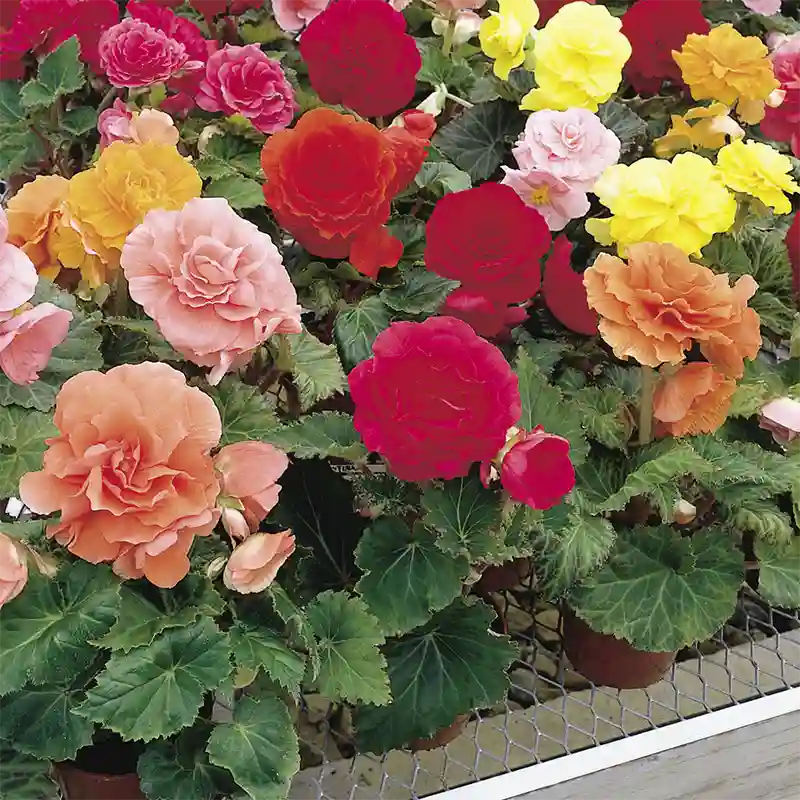
Tuberous begonias are adored for their beautiful flowers, which bloom in various hues of pink, orange, red, white, and multicolour. Begonias are known to have over 300 species in the Begonia genus. These perennials are easy to grow and are low-maintenance plants. It is appreciated by the gardeners for its stunning blooms and incredible versatility. Tuberous can be grown in borders, hanging baskets, or containers.
People often mistake the Tuberous begonia for an annual plant, but it thrives only in winter when kept indoors. The plant has typical foliage featuring glossy, large leaves in various shades of green and, at times, with hints of red or bronze.
Let us now dive further into the plant’s taxonomy, ideal growing conditions, care tips, different varieties and much more.
Table of Contents:
Taxonomy and Ideal Growing Conditions For Tuberous Begonia
Begonia x tuberhybrida belongs to the cultivars named for the tubers that lie dormant after the plant dies in the winter season; further, it regrows in spring. Tuberous begonia can be directly planted outdoors in spring. The plant might bloom for the first time in late summer. For more general information, here is the taxonomic overview and ideal growing conditions of the plant:
| Botanical name | Begonia x tuberhybrida |
| Kingdom | Plantae |
| Order | Cucurbitales |
| Family | Begoniaceae |
| Genus | Begonia |
| Native area | Tropical regions of South America and Southern Africa |
| Growth habit | Upright or trailing |
| Hardiness | 09 to 11 USDA zone |
| Light Requirements | Shade to partial sunlight |
| Maintenance | Low |
| Plant type | Perennials |
| Flower colour | Blooms in hues of pink, yellow, orange, red, white, and bicolours. |
| Foliage | Pointed leaves with serrated edges, in various shades of green, maroon, or chocolate. |
| Soil | Well-drained, rich soil or potting mix with good moisture retention. |
| Water Requirements | Tuberous Begonias require regular watering during the spring and summer seasons and little water during the winter season. The plant is not drought-tolerant and therefore requires moist soil. Note: Do not overwater the plant, as it can cause root rot. |
| Mature size | Up to 18 inches tall and 24 inches wide |
| Fertilizers | The Tuberous Begonias must be fertilised regularly as they are heavy feeders. Apply slow-release fertiliser at the time of planting and occasionally feed with diluted liquid fertiliser during the peak bloom period. |
| Toxicity | It is considered mildly toxic to pets and humans if ingested. |
Read more: Lucky Bamboo Plant: Growth, Care Tips, and Symbolism Explained
Popular Varieties of Tuberous Begonia Plant
The tuberous begonia plant comes in more than 300 species that beautifully thrive in tropical and subtropical regions. Below, discover the various types of begonia with their description for better understanding.
| Variety | Description |
‘Bedding’ Begonia
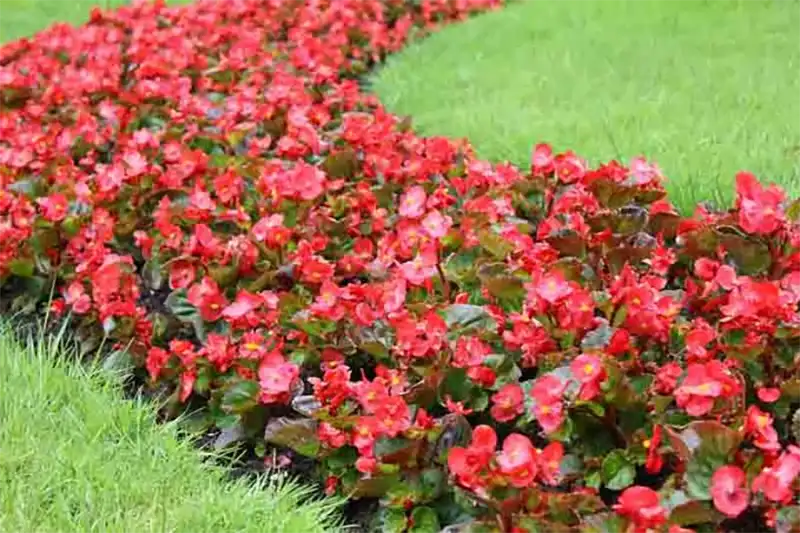 | ‘Bedding’ begonia has vivid yellow splotches on bright green leaves. The plant falls under the category of wax begonia and has fibrous roots. It is a hybrid plant and generally grows from 6 to 12 inches. |
Solenia ‘Dusty Rose’ Begonia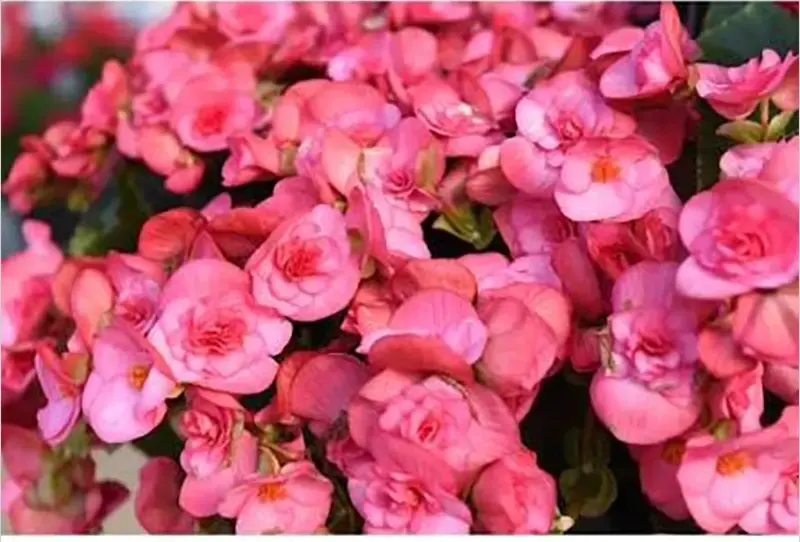 | Solenia ‘Dusty Rose’ Begonia is a begonia x tuberhybrida that blooms at the end of the stem. The plant needs full sun to partial shade and grows around 8 to 12 inches. |
‘Richmond’ Begonia
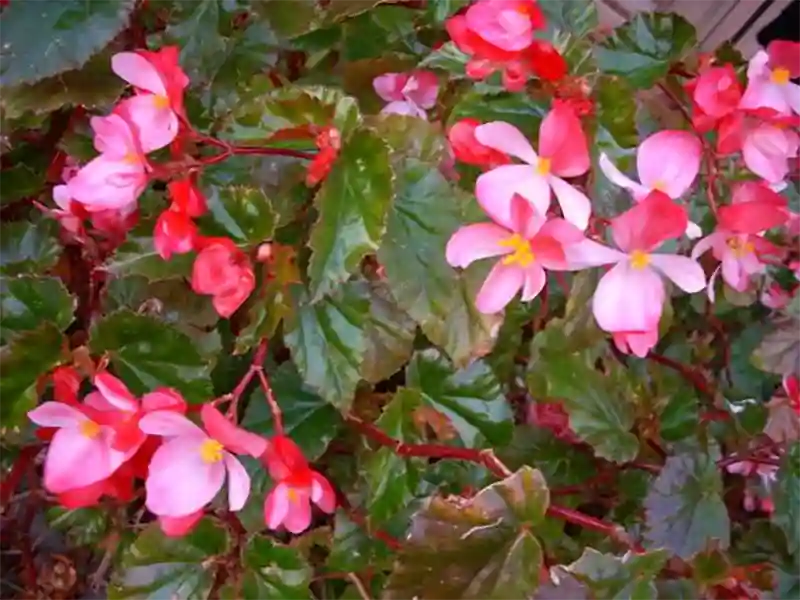 | Richmond is known for its colour-shifting property in different light conditions. It grows around 18 to 24 inches and needs proper sunlight to thrive. |
Nonstop ‘Mocca Yellow’ Begonia
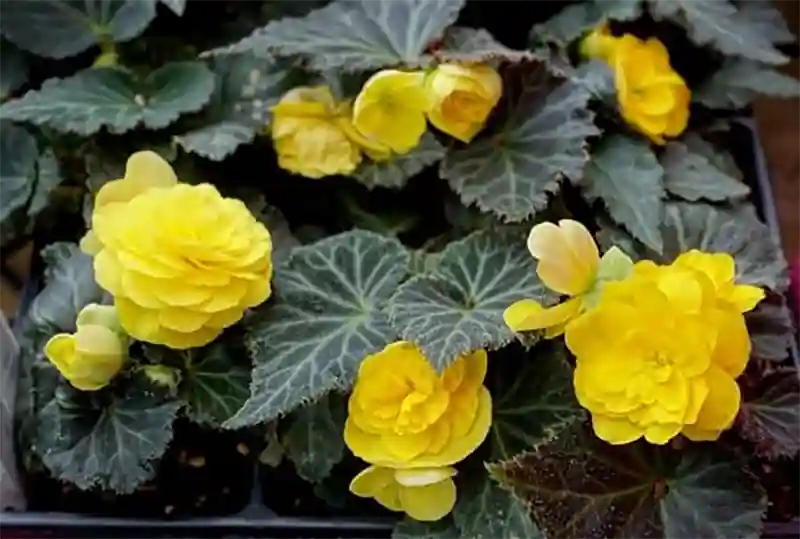 | This variety of begonia belongs to Begonia × tuberhybrida and prefers hot summer regions. The plant grows from 8 to 12 inches and prefers moderate light, water and fertilisers. |
Ambassador Series Begonia
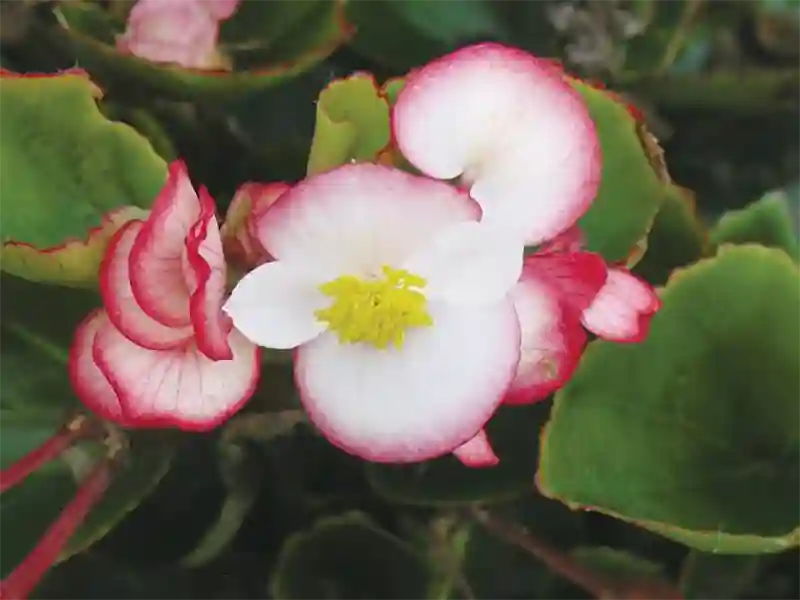 | They have thick, fleshy leaves, which make them perfect for beginners as they are drought-tolerant. The plant grows around 8 to 12 inches and blooms in various hues of red, white, and pink. |
Cocktail Series Begonia
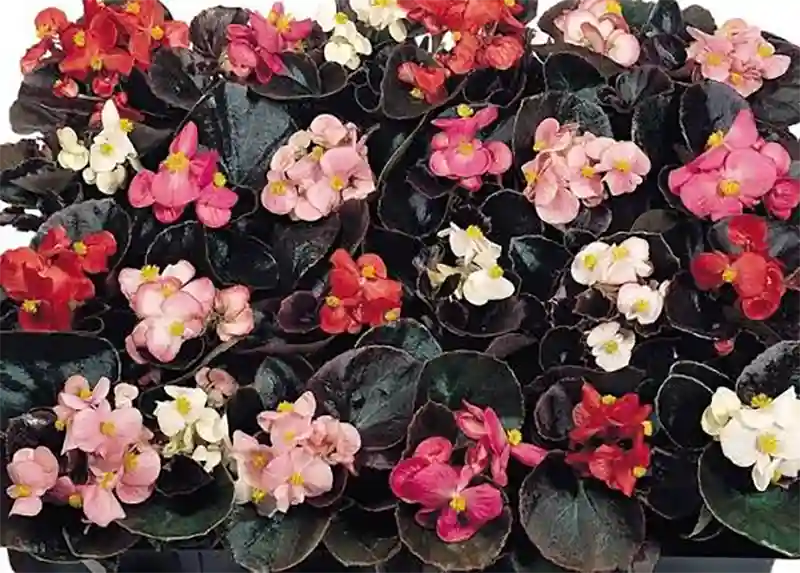 | The cocktail series begonia has dark-green leaves and can be planted in partial or full sunlight. The plant grows around 6 to 8 inches and offers flowers in shades of light pink, white, and red. |
‘Double Up White’ Begonia
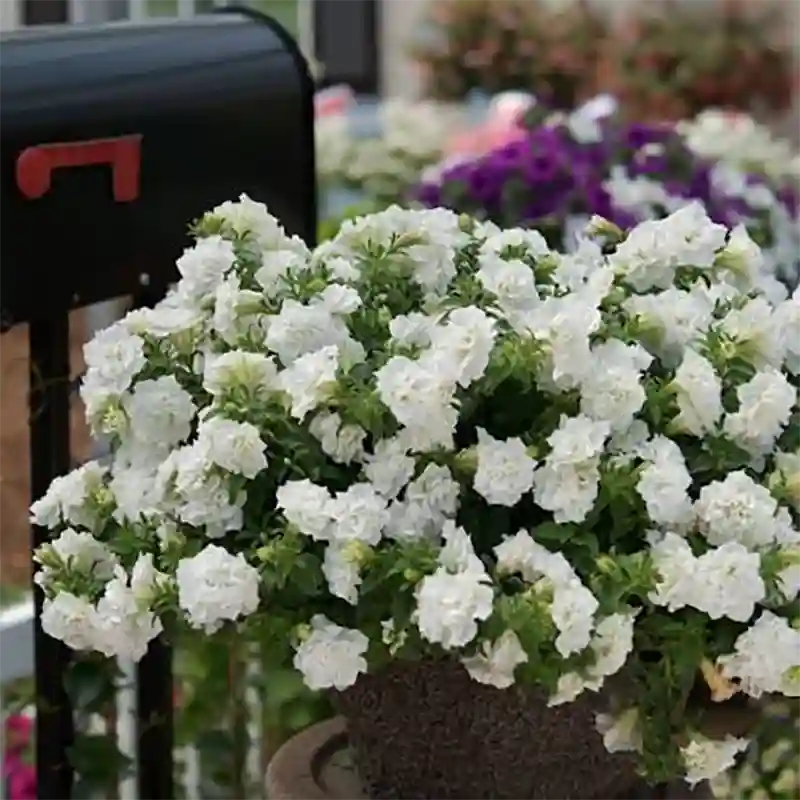 | The ‘Double Up White’ Begonia is a fibrous-rooted wax begonia variety that does not produce seeds. The plant grows up to 12 inches and requires partial shade. |
Rex Begonia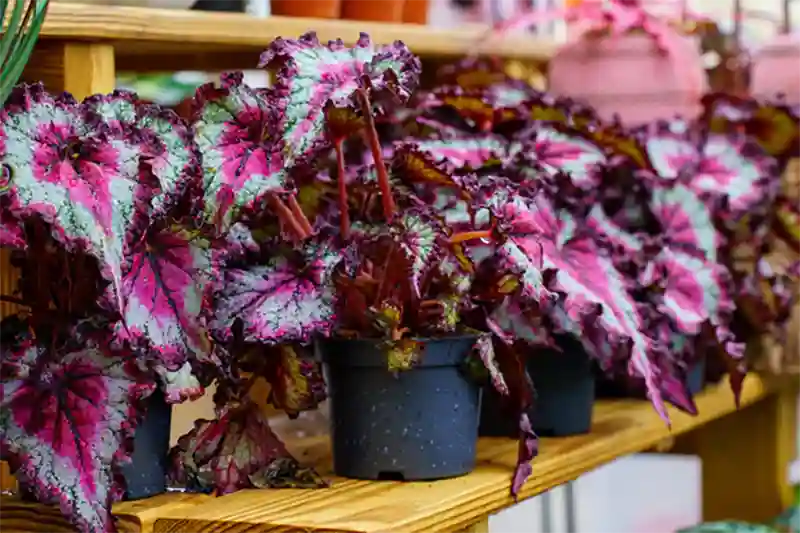 | Begonia rex var. are common houseplants that offer interesting foliage. The plant can grow from 6 inches to 24 inches depending upon the variety. |
Polka dot Begonia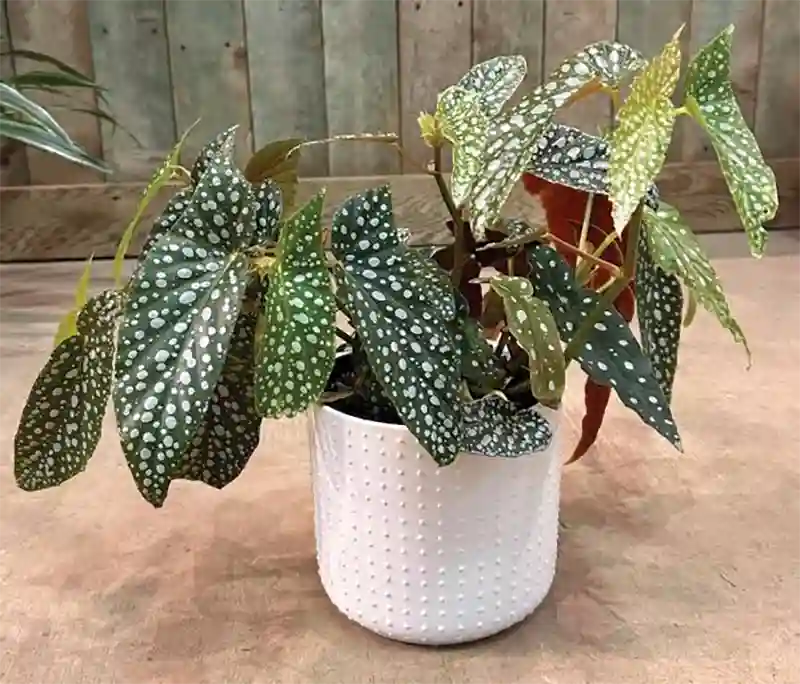 | Begonia maculata is another famous indoor houseplant with foliage of dark green leaves and light polka dots. The plant grows around 36 inches tall and 12 to 18 inches wide. It requires full to partial sunlight. |
Read more: Peperomia Plant: Care Tips For A Healthy Radiator Plant
How to Grow a Tuberous Begonia?
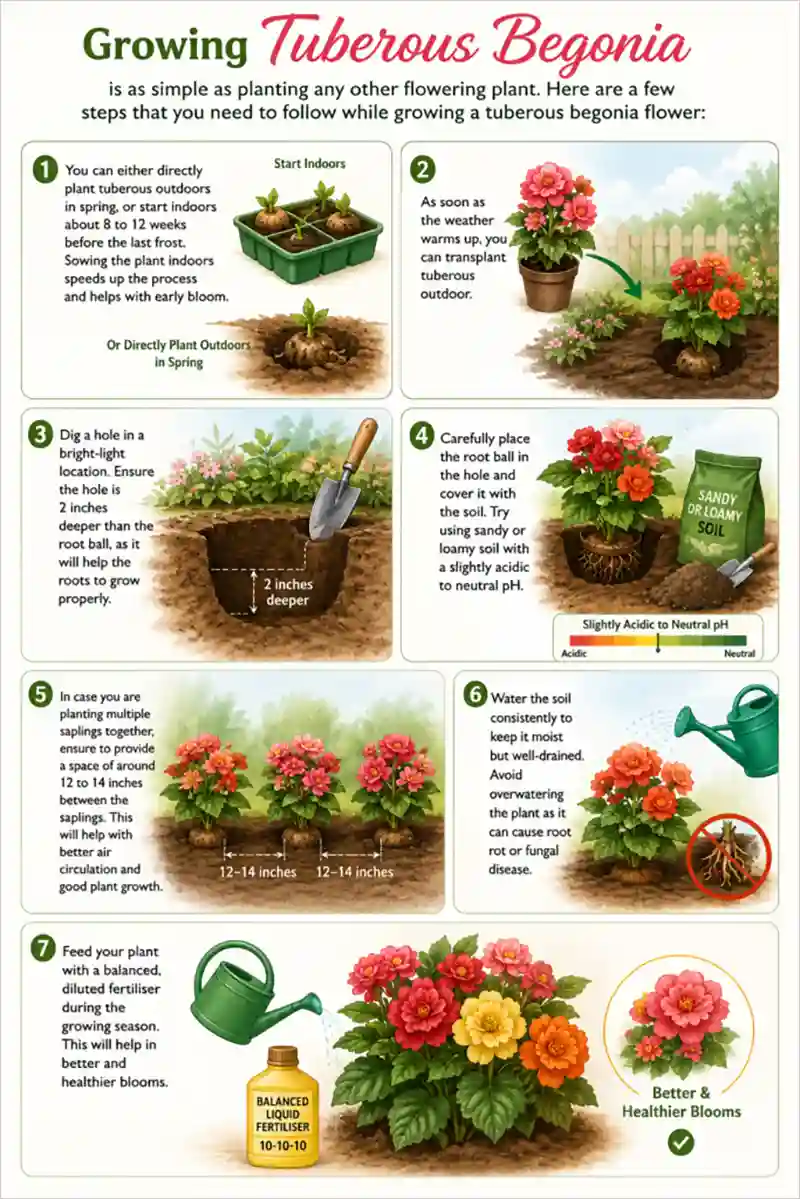
Growing tuberous begonia is as simple as planting any other flowering plant. Here are a few steps that you need to follow while growing a tuberous begonia flower:
- You can either directly plant tuberous outdoors in spring, or start indoors about 8 to 12 weeks before the last frost. Sowing the plant indoors speeds up the process and helps with early bloom.
- As soon as the weather warms up, you can transplant tuberous outdoor.
- Dig a hole in a bright-light location. Ensure the hole is 2 inches deeper than the root ball, as it will help the roots to grow properly.
- Carefully place the root ball in the hole and cover it with the soil. Try using sandy or loamy soil with a slightly acidic to neutral pH.
- In case you are planting multiple saplings together, ensure to provide a space of around 12 to 14 inches between the saplings. This will help with better air circulation and good plant growth.
- Water the soil consistently to keep it moist but well-drained. Avoid overwatering the plant as it can cause root rot or fungal disease.
- Feed your plant with a balanced, diluted fertiliser during the growing season. This will help in better and healthier blooms.
Did you know?
Tuberous begonias are monoecious, meaning they bear both the male and female blooms on a single plant.
Read more: Essential Aloe Plant Care Tips to Keep Your Plant Green, Plump, and Problem-Free
Tuberous Begonia Care Tips
Caring for tuberous plants is very simple. All you need to keep in mind are a few simple things, which include:
- Begonias tuberous require well-drained, moist soil. Ensure to water the plant twice or thrice a week and reduce watering during winter.
- Begonias require regular fertilisation, especially during the blooming season. Apply slow-release fertiliser at the time of planting and further use diluted liquid fertiliser during the peak blooming season.
- In spring, you can propagate the plant by stem cutting. This will help in better bloom.
- Over winter, bring your plant indoors as it will thrive better in a warm space.
Read more: January Birth Flower (Carnation and Snowdrop): Symbolism, History and Growing Conditions
Common Pests and Problems Associated With Tuberous Begonia
The common pests that might attack your begonia plant include powdery mildew, botrytis cinerea, and pythium, which are fungi, and insect pests are mealybugs, thrips, aphids, snails and slugs. To avoid these fungi and insect pests, using neem oil or any other organic pesticide is found to be beneficial. For snails and slugs, you can handpick them or use a strong spray jet of water.
The common problems associated with tuberous begonia are:
- Root rot, which is caused by overwatering, might be the cause of death of the plant.
- Opposite to overwatering is underwatering, which might again result in the plant’s death, as the tuberous begonia is not a drought-tolerant plant.
- Another major problem associated with this plant is that people often assume it is an annual plant and leave it outdoors in winter. This causes death, but can be avoided if the plant is carried indoors in winter.
Read more: Tradescantia Plant Guide: Taxonomic Overview, Ideal Growing Conditions, Care Tips, & Much More!
Takeaways
Tuberous begonias are perennials that can tolerate both direct and indirect sunlight, but they thrive best in partial shade. The plant blooms in different hues of pink, orange, white, and red. The tubers cannot survive in cold temperatures, but if brought inside during the winter season, the plant blooms back in spring.
Caring for a begonia is not very difficult, but it is essential and makes the difference in a plant’s life. If you are planning to plant Tuberous begonias, this spring is the perfect time to grow them outdoors, and 8 to 12 weeks before the winter ends is best for sowing the seeds indoors for early bloom.
FAQs
Are begonias annuals or perennials?
Do Tuberous Begonias attract pollinators?
No, Tuberous begonias are not known as pollinator-friendly plants. This is because of their larger double flowers that make it difficult for the pollinator to access the nectar.
What is the blooming season for Tuberous Begonias?
Tuberous Begonias bloom from early summer to the first frost in the fall.
What is the most suitable soil for begonias tuberous?
Tuberous Begonia prefers loam and sandy soil with acidic or neutral soil pH levels.
Are begonias heavy feeders?
Yes, tuberous begonias require fertilising every two weeks during the growing season. Use balanced fertiliser to promote blooms.
Sources:
Tuberous Begonia : iNaturalist
Latest Blog