This bush typically blooms once every year with yellow flowers in the early spring.
Forsythia (Golden Bells): How to Grow and Care for This Spring-Blooming Shrub
Author
Cerina TriglavcaninReviewed By
Cody Allison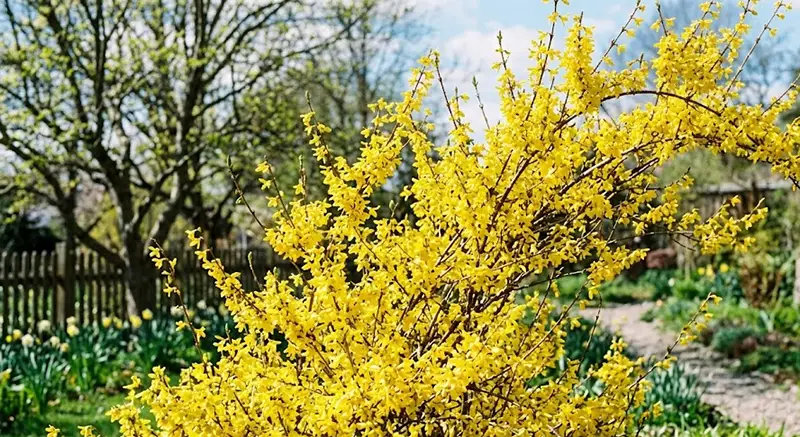
Forsythia, or golden bells, is one of the earliest flowering shrubs that is loved for its golden yellow flowers. As a true sign of spring, it has an upright or gracefully arching growth habit. You can use this versatile plant in a variety of ways. It is hardy in most of the climates and tolerant of an array of growing conditions.
Whether you are planning to use it in foundation planting, borders, containers, hedging, or screening, keep reading ahead to learn about forsythia planting and care.
Table of Contents:
Forsythia Bush at a Glance
Forsythia is a popular shrub that belongs to the olive family. It typically grows 2-10 feet tall and wide, though some varieties can reach up to 20 feet. This deciduous shrub is non-toxic and safe for household pets like cats and dogs.
| Scientific name | Forsythia spp. |
| Common names | Forsythia, golden bells |
| Order | Lamiales |
| Family | Oleaceae (Olive family) |
| Genus | Forsythia Vahl |
| Plant type | Shrub |
| Mature size | 2 to 10 feet tall and wide |
| Bloom time | Early to mid spring |
| Hardiness zones | USDA zones 5-8 |
| Native range | Asia |
| Toxicity | According to ASPCA, it is non-toxic to cats, dogs, and horses |
Did you know?
The forsythia genus is named after Scottish botanist William Forsythe.
How to Plant Forsythia
Plant forsythia plant in spring or fall. Choose a location that receives at least six hours of daily direct sunlight. Don’t grow it in an area that collects water or remains soggy after rains. Buy the sapling from a nursery or online store and plant it in your garden at the same depth it was in the pot.
Here’s everything you need to know for planting a forsythia:
When to Plant
When to plant forsythia? The best time to plant this shrub is spring or autumn to avoid both heat and cold stress. However, it can be planted at any time of the year as long as the soil is not too dry, frozen, or too wet.
Pro Tip
If the bush is bare root, plant it during November to February. Plant it immediately after it is delivered.
Where to Plant
Choose a spot that receives full sun exposure to partial shade. Also ensure that there is well-draining soil that stays well moist. Forsynthia is versatile and can be added creatively in the garden. You can use it in mixed borders, train against a wall, or grow it as a standalone specimen.
Pro Tip
Avoid planting forsythia bushes too close to buildings and structures. As they grow, there is a risk that they interfere with pathways or foundation structures. Also, don’t plant them under power lines or too close to the fences, as they may outgrow them.
Steps to Plant Golden Bells

- Step 1: Prepare the planting site by removing any grass debris or weeds. Amend the soil with compost or organic matter to improve its drainage or fertility.
- Step 2: Dig a hole twice as big as the root ball. If you are planning to plant multiple shrubs, space the holes at least 4-6 feet apart.
- Step 3: Gently remove the forsythia sapling from the pot. Loosen the roots if pot-bound to encourage growth.
- Step 4: Place the plant in the hole, ensuring that it is placed at the same depth it was in the pot. Fill the space with more soil and pat down gently.
- Step 5: Water well and keep the soil moist but not waterlogged.
Essential Care Tips for Forsythia
Golden bells need at least six hours of direct daily sunlight, consistent moisture, and well-draining soil to grow optimally. It also benefits from minimal fertilizer and occasional pruning. You can also apply a layer of mulch to support its growth.
Let’s see important care tips for planting forsythia bushes to start a garden from scratch:
Sunlight Needs
Border forsythia needs at least six hours of daily direct sunlight to produce abundant flowers. This can survive in partial shade, but flower production will be affected.
Watering Intake
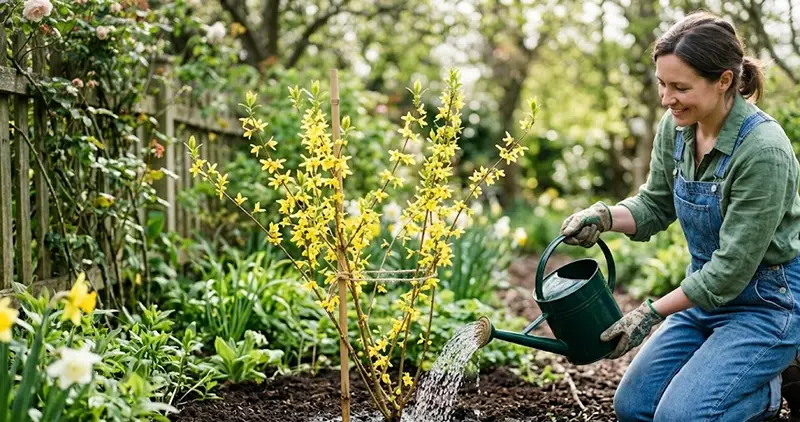
The newly planted forsythia plants need regular watering to get the roots established. In the first season, ensure at least 2 inches of water weekly. Mature ones are somewhat drought-tolerant, though during the dry spells, it’s better to water them deeply.
Soil and Fertilizer
Forsynthia bush prefers loose, well-draining soil, but these plants are tolerant of clay soils. They can do well in both alkaline and acidic soils. Amend it with rich organic matter if the soil is compacted to ensure good drainage.
The bush does not require much feeding. It’s better to avoid fertilisers in the first year if it is looking healthy. After that, you can apply a balanced slow-release fertilizer in the early spring to boost growth.
Temperature and Humidity
The plant thrives between 55-70 F, and prefers slightly humid climates. It can tolerate colder temperatures, but prolonged cold conditions can reduce spring flower production. Excessive humidity can increase the risk of fungal diseases.
Pruning
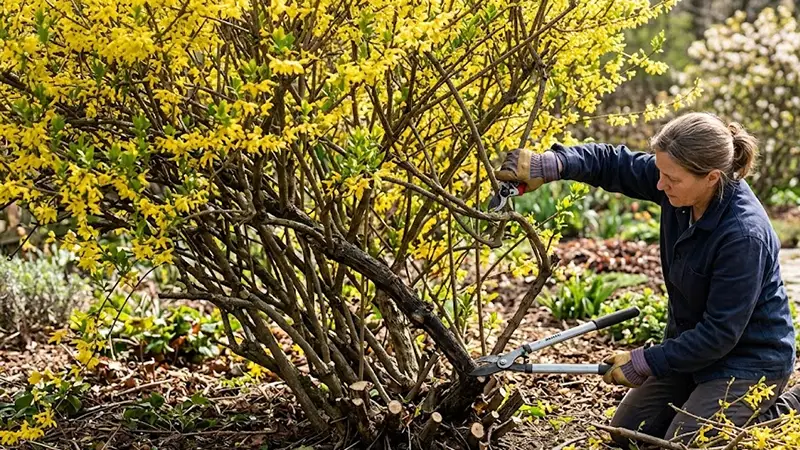
Forsythia flowers bloom on the old wood, so pruning is essential not only for maintaining the plant’s attractive appearance but also for rejuvenating the old shrubs. Prune it just after the flowering season to preserve next year’s blooms. Avoid pruning too late, which can cause the removal of next year’s flower buds. Trim the old thick branches at the base and the branches that are growing out of shape.
Mulching
Apply a layer of mulch around the base to retain soil moisture, regulate its temperature, and suppress the growth of weeds. Spread 2-3 inches of organic matter, including chopped leaves, shredded bark, and wood chips, on the soil in late autumn or late winter.
Pro Tip
Make sure that the mulch does not touch the stem directly. It can lead to pest issues and potential rotting.
Winter Care
Forcynthia does not require winter protection, as the plant will go dormant during this time. It also doesn’t need any pruning or watering during this season. However, it’s suggested to avoid heavy snow load on the branches. Gently shake off the snow to prevent branch damage.
Pro Tip
Don’t cut the bush back for winter care. It will lead to bud loss, and the bush will not flower for the next season.
Propagation Methods of Forsythia
You can propagate a forsythia bush in summer by rooting its softwood cuttings in soil. These shrubs can also be multiplied by root division and layering methods.
Let’s see the steps of propagation for these three methods:
1. By Cuttings
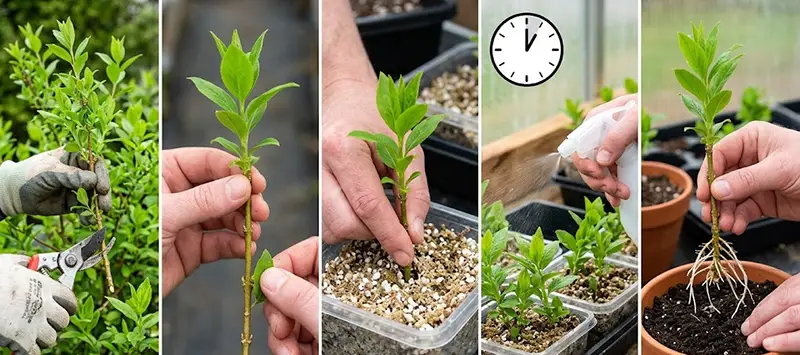
- Take a 4-10 inch long softwood cutting from the plant after the flowering season.
- Remove the leaves from the bottom two inches of the stem.
- Plant the cutting in the container filled with perlite, peat moss, or sand. Bury the cut end with at least one node under the soil line.
- Mist the cuttings regularly for a month until the roots get 1 inch long.
- Once roots are well established, transplant the cuttings into a larger pot.
You can also propagate the hardwood cuttings in mid-autumn to late winter. This will be a slower method, as the cuttings will establish during the winter. They will be ready by spring to grow actively.
2. By Division
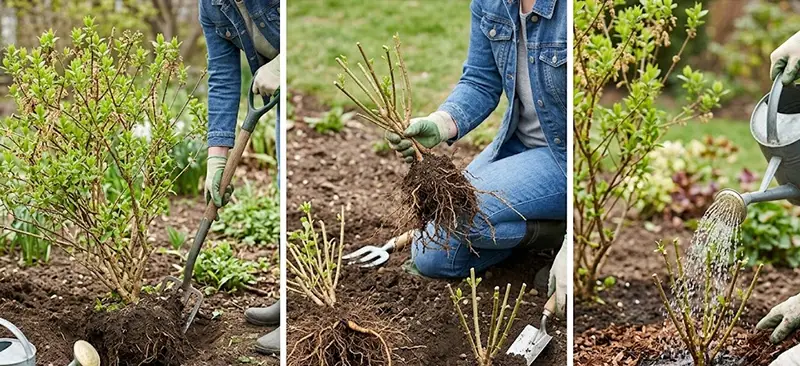
- After the flowering season, dig up the shrub.
- Pare down the stems to about 8 inches. Plant the divisions at their previous soil depth.
- Water well and mulch around to retain moisture.
3. By Layering
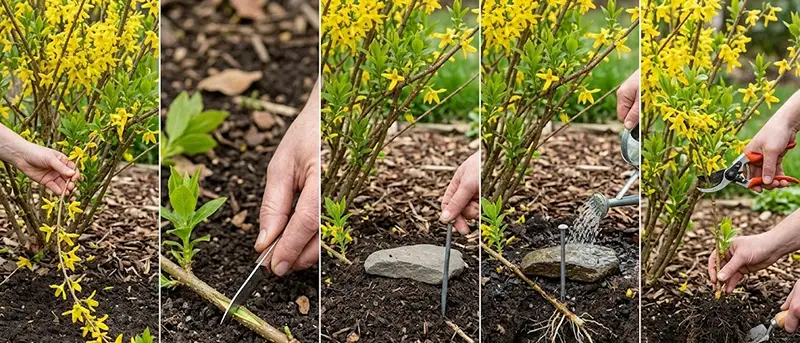
- Find a long branch of the mature plant and bend it down to the soil level.
- Make a small cut in the bark and below the node where it touches the soil.
- Bury the section in soil and secure it with a rock or peg so it stays on the ground.
- Water it well regularly until the roots form.
- Cut the branch from the parent plant. Dig up and replant it to the desired spot.
Pests and Diseases in Forsythia
Planting a forsythia bush is straightforward, but it is still susceptible to pests like aphids, spider mites, and Japanese weevil. It can also be affected by diseases like twig blight, leaf spot, and crown gall. You can prevent these issues with regular monitoring, proper planting, neem oil application, and keeping the base clean.
Pests in Golden Bells
| Pest | Description |
Aphids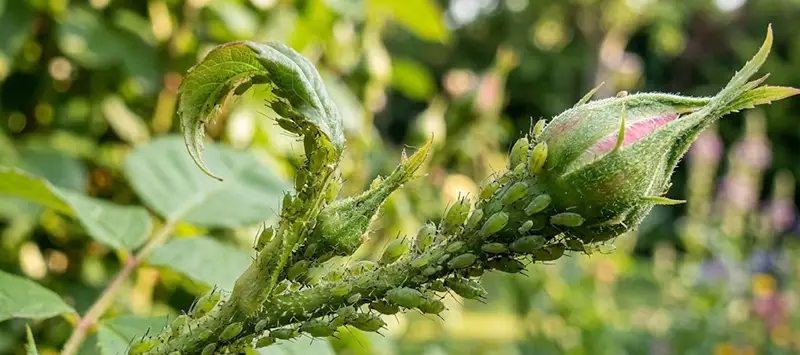 | Small pear shaped insects lead to yellow and distorted leaves. They also leave a sticky substance called honeydew that can cause sooty mold. |
Spider mites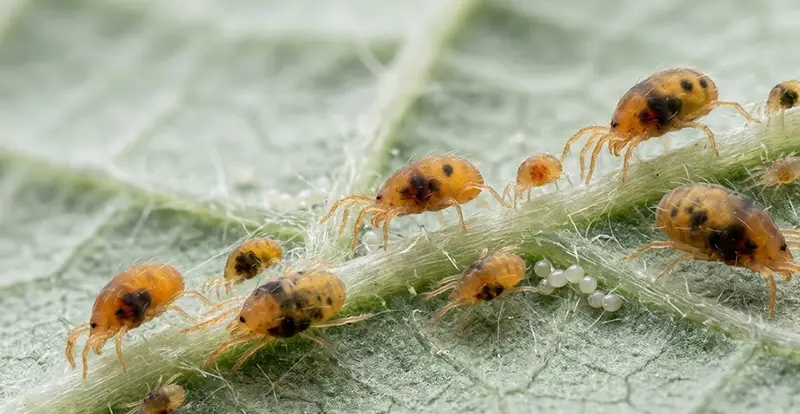 | Tiny insects that lead to a stippled and bronzed appearance or fine webbing. |
Japanese weevil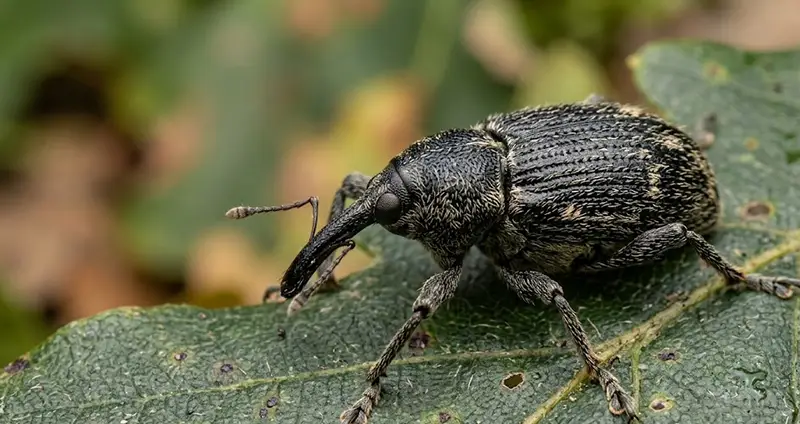 | They can cause damage as both adults or larvae. Adults damage the leaves, and larvae feed on the roots. |
Four-lined plant bug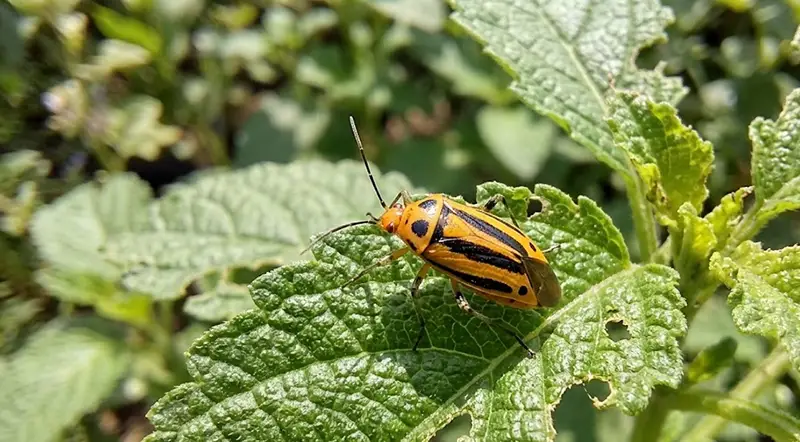 | The yellow-green bugs that cause small, round, dark spots on the leaves. |
Diseases in Golden Bells
| Disease | Description |
| Twig blight | This happens due to the fungus called Phomopsis, causing dieback of the ends of the branches. |
| Leaf spot | It is also a fungal disease that causes large brown or black spots on the foliage. |
| Crown gall | This is due to a bacterium and leads to tumor-like growth at the base of the plant or at the roots. |
Preventive Measures
- Monitor regularly: Inspect the plant regularly to find and treat the issues as soon as possible.
- Prune: Trim the dead and damaged branches to improve airflow and reduce the risk of fungal diseases.
- Encourage beneficial insects: Insects, including ladybugs, lacewings, and predatory mites, can help control the growth of spider mites and aphids.
- Apply neem oil: Apply neem oil, as this organic solution is beneficial against various pests and fungal diseases.
- Focus on cleanliness: Clean the fallen leaves and debris around the plant. It reduces the risk of diseases in the plant.
- Ensure good planting practices: Space the plants properly and ensure well-draining soil to minimize the chances of diseases.
Smart Landscaping Ideas for Forsythia
This bush is versatile for landscaping with vibrant yellow flowers. Use it strategically for hedges, borders, entrance design, and mass planting to enhance the appeal of the garden.
Here are some ideas for landscaping with forsythia:
- Natural hedge or border: For planting forsythia hedge, space the plants 3 to 6 feet apart. It grows rapidly and works well for creating a border. Its spring blooms offer privacy and a splash of colour to the outdoors.
- Statement entrance: Forsythia shrubs can be planted on either side of the garden or driveway to make a welcoming entrance, especially in the blooming season.
- Mass planting: Plant forsythia in a large area for the breathtaking spring visuals. This technique makes it a garden centerpiece.
- Container planting: Small varieties of this shrub can be used for containers. The pots can be placed on the deck or patio area, enhancing the beauty in spring.
- Foundation planting: You may use these bushes to mask the straight lines of the building, working well for soft foundation planting.
- Archway or trellis: Train the young plants to grow on archways and trellises. As the plant grows, it creates a blooming arch, great for the garden paths.
Companion Plants for Forsythia
Companion planting refers to the practice of placing different plants together that benefit each other. For forsythia flower, many companion plants complement its beauty and fill the visual gaps, including lungwort, allium, crocus, and daffodil.
| Flowering bulbs | Allium, crocus, daffodil, grape hyacinth, tulip |
| Perennials | Lungwort, Pasque flower |
| Shrubs | Red or yellow dogwood, spirea, flowering quince, azaleas and rhododendrons |
Summing Up
Forsythia is great to attract butterflies and bees to the landscape with its bright yellow blooms. It is a perfect plant to be used in borders, privacy hedges, and containers.
With minimal care, you can make this shrub thrive for a cheerful addition to your outdoors. Further, it is non-toxic to cats and dogs, making it ideal for houses with pets.
FAQs
When does forsythia bloom?
How to grow forsythia?
To grow this shrub, ensure you choose a spot that receives a minimum of 6 hours of direct sunlight daily. Also ensure well-draining soil and regular watering in the first season. Prune it to control its growth and mulch to retain soil moisture.
Do forsythia plants stay yellow in the summer?
No. They only produce the yellow blooms in spring. In summer, the plant features only the green leaves.
Do forsythia plants spread?
Yes! These plants can spread quickly through their branches and roots. If the branches are touching the ground, they can root and grow into a new plant.
What does forsythia look like in winter?
In winter, the plant sheds its leaves and reveals the long brown stems. It has a stark appearance in this season compared to its colourful spring growth.
Sources:
forsythia – Britannica
Forsythia spp. (Oleaceae) – University of Oxford
Forsythia – Oregon State University
Consider Forsythia – University of California Agriculture and Natural Resources
Latest Blog