Azaleas can be grown by seeds and by stem-cutting.
How to Care for Azaleas, Their Taxonomy, Care Tips, Ideal Growing Conditions, Popular Varieties, & Much More
Author
Annette HirdLast Update
September 30, 2026
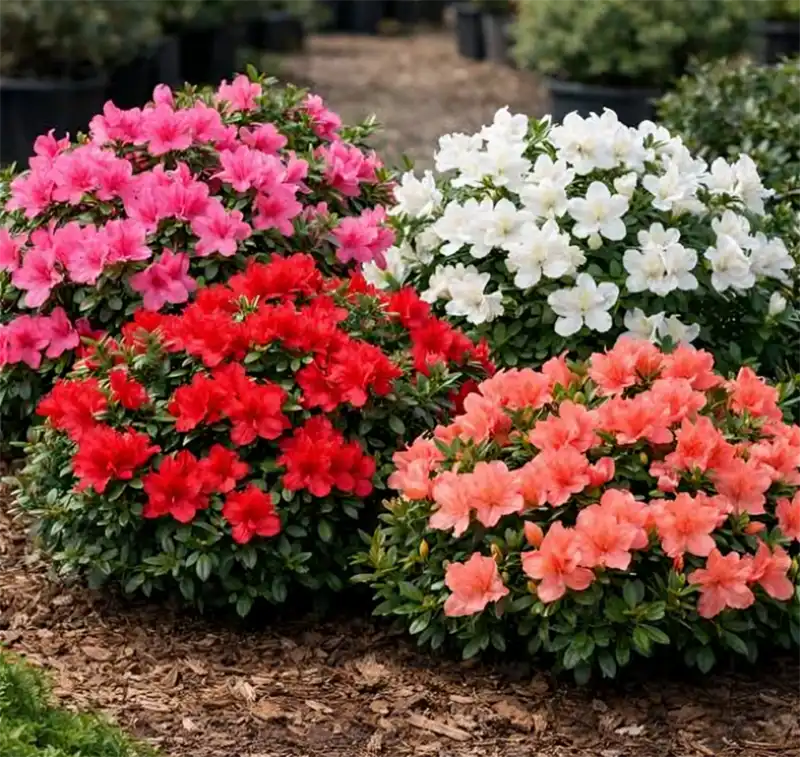
Azaleas are flowering shrubs that add vibrant colours to your garden. These flowering plants can be evergreen or deciduous and love shade. Azalea plants are usually grown in spring or early fall. They are known as slow-growing plants, but the wait is worth every bloom.
This perennial plant is generally considered to be toxic for pets and humans if consumed unknowingly. Therefore, in such a case, one must see a doctor.
Read the article below to learn more about how to care for azaleas its ideal growing conditions, taxonomy, and much more.
Table of Contents:
How to Care for Azaleas: Tips and Tricks that Actually Works
Azaleas are known as low-maintenance, gardener-friendly plants. With minimal care, the plant thrives for years. Here are some essential azalea care tips that might be helpful for you:
- Ensure that the azalea plant receives sunlight for four hours a day. Protect your plant from direct afternoon sunlight.
- Keep the soil moist throughout, but avoid keeping it soggy, as it can lead to root rot and further plant death.
- On extremely hot days, make sure to provide extra water to the plant.
- Ensure that the plant has proper air circulation. If there is a lack of air circulation, mildew can cause trouble for the plant.
- Make sure that the soil is acidic in nature, with the pH levels between 4 and 6. This will help the plant to grow steadily and healthily.
- In case the soil is neutral or alkaline in nature, use peat moss to improve drainage and acidify the soil.
- Apply fertiliser in late winter or early spring. Avoid fertilising the soil in summer or fall.
- The best way of checking if the soil is acidic enough for the plant to thrive is by sample checking. But in case you don’t have enough resources, use a basic NPK balanced fertiliser.
Did you know?
- In folklore, azaleas symbolise “take care of yourself for me”. People often give this flower to their loved ones while they are going out of station.
- In China, the flower symbolises womanhood, temperance, and fragile passion.
Read more: Everything You Need to Know About Cosmos Flower: From Ideal Growing Conditions to Pests & Problems
Azalea Taxonomy and Ideal Growing Conditions
Azalea is native to Asia, Europe, and North America. The plant thrives under partial to full sunlight and grows around 20 ft tall and wide. It blooms in various hues of red, pink, white, purple, and orange in spring. This perennial is also popular for attracting pollinators like bees, butterflies, and hummingbirds. For more general information, here is the taxonomic overview and ideal growing conditions of the plant:
| Botanical name | Rhododendron spp. |
| Common names | Azalea |
| Kingdom | Plantae |
| Order | Ericales |
| Family | Ericaceae (Heath family) |
| Genus | Rhododendron |
| Subgenera | Pentanthera: deciduous Azaleas (annually shed leaves) Tsutsusi: evergreen Azalea |
| Species | ‘Rosy Lights’, ‘Windbeam’, ‘Golden Lights’, ‘Golden Oriole’, ‘Fragrant Star’, and ‘Gibraltar’ |
| Native area | Asia, Europe, North America |
| Season of interest | Spring |
| Hardiness | 6 to 8 USDA Zones |
| Light Requirements | Partial to full sunlight |
| Maintenance | Low |
| Type | Showy shrub |
| Flower colour | White, pink, orange, yellow, purple, and red |
| Soil | Well-drained, loose soil with acidic pH levels |
| Water Requirements | Average |
| Mature size | 3 to 20 ft tall and wide |
| Fertilizers | In late winter or early spring |
| Toxicity | Toxic for both humans and pets |
Read more: How To Grow Mint Indoors? From Cultivation to Care Guide and Popular Recipes
How to Grow Azalea?

Azaleas can be easily grown from commercially purchased seeds or seeds that you would have collected from seed pods when flowers drop. Growing azaleas from seeds is a time-consuming process. It takes around two to three years before the new shrub flowers.
Here are the steps that can help you grow your plant:
- Collect the seed pods as they turn brown after the fall. Dry them indoors until they split into halves.
- Collect the seeds and clean them. In winter, fill a seed flat with a mixture of sand and peat moss.
- Moisten it and then sow the seeds over the surface. Cover the tray with a clear plastic bag and place it in a warm spot that receives bright, indirect sunlight.
- Within around 2 to 5 weeks, the seeds will start to germinate.
- Thin them out and place them at a distance of two to four inches.
- When the seedlings develop leaves, you can transplant them into small individual pots or the garden.
- After one full season, repot the plant.
Propagating Azaleas
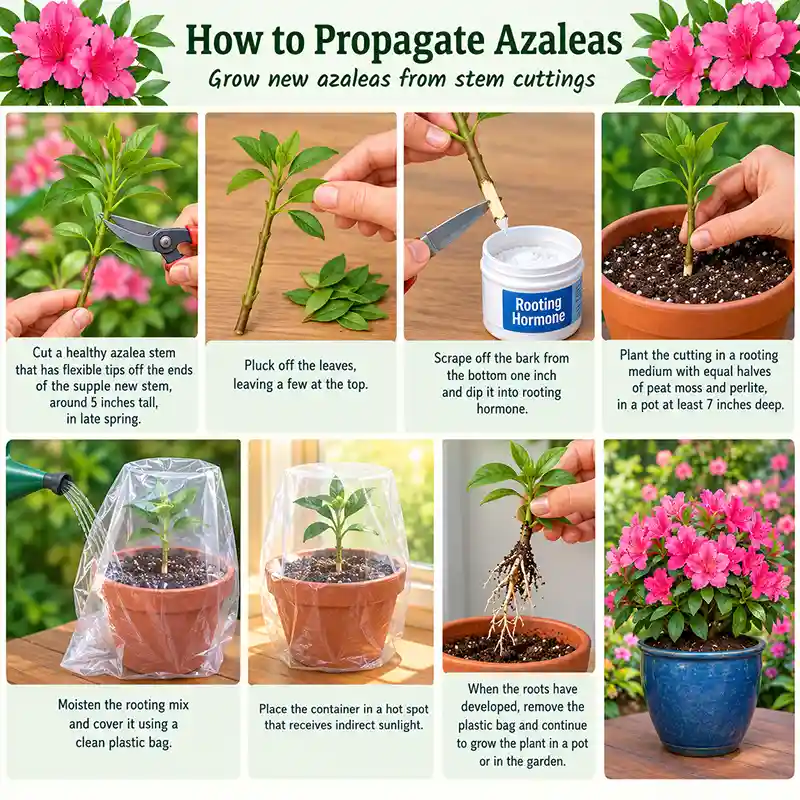
Like growing azaleas, propagating them is a time-consuming process that requires patience. Azaleas are generally propagated using the stem-cutting method. Here are the steps involved:
- Cut a healthy azalea stem that has flexible tips off the ends of the supple new stem, around 5 inches tall, in late spring.
- Pluck off the leaves, leaving a few at the top.
- Scrape off the bark from the bottom one inch and dip it into rooting hormone.
- Plant the cutting in a rooting medium with equal halves of peat moss and perlite, in a pot at least 7 inches deep.
- Moisten the rooting mix and cover it using a clean plastic bag.
- Place the container in a hot spot that receives indirect sunlight.
- When the roots have developed, remove the plastic bag and continue to grow the plant in a pot or in the garden.
Read more: Celery Plant: How to Grow This Nutritious Herbaceous Vegetable?
Pests and Diseases Associated with Azaleas
Various pests like aphids, borers, lacebugs, and leafhoppers might attack your azalea plant. Here is a list of pests and diseases that can cause trouble for your plant, along with their solutions:
| Pests and diseases | Solution |
| Aphids, mealybugs, mites, scale, thrips, whiteflies, lacebugs, and leafhoppers | These various pests might attack your plant due to inappropriate spacing or poor air circulation. To treat them, spray neem oil or any other organic horticultural oil that can kill these pests. Insects like scale and leafhoppers can be controlled by releasing predatory insects. |
| Leaf spot, mildew, and rust | These are some of the common fungal diseases that attack the plant. They are usually considered not life-threatening for the plants, but you can treat them using fungicides. |
| Phytophthora root rot | It is mainly caused by wet and soggy soil. In case of root rot, the plant’s health starts depleting day by day and eventually leads to plant death. To avoid such a situation, do not overwater the plant and also ensure that the soil is well-draining. If you have grown azaleas in a pot, make sure that it has a proper drainage hole. |
Read more: Koriandri: Taxonomy, Ideal Growing Conditions, and Care Tips
Takeaways
Azaleas are slow-growing, low-maintenance shrubs that usually take around two to three years to bloom, but all the wait is worth it when the plant gets its first bloom. It is also known as a pollinator-friendly plant and therefore attracts pollinators like bees, hummingbirds, and butterflies.
If you are planning to grow some flowering plants in your garden, azaleas can be a great addition.
Happy planting!
FAQs
How to grow azaleas?
How to take care of azaleas?
Make sure that the location you are choosing to plant azaleas receives sunlight for 4 hours, the soil is acidic in nature, and water the plant moderately.
Where to plant azaleas?
Plant azaleas in a location that receives bright, indirect sunlight for 4 hours a day.
When to plant azaleas?
The best time to plant azaleas is either in spring or late winter.
Sources
Azalea: Britannica
Rhododendrons and Azaleas: iNaturalist
Latest Blog