Chokeberry is a deciduous shrub that is native to Eastern Europe.
Chokeberry: Taxonomy, Ideal Growing Conditions, Care Tips, & Much More
Author
Rashika Gupta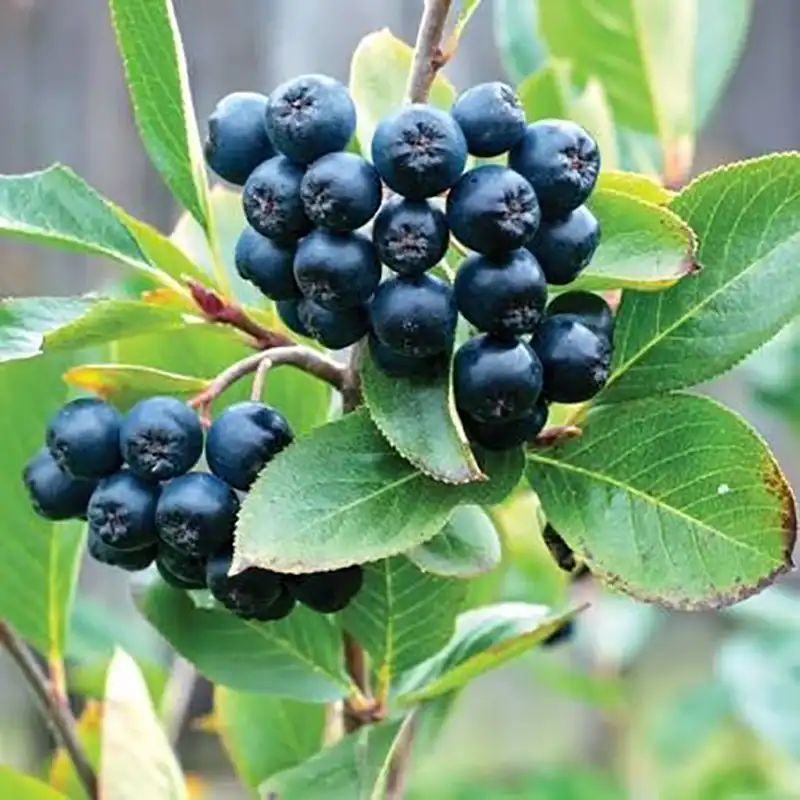
Chokeberry is a deciduous shrub that bears fruit that, over the years, has been seen as both food and medicine. The plant mainly grows in varieties like red chokeberry (A. arbutifolia), black chokeberry (A. melanocarpa), and purple-chokeberry (A. prunifolia). The fruit is considered safe to eat, and the plant grows as a medium shrub commonly used in ornamental landscaping.
Chokeberry grows in an upright and fairly rounded shape with glossy dark green leaves that may turn red to reddish purple in fall, providing attractive and striking color to the landscape. The plant bears clusters of small 5-petaled flowers in spring and purplish-black to black fruits or berries in late summer to fall.
Read the article to learn about chokeberry taxonomy, ideal growing conditions, care tips, growing process, and much more.
Table of Contents:
Aronia Berry Taxonomy and Ideal Growing Conditions
Chokeberry, also known as Black chokeberry or aronia berry, is a low-maintenance shrub that blooms white flowers in spring. The plant bears black and red berries that are known as a superfood. Chokeberry is native to North America and requires full sunlight with partial shade, moderate watering, and well-draining soil with acidic pH levels.
Look at the table below to know more about chokeberry taxonomy and ideal growing conditions:
| Botanical name | Aronia melanocarpa |
| Common name | Black chokeberry, chokeberry, aronia berry, aronia |
| Kingdom | Plantae |
| Order | Rosales |
| Family | Rosaceae |
| Genus | Aronia Medik |
| Native area | North America |
| Season of interest | Spring |
| Hardiness | 3 to 8 USDA zones |
| Light Requirements | Full sunlight with partial shade |
| Maintenance | Low |
| Type | Shrub |
| Flower colour | White |
| Soil | Well-drained soil with acidic pH levels |
| Water Requirements | Moderate |
| Mature size | 3 to 6 ft. tall and wide |
| Fertilizers | Only when soil is nutrient deficient |
| Toxicity | Non-toxic for both humans and pets |
| Tolerant | Adaptable, highly tolerant to challenging environmental conditions |
Read more: Spirea: Taxonomy, Care Tips, Ideal Growing Conditions, & Much More
Essential Chokeberry Care Tips
Chokeberries are highly adaptable to their surroundings and can grow well in both dry and moist locations. The plant thrives in acidic soil but is also tolerant of alkaline soil. Though this low-maintenance plant does not require much care and attention, here are a few essential care tips that help the plant thrive longer and produce more fruit:
- The most suitable location to plant chokeberry is in full sun with partial shade in hot afternoons. You can also plant it in partial shade, but that might not allow it to bear flowers and fruit.
- The adaptable conditions of chokeberry allow it to grow in a wide range of soils. It can tolerate both sandy soil and clay soil, but the best option for it is well-draining soil with an acidic pH level.
- Black chokeberry requires moderate watering. It is tolerant to occasional drought and occasional flooding. But avoid prolonged dry spells, especially during hot weather.
- Prune the plant annually to maintain its shape.
- The best way to provide nutrients to the plant is by using organic compost instead of fertilisers. This helps boost plant growth. The best time to add compost to the soil is during spring each year.
Read more: Hosta Plant: Taxonomy, Care Tips, Ideal Growing Conditions, and Varieties
How to Plant Chokeberry?
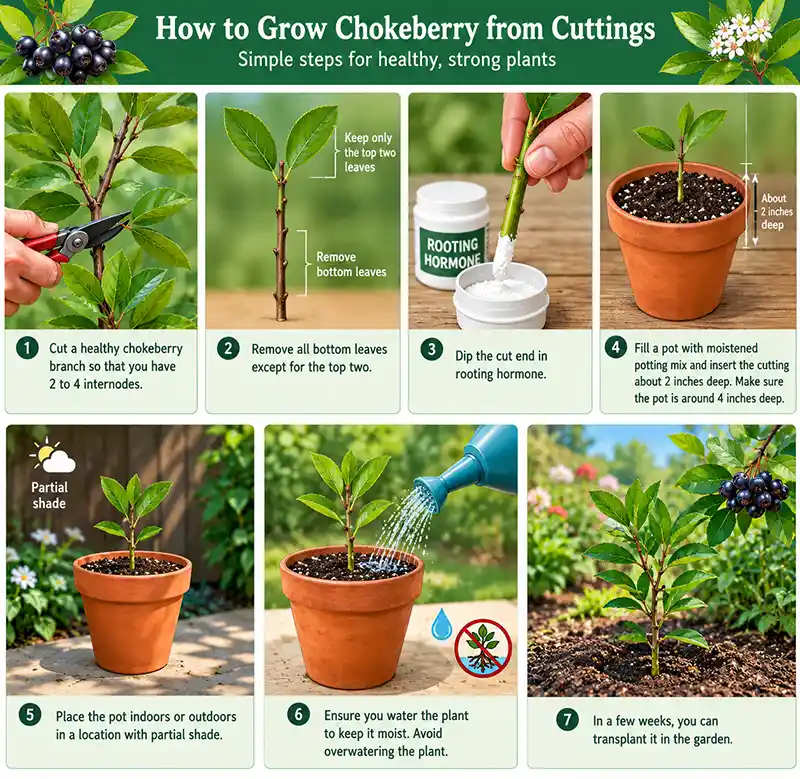
Propagating chokeberry from seed is challenging, as it takes several months of cold stratification. The best way to propagate chokeberry is using softwood cuttings in mid to late summer. Here are the essential steps that you can follow to cultivate chokeberry:
- Cut a healthy chokeberry branch so that you have 2 to 4 internodes.
- Remove all bottom leaves except for the top two.
- Dip the cut end in the rooting hormone.
- Fill a pot with moistened potting mix and insert the cutting about 2 inches deep. Make sure that the pot is around 4 inches deep.
- Place the pot indoors or outdoors in a location with partial shade.
- Ensure you water the plant to keep it moist. Avoid overwatering the plant.
- In a few weeks, you can transplant it in the garden.
Chokeberry Health Benefits
Aronia berries are popular among the masses for their anti-inflammatory and antioxidant properties, along with high fibre, vitamin C, and manganese. They are also low in calories, which makes them a perfect snack for people who are on their weight management journey.
The anti-inflammatory and antioxidant effects help protect cells from damage and benefit an individual in certain ways. These are:
- Improved heart health
- Reduced risk of cancer cells
- A good immune system
The best way to include aronia berries in your diet is by consuming them raw or making juices and smoothies from them. People also use these berries for baking and mix them into desserts.
Tip
If you cannot consume the berries raw or want to try something different, make jam. It tastes delicious. The healthy version can include stevia instead of sugar.
Read more: Hibiscus Care, Taxonomy, Ideal Growing Conditions, Growing Process, & Much More
Pests and Problems Associated With Aronia
Aronia berries are susceptible to leaf spots and twig blight. Other than that, the plant is not attacked by any other pests. Leaf spots can be caused by slugs and aphids and can be easily treated with a strong water spray or neem oil. Similar is the case with twig blight.
There are no problems associated with the aronia berry because the plant is tolerant to most of the conditions, be it weather, drought, flood, or soil; it tends to readily spread in the landscape. Therefore, blackberry is one of the most fruitful plants to grow if you are a beginner or pro gardener.
Read more: Peony Flower Guide: Taxonomy, Ideal Growing Conditions, Growing Process, Care Tips
Takeaways
Chokeberries are deciduous shrubs that survive in any given conditions, but the plant requires full sunlight to bloom and bear fruit. The best time to propagate it is in summer using softwood stem cuttings. This makes it an inexpensive plant to grow.
The low maintenance of the plant makes it more prominent, and its nutritious fruit works like the cherry on top. If you are planning to plant a low-maintenance shrub with multiple benefits, this is your sign to plant chokeberry.
Happy planting.
FAQs
What is a chokeberry?
Is blackberry edible?
Yes, the blackberry of Aronia melanocarpa is edible and has multiple health benefits, like helping reduce inflammation, improving the immune system, and reducing cancer risk.
Does the blackberry need a pollinator?
No, blackberries are bisexual and self-fertile, so a single plant can set fruit on its own.
Latest Blog