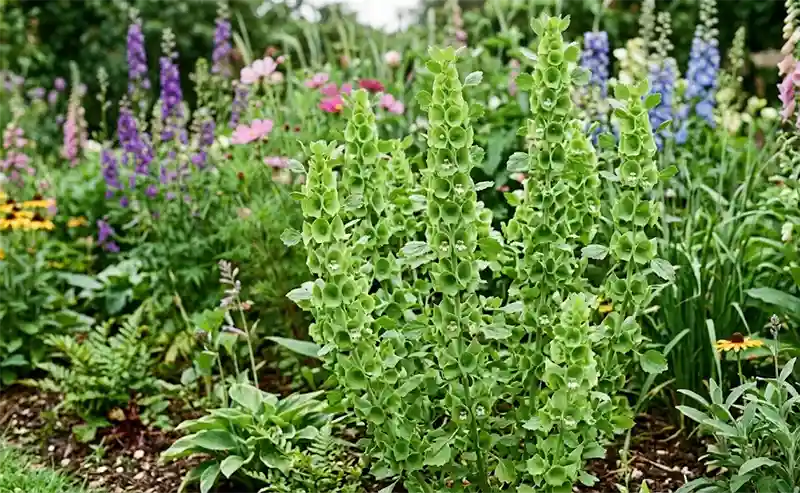
Bells of Ireland is an annual plant that features tiny white flowers surrounded by apple-green, bell-shaped calyces (outer sepals). It smells nice and has incredible texture and colour. The tall spikes of this flowering annual create a visually appealing and distinctive appearance.
If you wish to grow this hardy annual in garden beds, containers, or cut flower gardens, keep reading ahead to find out the Bells of Ireland planting, care, and common problems.
What are Bells of Ireland?: A Quick Information Table
Bells of Ireland, scientifically called Moluccella laevis, belong to the Lamiaceae family. The same family that includes herbs like rosemary, basil, mint, and lavender. The annual plant is famous for its green calyces that resemble bells. It also produces white flowers in summer and fall, which are less prominent but certainly add to its charm.
Botanical name
Moluccella laevis
Common names
Bells of Ireland, shell flower
Order
Lamiales
Family
Lamiaceae (Mint family)
Genus
Moluccella
Species
Moluccella laevis
Plant Type
Annual
Mature Size
2-3 feet tall and 12-18 inches wide
Flower Colour
White
Bloom Time
Summer and fall
Hardiness Zones
USDA zones 2-11
Native Area
Asia
How to Grow Bells of Ireland from Seeds
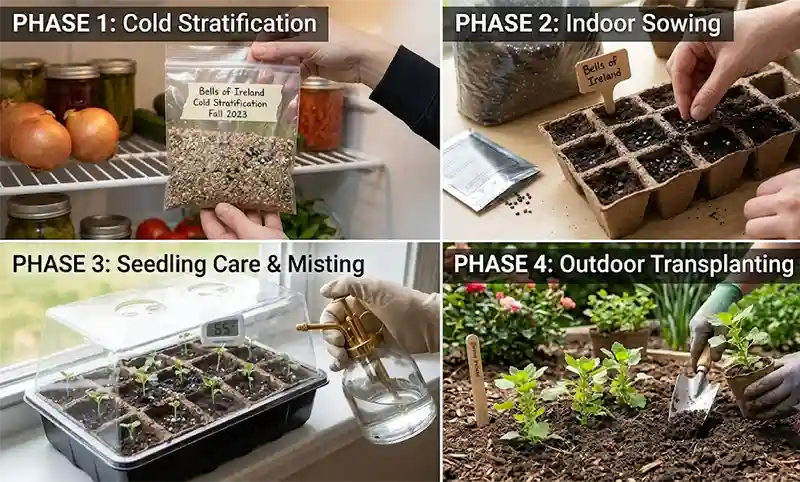
The best way to grow these annuals is by their seeds. You can sow the seeds directly in the garden after the last spring frost. They will take about 12-21 days to sprout. If you are wishing for earlier blooms, start the seeds indoors about two months before the last spring frost. When the temperatures reach 40°F, transplant them outdoors.
Here are the steps to grow Bells of Ireland flower from seeds:
The Bells of Ireland seeds need cold stratification to provide the best results. Sow the seeds outdoors in the fall or refrigerate them for a week before starting them indoors.
If you are starting the seeds indoors, use a seed tray or a 3-inch biodegradable pot. Fill it with potting soil and put the seeds into it. Do not cover the seeds with soil, as they need light to germinate.
Keep the soil moist by misting it regularly with a spray bottle.
When the outdoor temperatures are 40°F, transplant the plants outdoors in full sun or partial shade.
Pro Tip
If you are stratifying the seeds in the refrigerator, sandwich seeds between moist coffee filters or paper towels. Place them in the refrigerator for 1-2 weeks. This leads to faster germination.
Bells of Ireland Care Tips
Moluccella Bells of Ireland requires at least 6 hours of direct sunlight daily, along with proper moisture and well-draining soil. It also benefits from occasional feeding and light pruning. Avoid repotting the plant, as its roots get damaged or stunted easily.
Here are the care measures to follow for Irish bells:
Sunlight Requirements
The plant thrives best in full sun, so it’s suggested to keep it in a location that receives at least 6 hours of direct daily sunlight. If you want to have it indoors, place the pot on a south- or west-facing window to maintain adequate sunlight. The morning sun also prevents its stems from growing leggy. Plants in the shady location often need staking.
Soil Preference
The plant needs well-drained soil with a neutral pH. A sandy and loamy soil mix is ideal for Bells of Ireland moluccella, though it is tolerant of poor soils. Before sowing the seeds, add some compost to the planting area to enhance the soil fertility and structure.
Watering
During the seedling and transplanting phase, the plant needs proper moisture. Bells of Ireland seedlings do well when the soil dries slightly between waterings. Avoid overwatering, as it can cause root rot. You may also use the soaker hose to provide moisture without the soggy conditions.
Temperature and Humidity
The ideal temperature for growing these plants ranges from 60°F to 70°F. It is not a heat-tolerant plant and requires low to moderate humidity. The high humidity environment increases the risk of rot. It prefers cool temperatures and can survive in light frost too.
Fertilizer
Bells of Ireland don’t require much feeding. Before planting, adding compost is generally enough, but in case of poor soils, you may require light feeding. Feed the plants every 4-6 weeks with balanced water-soluble fertilizer in spring and summer. It’s recommended to dilute the fertilizer to half strength to avoid overfeeding and harming the plant.
Repotting
It is best to avoid repotting the plant or handle it with care while repotting, as its taproot system can get easily damaged or stunted. Unlike plants that have a fibrous root system, these plants do not recover well from root disturbance.
Pruning
The plant does not require much of the pruning, but removing the spent blooms can promote flowering and prevent it from seeding too quickly. If you want a more compact form, prune back the leggy growth.
Bells of Ireland as Cut Flowers
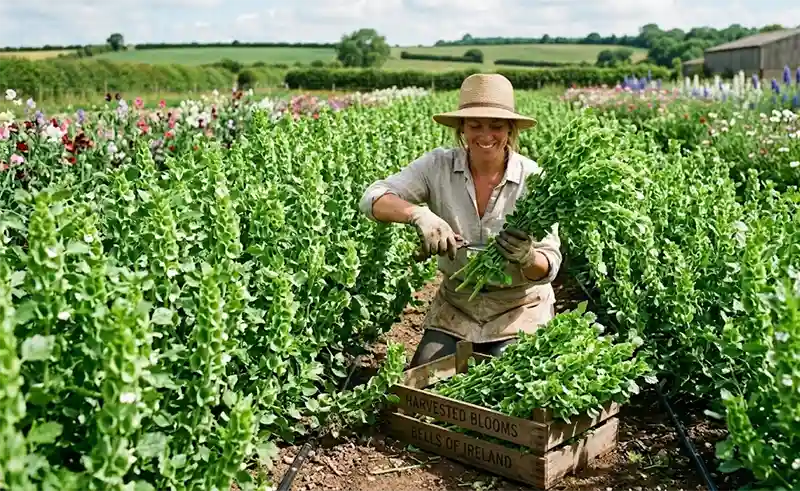
If you want to use flower Irish bells as cut flowers, harvest the stems when the white flowers are just beginning to open up. Keep the flowers in water immediately and place them away from sunlight in a cool area. You can also dry them and use dried Bells of Ireland in bouquets or centerpieces.
Cut the stems when the bells are half open or when the tiny white flowers start developing into the calyxes.
Remove the leaves from the bottom of the stems that would sit below the water level to prevent bacterial growth.
Place the stems in water immediately and keep them in a cool area away from sunlight.
If you want to dry them, wait till the bells are completely open. Hang the bunches upside down in a warm and well-ventilated space. The green colour will fade to pale tan or beige.
Pests and Diseases in Bells of Ireland
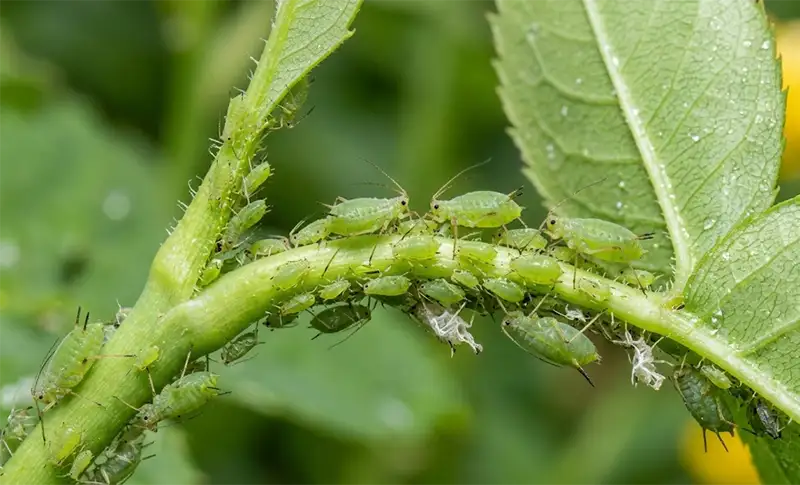
Bells-of-Ireland is generally resistant to pests and diseases. It can be affected by aphids, spider mites, whiteflies, and thrips. The plant is also susceptible to diseases like leaf blight and crown rot.
Let’s find out the pests and diseases in the Bells of Ireland plant:
Pests in Irish Bells
Pests
Signs and Solutions
Aphids
Signs: Small green, black, red, or peach coloured insects feed on the undersides of the leaves. They also lead to a sticky residue that attracts ants.
Solutions: Encourage natural predators like lady beetles and wasps, dislodge aphids with a strong jet of water, and use insecticidal soap.
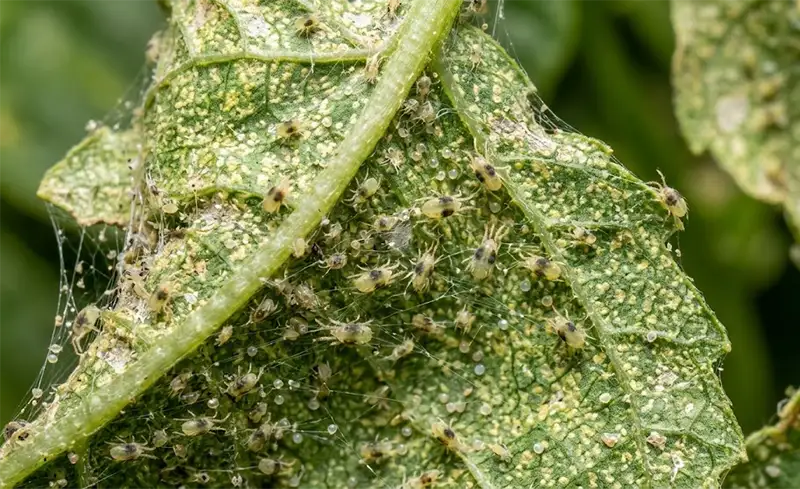
Spider Mites
Signs: The red, black, brown, or yellow insects cause white dots on the foliage. They also lead to webbing, yellowing, and stippled leaves.
Solutions: They can be controlled with the forceful spray of water, hot pepper wax, or insecticidal soap.
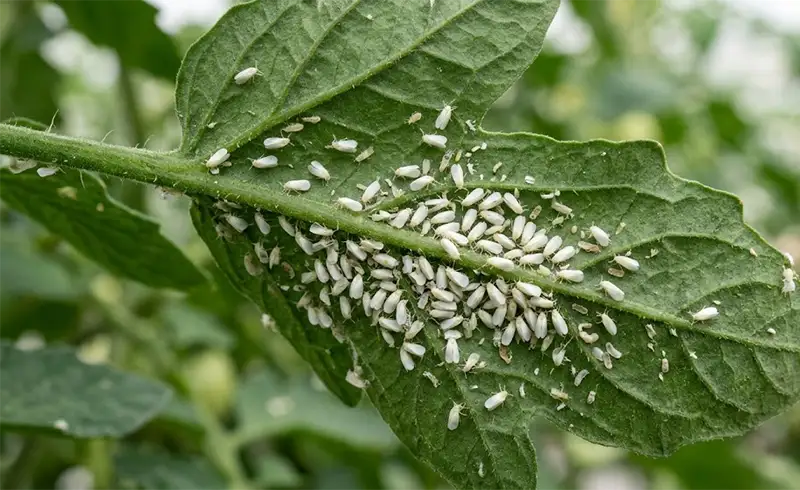
Whiteflies
Signs: These are the moth-like flying insects that flutter up when the plant is disturbed and feed on its juices.
Solutions: Use yellow sticky traps, insecticidal soap, or neem oil.
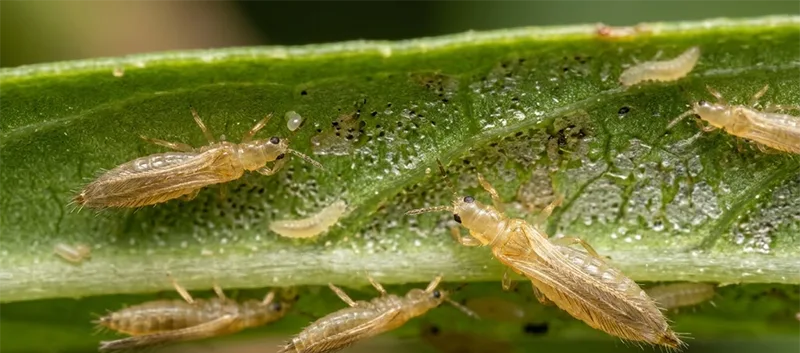
Thrips
Signs: These insects lead to silvery patches and distorted flowers and leaves.
Solutions: Remove affected parts and release beneficial predatory mites.
Diseases in Irish Bells
Diseases
Signs and Solutions
Cercospora Leaf Blight
Signs: Small flecks with a yellowish halo on the leaves.
Solutions: Remove the affected foliage and destroy all the debris.
Crown Rot
Signs: This causes wilting in the plants upward from the soil line.
Solutions: Remove the diseased plants and discard them.
Pros and Cons of Growing Bells of Ireland
The pros of planting bells of Ireland involve long vase life, wildlife support, and a delicious smell. The plant also has some cons, like short life, prickly spines, and need for netting support.
Pros
Cons
Long vase life of 7-10 days. They can also be dried and used as an everlasting flower.
Bells Ireland flowers are great for bouquets and complement nearly every flower type.
They smell delicious with hints of citrus.
These blooms attract bees and butterflies to the landscape while staying resistant to deer and rabbits.
The plant develops spines that can prick your hand if they are not harvested early.
These plants are not long-lasting. They usually finish growing by mid-summer.
They need support by netting, or they will be flattened in rain or windstorms.
Frequent User Queries of Bells of Ireland
There are many queries that people have asked on Reddit regarding the Bells of Ireland plant to troubleshoot care problems. Some of them are about its stunted growth and seed germination.
Let’s see some queries and their possible solutions:
u/lawlfratsters asked why aren’t my Bells of Ireland growing?Solution: For growing Bells of Ireland, you need well-draining soil and full sun. The plant may be struggling due to poor soil drainage, inadequate sunlight, or improper watering. Keep the soil well moist and avoid waterlogging conditions. Also, don’t disturb the roots until the Bells of Ireland seedling establishes.
Solution: For growing Bells of Ireland Moluccella laevis in Zone 7 during spring, you can either direct sow the seeds in the ground or pre-chill them, as they need cool temperatures. As they have sensitive roots, direct sowing is considered better to avoid transplant shock.
Conclusion
Bells of Ireland is a unique flowering plant that is famous for its unique structure resembling a bell or a cup. It features lush leaves that hide the beautiful white flowers. You can also use it fresh or dried in arrangements for home natural decor. As you have learned about its planting and care, you can try growing them now in a container, patio, or deck.
FAQs
How do you grow Bells of Ireland?
To grow the plants, handle the seeds carefully and provide them with cool weather. As they germinate, plant them in full sun and use well-draining soil.
Are Irish bell flowers native to Ireland?
No, the plant is not native to Ireland. It is actually native to western Asia.
Are irish bells flowers cut-and-come-again flowers?
No, these are not cut-and-come-again flowers. Once the main flowering spike is cut, that specific stem does not regrow.
Are belles of Ireland cold hardy?
No, these are not true cold-hardy perennials. They are considered half-hardy annuals rather than frost-resistant perennials.
How long do Bells of Ireland last?
These plants typically bloom from mid-summer to early fall. The flowers can last up to 1-2 weeks in the vase.