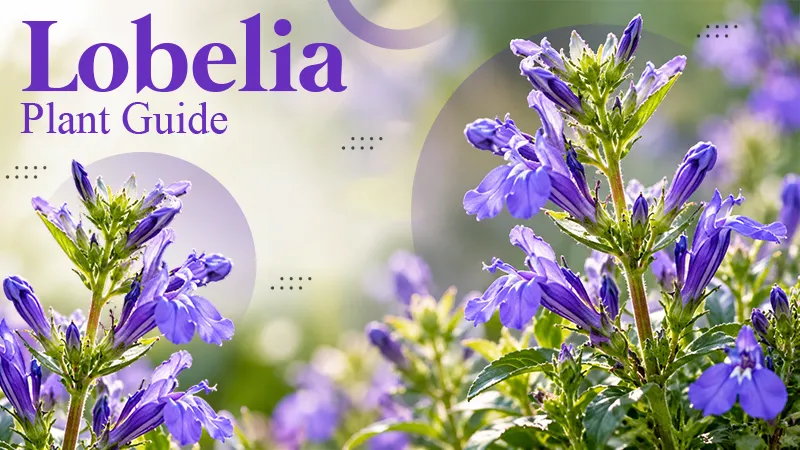
Lobelia thrives in full sunlight with partial shade in hot afternoons.
Lobelia Plant Guide: Taxonomy, Ideal Growing Conditions, Process and Care Tips
Author
Rashika GuptaReviewed By
Cody Allison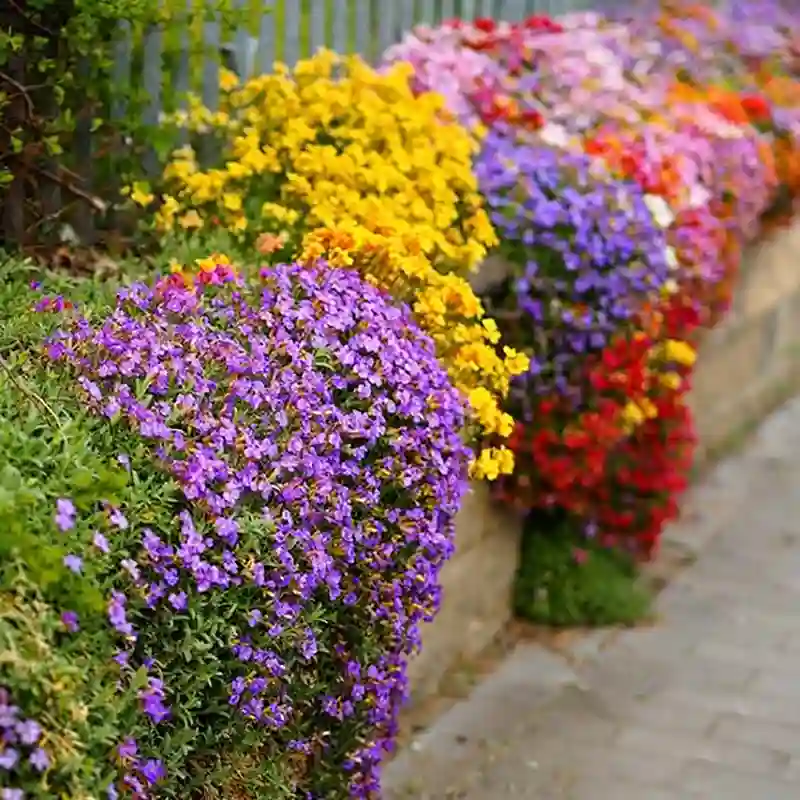
Lobelia blooms in multi-coloured flowers and has more than 400 species. The plant grows upright and trailing and includes annuals, half-hardy annuals, perennials, and even shrub and aquatic plants. This flowering plant is also pollinator-friendly and attracts pollinators like hummingbirds, bees, and butterflies.
Though there are hundreds of varieties, the most popular ones include Lobelia erinus, Lobelia cardinalis, and Lobelia siphilitica. Most species are planted in spring, after the danger of frost has passed.
Read the article to learn more about lobelia plant taxonomy, ideal growing conditions, growing process, popular varieties, care tips, and pests and problems associated with the plant.
Table of Contents:
Trailing Lobelia Taxonomy and Ideal Growing Conditions
Lobelia, also known as laguna flower, belongs to the Campanulaceae family and has over 400 species. The plant blooms in various hues of pink, blue, red, white, and purple. This perennial thrives under full, direct sunlight and requires regular watering with well-draining, moist soil with neutral to acidic pH levels.
Though the plant is considered toxic to pets and humans, it is a great addition for your balconies and garden to attract pollinators. Look at the table below to know more about the plant’s taxonomy and ideal growing conditions:
| Botanical name | Lobelia erinus |
| Common name | Lobelia, annual lobelia, laguna flower |
| Kingdom | Plantae |
| Order | Asterales (or Campanulales in older classifications) |
| Family | Campanulaceae (bellflower family) |
| Genus | Lobelia |
| Native area | Africa |
| Season of interest | Summer and fall |
| Hardiness | 10 to 11 USDA Zones |
| Light Requirements | Full, direct sunlight with partial shades |
| Maintenance | Low |
| Type | Showy, annual, perennial |
| Flower colour | Blue, pink, red, white, purple |
| Soil | Well-drained, moist soil with acidic to neutral pH levels |
| Water Requirements | Regular to average |
| Mature size | 6 to 9 inches tall and up to 10 inches wide |
| Fertilizers | Heavy feeders |
| Toxicity | Toxic to pets and humans |
| Tolerant | Limited tolerance for drought and frost |
Read more: Dracaena Lemon Lime: Growing Conditions, Care Measures and Common Pests and Diseases
Lobelia Plant Care Tips
Lobelia is a tender perennial that survives the winter and is often grown as an annual that does not require a lot of maintenance. The plant does not require deadheading because it self-cleans spent flowers. Here are some essential care tips for planting and aftercare. These are:
- Lobelia must be planted in a location that receives full to partial sunlight. The plant thrives in full sunlight but requires shade in extremely hot afternoons during summer.
- Lobelia likes rich, well-draining, and evenly moist soil with acidic to neutral pH levels.
- Water the soil regularly. Avoid overwatering because it can cause root rot.
- Lobelia are heavy feeders and therefore require fertilising every two weeks with a liquid fertiliser in the blooming season. Use fertilisers that are not nitrogen-dominant and have higher phosphorus, which promotes flowering.
- In case you are planting lobelia in containers, prefer plastic containers, as they retain moisture.
- Ensure that the containers have proper drainage holes to get rid of excess water.
Read more: Hibiscus Care, Taxonomy, Ideal Growing Conditions, Growing Process, & Much More
How to Grow a Lobelia Plant?
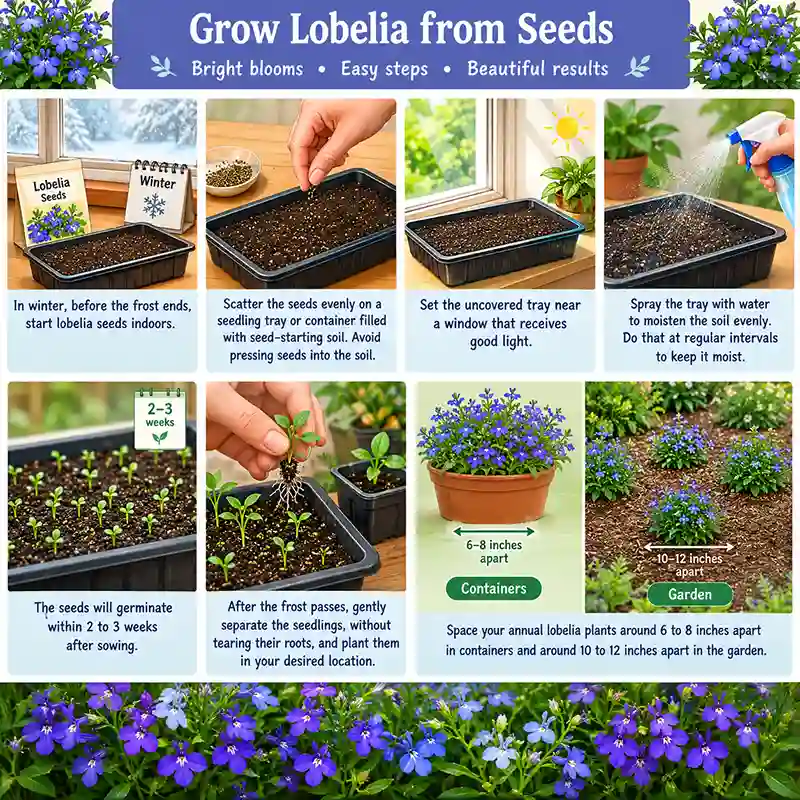
Lobelia can be easily planted using seeds rather than propagating them. It is recommended to start early indoors in cold-winter climates. Follow the steps mentioned below to grow a lobelia plant from seeds:
- In winter, before the frost ends, start lobelia seeds indoors.
- Scatter the seeds evenly on a seedling tray or container filled with seed-starting soil. Avoid pressing seeds into the soil.
- Set the uncovered tray near a window that receives good light.
- Spray the tray with water to moisten the soil evenly. Do that at regular intervals to keep it moist.
- The seeds will germinate within 2 to 3 weeks after sowing.
- After the frost passes, gently separate the seedlings, without tearing their roots, and plant them in your desired location.
- Space your annual lobelia plants around 6 to 8 inches apart in containers and around 10 to 12 inches apart in the garden.
Read more: Hosta Plant: Taxonomy, Care Tips, Ideal Growing Conditions, and Varieties
Popular Lobelia Varieties
Lobelia are hardy perennials that are grown for their ornamental properties. There are a wide range of varieties of lobelia. Some of the most popular ones are listed below along with their description:
| Variety and image | Description |
Cardinal flower (Lobelia cardinalis)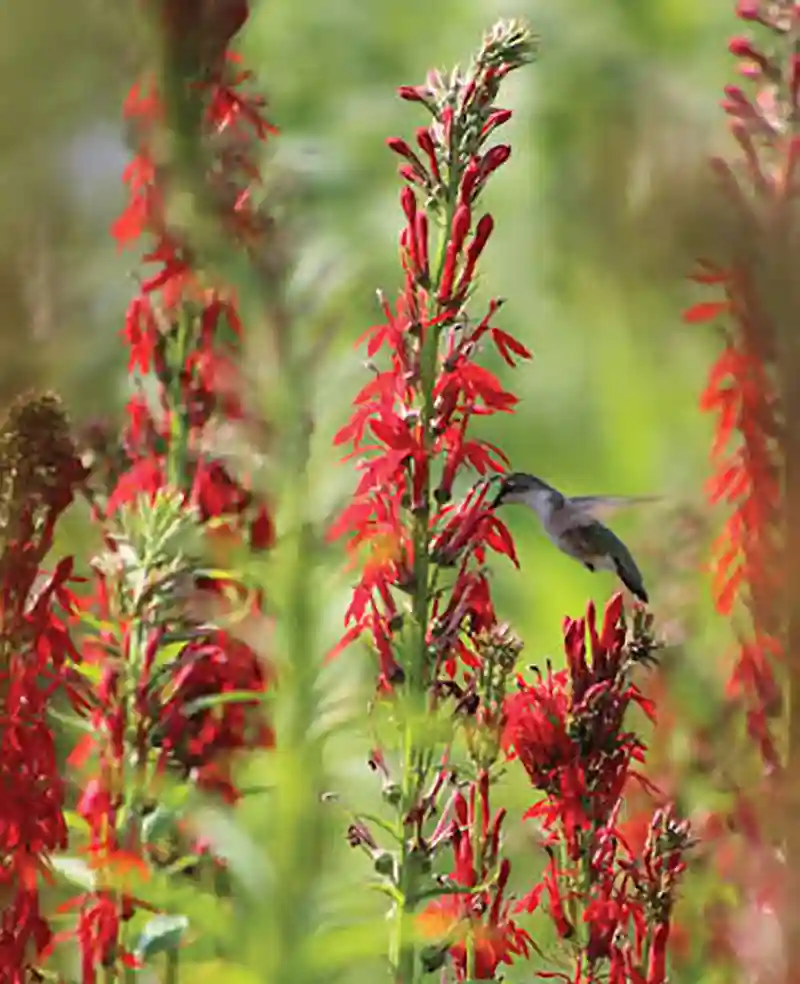 | Cardinal is a hardy perennial that blooms in red colour with an upright growth habit. The plant attracts hummingbirds and easily reseeds. |
Great lobelia (Lobelia siphilitica)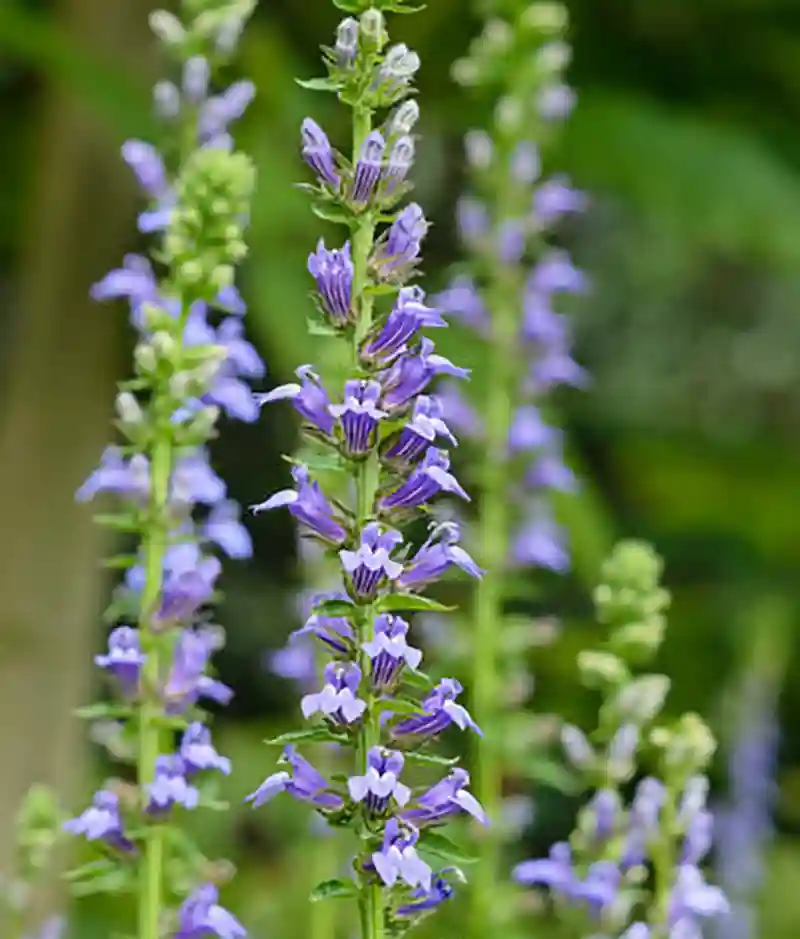 | Great lobelia blooms in blue colour and has an upright growth habit. |
Lobelia erinus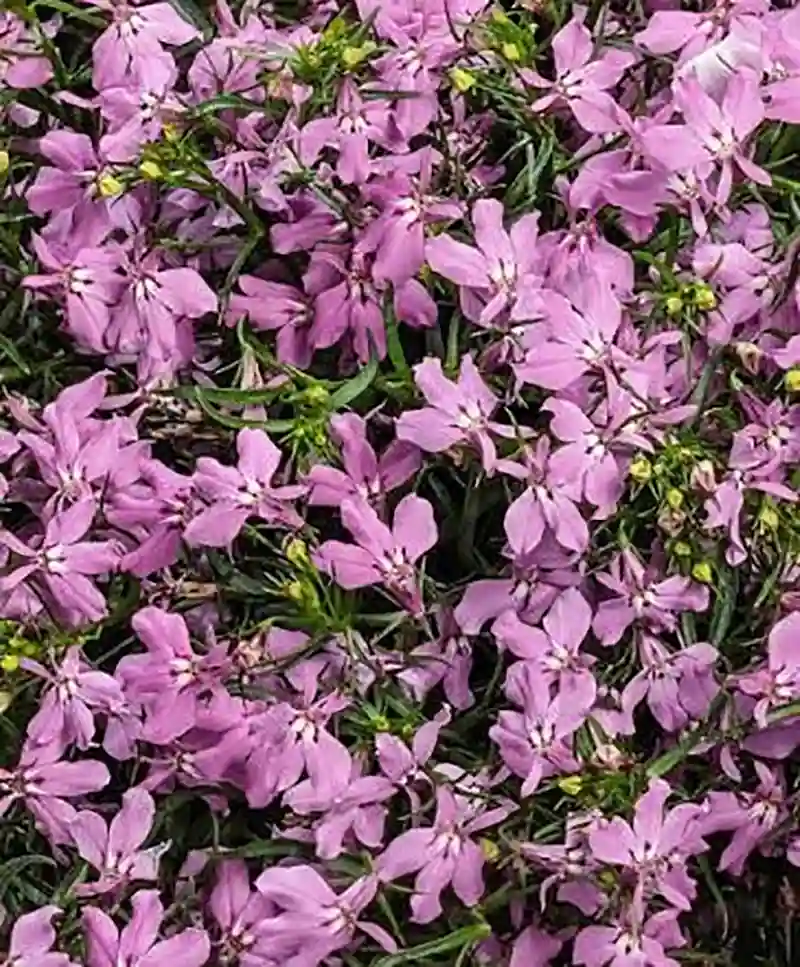 | Lobelia erinus blooms in hues of white, pink, blue, cherry red, and lilac pink. It is a tender perennial that stands up better to hot summer than other trailing varieties. |
Did you know?
Lobelia inflata is commonly known as the Indian tobacco plant. It is not commonly grown as a garden plant due to its serious toxic effects. However, the plant has been used for medicinal purposes for years.
Read more: Dieffenbachia Plant: Varieties, Growing Condition & Caring Tips
Pest and Problems Associated With Lobelia
The only pest that commonly attacks lobelia is the spider mite. You can tackle it using a gentle spray of cold water and, in case of severe infestation, use insecticidal soap or neem oil.
Common lobelia problems can include browning foliage, leaves curling, and spotted leaves. Below is the table that helps you with the solution to get rid of these problems:
| Problems | Solution |
| Browning foliage | Browning foliage is generally caused by overwatering the plant. To avoid this, do not overwater the plant and keep the soil evenly moist. Browning foliage can also be caused by too much exposure to direct sunlight in the hot afternoon. Choose a location that receives full sunlight in the morning and partial shade in the afternoon. |
| Leaves curling | Leaves curling might be caused by dry conditions. Though lobelia can tolerate occasional drought, too much dryness can kill the plant. Water the soil consistently to avoid such situations. |
| Spotted leaves | This may be because of mites attacking the plant and sucking its sap. To fix this, use insecticidal soaps. |
Read more: Peace Lily: Special Features, Care Measures, and Common Problems
Takeaways
The lobelia plant is a hardy, tender perennial that survives in winter and is therefore also known as an annual. That plant blooms in hues of blue, pink, purple, red, and white and thrives in direct to partial sunlight.
This pollinator-friendly plant is a gardeners’ favourite because of its ornamental quality and low maintenance. Also, the different varieties of Lobelia plants make it more convenient for gardeners to choose their favourite pick. It’s a sign for you to plant lobelia trailing next spring for beautiful and lively blooms.
Happy planting!
FAQs
Does a lobelia plant need sun or shade?
Is lobelia a perennial plant?
Yes, lobelia is a hardy, tender perennial that can survive in winter.
What are the most popular lobelia varieties?
The most popular lobelia varieties include Lobelia erinus, Lobelia cardinalis, and Lobelia siphilitica.
Sources
Lobelia: Britannica
Latest Blog