Yes, blue star is a perennial.
What is Amsonia? Its Essential Care Tips, Growing Process, Ideal Growing Conditions & Much More
Author
Annette HirdReviewed By
Cody Allison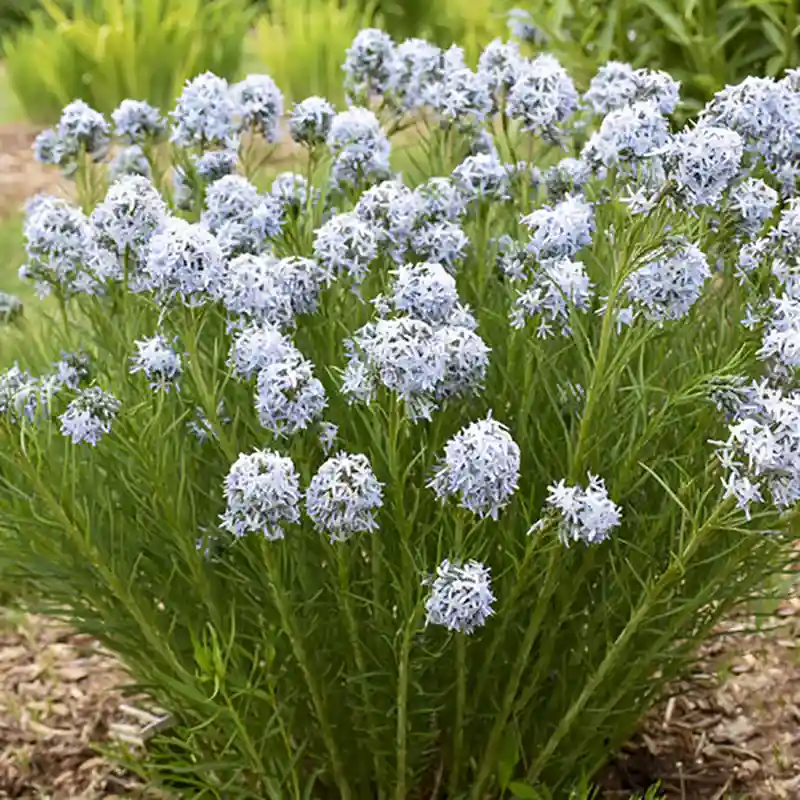
Amsonia, or blue star amsonia, gets its name from its beautiful flowers that bloom in clusters and last several weeks. This medium-growing perennial tends to be a small, tidy, shrub-like clump and is easy to care for.
Bluestar plants are a great addition for gardeners who want to attract local pollinators like bees, hummingbirds, and butterflies in their garden. The plant blooms in spring, and flowers are followed by seed pods. The best companion flowering plants for Amsonia bluestar are peonies and hostas, paired with oat grass seed heads.
Read the article to learn more about Amsonia taxonomy, care tips, growing process, and much more.
Table of Contents:
Amsonia Taxonomy and Ideal Growing Conditions
Eastern bluestar, also known as Arkansas amsonia, is a perennial flowering plant that is cultivated for its ornamental blooms. The plant belongs to the Apocynaceae family. The plant is native to North America and blooms in hues of blue, pink, and white. It requires direct sunlight, neutral soil with a pH between 6.2 and 7, and regular watering while establishing. Once established, the plant becomes drought-tolerant and does not require regular watering.
Look at the table below to learn about bluestar amsonia taxonomy and ideal growing conditions:
| Botanical name | Amsonia tabernaemontana |
| Common name | Blue star, Arkansas amsonia, Hubricht’s amsonia, Eastern blue star |
| Kingdom | Plantae |
| Order | Gentianales |
| Family | Apocynaceae (Dogbane family) |
| Genus | Amsonia Walter |
| Native area | North America |
| Season of interest | Spring till fall, depending on the variety |
| Hardiness | 3 to 11 USDA Zones |
| Light Requirements | Full sunlight with partial shade |
| Maintenance | Low |
| Type | Perennial, showy |
| Flower colour | White, blue, purple |
| Soil | Well-drained sandy, chalk, clay, or loamy soil with a neutral pH level between 6.2 and 7. |
| Water Requirements | Regular |
| Mature size | 2 to 3 ft. tall and wide |
| Fertilizers | Regular |
| Toxicity | Toxic to humans and pets |
| Tolerant | Drought-tolerant |
Read more: Creeping Jenny (Moneywort): Planting, Care, Propagation, and Types Explained
How to Grow an Amsonia Plant?
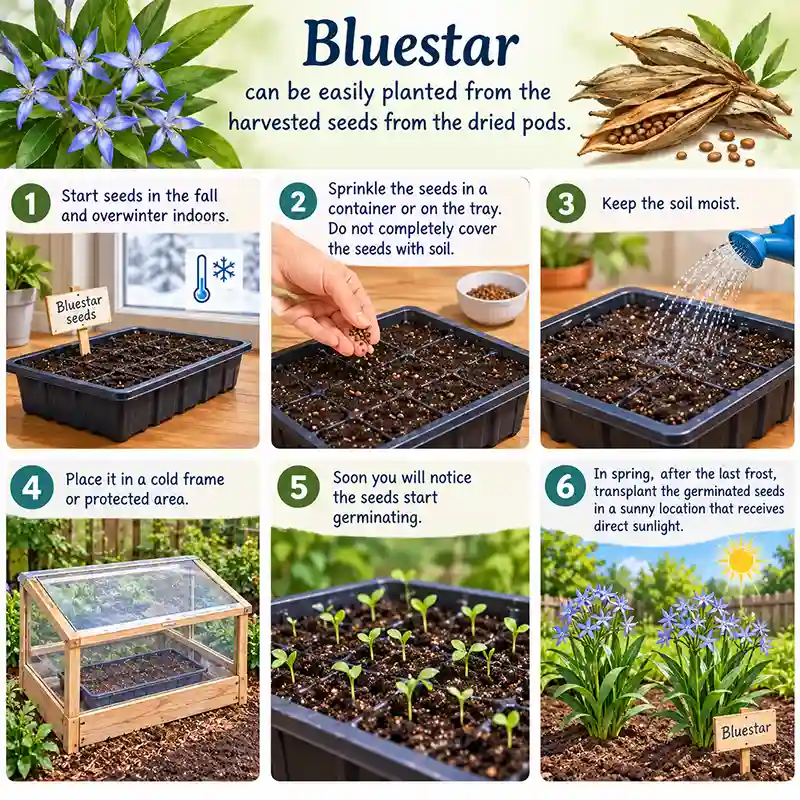
Bluestar can be easily planted from the harvested seeds from the dried pods. Here are some simple steps that I follow to plant it:
- Start seeds in the fall and overwinter indoors.
- Sprinkle the seeds in a container or on the tray. Do not completely cover the seeds with soil.
- Keep the soil moist.
- Place it in a cold frame or protected area.
- Soon you will notice the seeds start germinating.
- In spring, after the last frost, transplant the germinated seeds in a sunny location that receives direct sunlight.
Pro tip
- Once the plant gets established, do not water it too frequently because bluestar can briefly tolerate drought with time. But ensure that you water the plant deeply once every few weeks.
- Overwinter, if planted in a container, bring the plant indoors and place it into an unheated garage that stays just above freezing or cover it in a heavy frost blanket outdoors.
Read more: Crepe Myrtle: Taxonomy, Planting Steps, Care Guide, Popular Varieties, Pest Problems and Solutions
Essential Blue Star Plant Care Tips
Though the Blue Star plant is low-maintenance and does not require much attention, here are some tips that help my plant bloom healthily:
- Choose a location that receives direct sunlight for at least 6 to 7 hours a day.
- Though the plant can handle partial shade, it might affect the blooms. Therefore, do not forget to select the correct location while planting Amsonia.
- The plant grows better in a hot and dry climate.
- Bluestar likes well-draining, neutral soil with a pH level between 6.2 and 7.0.
- Fact: Amsonia can even grow in poor soil.
- The blue star perennial needs regular watering in the establishment period. Once established, the plant can tolerate brief dry-outs.
- The blue star thrives in a hot and humid climate.
- Use slow-release, water-soluble fertilizer when new leaves emerge.
Read more: Little Bluestem (Schizachyrium scoparium): Care Tips, Propagation and Common Problems
Popular Amsonia Tabernaemontana Varieties
Amsonia grows in wide varieties. Here are my 3 favourite varieties of the plant along with their description and image:
| Variety and image | Description |
Arkansas amsonia (Amsonia hubrichtii)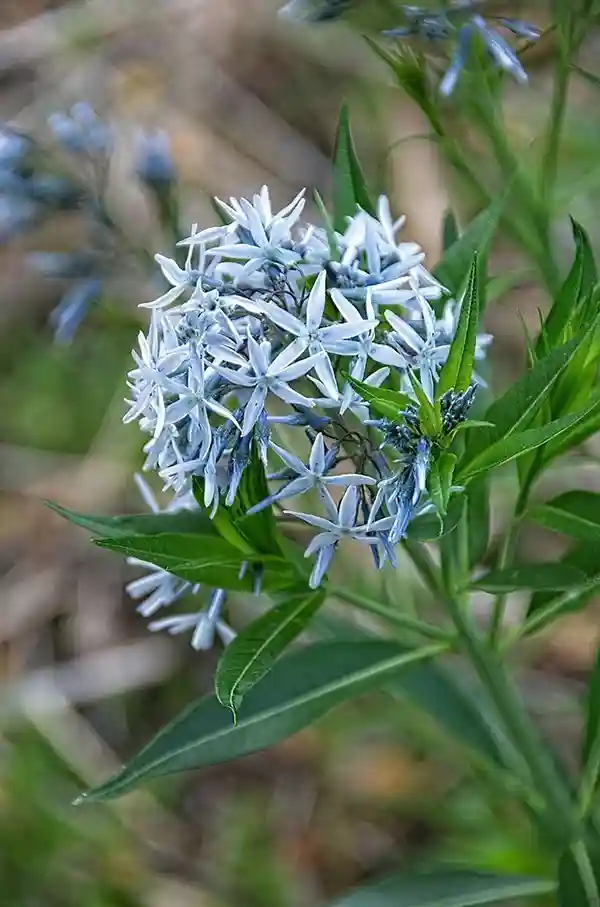 | Arkansas amsonia is also known as ‘Hubricht’s blue star,’ and ‘Narrow leaf blue star’ is a low-maintenance herbaceous perennial plant. The plant has narrow, needle-like leaves with bright blue flowers. |
‘Ozark blue star’ (Amsonia illustris)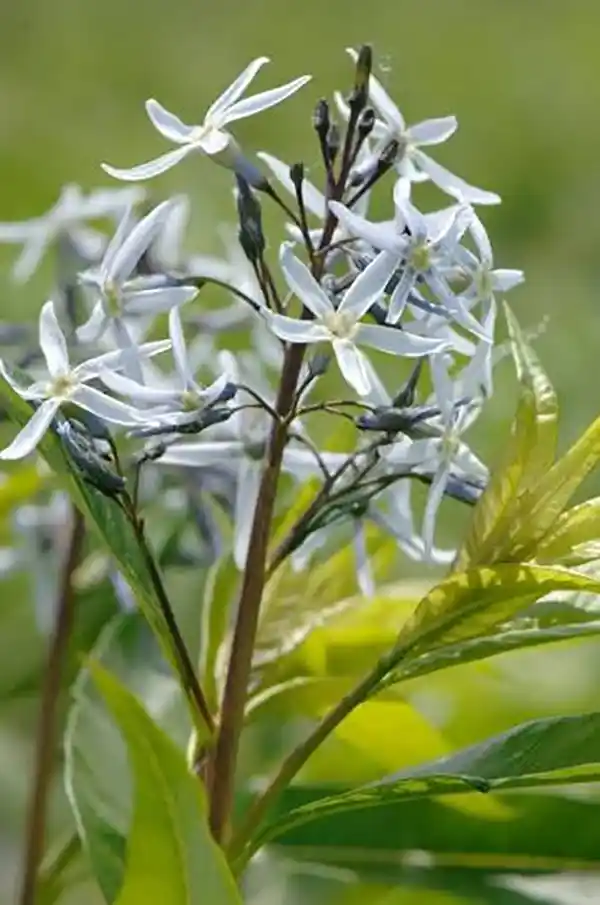 | This perennial is a long-lived, clump-forming plant variety that comes among tall plant that grows up to 4 ft. tall. It blooms with large flowers and has glossy leaves. |
Eastern blue star (Amsonia tabernaemontana)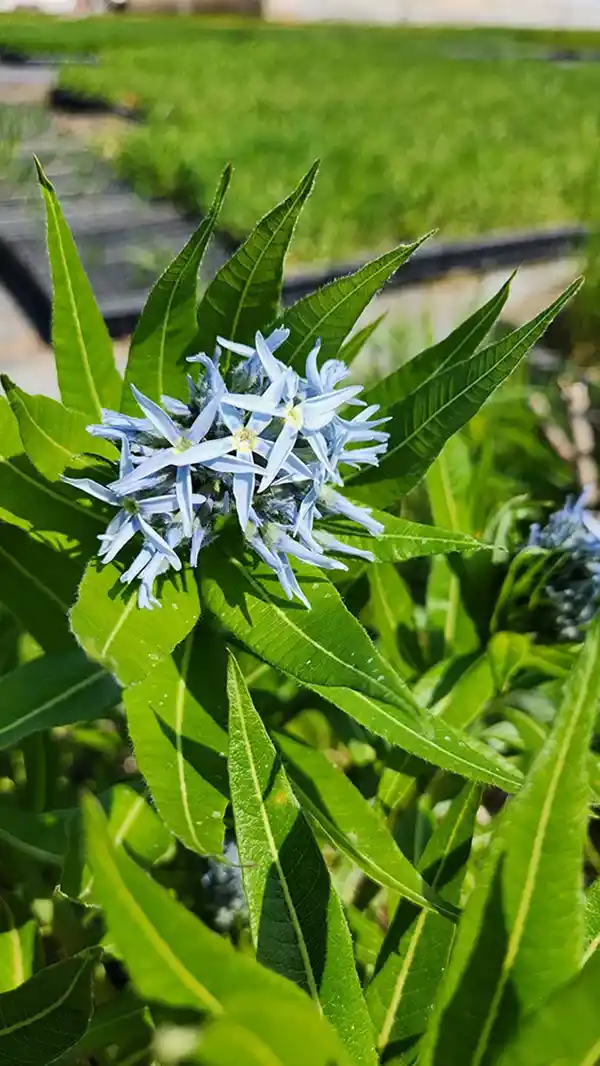 | Eastern blue star is also known as ‘Blue dogbane ‘, ‘woodland blue star’, and ‘willow amsonia.’ The plant has wider leaves and blooms in pale blue. |
Pests and Problems Associated With Arkansas Blue Star
Here is something very interesting about the Arkansas blue star: the plant is considered to be problem-free. No pests or diseases bother it.
Takeaways
Amsonia, also known as eastern blue star, is a perennial that blooms in hues of white, pink, and blue. The plant is native to North America and belongs to the Apocynaceae (Dogbane family). It is a low-maintenance plant that can tolerate brief droughts.
With the right care and good location, the plant can thrive for years and can be easily grown using seeds that are produced from pods. You can plant them in fall or overwinter indoors and later in spring transplant them in a bright, sunny location.
Happy planting!
FAQs
Is blue star perennial?
Does bluestar require direct sunlight?
Yes, the blue star requires direct sunlight for fuller and healthier blooms.
What are the uses of Amsonia?
Amsonia is perfect for borders, cottage gardens, meadows, and decor. The plant is also helpful in attracting pollinators.
Sources
Amsonia: Britannica
Eastern Bluestar: iNaturalist
Latest Blog