The scientific name for the Bougainvillea genus is Bougainvillea, which belongs to the four-o’clock family, Nyctaginaceae.
Bougainvillea Flower Guide: Taxonomy, Planting Steps, Growing Conditions, Pest Problems and Solutions
Author
Annette Hird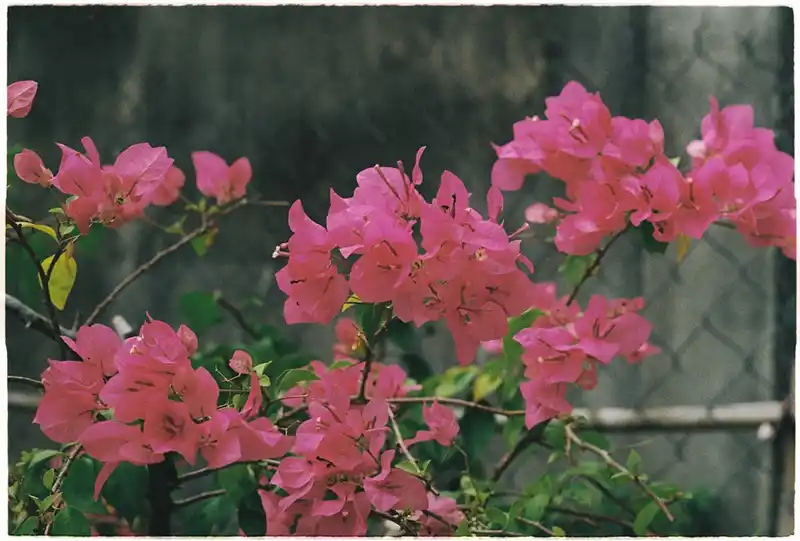
Bougainvillea is a beautiful flowering plant known for its bright, colorful blooms and fast growth. It can make a garden, balcony, or wall look cheerful and full of life. But for a healthy harvest, you need to give it the right conditions.
Don’t worry if you are new to gardening. A bougainvillea plant is not very difficult to grow once you understand its basic needs. It loves plenty of sunlight, well-drained soil, and moderate watering. Knowing the right planting steps is also important.
Let’s get started! In this guide, I have explained some features of the species, how to plant it, ideal growing conditions, popular varieties, and how to deal with common pests.
Table of Contents:
Taxonomy and Ideal Growing Conditions for Bougainvillea
When you plan to design a beautiful landscape, bougainvillea flowers are the first to come to mind. It is a vibrant, fast-growing flowering vine known for its colorful bracts. The bloom belongs to the Nyctaginaceae family, commonly called the four-o’clock family.
You can grow it as a climbing vine, shrub, or bushy plant, and it looks beautiful along walls, fences, gates, and balconies.
Here is the taxonomic classification of this pink flower and its ideal growing conditions:
| Botanical Name | Bougainvillea spp. |
| Common Name | Bugambilia flowers, paper flowers, trinitaria |
| Kingdom | Plantae |
| Order | Caryophyllales |
| Family | Nyctaginaceae (four o’clock family) |
| Genus | Bougainvillea |
| Native Area | South America (Brazil and Peru) |
| Bloom Period | Spring to fall; year-round in warm areas |
| Hardiness Zone | 9 to 11 USDA |
| Light Requirements | Full sunlight, for at least 6 hours |
| Water Needs | Moderate when fully established |
| Soil Type | Fast-draining, sandy, and acidic |
| Mature Size | 1 to 2 inches |
| Fertilizer | Prefers low-nitrogen plant food |
| Toxicity | Mildly toxic; can cause stomach issues |
| Maintenance | Low to moderate |
Also Read: Spirea: Taxonomy, Care Tips, Ideal Growing Conditions, & Much More
How to Grow a Bougainvillea Plant?
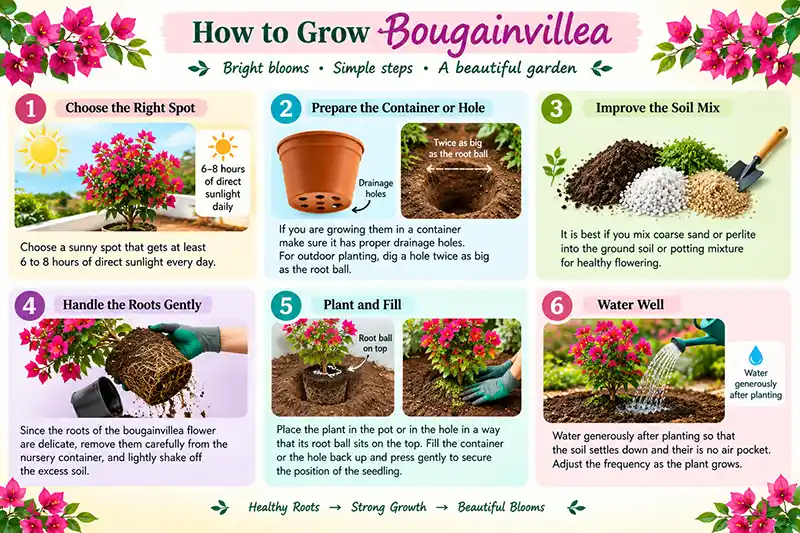
Looking for an easy and beginner-friendly way to grow bougainvilleas? You have reached the right spot! While this small evergreen plant can be grown from seeds, it is easier to cultivate using seedlings.
Quickly check out the steps for the same!
- Choose a sunny spot that gets at least 6 to 8 hours of direct sunlight every day.
- If you are growing them in a container, make sure it has proper drainage holes. For outdoor planting, dig a hole twice as big as the root ball.
- It is best if you mix coarse sand or perlite into the soil or potting mixture for healthy flowering.
- Since the roots of the bougainvillea are delicate, remove them carefully from the nursery container, and lightly shake off the excess soil.
- Place the plant in the pot or in the hole in a way that its root ball sits on top. Fill the container or the hole back up and press gently to secure the position of the seedling.
- Water generously after planting so that the soil settles down and there is no air pocket. Adjust the frequency as the plant grows.
Abodelook Pro Tip
Do not sow the seeds or plant the seedling in heavily fed and organically rich soil. This woody flower grows best when it is underfed, and the soil gets a bit dry between the watering sessions.
Maintenance and Care Tips For Bougainvillea Flowers
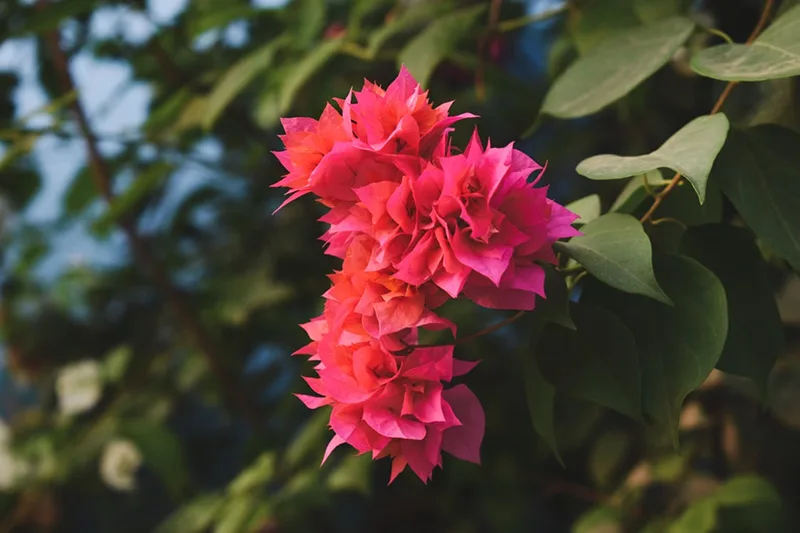
Caring for this vibrant, bushy plant is relatively easy, as it is low-maintenance. Many expert gardeners call the flower a “bloom-on-stress” plant because it performs well when it is under mild stress.
Still, here is a list of maintenance and care tips that one needs to keep in mind while growing these for optimal flowering.
- Choose a bright, sunny location. Make sure the species get at least 6 hours of direct sunlight. More daylight will give you the best flowers.
- Water only when the top few inches of the soil feel dry. Do not let the soil get heavy or damp. This can kill the roots, and eventually the flower will die.
- Bougainvilleas do not need heavy fertilizer. A low-nitrogen feed used during the growing season can keep the flower blooming. Heavy ones encourage more leafy growth.
- Lightly prune after every bloom cycle. Major pruning should always be done during late winter or early spring to encourage new growth.
- Do not repot bougainvilleas frequently.
- If the night temperature falls below 40°F (4°C), bring the container indoors or cover the plant using a thin sheet to protect it from harsh frost.
Suggested Read: Heuchera: Taxonomy, Care Tips, Ideal Growing Conditions, Pests and Diseases & Much More
Popular Bougainvillea Varieties You Cannot Miss
There are over 100 different types of bougainvillea flowers available in the market. Each species carries its own notable features. Here, in this section, I have listed five popular varieties that you definitely cannot miss.
| Name of the Variety | Description |
Bougainvillea ‘Barbara Karst’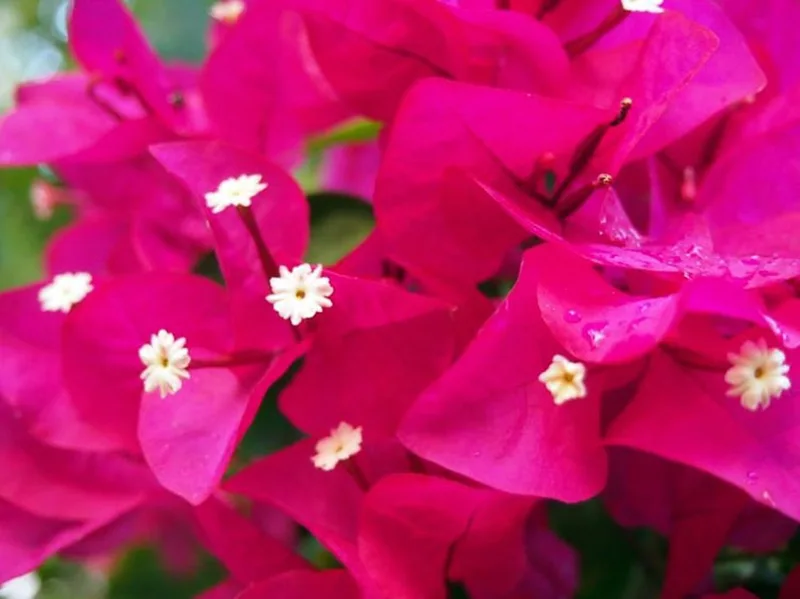 | This is one of the most popular varieties of the genus. It is a fast-growing, climbing vine. Although it is low-maintenance, due to its vigorous growth rate, it needs regular pruning. |
Bougainvillea ‘Royal Purple’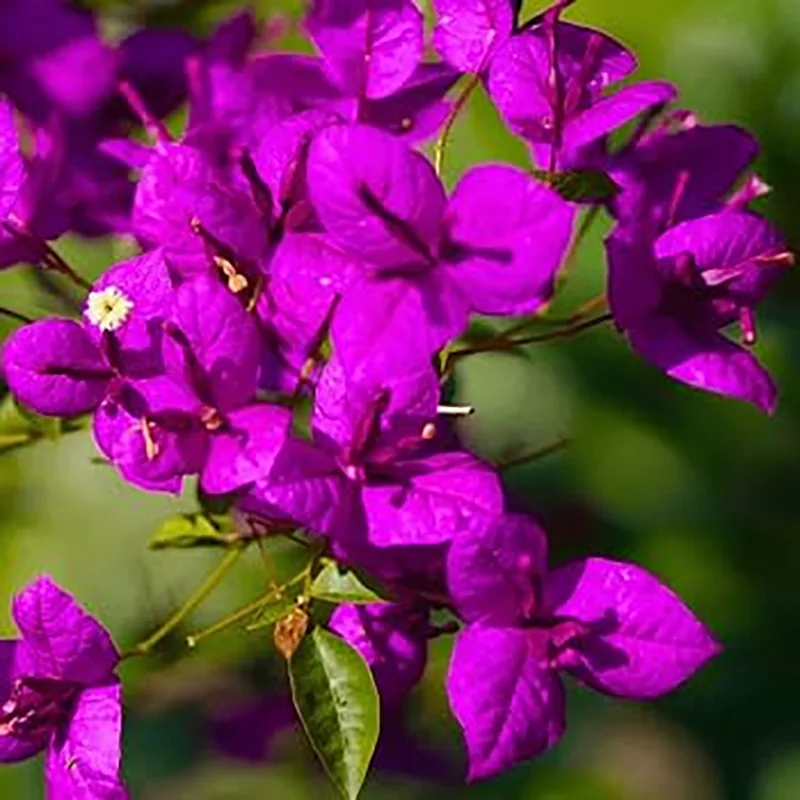 | This cultivar produces deep purple blooms that look extremely stunning. If you wish to add a pop of color to your boring front lawn, adding these can enhance its beauty. I have mostly seen them growing in containers or on a trellis. Its bushy appearance makes it a perfect flower for covering the fences. |
Bougainvillea ‘Golden Jackpot’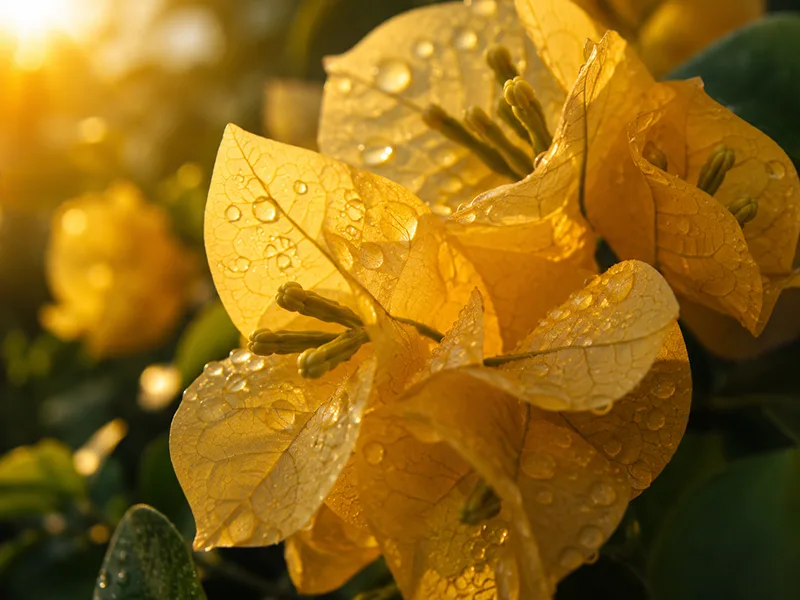 | Honestly speaking, the paper-like yellow flowers of this bougainvillea variety look extremely eye-pleasing. It creates a stunning contrast with dark green leaves. The care guide for this species is similar to other varieties, but it is one of the most admired types, especially among novice flora lovers. |
Bougainvillea ‘White Madonna’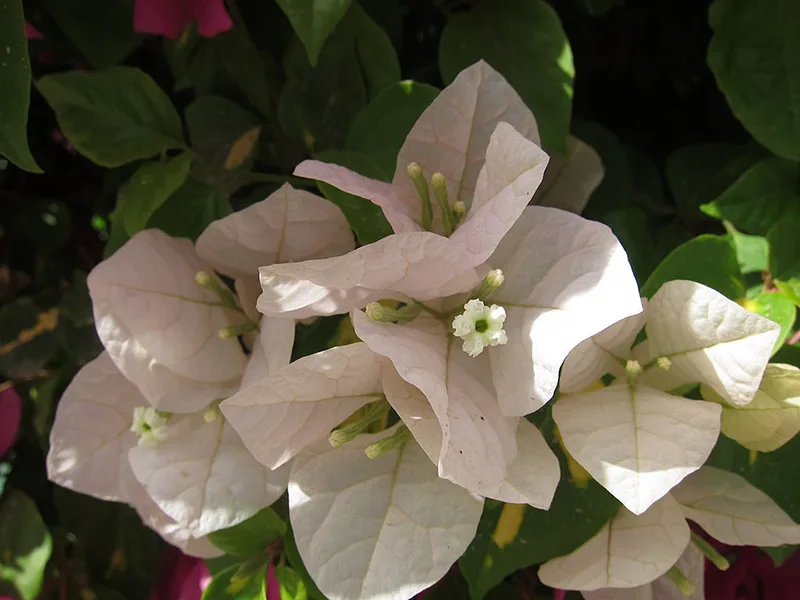 | The Bougainvillea white madonna is an evergreen climbing vine. It is famous for its white, paper-like blooms that look extremely aesthetic with its dark green leaves. Due to its stunning appearance, this flower is often used for floral arrangements conveying emotions like peace and remembrance. |
Bougainvillea ‘California Gold’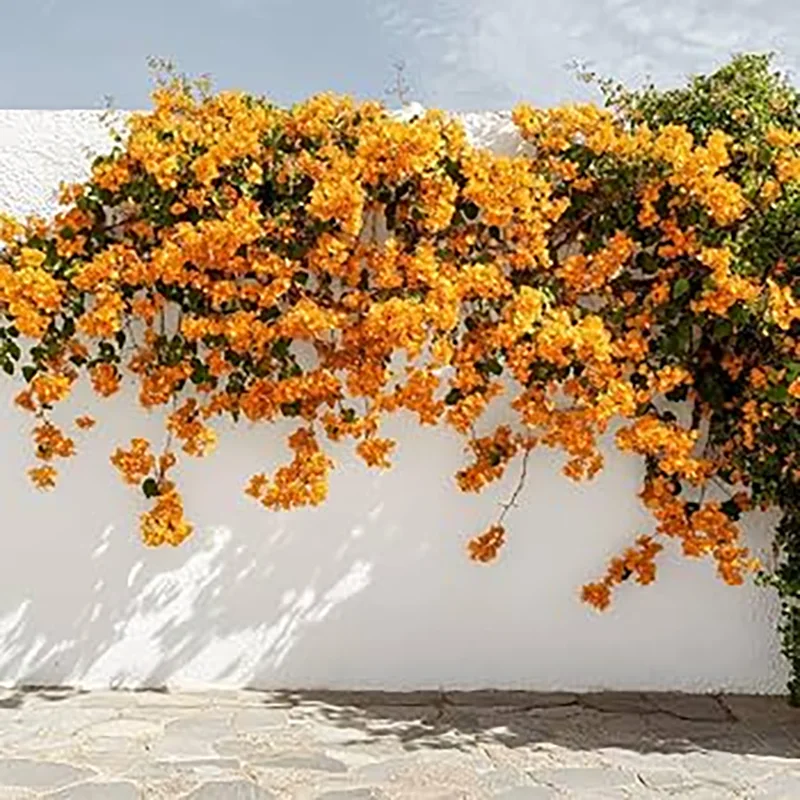 | This popular cultivar features bright golden-yellow flowers, and many gardeners consider it to be one of the most stunning varieties. Its blooms turn light orange during late summer, which makes the flower eye-pleasing. |
Common Pests and Problems With Bougainvillea Plants
Bougainvillea loopers, aphids, spider mites, mealybugs, root rot, and bacterial leaf spot are some common issues faced by this stunning species. Regular monitoring and proper care can minimise the risk.
Allow me to quickly walk you through the symptoms and treatment ideas for bougainvillea.
| Pests and Diseases | Symptoms and Solution |
Bougainvillea Loopers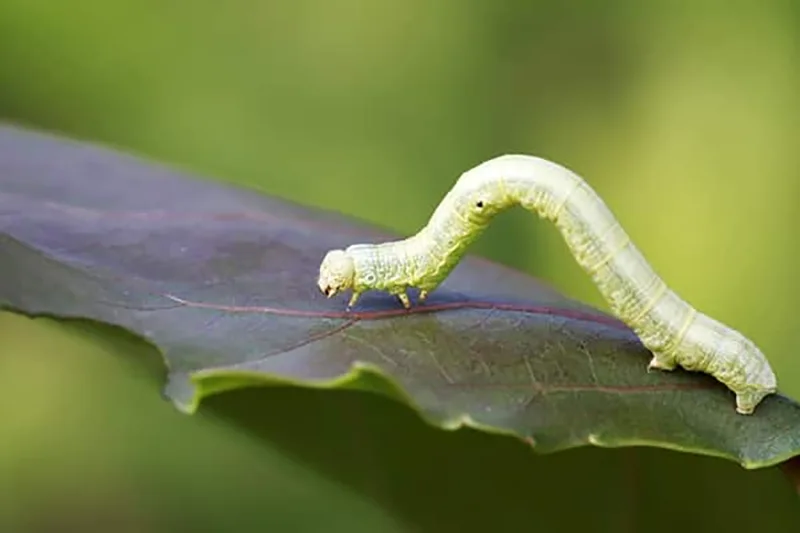 | These are green, brown, or yellow inchworms that feed on the leaves at night. You can simply control them using Bacillus thuringiensis spray and remove them manually. |
Aphids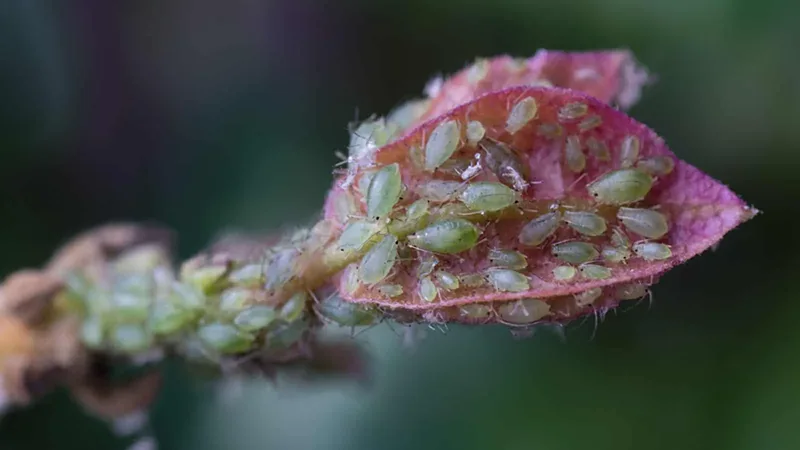 | These are tiny clusters of light green insects on the leaves or on the stem part of the flower. They cause the leaves to curl and turn yellow. Remove them with a strong water stream or use insecticidal soap. |
Mealybugs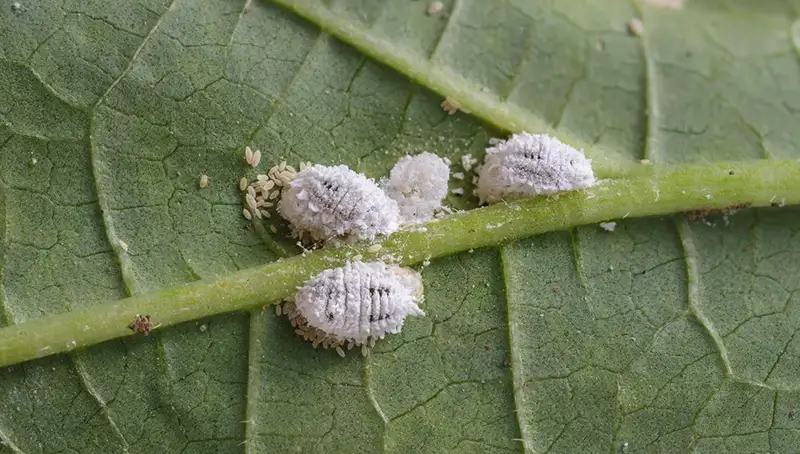 | Also known as sap-suckers, these are white cotton-like insects that leave a waxy residue on the leaves. They can stunt the growth of the plant and turn the leaves brown. You can remove them by wiping the leaves with rubbing alcohol. Isolate the plant in case of heavy infestation. |
Spider Mites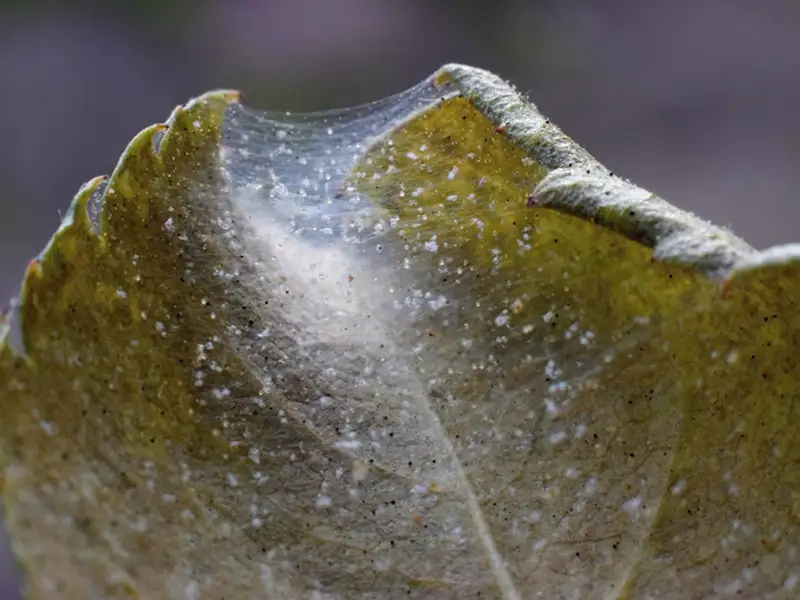 | Have you seen fine webbing around the leaves of the bougainvillea flowers? It is most likely spider mites. They can cause wilting and turn the leaves dry and brown. Wash them off with water or spray with neem oil. |
Leaf Spot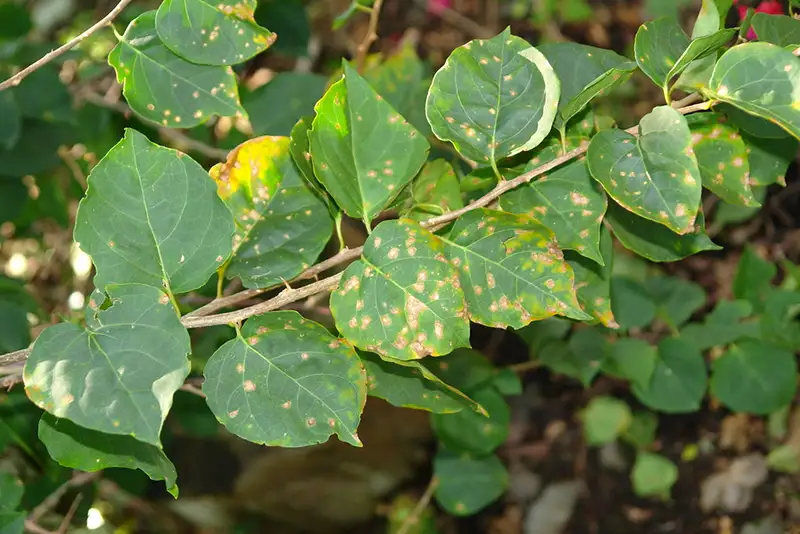 | Fungal or bacterial infections cause reddish-brown or tan spots. These usually happen due to excessive moisture. Try to keep the leaves dry. Do not overwater the plant and water only when the soil feels dry. |
Root Rot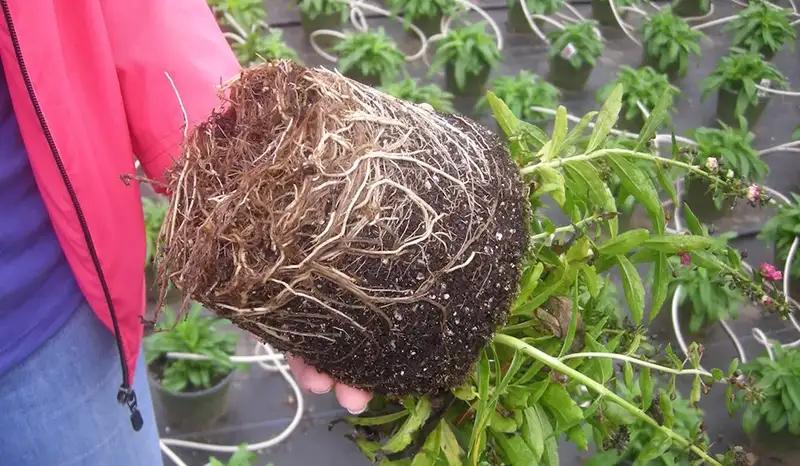 | This mainly happens due to overwatering. Waterlogged soil can damage the roots, which eventually leads to yellow leaves, and the plant dies. |
Takeaways
Growing bougainvillea has been a rewarding experience for me. It may look delicate, but the plant is actually quite hardy and loves the sun. My experience with this vibrant flower has been a mix of patience and pruning. With good soil drainage, moderate watering, and regular monitoring, it can turn any ordinary or boring corner in a garden into a colorful space.
If you are looking for a fuss-free flower that is extremely eye-pleasing, bougainvillea is worth growing!
FAQs
What is the botanical name of bougainvillea?
What is the ideal bougainvillea care guide?
Plenty of sunlight, fertile soil with a good drainage system, and moderate watering as per the temperature of the region are some basic needs for growing flourishing bougainvillea plants.
Which is the best fertilizer for bougainvillea?
A low-nitrogen, high-potassium, and high-phosphorus formula works best for the vibrant plant. Use it in the ratio 5:10:10, and you will witness healthy blooms in no time.
What is the lifespan of bougainvillea?
The average lifespan of the bougainvillea plant is 20-50 years. With proper care, it may last longer.
Sources
Bougainvillea – NC State Extension Research Paper
Bougainvillea: The Climbing Tropical Vine – Britannica
Latest Blog