Yes! These are perennial plants where the cultivar is hardy, and bulbs are grown in well-drained soil.
Asiatic Lily: How to Plant and Care for this Bulbous Perennial
Author
Annette HirdReviewed By
Cody Allison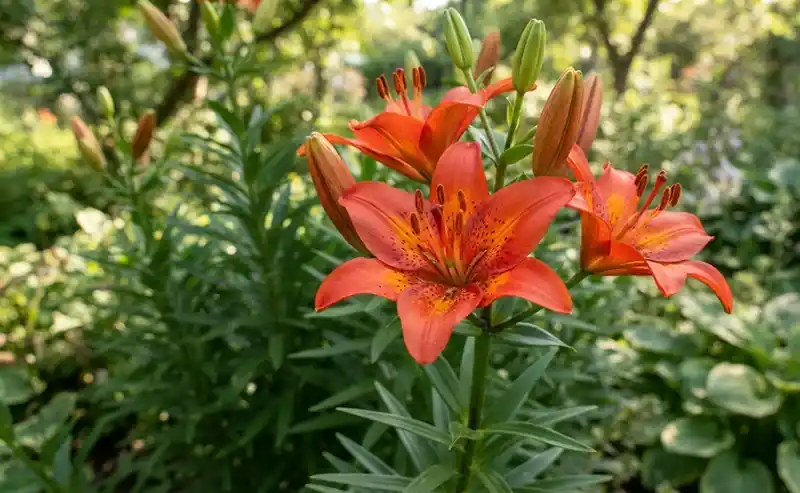
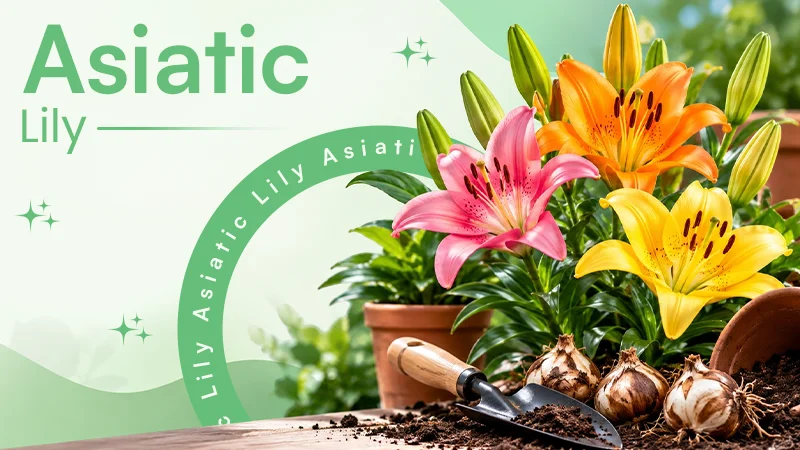
Asiatic lily is a perennial bulb that is a cold-hardy and relatively pest free plant. Unlike fragrant oriental lilies, which bloom for four weeks in the late summer, Asiatic lily plants bloom in late spring and early summer.
Available in a wide colour range including pink, orange, lavender, yellow, red and white, it features showy and upright flowers.
To grow this remarkably versatile plant in your summer garden, discover its types, care, and design ideas in this article.
Table of Contents:
Asiatic Lilies at a Glance
Asiatic lilies are fast-growing, low-maintenance plants that belong to the Liliaceae family. It is one of the best flowers that starts with A. The perennial can grow to about 2-5 feet tall, producing vibrant 4-6 inch-wide flowers. This blooms before the orientals and is found to be toxic to feline friends.
| Botanical name | Lilium Asiatic hybrids (formerly Lilium asiatica) |
| Common names | Asiatic lily, Asiatic hybrid lily |
| Order | Liliales |
| Family | Liliaceae (Lily family) |
| Genus | Lilium |
| Plant type | Bulbous perennial |
| Mature plant size | 2-5 feet tall |
| Flower size | 4-6 inches |
| Flower colours | Red, pink, white, orange, yellow, and purple |
| Bloom time | Spring and summer |
| Hardiness zones | USDA zones 4-9 |
| Native area | As horticultural hybrids, they do not have any native area |
| Toxicity | According to ASPCA, the plants are toxic to cats |
How to Plant Asiatic Lily from Seeds
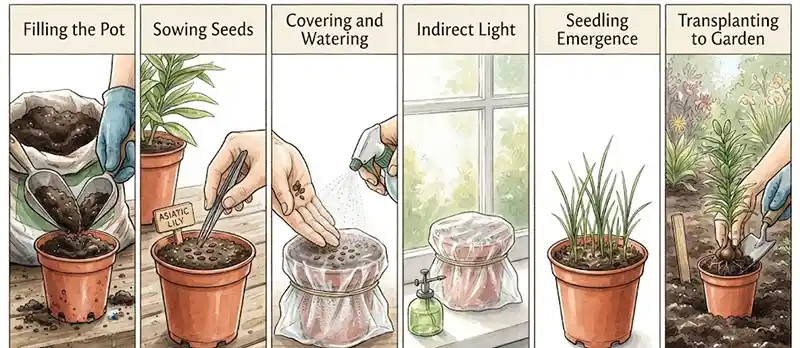
Lilium Asiatic can be grown from its seeds. However, it’s important to remember that, as they are hybrids, the new plants will likely not look like the parent plant. Also, when growing from seeds, the perennials can take 3-7 years to flower. To plant from seeds, germinate them in the potting mix, harden them off, and transplant them to the outdoors after the danger of frost has passed.
Here are the steps to plant it:
- Fill a small pot with potting mix and sow the seeds a few inches apart.
- Place the seeds in the pot with the pointy side down. Cover them with ½ inches of potting mix.
- Water them well, keep them moist, and cover the container with a plastic bag to hold in moisture and humidity.
- Keep the container in a spot that receives bright indirect light and water only when the soil feels dry.
- As the seeds germinate, the seedlings will look like blades of grass.
- Harden off the seedlings, and when the small bulbs form in the soil, transplant them to the garden beds.
Pro Tip
To use seeds from the existing plants, collect the seeds when the pod opens. Store the seeds in a cool, dry place and sow them in the following spring.
Asiatic Lily Care Essentials
In Asiatic lily care, plant them in well-draining soil in a spot that receives more than six hours of direct sunlight daily. Ensure you provide consistent moisture and fertilizer in spring for the best blooms. It does not require any pruning, but you can deadhead the flowers to prevent seed dispersal.
Here’s how to care for these plants to start a garden from scratch:
Sunlight Needs
Plant Asiatic Lily bulbs in a spot outdoors that receives full sun to partial shade. The plant needs at least six hours of direct sunlight daily to produce strong stems and abundant flowers. In warmer regions, some afternoon shade should be provided to protect the plant.
Soil Preference
The plant grows well in loose, moist, and well-drained soil. Ensure that the soil is slightly acidic with good drainage. Before planting, add compost to the soil to enhance its quality.
Pro Tip
The fleshy bulbs can rot if they are left for a longer time in saturated, poorly aerated soil. Grow the plant in a raised bed or a container if winter water collects around the bulbs.
Watering Requirement
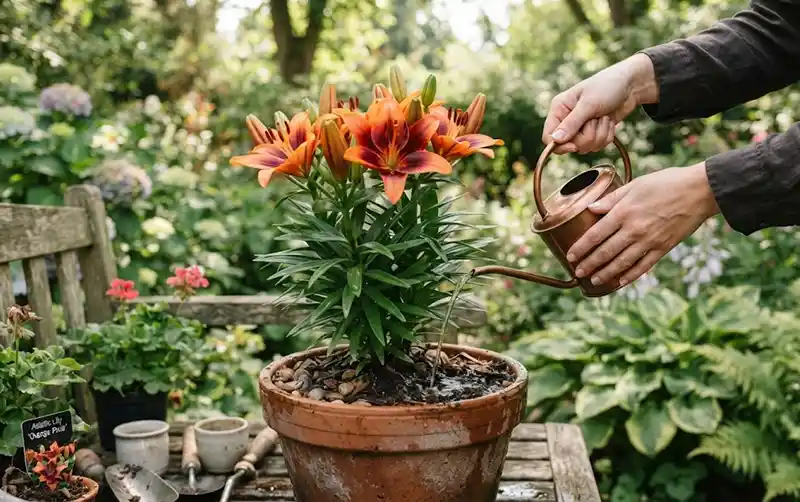
When the plant is actively growing in spring and summer, ensure consistent moisture. Provide the plants with 1-2 inches of water per week during the hot summer. Allow the soil to dry out between watering days to prevent root rot.
Temperature and Humidity
Pink Asiatic Lilies are summer-blooming perennials that prefer warm temperatures, but they can survive in the cold winters. They can tolerate cold temperatures as low as- 35°F but they can show signs of stress if temperatures go below 50°F and above 90°F. The best humidity for this plant is 40% to 60%. Excessive humidity with poor air circulation may cause fungal diseases in the plant.
Fertilizer
Feed the Lilium Asiatic pink with balanced slow-release fertilizer in the spring when the first shoots emerge. If planting in the fall, add a small amount of fertilizer granules in the hole to boost the nutrition of the soil.
Pruning
The perennial does not require any pruning. Leave the green stems and leaves on the plant and allow the foliage to die back naturally in the winter. While cutting the flowers for a bouquet or home natural decor, leave at least one-third of the stem on the plant. You can deadhead the flowers for a tidy appearance. However, after deadheading, the plant is not going to rebloom.
Overwintering
These lilies can survive the winters of USDA zones 4-9. For protection, you can cover the plants with organic mulch, including shredded leaves or straw until the spring.
Repotting
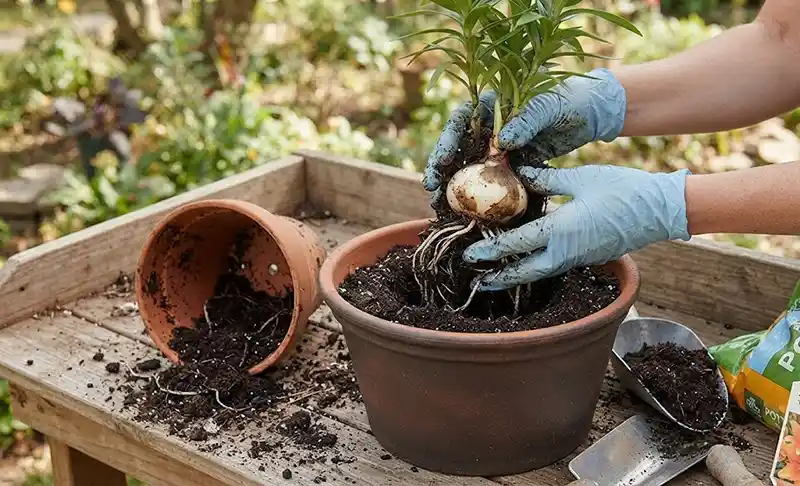
The plants thrive well in pots with drainage holes and rich potting mix. Each regular-size bulb has a container that is about 7 inches in diameter. If you are using dwarf Asiatic Lilies bulbs, plant them about 2 inches apart.
Repot the plant in early spring before the new growth or in late summer after the end of blooming. To repot, gently remove the plant from the container gently. Remove the dead and damaged foliage and dying roots. Replace it in a slightly larger container, ensuring that the bulb is at least six inches below the rim of the container.
How to Propagate Asiatic Lily
You may propagate these lilies by their bulbs, bulblets, or scales. The best time to propagate is from late summer to fall when the mother bulb has bloomed. The benefit of propagating by these methods is that the offspring will be identical to the mother plant, unlike the seed propagation method.
Let’s see the steps of each method in detail:
By Dividing the Bulbs
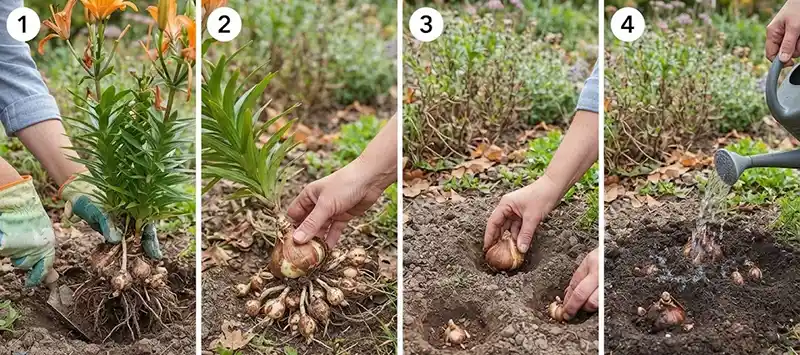
- In the early fall, dig around the plant and lift the clump from the soil.
- Shake off the excess soil to see it clearly. Detach the newly produced little bulbs, ensuring they have a growing point and clusters of little scales.
- Plant the mother bulb and new bulbs.
- Water well and keep the soil well moist till the plants are established.
By Bulblets
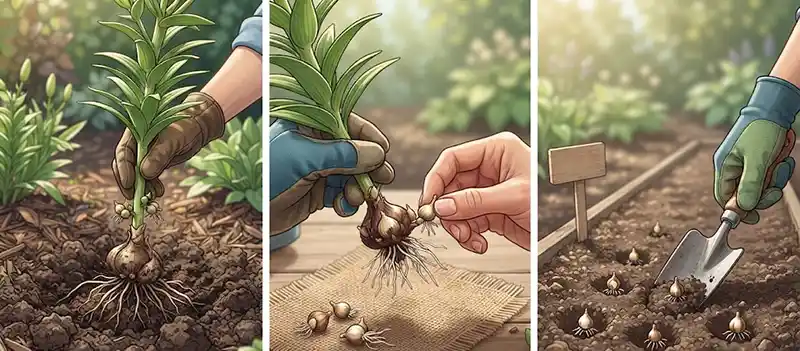
- If you pull up the lilies for dividing them, you may notice the bulblets that grow on the portion of the stem.
- Remove these bulblets, ensuring they have roots.
- Plant them twice as deep as they are in a pot or garden bed for a year.
By Scales
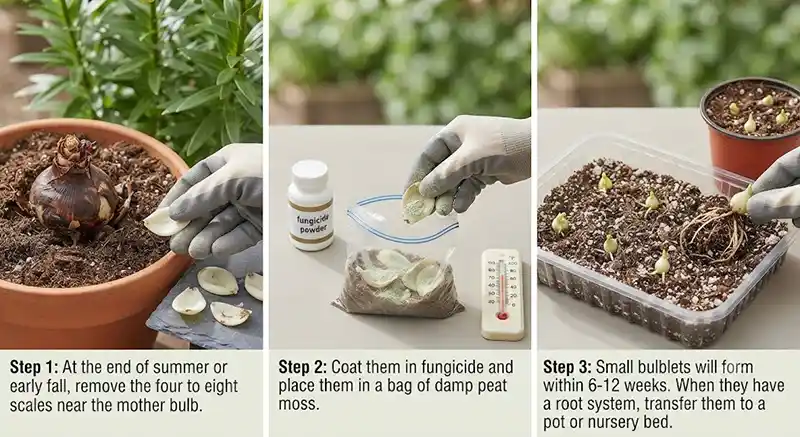
- At the end of summer or early fall, remove the four to eight scales near the mother bulb.
- Coat them in fungicide and place them in the bag of damp peat moss. Then store them at 70°F for a few weeks.
- Small bulblets will form within 6-12 weeks. When they have a root system, transfer them to a pot or nursery bed. They will be ready to bloom in 1-2 years.
Types of Asiatic Lily
As you have learned how to care for your Asiatic lily flower, now the fun part begins: choosing the right cultivar. Some of the famous types include Lilium ‘Forever Susan’, Lilium ‘Blackstone ‘, and Lilium ‘Sundew’.
Let’s understand more about the plant’s variety so that you can enhance the look of your outdoors with different Asiatic Lily colors:
| Types | Description |
Lilium ‘Forever Susan’ | This variety features flowers that have a deep orange center, purple petals, and deep yellow edges. |
Lilium ‘Apricot Fudge’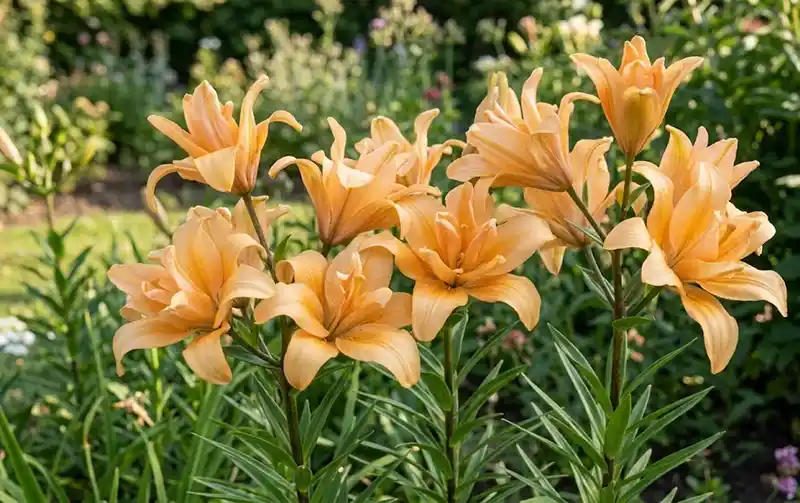 | It produces creamy orange Asiatic lilies that are fragrant and eye-catching. |
Lilium ‘Blackstone’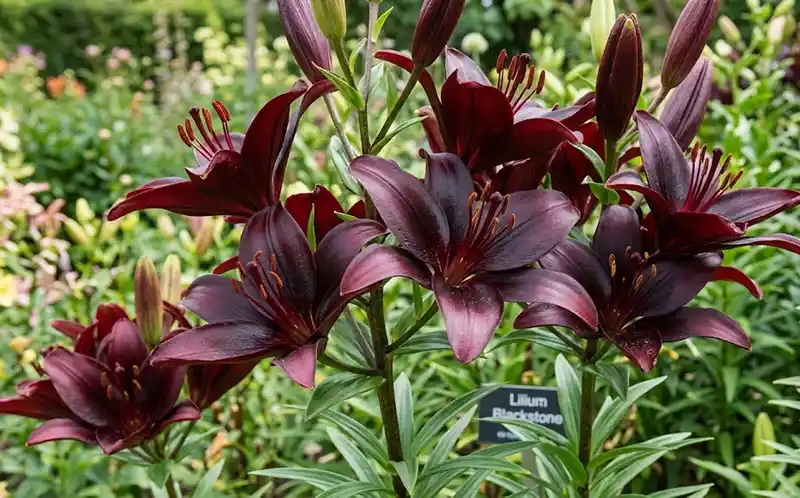 | This type has deep burgundy or almost black blooms with a shiny surface that contrast beautifully with the orange anthers. |
Lilium ‘Sundew’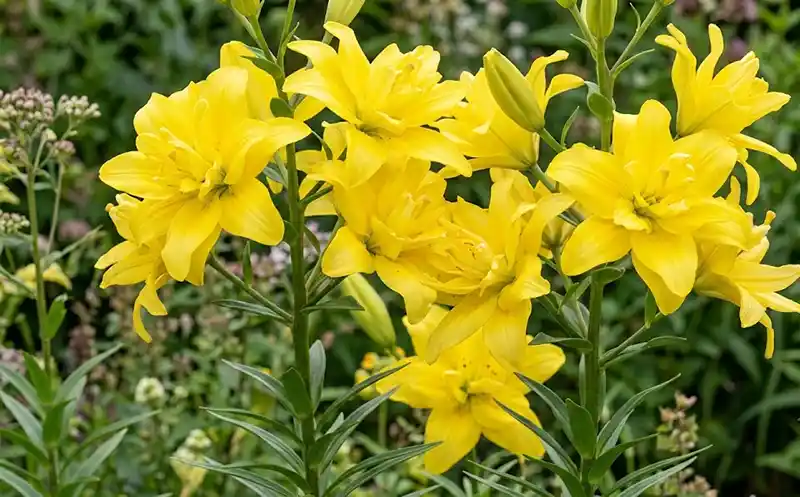 | It is a yellow Asiatic lily variety with dark red freckles. As this type lacks pollen, it works well in cut flower arrangements. |
Lilium ‘Red Velvet’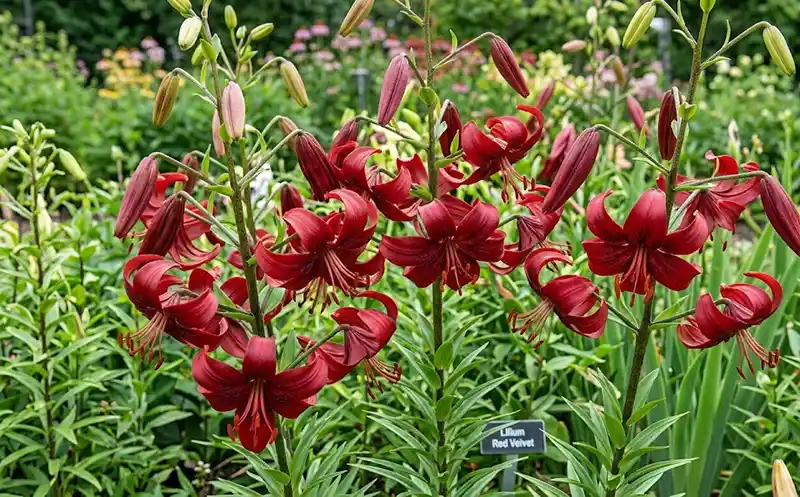 | This is a red Asiatic lily type that has down-facing blooms with brown accents. |
Pro Tip
If you want to use the blooms as cut flowers, while cutting, leave plenty of stem and foliage behind. Therefore, the bulb can continue to photosynthesize after the flower.
Pests and Diseases in Asiatic Lily
These lilies can be susceptible to damage from pests like lily beetles, aphids, thrips, and slugs. They can also develop fungal diseases, including botrytis blight and basal rot.
Let’s understand these pests and diseases in detail:
Pest Infestations
- Lily beetle: This is one of the most common pests that appear on this plant. The adult beetles and larvae damage the leaves, buds, and flowers. To treat this issue, hand-pick the adult insects and drop the larvae in soapy water.
- Aphids: These pests feed on the new growth and may contribute to virus transmission. To prevent them, dislodge them with a strong jet of water or use insecticidal soap or neem oil.
- Slugs and snails: They can damage the tender new shoots in the plant. To prevent them, use a physical barrier or apply organic iron phosphate slug bait.
- Thrips: These pests can cause scarring or distortion in the foliage and blooms. To treat this issue, prune the plant or use insecticidal spray in case of severe infestations.
- Vine weevil: They are commonly seen in container-grown plants, causing wilting and dying. To prevent them, hand-pick them at night and apply beneficial entomopathogenic nematodes in the soil to target the larvae.
- Rabbits and voles: In the gardens, they can damage the bulbs and shoots. Protect your plants with vole-resistant bulb baskets or physical mesh fencing.
Diseases that Affect Asiatic Lilies
- Botrytis blight: This disease occurs in wet and humid conditions. It causes brown leaves and limp foliage. To prevent this issue, improve air circulation and spray with fungicide.
- Basal rot: In this disease, the underpart of the bulb gets affected. It causes the yellowing of leaves, stunted growth, and eventual death of the plant. There is a possibility that the mother bulb may not recover, though you can divide and obtain the younger bulbs if they are not affected yet. To protect the plant from this disease, avoid over-fertilization, add mulch, and improve soil drainage.
Design Ideas with Asiatic Lily
Asiatic hybrid lilies are more effective when they are intentionally planted in the landscape rather than just scattered. Select neighbouring plants that have blue and violet flowers or silver foliage. You may also plant them with low-growing perennials to cover the lower stems or the later-flowering plants to keep the surroundings vibrant after the lilies finish blooming.
- Grow with plants that have blue and violet flowers. They contrast wonderfully with the Asiatic Lily orange, red, and yellow flowers.
- Choose companion plants with silver foliage; this will soften its strong flower colours.
- Low-growing perennials are great to be planted alongside this flowering plant. They help cover the lower stems without hiding the flowers.
- Later-flowering plants are also suggested as they add colours when the Asiatic lily display ends.
Bottom Line
Asiatic lilies are truly bold and beautiful, with a low-maintenance nature and vibrant colours. These plants bloom early and produce bulbs that double each year. By keeping them in full sun, ensuring well-drained soil and frequent watering, you can see this bulbous perennial bloom year by year in your garden.
FAQs
Are Asiatic lilies perennial plants?
How tall does a white Asiatic Lily grow?
There are many types of white Asiatic lily cultivars. They can generally grow from 24 to 30 inches tall.
When should the bulbs of Asiatic hybrid lily be planted?
The best time to plant the bulbs is fall or early spring. It’s suggested to plant them immediately after the purchase, as they can lose their moisture if kept in storage.
Are Asiatic hybrid lilies toxic to cats?
Yes! These are true lilies and considered toxic to cats.
Are Asiatic hybrid lilies fragrant?
Most of the types have little to no fragrance, though there are some cultivars that are lightly scented. If you are looking for fragrant lilies, it’s better to choose oriental or trumpet lilies instead.
Sources:
Asiatic vs. Oriental Lilies… Same Plants or Different? – The Ohio State University
lily – Britannica
How to grow lilies – BBC Gardener’s World Magazine
Latest Blog