A perennial, grown as an annual in most of the country. It overwinters outdoors from about zone 8 upward, dying to the ground and resprouting, and is a bedding plant anywhere colder.
Lantana Plant: Taxonomy, Care Tips, Varieties, And Whether It Comes Back
Author
Annette HirdReviewed By
Cody Allison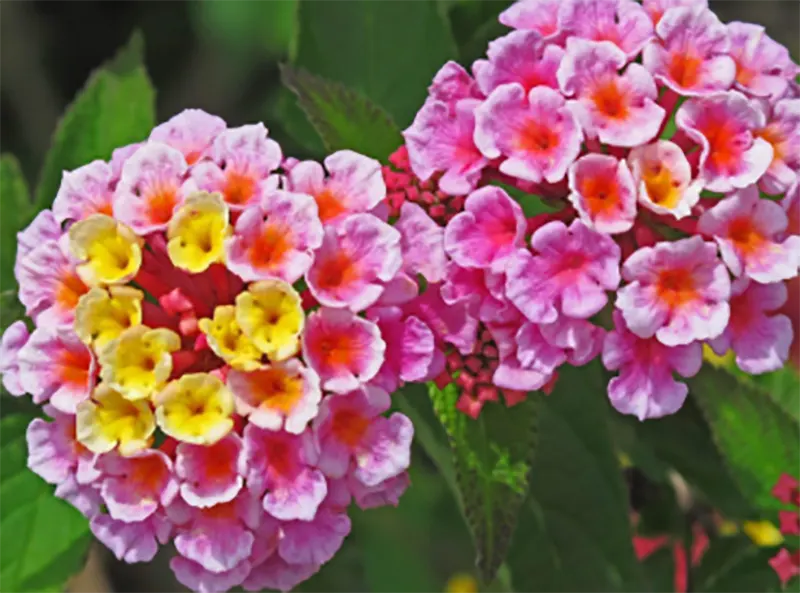
Lantana is a perennial shrub, and most of the country buys it as a bedding plant annually. Both of those are true at once, which is why nobody can give you a straight answer about whether it comes back.
The honest version depends on your zone and, more than anyone mentions, on which cultivar you picked up. That one decision also settles whether your plant sets poisonous berries and whether it seeds itself into the neighborhood.
Read on for lantana plant care: taxonomy, sun and water, growing it in pots, the varieties worth asking for by name, and what to do about the problems. It is also one of the better hummingbird flowers you can plant.
Table of Contents:
Is Lantana A Perennial Or An Annual?
Lantana is a perennial plant that grows mostly in zones 9 to 11. Some of the species of this plant also grow in zone 8, but here, the plant becomes exceptionally root-hardy, thus not acquiring the typical Lantana characteristics. A few cultivars of it also grow in 7b.
This gap is exactly where all the confusion starts because the answer to whether a lantana plant is annual or perennial cannot ever be decided on the basis of the zones it is grown in. The real answer only lies in what kind of cultivar you are growing.
This is also the reason why some nurseries say that a Lantana plant is perennial in zones 9 to 11 while others specify that it is perennial in regions 8 to 11. Moreover, if we talk about the full species of plant, then the range for the plant extends from 7a to 11b. All three describe the same plant, yet none of them answers the question accurately.
This feature is actually the most interesting about a lantana plant, and this is often caused by people getting confused about whether a lantana is perennial or annual. A lantana plant, when grown in cold regions, has the habit of dying at its top growth and surviving at its root, which makes it perennial on paper but not in practice. So in zone 8, a lantana can be called perennial, but one should always remember that here, the plant grows from the ground rather than from the old stems.
A lantana plant that is perennial does not grow back to look like its original self. In fact, it does not look like anything at all for a few weeks.
Quick tip
Hardy lantana puts up no growth at all until both the soil and the air have warmed properly, which can be well into May. I have watched more than one perfectly alive crown get dug out in April and replaced with a new plant from the same nursery. Leave it until June before you call it.
What Does A Lantana Look Like?
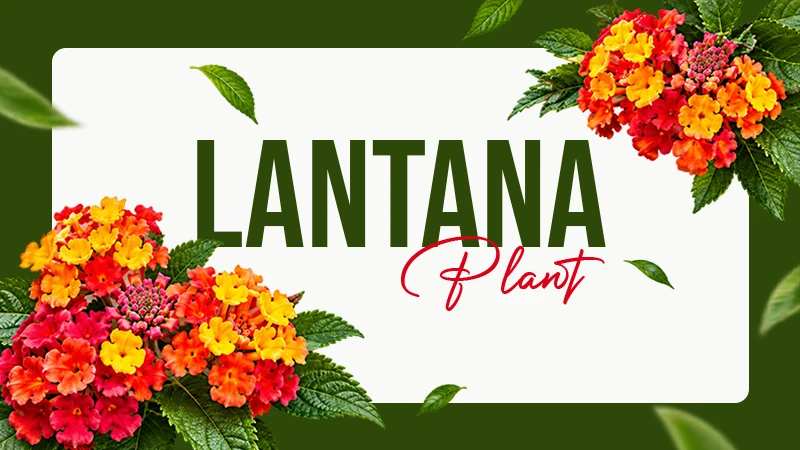
Lantana plants have very unique features when it comes to their appearance, like having a rough and square-shaped stem. They are also quite popular for their flowers, which look like clusters of tiny tubulars with a flat top.
Each of these flower clusters holds up more florets than one can imagine. This means that the florets are actually all under one inch, fitted across five lobes, thus making a total of thirty florets in one single cluster. The leaves also have an interesting and unique feature, just like the stem and the flowers. They are about 3 to 6 inches long and have a rough texture on their upper side. They also have a more oval shape, and when crushed, they give off a sharp smell that is rarely easy to ignore. The stems of this plant actually have a cross section which has a shape of square, with some types carrying small prickles.
However, the size to which the plant grows depends entirely on the kind of plant you’re growing. This means that if you prefer more bushy cultivars of the lantana plant, then you should expect height up to 5 to 6 feet in a warm climate.
Also, if the kind you’re growing has features of spreading the roots a lot more than regular kinds, then the height would typically grow up to 1 to 2 feet high, and they would run up to 4 feet wide. Compact bedding types have it all different because they barely pass a foot either way.
Did you know?
A lantana cluster is usually two colors at once because the individual florets change color as they age. The newest ones sit in the middle, the older ones ring the outside, and what you read as a yellow-and-pink flower is really the same flower at two different stages.
Lantana Plant Taxonomy And Growing Conditions
Most of the care for a lantana plant actually comes before it is rooted in. This is because one has to make sure that it is being provided with the sufficient conditions necessary for it to survive.
The Lantana flower plant is actually a shrubby member of the verbena family, which loves heat very much. This is why, before putting it in the ground, one has to ensure that it will receive full sun and sharp drainage. These are the only two basic conditions that this plant requires once it has rooted in, and then it almost needs nothing from you.
| Botanical name | Lantana camara (recent work treats the common garden plant as Lantana strigocamara) |
| Common names | Lantana, common lantana, shrub verbena, yellow sage |
| Family | Verbenaceae (verbena family) |
| Genus | Lantana |
| Native area | West Indies, Mexico through tropical America |
| Hardiness | 7a to 11b USDA zones; reliably perennial from 9 |
| Light requirements | Full sun, 6 or more hours daily |
| Type | Woody shrub, herbaceous perennial or groundcover by cultivar |
| Soil | Clay, loam, sand, or rocky, provided it drains; pH 6.0 to 8.0 |
| Water requirements | Moderate while establishing, drought-tolerant after |
| Mature size | 1 to 6 ft tall, 3 to 5 ft wide |
| Season of interest | Summer through fall, until the first frost |
| Tolerant | Heat, drought, salt, humidity, deer |
| Not tolerant | Shade, wet feet, frost |
| Toxicity | Toxic to dogs, cats, and horses; unripe berries are the dangerous part |
Read more: 50 Fall Flowers: African Daisy, Calibrachoa, Petunia, Nemesia, And More!
Does Lantana Need Full Sun Or Shade?
Lantana plant is one of those heat-loving members of the plant family that require as much heat as you can give them. This means that full sun for the duration of six hours every day is actually the bare minimum for such plants, and one can actually build on this. So the choice of weather to place a lantana plant in the Sun or in shade is not a choice that you get to make.
In fact, keeping it in full sun is actually a good idea rather than keeping it in shade because what it does in the shade is actually more annoying. In shade, the plant does not die, but it stops growing flowers and keeps growing leaves. And because the foliage never dries out in the shade, the plant actually picks up powdery mildew.
In fact, if your foliage is not drying out, and you have kept the plant under a good amount of sunlight, then it probably means that it has a second cause. And this cause actually has the opposite way to fix it. Sometimes over-feeding a plant can lead to it having no flowers and identical leaves, so if your plant is under full sun and still showing such signs, then you know what the problem is, and you might want to take a stop at that fertilizer.
How To Grow Lantana
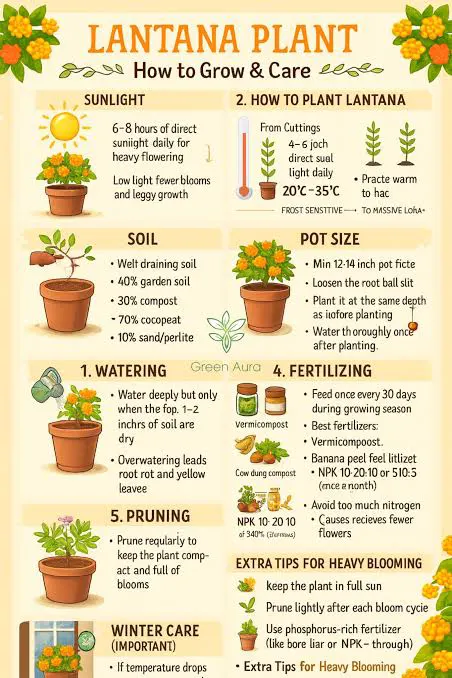
Plant it late and keep it hungry.
Planting
One has to remember a lot of factors while planting a lantana plant to make sure that the plant actually grows healthily. The first and foremost is that you have to wait at least 2 weeks until the last frost has passed because you will be rewarded with a good lantana plant only in warm soil, and you will get a stunted plant in the cold ground.
Since the plant also takes up a lot of space in terms of spreading and height, it is always recommended to make sure that you plant a lantana with enough spacing between two plants so that they do not overlap with each other. This means that space the plants with up to 12 inches of width if the cultivar you are growing is compact, but only space about 3 feet if the plant is a bushy one. Dig a hole twice the width of the root ball, set the plant level with the surface, and water it in.
Watering
This one is worth remembering if you want a plant that actually flowers. You should always keep the plant moist only for the first few weeks, and then you should stop watering it because an established lantern plant is actually drought tolerant. Which means that it survives and grows more healthily if you stop watering it. And even if you have to, in certain situations, always prefer to water the soil rather than the foliage.
However, you should also remember that drying out the plant too much also has its own set of side effects. A plant refuses to flower in conditions like these. And while it is blooming, one thorough soak covers any week that brings under an inch of rain.
Feeding And Pruning
A lantana plant actually requires less effort than most people assume, and this generosity is actually more harmful for these plants than neglect ever will be. So if you are feeding the plant, make sure that you feed it lightly by combining it with the use of a slow-release fertilizer. Not feeding it at all is the best option.
Some other caring tips include shearing the plant in the summer so that it keeps flowering. This step is actually pretty important because it can increase the growth of a plant by at least one third of its height and spread. One mistake that most people make is that they also hard-cut the plant during summer, which leaves the plant more at risk of drying out, and this is why it is advised to always save this procedure for the spring. Cutting hard in fall actually costs them hardiness, especially when they are needed in winter, while perennial types get taken back to 6 to 12 inches in March.
Growing Lantana In Pots
Most people often assume that a potted lantana would actually not flower because of the less space it has. But none of that is actually true because growing a potted lantana is the easiest version of this plant to get right. This is also the version of the plant you should opt for if you are a beginner and do not know how to grow a lantana properly.
The reason why most people actually consider this an easier version is because a container solves the problem of the good drainage that a plant requires, which most people seem to get wrong in the ground. Moreover, an added benefit is that you can move the whole container to a different spot during different seasons, which means that the chances of it getting destroyed by frost are much lower.
All you need to grow this plant is a pot with a good drainage hole and a potting mix. One thing to remember so that you know which cultivars you want and how you want to grow it is that while this plant, when potted in a hot deck, requires more water than the same plant being potted in a bed, the plant in the deck also blooms harder, which means that it will flower more generously.
This is why, if you like flowers and are growing this plant especially for this reason, then planting it in a bed is not that much of a use to you. Trailing types are the ones to use in baskets and window boxes.
Moreover, if you grow this plant in a pot, then you can prevent it from overwintering outside, which results in this plant having harder growth. So the best way to actually make sure that your plant grows healthily in a pot during winter is to cut it back during spring. Then bring this plant to a cool room before the first frost appears and water it continuously through the winter, after which you can put it out again once the nights start becoming warm. Our planters and pots range covers most of what this needs.
Lantana Varieties By Color
Buy lantana by cultivar name, not by color alone.
- Yellow. This is the typical standard of a yellow lantana plant that most people buy, and it is actually a compact variety of the plant which is popularly known as ‘New Gold’. Other cultivars of the same plant which have a yellow shade are ‘Chapel Hill Yellow’ and ‘Chapel Hill Gold’. These species are hardy to zone 7b and hence matter more in cold gardens than hot regions.
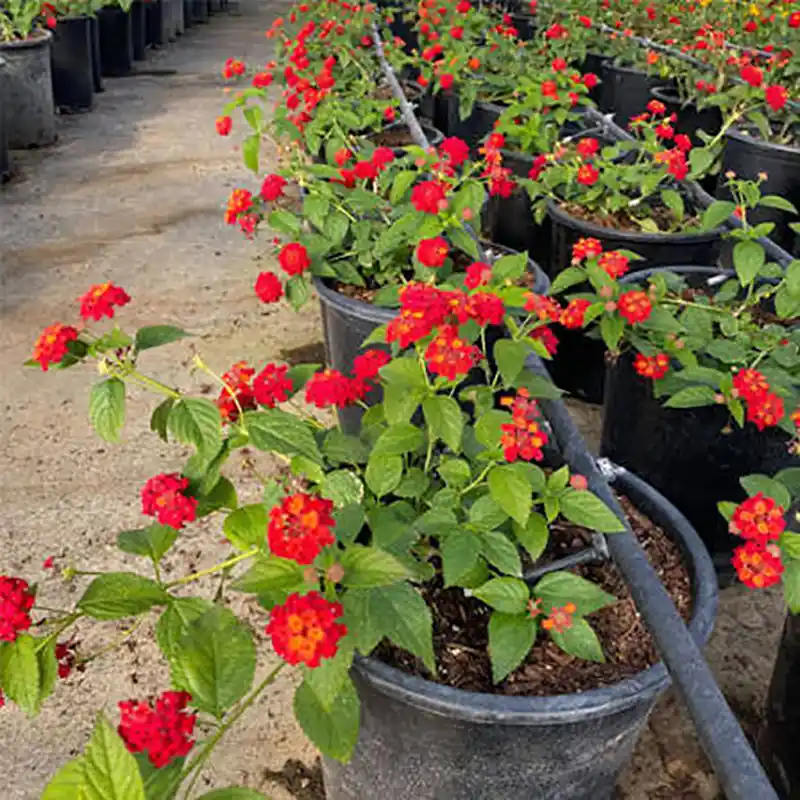
- Red and orange. This is actually one of the most interesting colour palettes of a lantana plant because the red shade of a lantana plant actually does not read as one colour because it changes its shade as it matures. This means that when this plant ages, the florets actually shift from a bright red colour to an orange. The most popular variety of this shade is ‘Dallas Red ‘, which is an upright plant with fiery orange-red clusters.
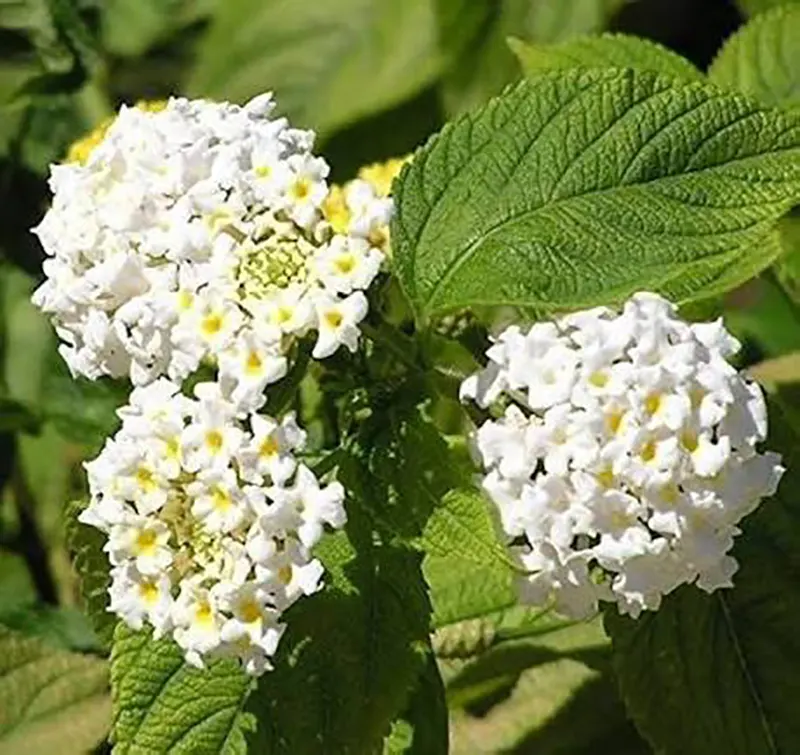
- White. This kind of lantana is mostly found on high shelves and baskets. This is because a white shade lantana suits walls more than it will ever suit beds. The most popular amongst these is the Lantana montevidensis, which is said to be a trailing species. Hence, these plants are actually low in height, but they spread over a quite vast area, thus creating the spilling effect.
- Lavender and pink. If you live in a region with a cool climate, then you might want to grow ‘Miss Huff’. This is the variety of the plant that can survive a real winter and can also reach up to a height of 5 feet. This is a tree-sized shrub, which in some places, especially in the upper South, returns year after year, thus making it an annual plant in that region.
- Sterile cultivars. ‘Bloomify Red’, ‘Bloomify Rose’ and ‘Luscious Royale Red Zone’ have no viable seed or pollen at all, and ‘New Gold’, ‘Miss Huff’, ‘Samantha’ and ‘Mozelle’ produce no berries either.
That last group is worth more than it sounds, and the next section explains why.
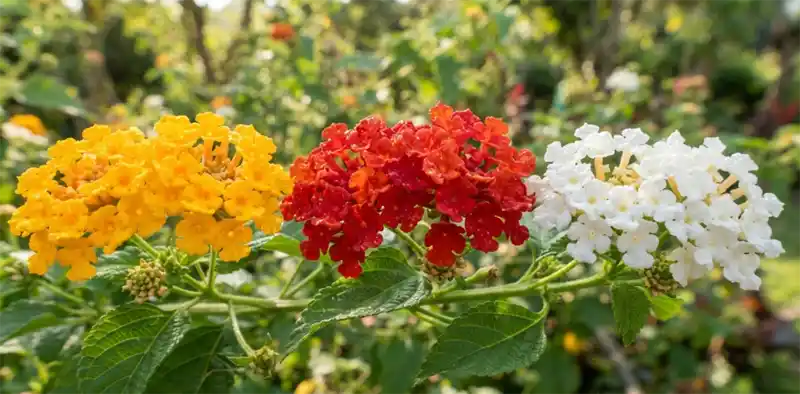
Florets change color with age, so most clusters carry two shades at once.
Why Is Lantana A Problem?
There are two reasons why growing a lantana plant can be a huge issue for some people, and one alteration while buying the plant actually deals with both of them.
The first and the most obvious one is poisoning. This plant actually isn’t as harmless as it seems because every part of this specific plant is toxic, and it also sits on the ASPCA’S toxic list for dogs, cats, and horses. It can also cause symptoms like vomiting, diarrhoea, and prolonged difficulty in breathing when this plant is consumed by a living organism.
While the plant itself is very toxic, the greenish purple berries are the absolute worst part about it, and because these berries are most likely to be eaten by animals, livestock stands at the greatest vulnerability. The leaves can also irritate the skin if handled with bare hands.
The second reason, which is also as harmful as the first one, is the vast spread that plants showcase. When the birds eat the berries of such plants and drop the seed in warm regions, the plant can actually spread into various regions and thus destroy the native growth of that plant. It carries an invasive listing in the UF/IFAS Assessment, which does not recommend the common form anywhere in Florida.
This is why we can say that both of the problems come from the same cause, that is, the berries. In fact, according to Clemson’s extension service, a cultivar that grows no fruit and hence does not produce any seed actually avoids the poisoning risk. This is why sterile cultivars are actually preferred more in neighborhoods which have a lot of homes surrounding them because these species do not produce berries and hence make the plant safe.
Moreover, you do not have to worry about the plant growing into a toxic one because a plant that has no viable seed cannot grow even if provided with a natural reserve. This is why sterile cultivars are a good option and often recommended to grow if you have a dog that eats things.
Takeaways
Most of the answer to whether a lantana plant is perennial or annual comes from what your answer is about the kind of cultivar you are growing and the zone in which you are growing it. Most people assume that the plant becomes perennial or annual based on what you do with the plant during winters or how carefully you mulch it, but that’s not the case at all.
Mainly, this plant is actually a perennial plant which can be grown wonderfully and without any difficulties if it is given full sun with sharp drainage. Six hours of full sunlight is actually the bare minimum, and the plant can handle much more than that. This plant also requires little to no feeding because overfeeding it can actually destroy it.
Overfeeding the plant and not giving it enough sunlight actually has the same result, that is the plant will start growing too many leaves and will not grow even a single flower in it. This is why, if you observe such patterns in your plant, a good option is to either reduce the use of fertilizer or to increase the light that falls on it. Most often it is only one of these reasons and not both of them.
The best recommended method to choose what cultivar kind you should buy is to specify the name while buying because a sterile cultivar might flower just as nicely as any other variety of this plant; additionally, it does not produce any poisonous berries, which makes it safe to grow in your home.
Happy planting!
FAQs
Is Lantana An Annual Or Perennial Where You Live?
Are Lantanas Perennials In Pots?
Only if you move them. A pot gives no root insulation, so a container plant freezes in zones where the same cultivar survives in the ground. Bring it into a cool, bright room over winter.
Does Lantana Come Back Every Year?
In zones 8 to 11, yes, from the roots. The top growth dies off, and new shoots appear late, often not until May, which is why so many live plants get dug up in spring.
Lantana: How To Grow It From Cuttings?
Take 4- to 6-inch tip cuttings in summer, strip the lower leaves, and root them in moist mix. Expect roots in about four weeks. Named cultivars do not come true from seed, so cuttings are the only way to copy one.
What Eats Lantana Or Damages It?
Lace bugs are the main pest, with mites and caterpillars in dry spells and whiteflies on overwintered plants. Deer leave it alone. Powdery mildew and root rot both point to too much shade or water.
Is Lantana Plant Perennial Everywhere In The US?
No. It is perennial across the South and the warm West, and strictly an annual in the North. The cold limit runs through zones 7 and 8, where cultivar and winter drainage decide it.
Sources:
Lantana camara — NC State Extension Gardener Plant Toolbox — https://plants.ces.ncsu.edu/plants/lantana-camara/
Lantana (HGIC 1177) — Clemson Cooperative Extension Home & Garden Information Center — https://hgic.clemson.edu/factsheet/lantana/
Lantana — UF/IFAS Gardening Solutions, University of Florida — https://gardeningsolutions.ifas.ufl.edu/plants/ornamentals/lantana/
Lantana — ASPCA Toxic and Non-Toxic Plants — https://www.aspca.org/pet-care/animal-poison-control/toxic-and-non-toxic-plants/lantana
Latest Blog