Buying the perfect equipment for your bathroom is quite easy because there are only things you think that you have to check. Firstly, you have to check your requirements, and then you have to pair them with what your current bathroom can accommodate. Lastly, all you have to do is check your lease agreement for modification rules, and you are good to go.
How to Choose Your First Bidet
Author
Kamron SandersMost people make expensive modifications to their bathroom without ever actually understanding what their bathroom needs and what it can fit.
This is one of the most important things which you should check before making any new additions or modifications to your bathroom because your first bidet should be able to work easily in a bathroom that you already have.
You should not require an expensive remodel for it to work because no matter how expensive the equipment is, if it cannot fit into your bathroom because of a plug that sits out of reach or because of control buttons that do not function easily, then the seat is as good as nothing.
Quick answer: There are certain modifications which you should consider before you ever actually buy the equipment or make changes in your bathroom to fit that equipment. This is because while a feature may look effective, if you do not really need it, then it does not make sense to install that in your bathroom.
For example, if you are not the biggest fan of heated water and can handle a room-temperature one, then installing a heater does not make sense. Similarly, you should also check the lease agreement because there are certain modifications that you cannot make in a rental home, and confirming it beforehand saves you money and time.
This is why it is recommended to observe five things before buying: your budget, toilet fit, utility access, reach to the controls, and rental permissions.
Table of Contents:
How Do You Choose Between the Main Bidet Types?
Select based on the features you’ll need and what your bathroom’s fittings can support. A bidet seat replaces your existing toilet seat; an attachment sits under it. A handheld sprayer provides you with manual control over aiming, whereas a portable model requires no permanent water connection.
| Type | Installation | Power | Space needed | Cleaning control | Warm water | Drying |
|---|---|---|---|---|---|---|
| Electric seat $300 to $800 or more for heated-water models with air drying | Replace seat and connect water supply | Suitable bathroom outlet | Correct bowl fit and rear clearance | Panel or remote; adjustable spray | Built-in heating on equipped models | Air dryer on equipped models |
| Non-electric attachment $30 to $100 | Mount beneath seat and connect water supply | None | Clearance beneath seat and beside controls | Usually a side dial | Only with a suitable warm-water connection | No powered dryer |
| Handheld sprayer | Connect supply hose and position holder | None | Reachable storage for hose and handle | Manual aim and trigger pressure | Requires a compatible mixed-water supply | No powered dryer |
| Portable bidet | Fill before use; no fixture installation | Hand pressure or battery, depending on model | Bottle storage | Manual aim; squeeze or button | Fill within the manufacturer’s temperature limits | No powered dryer |
Check Compatibility Before You Buy
Keep the installation sheet for your shortlisted model on the side of your measurements as you work through these checks in order.
Step 1: Set the budget and desired comfort level
Select your entire spending limit and choose which features you actually require and which are optional. Make sure to include the unit and any expert work in your total; don’t base your budget on the sticker price alone. You can opt out of water heating costs if room-temperature water is something you don’t mind; search for an air dryer if drying is a need.
Step 2: Identify the toilet shape and measure the available space
Size the toilet you have before selecting a seat or attachment. Verify whether you have a round or elongated bowl, then analyze the manufacturer’s drawing with the distances you calculated between the mounting holes and to the bowl’s front edge. Ensure that there’s enough space behind the seat and beside any fixed control panel, especially if a wall or vanity is close by.
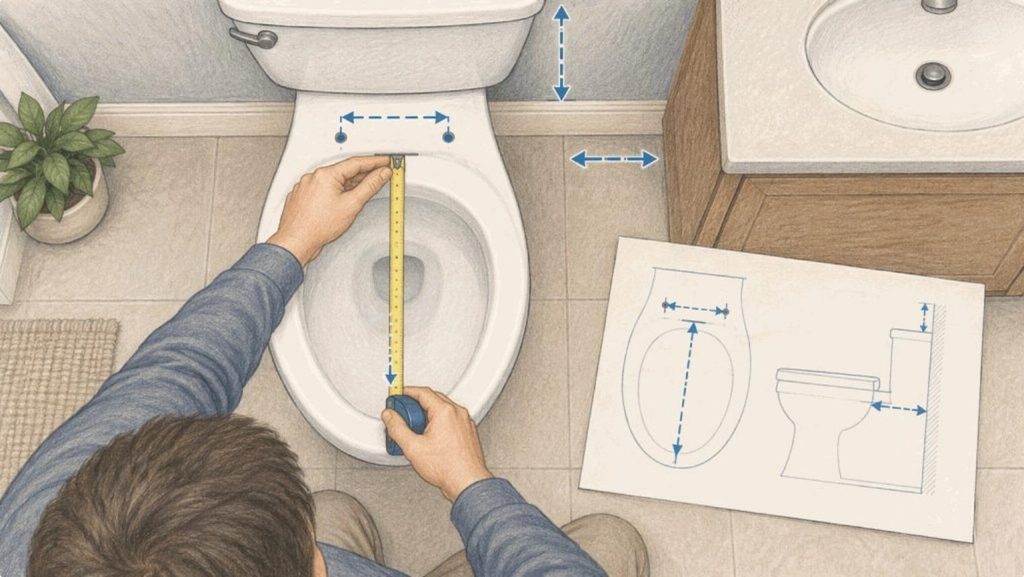
A man measuring the toilet seat dimensions
Step 3: Check the water and power supplies
Look where your bidet will get water from and, if it requires a power supply, where it will get electricity. Confirm that both the shutoff valve and the supply fitting are well within your reach. Don’t utilize an extension cord to generate power for an electric seat; check with an electrician about ground-fault circuit interrupter protection. A warm-water equipment also needs you to confirm the hot-water connection and the planned path of the hose to the sink.
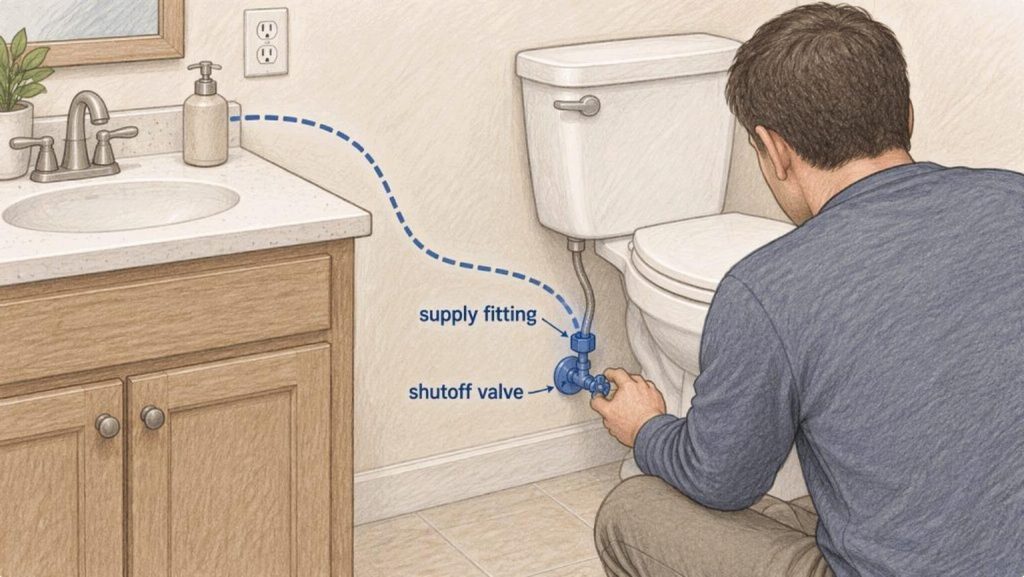
A man checking water supply and hose connection
Step 4: Match the controls to mobility and cleaning needs
Try utilizing the access from a seated position, with your normal reach and grip. A remote can be useful for someone who has difficulty in twisting toward a side dial, but they still require being able to use its buttons. Look for gentle pressure alternatives and nozzle modification features. A handheld sprayer also needs steady aim and control over its trigger.
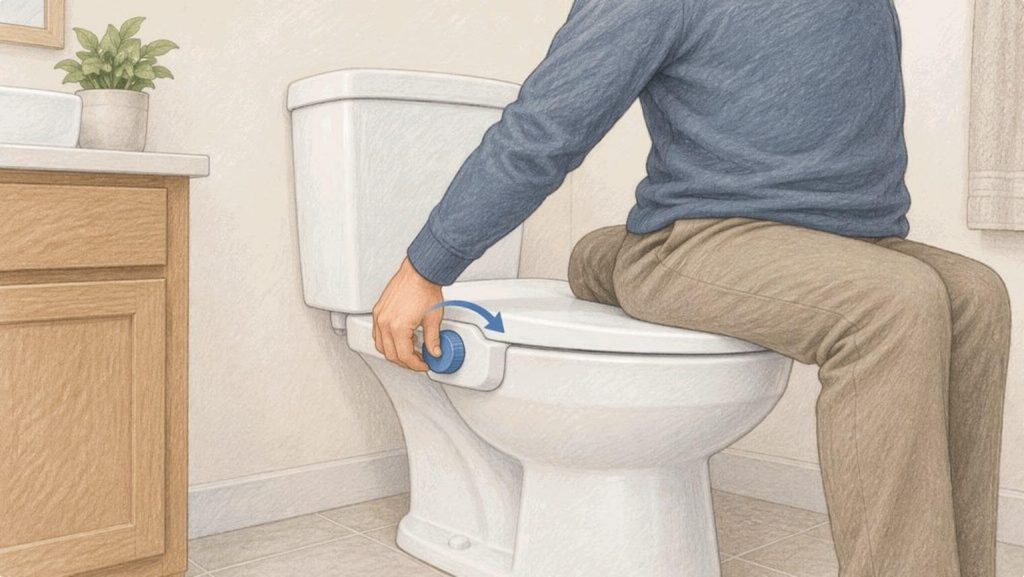
A man checking the ease of the knob
Step 5: Confirm rental rules and reversible installation
Read your lease and get written permission before altering a plumbing connection. Inquire about what you’ll have to restore when you move out, and store the original seat and fittings for later. A detachable attachment still modifies the supply connection while it’s installed, so confirm that with your lease’s plumbing restrictions instead of relying on a renter-friendly label.
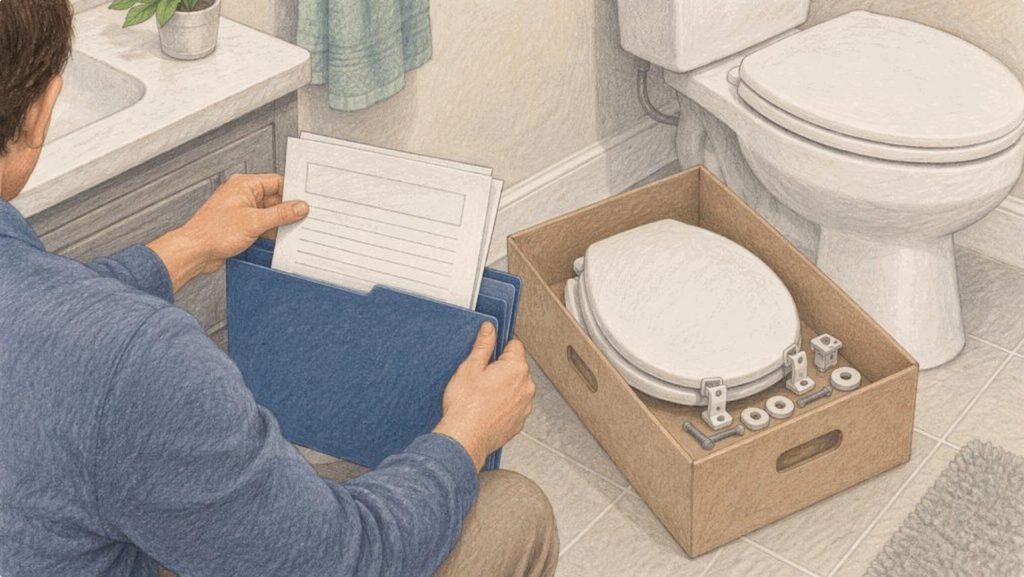
A man checking lease agreement before making modifications
Choose For Your Household
Your bathroom and daily routine may lead you to a choice that isn’t instantly obvious. A replacement seat, for example, may fit better in a narrow bathroom than an attachment whose side dial sticks out.
Renters: A portable bidet doesn’t need plumbing modifications, and it can easily move with you when you change houses. A permitted device is a good fit if you need an always-ready wash without refilling a bottle.
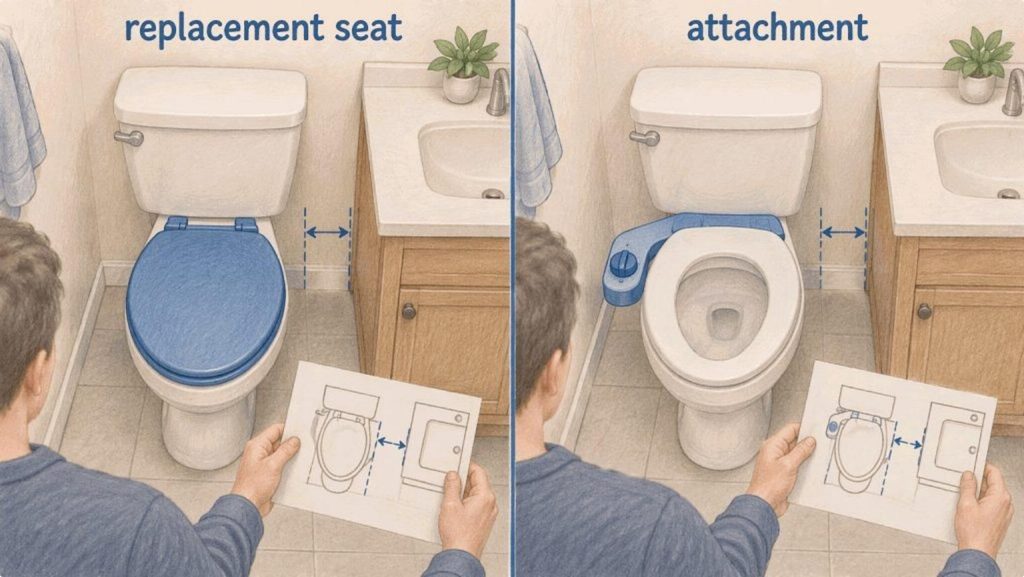
Before and after photo of a toilet seat modification
Small bathrooms: Analyze the installed measurements, including controls, instead of the product’s appearance. A handheld sprayer stores your seat as it is, but you’ll need room for storing its hose off the floor.
Limited mobility: Think about the whole washing motion, involving filling and aiming. A battery-powered portable version may provide a plumbing-free option if you find squeezing a portable bottle uncomfortable; consider its weight when it’s full.
Budget-conscious trials: Begin by washing with cold water if warmth isn’t necessary. A portable bottle allows you to test water washing without committing to a fixture, though it doesn’t work like a permanent nozzle. Verify the return policy before opening or installing the product.
How Much Do Bidets Cost to Buy and Install?
Your total consists of the unit’s cost and any plumbing or electrical work. Regular attachments have lower purchase prices compared to the heated electric seats, which are more expensive, but installation costs can alter the comparison. Ask about an individual quote for water supply changes or a new outlet before placing your order.
You can know about a bidet’s pros and cons more efficiently by thinking about your actual toilet paper spending. Given your bathroom’s restrictions, are bidets worth it once you manage the installed cost against possible paper savings and the hygiene and comfort gains? Analyze the installed price with what you already spend, and consider the paper you’ll still require for drying.
Mic estimated water use sits at about 0.15 gallons per bidet visit in its October 13, 2021, reporting. Scientific American’s December 16, 2009, article lists Lloyd Alter of TreeHugger.com, who estimated manufacturing water per paper roll at 37 gallons, based on the manufacturing procedure and fiber. The units aren’t equal to each other: a wash isn’t a roll, and factory water use isn’t your household bill.
The New York Times stated on July 15, 2024, that recycled tissue uses less water, citing an Environmental Paper Network analysis that calculated water use at about 50% less and total energy at 37% less than virgin-fiber tissue. The same report also observed that comparing tissue with bidets also means considering local water availability and electricity utilization, along with product materials and lifespan.
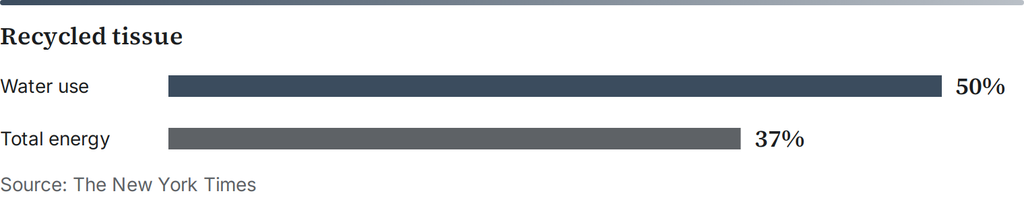
Visual comparison of tissue and water to check how much energy is saved
Are Bidets Sanitary?
Bidets are usually considered hygienic if you use them effectively and store them clean. Lifehacker reported on May 23, 2017, that medical experts see bidets as providing gentler cleaning than toilet paper, but noted that peer-reviewed evidence for better health outcomes is restricted.
Gentler cleaning: A bidet can fit you if you need gentler cleaning, as long as you use it properly and keep it hygienic. The evidence for improved health outcomes remains limited.
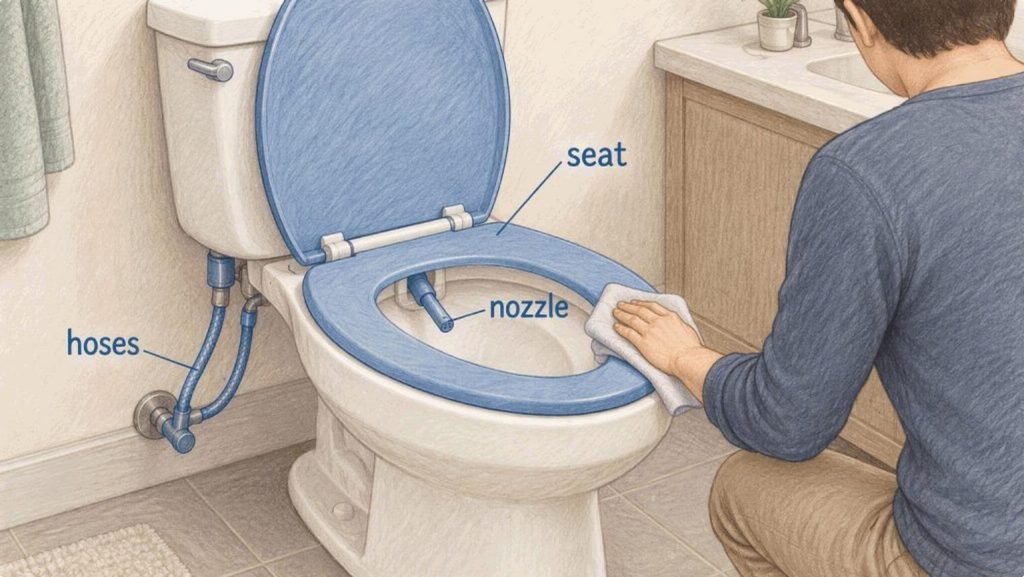
A man cleaning the toilet seat with disinfectant
Installation difficulty: A secure supply connection within reach makes installing a regular attachment less involved than adding an outlet for an electric seat. Don’t continue the work if a valve doesn’t close or a fitting leaks. Check with a plumber instead of forcing it.
Video: Bidets! Everything you need to know. (YouTube)
Routine care: Follow the manual for your model when you clean its nozzle and seat. A self-rinse isn’t a replacement for cleaning exposed surfaces. Verify the hoses for leaks and keep a check of the directions for shutting off a handheld sprayer after using it. Clean portable bottles according to their directions, then let them dry before storing them.
Comfort and drying: Begin with gentle pressure and a temperature you find convenient. You may still require a bit of toilet paper to pat yourself dry. An air dryer can decrease that need, but look at how well it works if you need to dry without reaching.
Make Your First Choice
Look at your toilet dimensions and shortlist only versions that work with the connections you have permission to use. Analyze the controls you find most suitable to use and the features you won’t compromise on. Purchase the simplest kind that meets your requirements after taking into account the cost of any plumbing or electrical work it needs.
FAQs
How do I buy the perfect bidet for my bathroom?
What is the cost for getting a bidet installed?
A bidet usually costs different amounts after considering what all you are installing with it. Moreover, there is a variety of price ranges when it comes to bidet which depends on the features of it. So all you have to do is check your budget and the kind that will be suitable for your bathroom, and hence you will be able to find multiple great options within your budget.
Is a bidet as good and sanitary as people say?
Yes, it is as good as people say, but that can totally depend on your preferences and requirements. Moreover, when it comes to hygiene, keeping a bidet clean is actually pretty easy. All you have to do is ensure that you store it in a nice place when it is not being used and that it is cleaned regularly as instructed in the manual.
Latest Blog