Yes! The houseplant needs sunlight, ideally, bright indirect light. Though it is tolerant in low-light spaces like a north-facing window.
Neanthe Bella Palm Care: Complete Growing Guide
Author
Rashika GuptaReviewed By
Cody Allison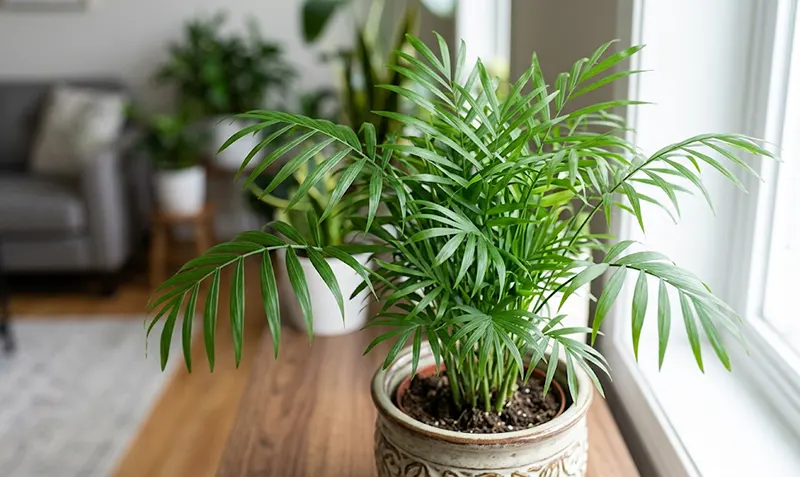
Neanthe bella palm, also known as parlor palm, is a slow-growing and low-maintenance indoor plant. Native to Mexican and Guatemalan rainforests, it features year-round green fronds that sometimes bloom tiny yellow flow ers. The plant can adapt well to the low-light conditions and remains compact enough to be kept in small pots.
Below, I have shared a guide that includes its growing conditions, care tips, and solutions for pests and diseases, so you can add this plant to your indoor space and liven up your desks and shelves.
Table of Contents:
What Is Neanthe Bella Palm? Taxonomy and Features
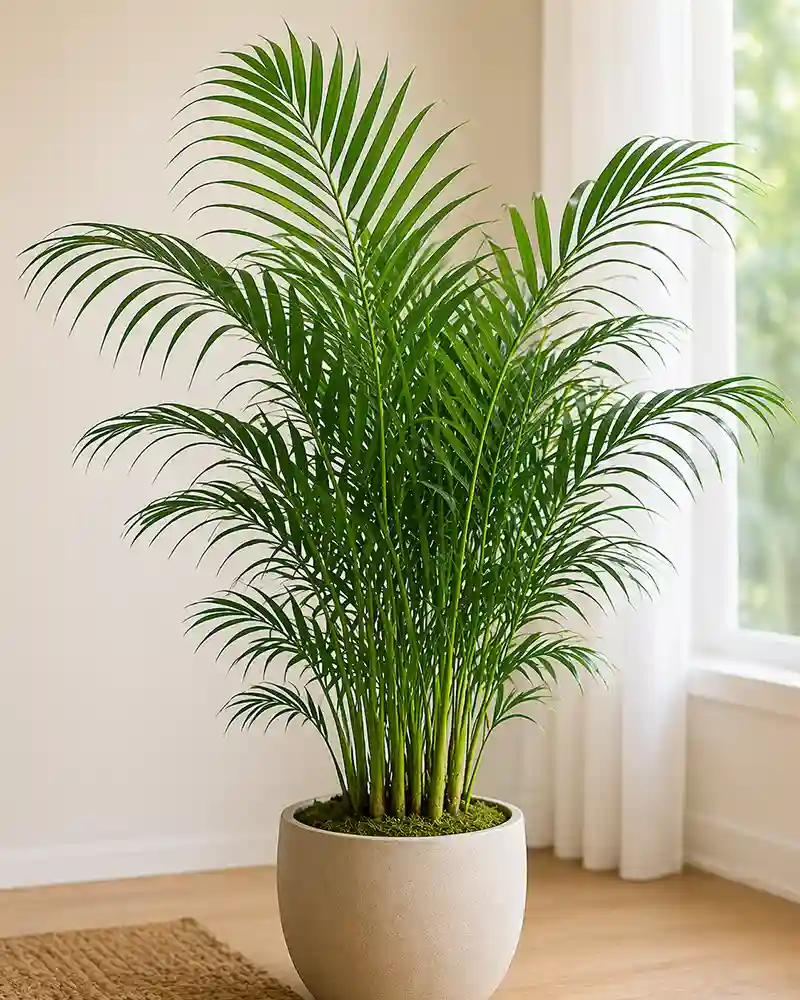
Bella palm tree, botanically called Chamaedorea elegans, is part of the Arecaceae (Palmae) family. Planters and homeowners love it because of its air-purifying qualities and delicate green fronds.
Though rare indoors, the plant blooms with fragrant flowers followed by small, round fruits. Take a look below at its scientific overview and special features before moving forward to its care measures:
Taxonomic Overview of Neanthe Bella Palm
| Botanical name | Chamaedorea elegans |
| Kingdom | Plantae |
| Order | Arecales |
| Family | Arecaceae (Palmae) |
| Genus | Chamaedorea |
| Species | C. elegans |
Did you know?
Parlor palm’s botanical name, Chamaedorea, is derived from Greek words meaning “on the ground” and “gifts”. This highlights the easy-harvesting nature of its fruits, which are low to the ground and easily reached.
Special Features of Neanthe Bella Palm
Parlor palm, as an evergreen houseplant, has a slow growth rate. Due to this, it thrives well even on occasional neglect and remains compact to fit into small spaces. The plant’s other special features include its pet-friendly nature and its air-purifying qualities.
- Ideal Size for Small Spaces
Unlike the other palms, this species remains compact up to 3 feet tall indoors, with a maximum of 6 feet. This makes it well-suited for desks, tables, and narrow spaces.
- Pet Friendly
As per the ASPCA, the palm Neanthe Bella plant is non-toxic to cats and dogs. Therefore, it is considered a safe option for homes with these animals.
- Durable and Low Maintenance
This plant is highly durable and low-maintenance, ultimately being ideal for beginners. Due to its slow growth, it doesn’t need regular pruning. Additionally, this palm can withstand occasional dry periods because of its rainforest nature.
- Early Flowering and Fruits
Despite its small size, the plant blooms with small, fragrant yellow flowers, often starting when only 12 inches tall. Following the successful flowering, it can also produce round and black fruits, which are more common when it is planted in outdoor settings.
- Natural Air Purifier and Humidifier
Parlor palm purifies air by absorbing harmful volatile organic compounds through its lush, feathery fronds. It also acts as a natural humidifier, supporting respiratory health when kept indoors.
Explore: How to Propagate Pothos? Propagation Methods, Ideal Rooting Conditions, and Common Problems
Neanthe Bella Palm Growing Conditions
As per its growing conditions, Neanthe Bella thrives best indoors or on warm, humid patios. This tropical houseplant needs bright indirect light and well-draining soil. In addition to that, it prefers infrequent watering sessions due to being sensitive to overwatering.
| Hardiness Zones | Zones 10-12 |
| Sunlight Requirements | Considered low-light plants, they grow best in bright indirect sunlight. Avoid keeping them in direct sun, which can cause leaf scorch. |
| Soil Needs | Needs a well-draining, high-quality potting mix. |
| Water Requirements | Allow the top inch of the soil to dry out between watering sessions, as it is sensitive to overwatering. |
How to Care for a Neanthe Bella Palm?
Parlor palm is a low-maintenance plant and doesn’t require much care from its planter. I have been growing it indoors for years now, and it certainly thrives on neglect. You just need to keep it in a warm and humid environment, and fertilize it 1-2 times a year to support its growth. Let’s see its care measures in detail:
Fertilizer
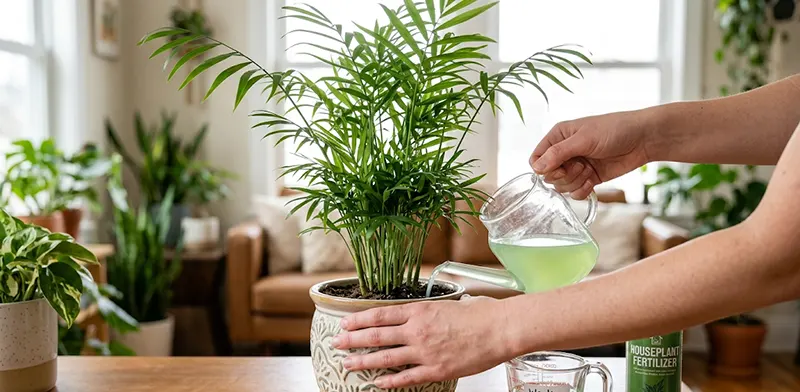
These houseplants are light feeders and don’t require much fertilizer. Feed them with a weak liquid fertilizer 1-2 times during their active growing season in spring and summer. Wait for 6-12 months before feeding if you have just repotted or purchased a new plant, as the potting soil itself contains the nutrients.
Neanthe Bella are sensitive to overfertilizing, as it can lead to salt buildup and brown tips. Also, avoid feeding the houseplant in the fall and winter, as it is the dormancy period, and doesn’t consume nutrients during this time.
Pruning
Pruning is not essential in the Neanthe Bella palm care. I prefer to remove dead and yellow fronds at the base rather than doing heavy pruning of the plant. These palms are slow growers, and they don’t need much shaping. Additionally, cutting the healthy fronds can stop their growth.
Temperature and Humidity
In parlor palm bella care, consider keeping the room temperature warm, ideally between 18°C and 27°C. Though it can survive the short period of 10°C but will die if touched by frost. Protect the houseplant from cold drafts from windows, vents, and outside doors.
It also requires moderate to high humidity. Dry air affects its health negatively and can cause brown tips and dry leaf margins. If your surroundings are not humid enough, you can keep it in the bathroom or use a humidifier to support its growth.
Repotting
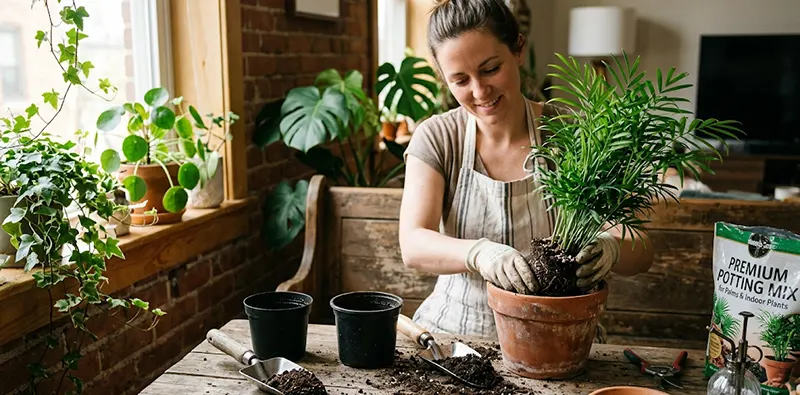
In the parlor palm, repotting must be done with care, as it is a slow grower and has a weak root system. Repot the plant in the growing season every 2-3 years, when it is root-bound. Here are the steps for the process:
- Select the pot (1-2 inches larger) with drainage holes. Fill the bottom with the fresh potting mix.
- Gently remove the palm from the pot, taking care of its fragile root system. Inspect the roots; if found rotten, trim them with sterile scissors.
- Place the palm into the new pot, ensuring the same soil level as it was growing before. Fill the place with soil and gently tap to secure the plant.
- Water well until it drains from the bottom. Place the pot in bright indirect sunlight.
Quick Tip: Avoid repotting the plant in a much larger pot. It can lead to water retention and root rot.
Rotation and Cleaning
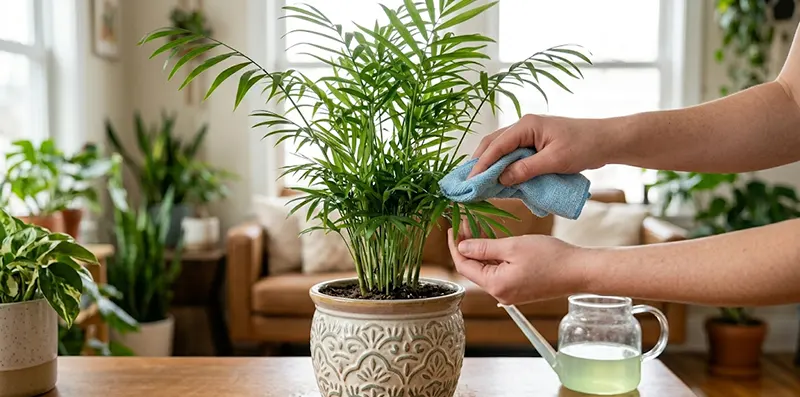
Rotate the plant to a quarter turn every 3-6 months. It will ensure that all sides of the plant receive adequate sunlight and prevent it from becoming lopsided. Furthermore, regularly wipe the fronds with a damp cloth to let them breathe and improve photosynthesis. You can also rinse the plant in a shower or outdoors once or twice a year.
Quick Tip : While cleaning, check the undersides of the leaves for pest infestations like spider mites and mealybugs.
Also read: 10 Flowers That Bloom in Late Winter Nyt – Care Guide, Planting Tips and Common Challenges
How to Grow Neanthe Bella Palm Plant?
I think the division method (separating clumps) is the most practical growing method for Neanthe Bella palm indoor care. It is not possible to propagate the plant through stem or leaf cuttings. The other method is growing from seeds, which is a slow process and can take many years for the plant to reach mature height.
Here are the steps for both methods:
Division Propagation Method (Separating Clumps)
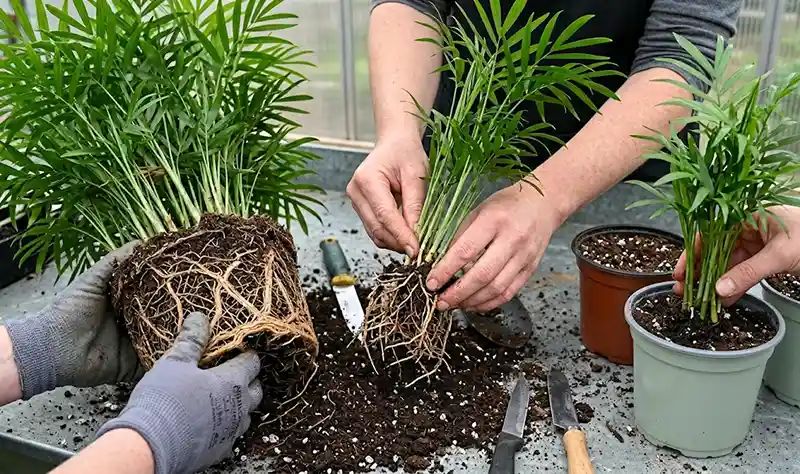
- Water the plant well a day before to reduce the transplant stress.
- The next day, gently take out the plant from the pot and remove as much soil as possible to see the root structure.
- Identify the section of stems that has its own established root system.
- Use your hands to untangle the root system and cut the roots that are heavily tangled by using a clean, sharp knife.
- Plant the new divisions in smaller pots with a well-draining potting mix.
- Place the plants in bright indirect light and keep the soil consistently moist.
Growing From Seeds
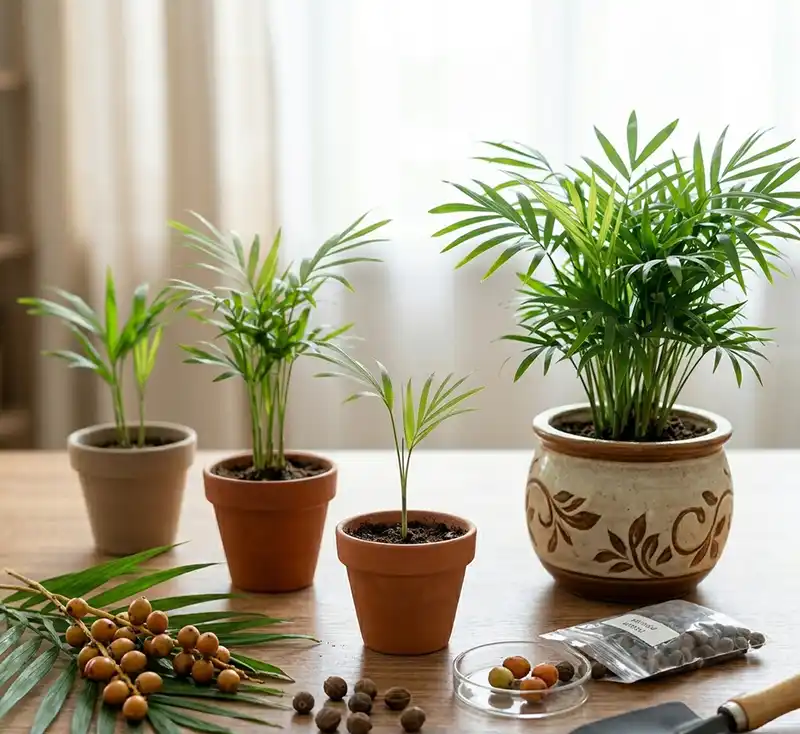
- If you have collected the seeds from a plant, remove all fruit pulp, as it can inhibit the germination process.
- Soak the seeds in lukewarm water for 1-2 days to encourage germination. Ensure to change water daily to prevent mold.
- Plant the seeds in small pots with a fast-draining potting mix. Cover the seeds with ¼ inch of soil.
- Maintain high humidity by covering the pot with plastic. Place the pot in bright indirect light.
- Be patient as the seeds can take weeks to months to sprout. Once leaves start appearing, you can transplant the seedlings into their individual pots.
Neanthe Bella Palm Pests and Diseases
Though generally low maintenance, parlor palms are found to be susceptible to pests like spidermites, mealybugs, and fungus gnats. It’s suggested to inspect the plant regularly to identify and treat the infestations early. The houseplant can also be affected by diseases like stem blight, leaf spot, and root rot, which are mostly caused by moisture issues.
Pest Infestations in Parlor Palm
| Pests | Signs | Solution |
Spider Mites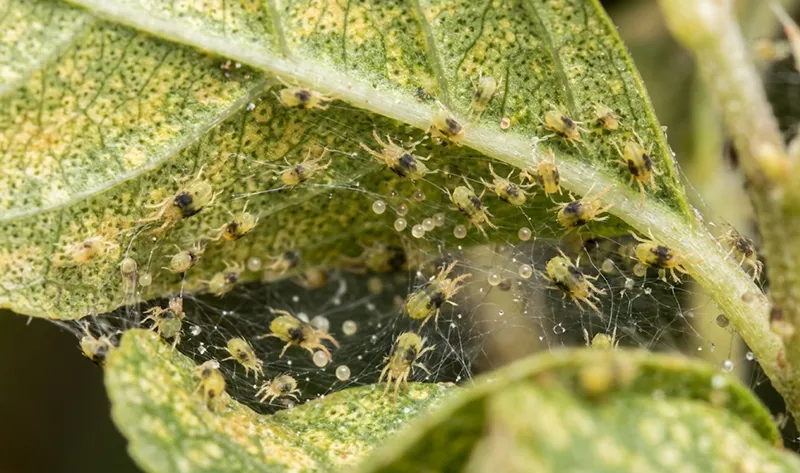 | These tiny insects thrive in dry conditions. Signs include fine webbing between fronds and pale stippled spots on leaves. | Increase humidity by misting 3-4 times a week. Wash the plant with water, and apply insecticidal soap. |
Mealybugs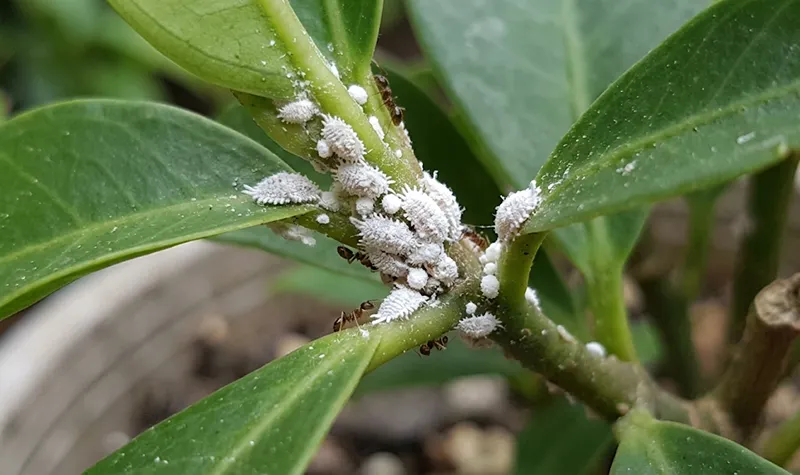 | Small white cotton-like masses on leaves and stems. They lead to yellowing and wilting of leaves. | Dab individual insects with a cotton dabbed in alcohol. In severe infestations, use insecticidal soap. |
Scale Insects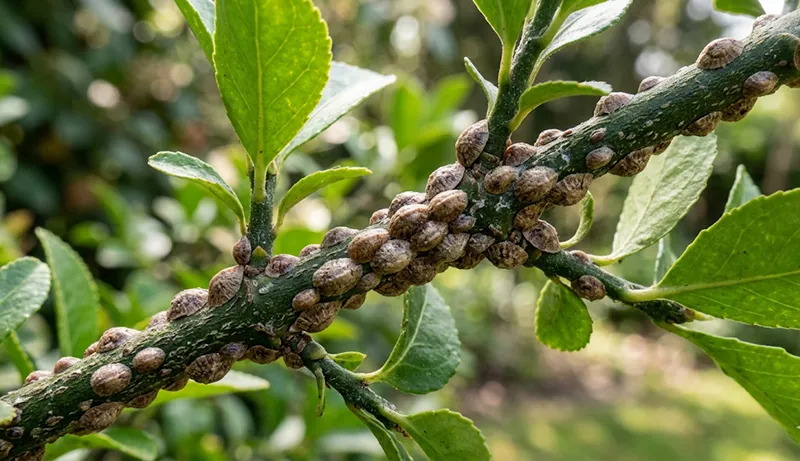 | Brown, domed-shaped insects that fix themselves on stems.They cause stunted growth and yellow leaves. | Manually remove the insects and treat the plant with neem oil. |
Fungus Gnats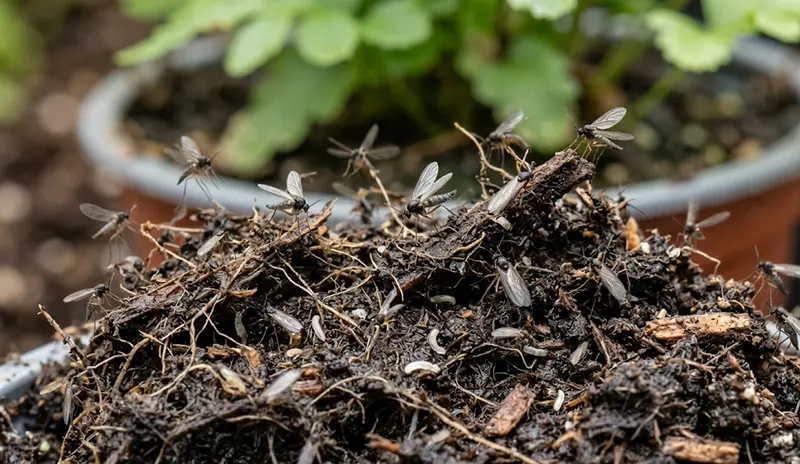 | Small black flies are hovering around the soil. | These insects thrive in wet soil. To treat it, allow the soil to dry out between waterings. |
Diseases in Parlor Palm
| Disease | Signs | Solution |
| Root Rot | The condition is caused by improper watering and poor drainage, leading to yellowing fronds and mushy black roots. | Repot the plant in a well-draining potting mix, trim the mushy roots, and reduce water frequency. |
| Leaf Spot | It is a fungal infection that causes small reddish-brown or black spots on the fronds with a yellow halo. | Remove damaged foliage and avoid overhead watering of the plant. Also, improve the air circulation. |
| Stem Blight | This disease is also known as “pink rot”. Signs include pink-orange fungal pores on stems, brown spots, and the quick death of the fronds. | Apply fungicide to protect the plant and promote its healing. |
You may also read: Calathea Plant: Varieties, Growing Conditions, Features and Care Guide
Common User Queries on Neanthe Bella Palm
During my research on this plant, I found many user queries on Reddit regarding its maintenance, pests, and diseases. Many of them were concerned about the white spots on the plant. Let’s address some of the queries one by one:
- Wintoonie shows her concern Help my Neanthe Bella Palm, please! She illustrates the issue that one of the stems is droopy because she was trying to put out another stem with too much energy. Additionally, she also noticed some white spots on the plant.
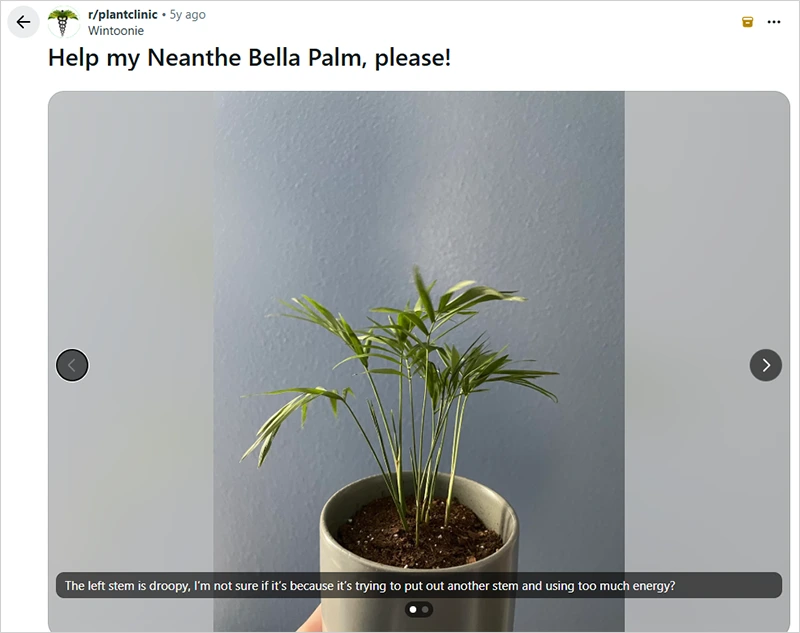
Solution: A single droopy stem is the sign of environmental stress in the plant caused by improper watering or a sudden change in the environment. If the stem is still green, you can prop it with a bamboo stake to maintain structure. Otherwise, if the fronds are too old, they will die naturally to support the new growth.
Coming to the white spots, they can be caused by pests like mealy bugs or spider mites. Apply insecticidal soap to treat them.
- ksbatt asked First time plant parent here. I bought this Neanthe Bella Palm and the very next day my damn cat ate all the leaves off it while I was out of the room (not toxic, I checked before bringing it home thank goodness). Will this poor thing recover?
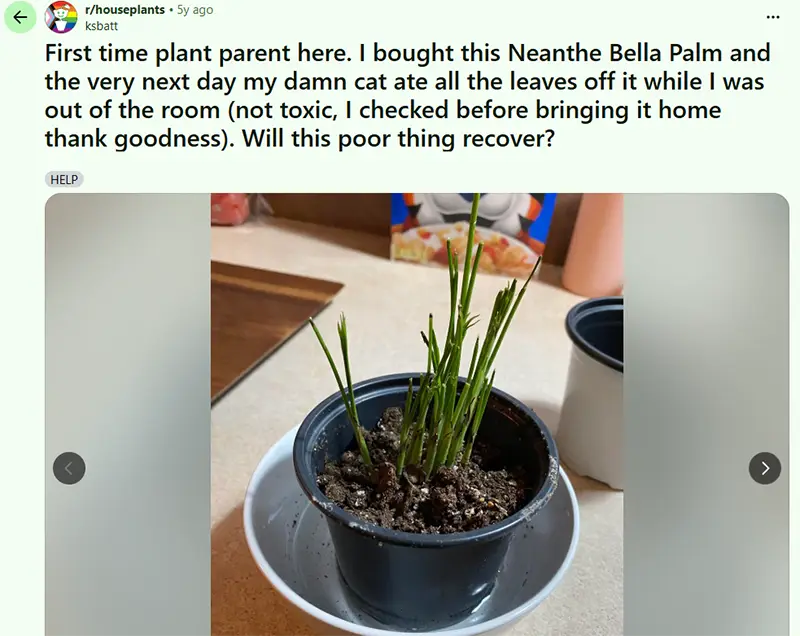
Solution: Yes! It is a resilient plant, and can recover as long as the roots and core remain healthy. It may look sparse for a few months, but with regular care, it can attain its lushness again.
- shards0fblue asked My rescued neanthe bella palm seems so happy and is even putting out new shoots, but today I noticed this little white fuzzy stuff. What is it and what should I do?
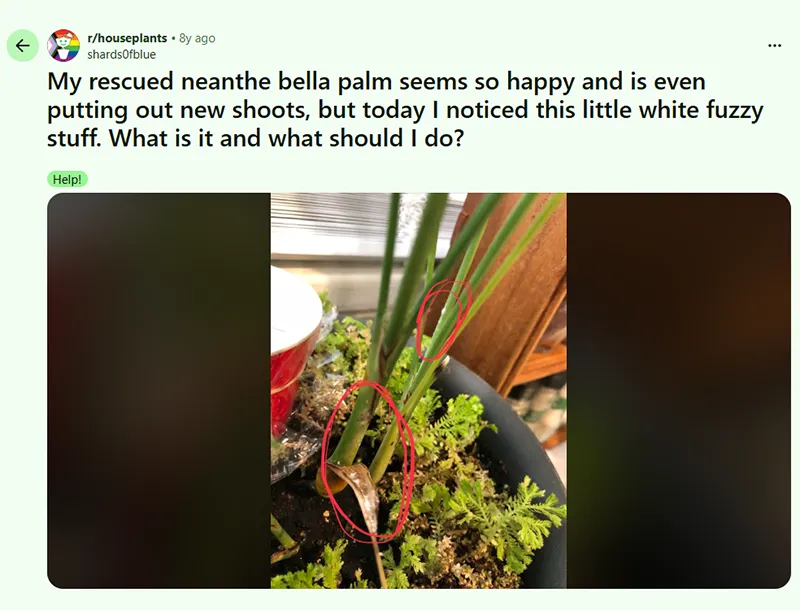
Solution: The white fuzzy stuff can be a mealybug, which is a common sap-sucking pest. To treat the issue, isolate the plant, and wipe the affected area with alcohol dipped cotton swabs. Consider using insecticidal soap in case of severe infestation.
Bottomline
The Neanthe bella palm is loved by the planters due to its lush tropical fronds. It is a highly resilient plant that can adapt well to the low-light surroundings and average humidity. The pet-safe houseplant is perfect to enhance the look of desktops and small spaces.
To keep it healthy and long-lived, focus on the regular inspection of the pests and mimic its tropical, warm, humid environment. By providing minimal care, you can use these palms to add an elegant touch to your interior decoration.
FAQs
Does the parlor palm need sunlight?
How tall can a Neanthe Bella palm grow up to?
This palm plant can grow up to the height of 2-6 feet when kept indoors and around 6-16 feet when planted outdoors.
How often should I fertilize a parlor palm?
It is a light feeder and doesn’t require much fertilizer. Feed it 1-2 times with a liquid fertilizer in spring and summer.
Is Bella Palm tree pet-friendly?
Yes! It is non-toxic to both cats and dogs and well-suited for homes with pets.
Why are the fronds turning brown in the parlor palm?
The brown fronds are a sign of underwatering or low humidity. To treat the issue, water the plant well and increase humidity by placing it in the bathroom or using a humidifier.
Sources:
How to grow parlour palm – BBC Gardeners’ World Magazine
Latest Blog