Yes, we can plant an umbrella indoors.
How to Grow Schefflera Plant: Care Tips, Propagation Method, Common Pests and Diseases
Author
Annette HirdLast Update
September 22, 2026
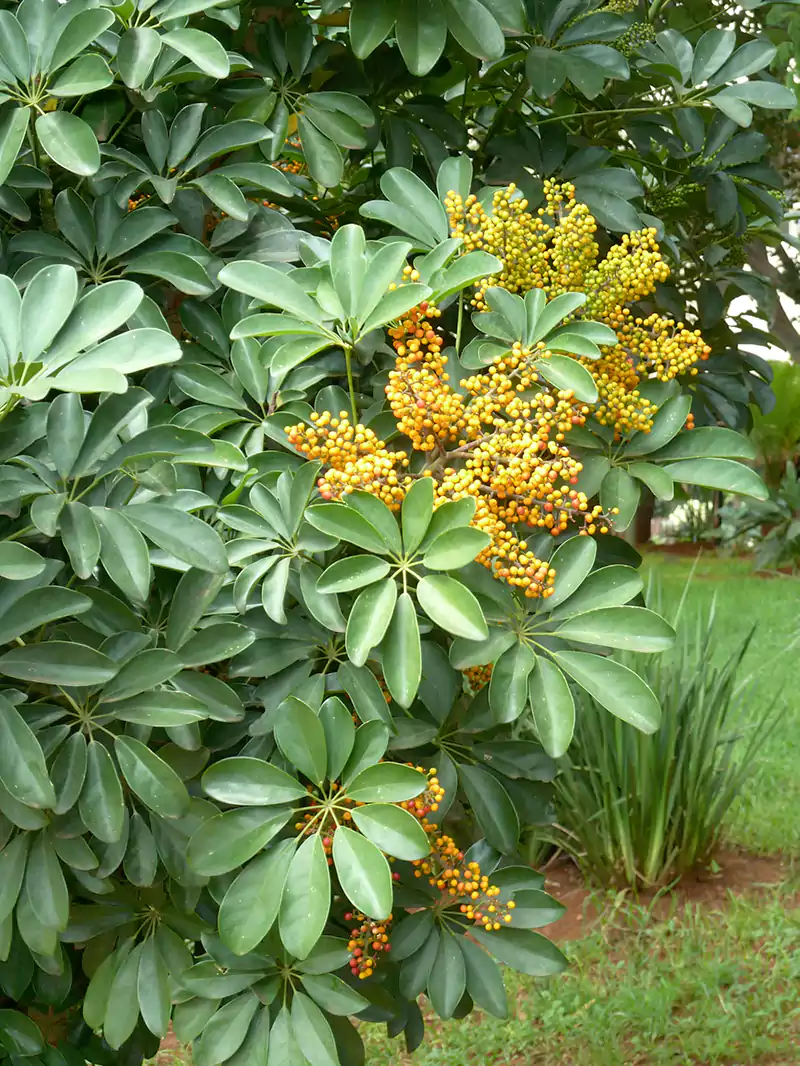
Schefflera, also known as umbrella plant or umbrella tree, is a popular tropical houseplant, well known for its long, shiny, and oval green leaves. This low-maintenance plant comes in various varieties, sizes, and leaf colors. It is a perennial plant that lives for many years rather than completing its life cycle in one season.
The plant can be grown both indoors and outdoors depending on the variety and plant size. Many people use it as a part of home decor, while others choose to plant it outdoors during summer.
Read the article to learn more about how to grow Schefflera plant, or umbrella tree.
Table of Contents:
Taxonomy and Ideal Growing Conditions For the Schefflera Plant
Schefflera is a genus of flowering plants with 13 native species to New Zealand and some to the Pacific Islands. The genus is named in honor of Johann Peter Ernst von Scheffler, who was a physician and botanist of Gdansk and Warsaw. For more general information, here is the taxonomic overview and ideal growing conditions of the plant that will help you to learn how to grow Schefflera plant:
| Botanical Name | Schefflera spp. |
| Common Names | Umbrella plant, dwarf umbrella tree, schefflera, or mini umbrella tree |
| Kingdom | Plantae |
| Order | Apiales |
| Family | Araliaceae (Ginseng family) |
| Genus | Schefflera J.R. Frost & G. Frost. |
| Species | The commonly found species of Schefflera are Schefflera actinophylla (Umbrella tree or Queensland umbrella tree), Schefflera arboricola or Dwarf umbrella tree (sometimes reclassified as Heptapleurum arboricolum), Schefflera elegantissima, or False Aralia, and Schefflera arbicola, or Golden Capella. |
| Native area | Pacific Islands, Australia, Africa, and Asia |
| Bloom period | Summer (outdoors) |
| Hardiness Zone | 10 to 12 USDA Zones |
| Light Requirements | Indirect or partial sunlight |
| Maintenance | Low |
| Type | Tree |
| Characteristics | Showy plant |
| Soil | Moist, well-drained, loamy soil with acidic pH levels |
| Flower colour | Pink, red, and white |
| Water Requirements | Average. |
| Mature size | Indoors: 4 to 6 ft. tall and 3 to 6 ft. wide Outdoors: up to 25 ft. tall and 15 to 18 ft. wide. |
| Fertilizers | Heavy feeder; requires balanced liquid fertilizer once a month during spring and summer. |
| Toxicity | Toxic to both humans and pets |
Read more: 20 Stunning Flowers That Start With the Letter P (With Pictures & Facts)
How to Propagate a Schefflera Plant?
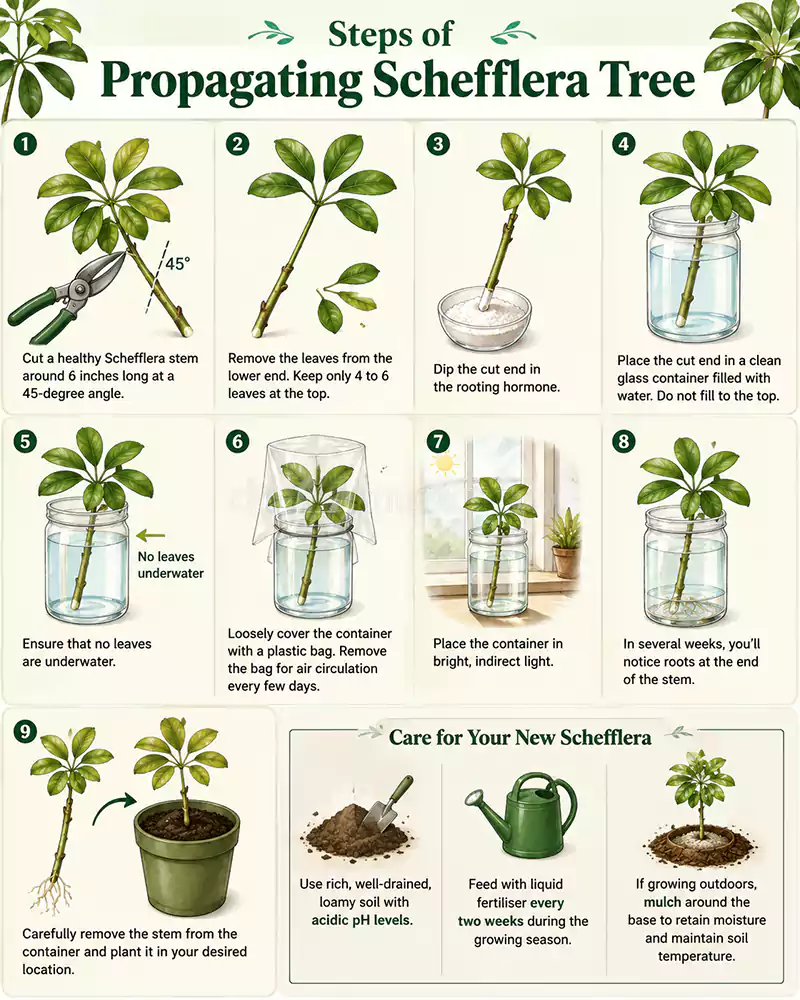
The best way to grow a Schefflera plant is by propagating it. You can propagate your umbrella tree during spring and summer. Here are some simple steps to propagate a Schefflera tree:
- Cut a piece of healthy Schefflera stem around 6 inches long, making a 45-degree angle.
- Remove the leaves from the lower end of the stem. Do not leave more than 4 to 6 leaves at the top of the stem.
- Dip the cut end in the rooting hormone.
- Now, place the cut end in a clean glass container filled with water. Do not fill the container up to the top.
- Ensure that no leaves are underwater.
- Loosely cover the container with a plastic bag. Remove the bag for an hour or so every few days for air circulation.
- Place the container in bright, indirect light.
- In several weeks, you’ll notice roots at the end of the stem.
- Carefully remove the stem from the container and place it in your desired location.
- Ensure that the soil is rich, well-drained, loamy soil with acidic pH levels.
- Feed the soil with liquid fertilisers every two weeks during the growing season.
- If growing outdoors, mulch around the plant base as it will help the soil to retain moisture and maintain soil temperature.
Tip
Propagate your plant every 1 to 2 years during spring for better growth.
Read more: 25 Best Hummingbird Flowers: Trumpet Vine, Beardtongue, Lantana and More
Schefflera Plant Care Tips
Here are the main care tips for growing schefflera plants:
- Place your plant in a location that receives indirect, bright sunlight. This will ensure proper plant growth.
- Feed your umbrella plant twice a week during the growing season.
- Make sure that the soil is rich, well-drained, and has acidic pH levels.
- Only water the plant when the top layer of soil starts drying. This will avoid overwatering, and your plant will survive longer.
- Schefflera plants can tolerate an average humid area when planted indoors, but prefer higher humidity around 40%.
Did you know?
Umbrella plants rarely bloom indoors, but produce flowers in the wild.
Read more: Philodendron Prince of Orange: Benefits, Growing Process, and Care Tips
Common Pests, Diseases, and Problems With the Schefflera Plant
Bacterial leaf spots and Alternaria leaf spots are commonly found in umbrella plants, and they are known for affecting the plant easily. To avoid these diseases, avoid overhead watering and apply a copper fungicide. If you still do not witness any changes, try fertilising your plant.
Indoors, Schefflera are prone to attracting aphids that leave a honeydew excretion, which makes the leaves sticky and leads to sooty mold. To treat aphids, use an organic pesticide like neem oil or use a strong spray of water on the plant.
Tip
Keep the infected plant in an isolated space so that it does not spread pests, which might cause harm to other plants.
When planted outdoors, pests like mealybugs, spider mites, and scale insects can attack your plant. These can be recognised as webbing, white, cotton-looking sections, or tiny bugs on the underside of the leaves. To avoid them from attacking your plant, make sure to keep an eye on your umbrella tree plant and use organic pesticides like neem oil or insecticidal soap spray.
Common Problems with the Schefflera
The common problems with the Schefflera plant are listed below with the solution:
| Problem | Solution |
| Brown spots on leaves | The common reason behind brown spots on Schefflera leaves is underwatering. In such a situation, water your plant more frequently during the growing season. Tip: The best way to water your plant is by watering it deeply and allowing the soil to slightly dry between two watering sessions. |
| Yellowing leaves | Yellowing leaves are a common indicator of overwatering the schefflera plant. This can be avoided by watering the plant only when the soil’s top layer dries out completely and avoiding overhead watering. |
| Drooping leaves | Drooping leaves symbolize that your plant is stressed. This might happen because of certain reasons like a sudden shift in environment, too much sun exposure, reduced or increased temperature, or watering changes. You can let the plant settle into its new environment, place it in an area that receives indirect, bright sunlight, and water only when required. |
Read more: 20 Beautiful Flowers That Starts With A: Add Aesthetics to Your Garden
Takeaways
While Schefflera is known as a houseplant, it requires a well-established environment in which it can thrive. The non-negotiable factors include proper ventilation, bright, indirect sunlight, and hot, humid weather conditions. If these parameters fit perfectly in your space, the umbrella plant can be one of the best additions to your space.
The plant comes in various varieties, which allows you to choose your houseplant. Some of the most popular varieties include Schefflera actinophylla, or umbrella tree; Schefflera arboricola, commonly known as draft umbrella tree; Schefflera elegantissima, or False Aralia; and Schefflera arbicola, or Golden Capella.
Next summer, if you are planning to plant a tree or draft a tree, Schefflera can be one of the best choices for you. Happy planting!
FAQs
Can we plant an umbrella plant indoor?
What are common names of the Schefflera plant?
Schefflera is commonly known as Umbrella plant, dwarf umbrella tree, schefflera, or mini umbrella tree.
Which pests can attack the Schefflera plant?
Pests like mealybugs, spider mites, scale insects, and aphids can attack the Schefflera plant. They can be treated by using neem oil or insecticidal soap.
What are the common problems associated with Schefflera?
The common problems with Schefflera are dropping leaves, yellowing leaves, and brown spots on leaves.
Are Schefflera plants toxic to pets?
Yes, the Schefflera plant is severely toxic to pets. Avoid getting one if you have pets around.
How long does an umbrella plant live?
The Schefflera plant can thrive for around 20 to 25 years indoors if properly cared for. The plant might lose its charm with time; therefore, ensure propagating it.
What are the most popular varieties of Schefflera tree?
The most common varieties of the Schefflera tree are Schefflera actinophylla, or umbrella tree; Schefflera arboricola, commonly known as draft umbrella tree; Schefflera elegantissima, or False Aralia; and Schefflera arbicola, or Golden Capella.
Sources
Schefflera: Britannica
Latest Blog