No, it is not possible to propagate pothos without a node. Its roots emerge from the node itself, so at least one node should be present on the cutting.
How to Propagate Pothos? Propagation Methods, Ideal Rooting Conditions, and Common Problems
Author
Annette HirdReviewed By
Cody Allison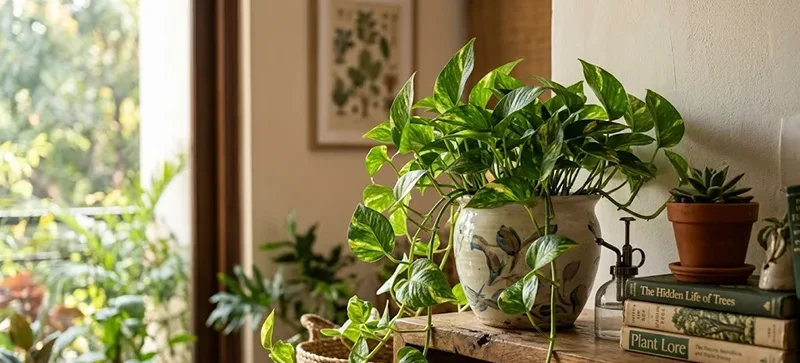
Pothos, often called Devil’s Ivy, is an extremely durable trailing houseplant. This gorgeous plant is famous for its distinguished, vibrant leaves and cascading vines. I fell in love with its heart-shaped leaves the moment I saw it and knew I had to have one. The best part? It’s amazingly easy to propagate, allowing me to fill my home with greenery in a budget-friendly way!
If you want to learn how to propagate pothos, explore this guide that covers everything from initial propagation to its aftercare and common problems.
Table of Contents:
How to Propagate Pothos Plant? 3 Simple Ways
Propagating pothos is beginner-friendly and doesn’t require many tools. It can be done by three methods, including water propagation, soil propagation, and the division method. I prefer propagating pothos in water as it allows easy monitoring of the root growth.
Soil propagation is similar to water propagation, but in that you just need to directly plant the cutting into soil instead of growing it first in water. On the other hand, the division method is best for mature and bushy plants. Before moving on to each method in detail lets see the things you need for the propagation process:
Things needed for Pothos Plant Propagation
- A healthy pothos plant.
- Clean and sharp scissors or shears.
- A glass jar or container (for pothos water propagation).
- Potting soil and a container with drainage holes (for soil propagation).
Method 1: Water Propagation (Most Common)
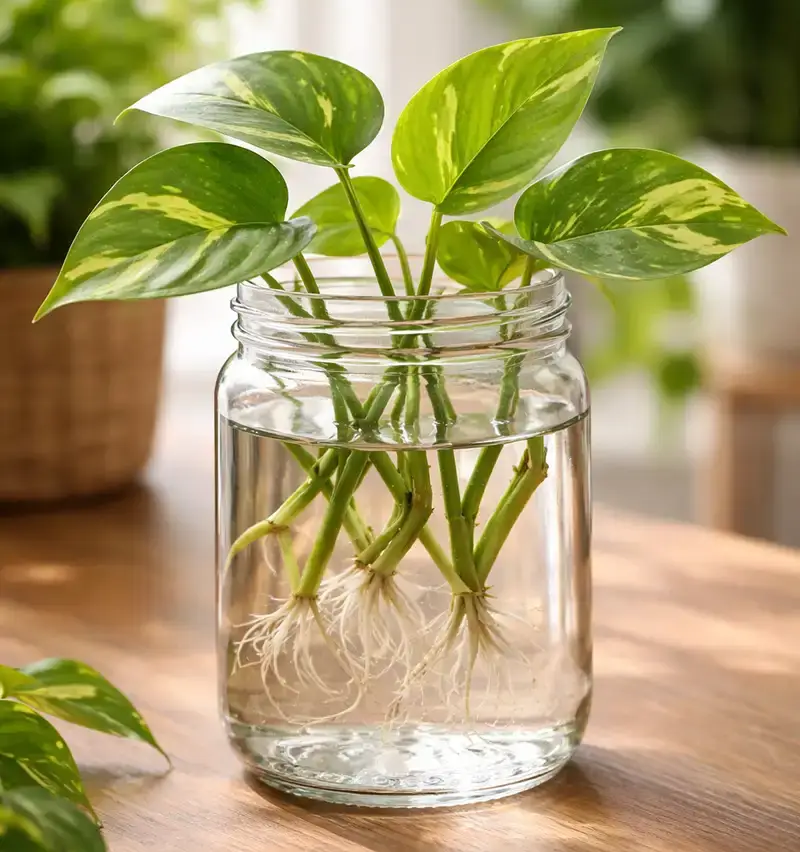
- Propagate pothos in water by cutting a healthy vine, roughly 4-6 inches long, using sterile scissors or shears. Ensure the cutting has at least 2-3 nodes.
- Remove the lower leaves from the cut end, ensuring that no leaves are submerged in water. It can lead to rotting.
- Place the root in a clean glass jar with water. It will be best to see the rooting process. Furthermore, use tap water at room temperature for faster root development.
- Keep the container in bright indirect sunlight. Avoid direct sun exposure, as it can cause algae growth and scorching of the plant.
- Change water every 7-10 days to prevent bacterial growth. Once the roots get 2-3 inches long, transfer the plant to the soil.
Method 2: Soil Propagation
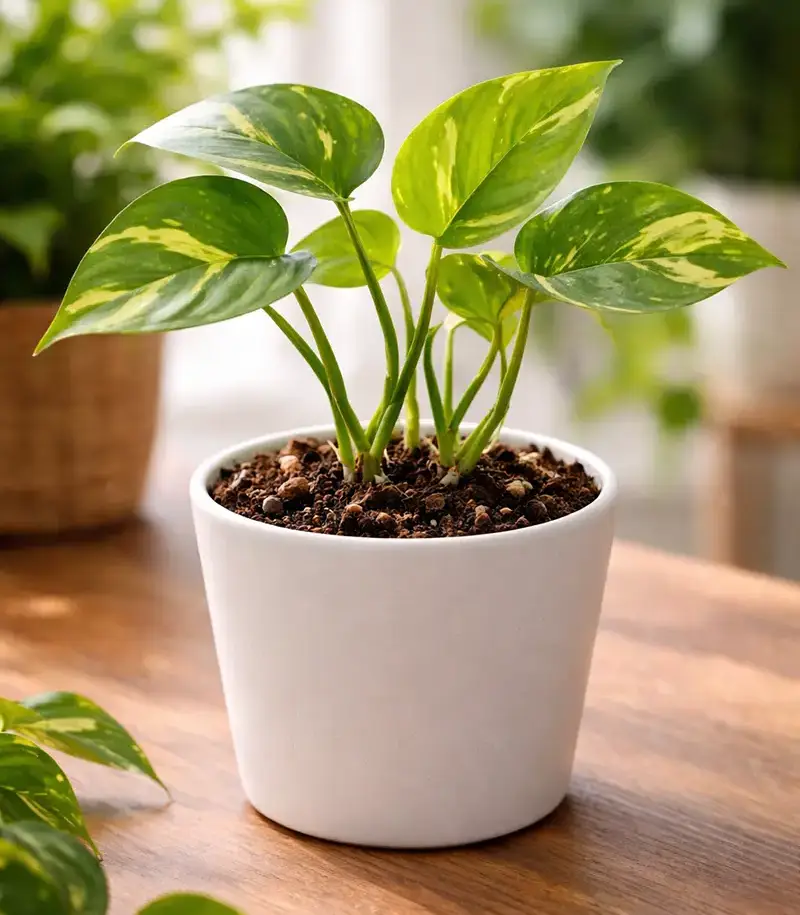
- Select a healthy vine and cut below 3-4 inches from the leaf node.
- Remove the lower leaves and ensure that at least one node remains under the soil.
- Fill the well-draining pot with a potting mix. Poke a hole into it with a pencil and insert the cutting into it. Ensure the node is buried properly.
- Water the plant deeply, ensuring it’s properly moist but not waterlogged. Keep the pot in bright indirect sunlight, and roots will develop in 4-6 weeks.
Method 3: Division Method
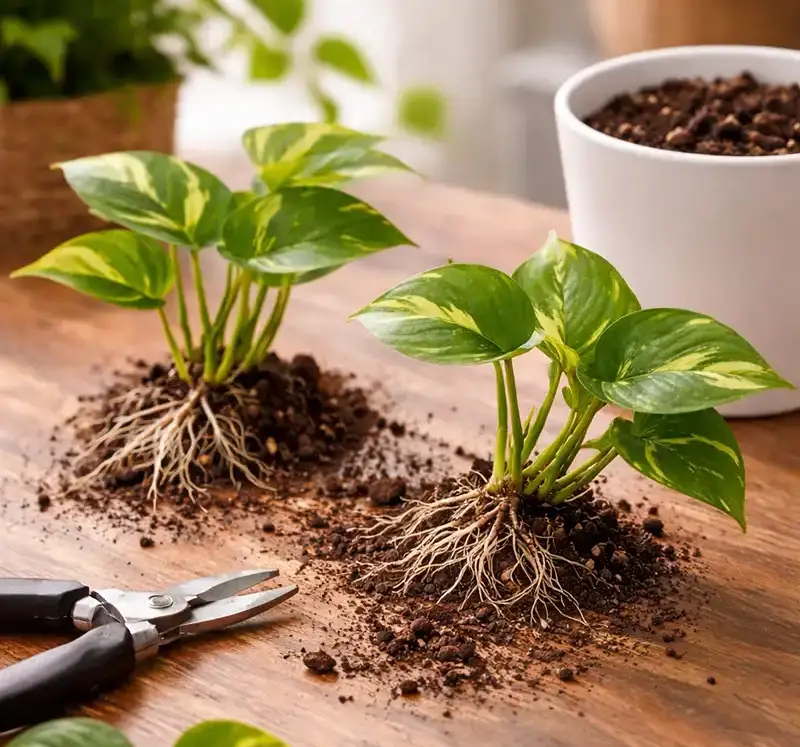
- Allow the soil to dry out a bit to make the root ball easier to manage.
- Remove the plant from the pot and shake off the soil to see the roots clearly.
- Look for the natural separations in the root structure, and with a sharp knife, cut through the root ball.
- Verify that each new section has 2-3 healthy vines and a solid root system.
- Plant the divisions into individual pots with well-draining potting mix and water them properly.
Explore: How To Grow Mint Indoors? From Cultivation to Care Guide and Popular Recipes
Best Time and Reason for Pothos Propagation
The ideal time to propagate the pothos is its active growing season, spring and summer. However, if any long trail breaks off in winter, you don’t need to waste it. It is possible to propagate that cutting indoors. Cutting the older plant will not only get you new plants, but it will also increase the growth of the mother plant.
Best Time for Pothos Propagation
- Spring and Summer: It is the best time, as the plant is actively growing. At this time, the warm temperature leads to faster root development.
- Early Fall: Early fall is also suitable for propagating pothos. It is the ideal time to take cuttings and grow them indoors throughout the winter season.
- Winter: Though it is not the ideal time, propagating pothos is possible in winter. Roots can grow in this time, but the process will be slower than in the summer.
Why Should You Do Pothos Propagation?
Propagating this houseplant is the best way to manage its leggy stems while revitalizing the parent plant. This rewarding process transforms a single plant into a beautiful collection. It allows you to fill your home with new foliage or create sustainable gifts.
- Create Fuller Plants
Learning how to propagate pothos will help you get a denser, bushier plant. By taking cuttings from the long trailing vines of the plant and rooting them in the original pot, you increase the number of stems. Ultimately, it fills the empty space, providing a fuller appearance.
- Free New Plants
With pothos propagation, you can create many plants from a single plant. It will help you increase your own collection or work as a thoughtful gift for your loved ones.
- Improve Parent Plant Health
Trimming the leggy vines encourages better growth of the mother plant. It ensures that the indoor houseplant doesn’t waste energy on the bare stems.
- Encourages Rooting in Other Plants
Pothos cuttings release rooting hormones (auxin) in the water where they are planted. Using that water in slow-growing plants can help encourage their faster growth.
Also Read: Goldfish Plant: Origin, Varieties, Caring & Growing Tips
Ideal Conditions For Rooting of Pothos
Only understanding how to propagate pothos will not lead to fast rooting of the plant. For that, you have to be careful about its ideal rooting conditions as well.
The houseplant thrives best in bright indirect sunlight, warm temperatures, and high humidity. In addition to that, it also needs consistent moisture, no matter if you are propagating it in soil or water.
| Hardiness Zones | USDA zones 10-12 |
| Sunlight Requirements | Grows best in bright indirect sunlight. Avoid keeping them under direct sunlight, as it can lead to burning of the cuttings. |
| Temperature & Humidity | Maintain a warm temperature of 18 to 30°C, as it is sensitive to cold. High humidity of 50-70 % is best for pothos to prevent browning and wilting. |
| Watering Needs | If kept in water, change water every 7-10 days to prevent bacterial growth.If directly planted in the soil, keep it consistently moist but not soggy. |
| Soil Requirements | A well-draining, moist, and light airy potting mix with perlite is ideal. |
Aftercare of Pothos Plant
According to me, the Pothos plant is exceptionally easy to care for. The houseplant thrives on neglect and is excellent for novice indoor gardeners. It requires minimal feeding and occasional pruning to promote its growth. Furthermore, its cleaning and repotting are also simple to do.
Fertilizing
Fertilizing is the key in pothos care to encourage its glossy foliage in your indoor garden. Let the roots settle without stress before feeding the young pothos. Once the roots are settled properly, fertilize it in every growing season. Use a balanced liquid fertilizer or organic liquid plant food to maintain its vigorous growth.
Pruning
Pruning helps make the plant dense, and it manages its long, leggy vines. Trim the plant to a reasonable length in the active growing season. It will encourage the growth of the new branches, turning the sparse plant into a fuller one. The same cuttings can be propagated in water to create new plants.
Cleaning
Cleaning is an essential part of the pothos plant care. It will encourage photosynthesis and maintain the overall health of the plant. Furthermore, a clean pot is also less susceptible to pests like mealybugs and spidermites. For this, you can use a clean, damp cloth and wipe the top and bottom of the leaves to remove dust.
Repotting
Repot the houseplant to a larger container every 1-2 years to prevent it from becoming root-bound. It is also beneficial to refresh the nutrient-depleted soil and provide plants more room to expand. Consider repotting it when the roots are visibly growing out of the drainage holes or on the top of the soil.
You May Also Read: Gladiolus Flower: Symbolism, Types, and Care Guide for the Vibrant Sword Lily
Common Problems and Fixes of Pothos Plant Propagation
In addition to knowing how to propagate pothos, it is always crucial to be careful of the common problems that occur during the propagation process. Some of the issues involve mushy and brown cuttings, slow rooting, and yellowing of leaves.
Let’s understand the solutions to these problems to increase the success rate and protect the health of the parent plant:
- Cuttings Turning Brown and Mushy
This is the most common issue if you want to know how to propagate pothos. The cause of brown and mushy cuttings is bacterial growth in water, often resulting from a dirty container or submerged leaves.
Fix: Cut off the mushy sections of the stem and change the water every 3-5 days. Ensure that no leaves are submerged in water; only the node is.
- No Roots or Slow Rooting
If you see no roots emerging even after several weeks, the plant is likely to lack energy and warmth.
Fix: Move the container to a warmer spot, preferably in bright indirect sunlight. Ensure that the node is included in the cutting because no node means no roots.
- Yellowing Leaves
Yellowing of the leaves indicates stress on the plant due to overwatering or a lack of nutrients.
Fix: If kept in water, change the water to refresh the oxygen levels. On the other hand, if it is kept in soil, allow the soil to dry out before watering it again.
- Shock After Moving From Water to Soil
It is found that the water-propagated cuttings are sensitive. They struggle to settle in the dense environment of the soil, which leads to drooping.
Fix: Plant the cuttings in soil as soon as the roots get 1-2 inches long. Ensure that you are using an airy potting mix. Additionally, keep the soil well moist for the first 1-2 weeks to support the transition.
Concluding Remarks
Now, as you know how to propagate pothos, you are ready to expand your indoor garden or gift the baby pothos to your friends and family. Whether you choose any of the mentioned methods, the process is quite easy and requires only a little patience.
By being careful of its rooting conditions and common problems, you can grow these glossy trailing plants without any worries. As a resilient plant, pothos are ideal to start a garden from scratch.
FAQs
Can you propagate Pothos without a node?
How to propagate pothos in water?
Propagating the houseplant in water is easy. Cut the cutting below the node, leaving 2-3 leaves on it. Place the cutting in a glass jar or container.
Keep the container in bright indirect sunlight and change water every few days. Roots will emerge in 1-2 weeks, and then it can be transferred to soil.
Where is the node on a pothos?
The node is the small brownish bump located directly opposite a leaf stem. It is a growth point from where new roots, vines, and leaves emerge.
Can Pothos live forever in water?
Yes! You can keep the plant in water forever. But it needs specific care to thrive in that environment. Also, the growth will be much slower compared to when they are kept in soil. They require the nutrients that are available in soil to stay healthy.
How long does it take Pothos to root in water?
The cuttings start rooting in 1-2 weeks. Though the significant root structure development may take around 3-6 weeks.
Sources:
Pothos– Britannica
How to care for golden pothos (devil’s ivy)– BBC Gardeners’ World Magazine
Pothos, Epipremmum aureum– Wisconsin Horticulture
Latest Blog