No, the tradescantia prefers bright, indirect sunlight. Place your plant near a window, and avoid direct sunlight, as it can scorch the leaves.
Tradescantia Plant Guide: Taxonomic Overview, Ideal Growing Conditions, Care Tips, & Much More!
Author
Rashika GuptaTradescantia is a diverse plant genus that is suitable as an indoor houseplant and can also be grown outdoors. It is typically grown for its attractive and aesthetic foliage, but the plant has much more to offer. It is one of the air-purifying plants that requires minimal attention and care.
The plant comes in a wide range of varieties, from soft pastel to bold foliage shade that adds texture and colour to your place. Read the article to know more about the tradescantia plant varieties, taxonomic overview, care tips, and much more.
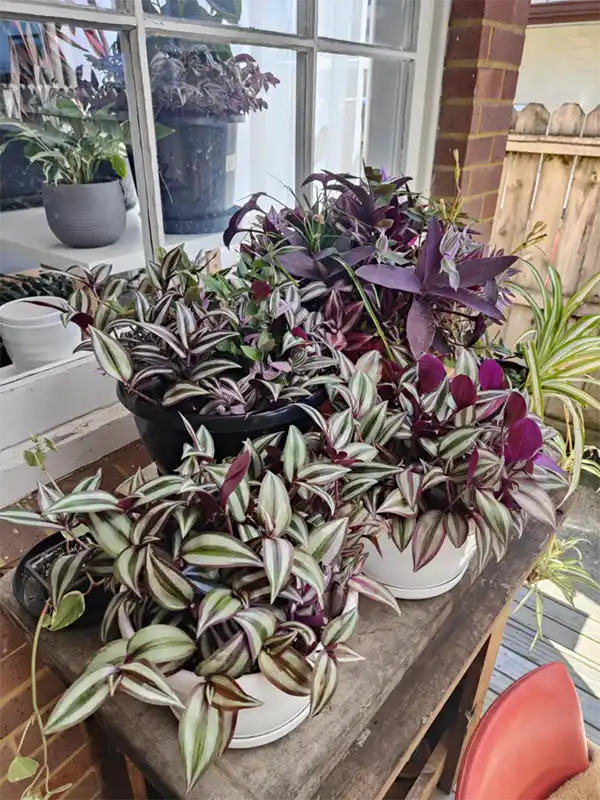
Table of Contents:
Taxonomy and Ideal Growing Conditions For Tradescantia Plant
Tradescantia plants are low-maintenance plants that thrive in well-drained, moist, loamy, and sandy soil. The plant is known for its beautiful leaves in various colours.
For more general information, here is the taxonomic overview and ideal growing conditions of the plant-
| Botanical name | Tradescantia spp. |
| Kingdom | Plantae |
| Order | Commelinales |
| Family | Commelinaceae |
| Genus | Tradescantia |
| Species | Tradescantia pallida |
| Hardiness | 9-11 USDA zone |
| Light Requirements | Bright, direct sunlight, partial shade |
| Plant type | Perennial, houseplants |
| Season of interest | Spring, summer, fall, and winter |
| Maintenance | Low |
| Soil | Well-drained, moist, loamy, sandy soil with acidic, alkaline, and neutral pH levels. |
| Water Requirements | Moist soil. Water only when the top layer of soil starts to dry. |
| Characteristics | Showy, evergreen |
| Fertilizers | Balanced, water-soluble fertilizer every 4-6 weeks during the growing season, that is, spring and summer. Note- reduce fertilization during the fall and winter. |
| Mature size | 6 to 9 inches tall and 2 to 3 ft. wide |
| Flowers | Tiny boat-shaped rosy-purple flowers |
| Toxicity | The plant is toxic to pets if ingested, causing gastrointestinal irritation. |
Read more: Lucky Bamboo Plant: Growth, Care Tips, and Symbolism Explained
Varieties of Tradescantia Plant
The Tradescantia plant offers you various varieties. Here are some of the tradescantia indoor plant or houseplant tradescantia with their description:
| Variety | Description |
Purple heart spiderwort 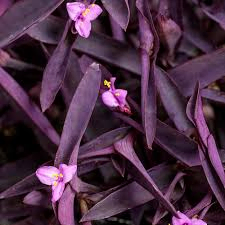 | The purple heart spiderwort is a trailing plant that grows 10 to 14 inches tall and wide. It has purple foliage with grey-green highlights, and hot pink undersides. It can be grown both outdoors and indoors as a houseplant. |
New vogue (tradescantia hybrid)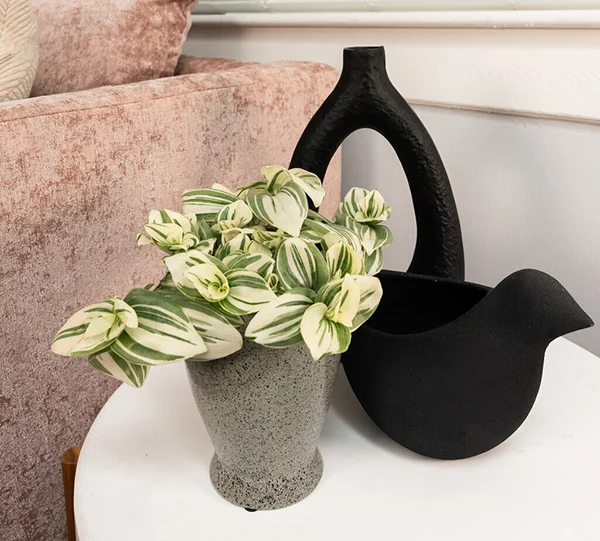 | This variety of new vogue has pink and green striped foliage. It is perfect for hanging baskets and grows 2 to 4 inches tall and trails to around 36 inches. |
Webmaster spiderwort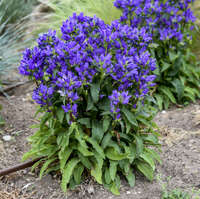 | Webmaster spiderwort is a Tradescantia hybrid with a mounding habit. The plant blooms from early to mid-summer and has green foliage with lilac-coloured blooms. This plant grows up to 18 inches tall and 24 inches wide. |
Nanouk 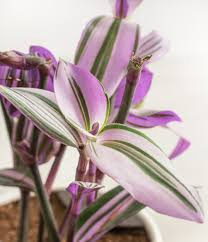 | Tradescantia albiflora or Nanouk is a low-trailing habit Tradescantia, which grows about 3 to 6 inches tall and 12 to 14 inches wide. This variety blooms from spring to fall and offers flowers with white, yellow, and pink accents. |
Inch plant, small-leaf spiderwort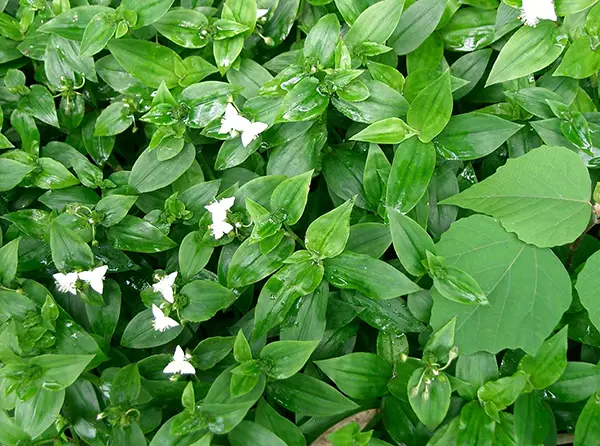 | T fluminensis is a spreading or trailing habit plant which blooms during the summer season. It grows up to 9 inches tall and 24 inches wide. The plant has green foliage with white flowers. |
Tricolor 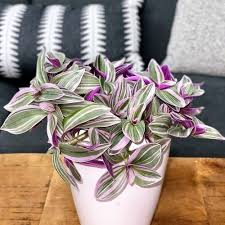 | Tradescantia tricolor has sword-shaped leaves up to 5 inches long. The plant grows up to 12 inches tall and 24 inches wide throughout the year and has pink and green foliage with magenta undersides. To grow, it requires full sunlight to partial shade, with protection from the afternoon sun during the summer. |
Virginia Spiderwort 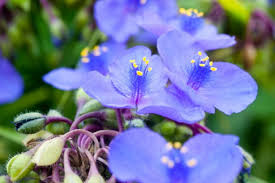 | Virginia spiderwort is native to many regions in the US and grows well in partial shade. The plant has green foliage and violet, blue flowers. It grows from 18 to 36 inches tall and 12 to 18 inches wide. |
Sweet Kate 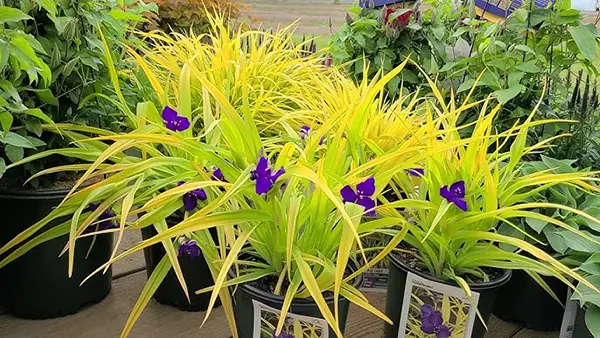 | Sweet Kate blooms from late spring to midsummer. The plant is known to be an unusual variety that offers gold foliage and purple flowers. |
How to Grow/Propagate Tradescantia Plant?
The Tradescantia plant can be grown best from a stem cutting. It is advisable to grow the plant through this method rather than getting the plant from a nursery.
Here are some simple steps to grow and propagate the tradescantia plant:
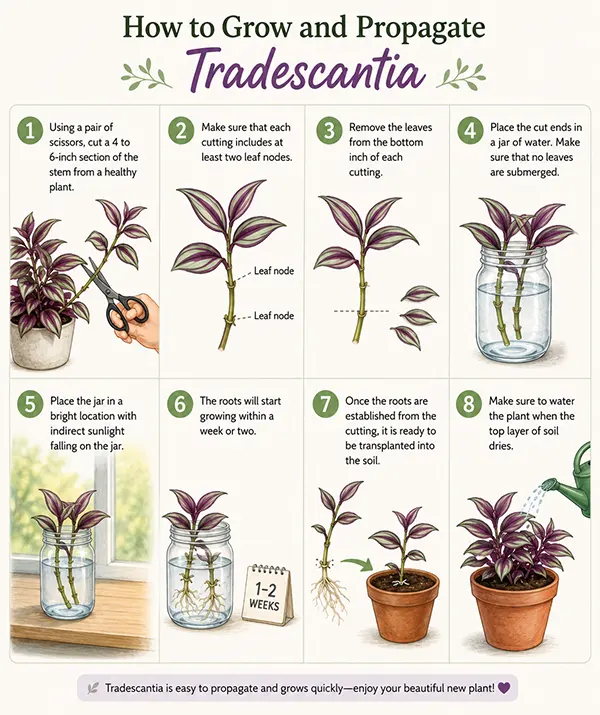
- Using a pair of scissors, cut a 4 to 6-inch section of the stem from a healthy plant.
- Make sure that each cutting includes at least two leaf nodes.
- Remove the leaves from the bottom inch of each cutting.
- Place the cut ends in a jar of water. Make sure that no leaves are submerged.
- Place the jar in a bright location with indirect sunlight falling on the jar.
- The roots will start growing within a week or two.
- Once the roots are established from the cutting, it is ready to be transplanted into the soil.
- Make sure to water the plant when the top layer of soil dries.
Tip In case you want to plant tradescantia directly in soil, place the stem cutting into moist potting soil. Ensure that at least one leaf node is buried where the roots can develop.
Read more: Calathea Plant: Varieties, Growing Conditions, Features and Care Guide
Ideal Caring Tips for a Tradescantia Plant
The Tradescantia plant requires low maintenance and is beginner-friendly. Here are some care tips for tradescantia:
- Place the plant in light shade outdoors, but indoors, the plant prefers bright light, so it is advised to place it near a window.
- It is important to keep the soil moist, but overwatering can kill the plant, so only water the tradescantia when the top layer of soil dries.
- Use a well-drained potting mix to grow a tradescantia plant.
- Make sure that the container you are using to plant tradescantia has a drainage hole for proper air circulation and removal of excess water.
- Use balanced, water-soluble fertilizer every 4 to 6 weeks during the growing season. In the fall and winter seasons, reduce fertilization.
- Repotting helps the plant bloom and grow more. Repot the tradescantia in spring every 1 to 2 years.
- Pruning encourages fuller growth of tradescantia and prevents the plant from becoming too leggy. Pinch back the stems as needed to maintain the plant’s shape and size.
Read more: Goldfish Plant: Origin, Varieties, Caring & Growing Tips
Pests and Common Problems Associated With Tradescantia Plant
Though tradescantia is known to be a low-maintenance plant, there are still pests that can attack it. The list includes aphids, spider mites, and mealybugs. These can be easily removed using organic pesticides like neem oil.
If they are in a small number, you can rinse them with water or treat them with insecticidal soap. For mealybugs, use a cotton swab dipped in rubbing alcohol.
Further, here is the list of common problems associated with the tradescantia plant, with their solution:
| Problem | Solution |
| Root rot | Root rot is caused by overwatering the plant. It is important to take a gap between two watering sessions. |
| Leaf spot | Leaf spotting is the sign of fungal infection. To avoid this, you can place the plant in an area with proper air circulation. |
| Fading leaf variegation and leggy growth | The leaves start fading when they are not kept in a proper location. For indoors, place your plant near the window, and outdoors, place the plant in an area which receives bright, indirect light. |
| Brown leaf tips | This can be caused by low humidity, inconsistent watering, or over-fertilization. Try to maintain the soil moisture and fertilize the plant only during the growing season. |
Read more: Natural Mealybug Treatment: Symptoms, Solutions, and Prevention Against Mealybugs
Takeaways
Tradescantia is a beginner-friendly plant with low-maintenance requirements. The plant can be used for its aesthetic values, and it also helps purify the air. If you are a beginner or pro gardener, tradescantia must be on your list.
With some simple steps like proper placement, watering, and good soil mixture, your plant can thrive and grow beautifully.
FAQs
Do tradescantia need more sunlight to thrive?
How often should I water my tradescantia plant?
You should only water your plant when the top layer of soil starts to dry. Overwatering can cause root rot, so make sure you don’t overwater the plant.
What is the best soil type to plant tradescantia?
Tradescantia prefers well-drained potting soil. Use sandy or loamy soil.
How often should I fertilize my tradescantia plants?
The tradescantia plant needs to be fertilized once a month during the growing season. Reduce fertilizing the plant during the fall and winter seasons.
Is the tradescantia plant toxic to pets?
The plant is toxic to pets if ingested, causing gastrointestinal irritation.
Sources
Tradescantia: North Carolina Extension Gardener Plant Toolbox
Spiderwort: Britannica
Latest Blog