It takes about 2-5 years for the dragon fruit plant to bear fruit.
How to Grow Dragon Fruit? Learn to Grow this Unique Tropical Fruit
Author
Annette Hird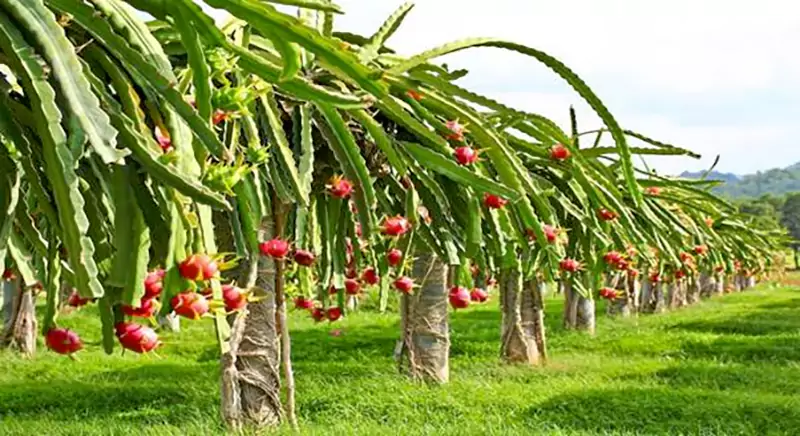
Dragon fruit is one of the most nutritious and unique fruits to exist. With a lotus-like appearance, it has leaf-like scales that feel like its layers unfolding, revealing the delicious fruit.
When I started planting the dragon fruit plant, this realization hit me: there are no dragon fruit trees, but climbing vines that look huge, almost resembling small trees.
Although dragon fruit takes almost 2 years to bear fruit, the wait is worthwhile. If you are also curious about how to grow dragon fruit, come along and explore the simplest and most detailed methods ahead.
Table of Contents:
- What is Dragon fruit? A Cactus Variety?
- How to Grow Dragon Fruit in Plant?
- What are the Ideal Growing Conditions for Growing Dragon Fruit?
- How to Care for a Homegrown Dragonfruit Plant?
- What Are the Different Types of Dragon Fruit to Grow?
- Common User Concerns and Solutions for the Dragon Fruit Plant
- Lab Research and Findings About the Dragon Fruit
- Fun Facts About the Dragon Fruit
- Concluding Remarks
- FAQs
What is Dragon fruit? A Cactus Variety?
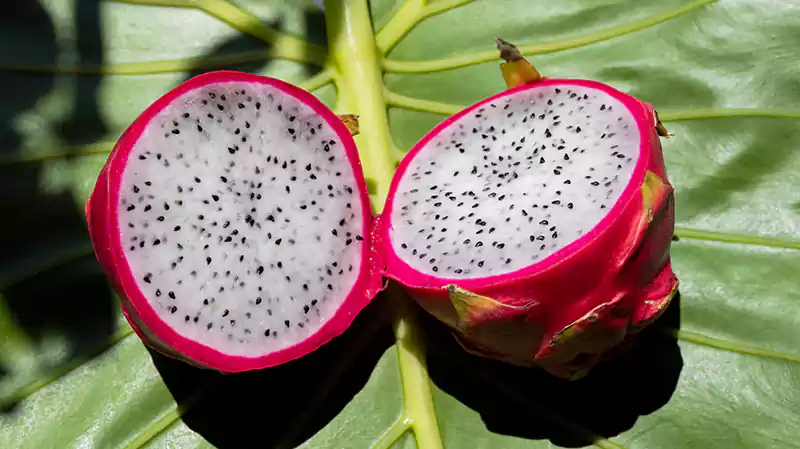
Much like the barrel cactus, the dragon fruit also belongs to the Cactaceae family and is a climbing vine native to Central and South America. Also known as a pitaya, this tropical fruit has a gorgeous pink outer shell and white (sometimes red) interior with small black seeds.
Globally grown in 3 major types in different colors, dragon fruit is considered extremely nutritious and beneficial for health. The dragon fruit is widely compared to the kiwi fruit due to their similar taste and texture; also, both of them are grown on climbing vines mistaken for trees.
If you are also wondering how to grow dragon fruit vines at home, let me take you through this detailed exploration of the planting and care guide of the dragon fruit, but before that, take a look at the scientific classification of the same:
 | |
| Botanical name | Selenicereus undatus |
| Kingdom | Plantae |
| Division | Spermatophyta |
| Class | Magnoliopsida |
| Order | Caryophyllales |
| Family | Cactaceae |
| Genus | Selenicereus |
How to Grow Dragon Fruit in Plant?
According to me, the dragon fruit plants can be easily planted at home in a container or the ground using stem cuttings.
If you have been consuming this tropical fruit and wondering how to grow dragon fruit, take a look at my easy planting guide for the same:
- Take a dragon fruit cutting from a healthy plant.
- Make sure you only take the top section, which has this white callus, as that is where the roots will grow from.
- Now keep these stem cuttings in a shaded area for 2 days to prevent rot before forming roots.
- Fill a 12-inch pot with a well-draining soil mix with 80% soil mix and 20% coco coir.
- Place the stem cuttings 3 inches deep in the soil.
- Water the plant thoroughly and place it near a window with bright direct sunlight for 8 hours.
- Although the dragon fruits are not heavy feeders, unlike the dahlia flowers, they can be fed with a balanced fertilizer twice during the growing season.
Also read: How Do Pistachios Grow? Planting Guide and Care Tips For This Ancient Nut
What are the Ideal Growing Conditions for Growing Dragon Fruit?
Dragon fruit is a warm-season crop like the pineapple fruit and cannot tolerate frost; hence, cultivating dragon fruit plants in early spring is advisable.
Instead of the dragon fruit seeds, I use the stem cuttings to grow these perennial vines, as they have faster growth. To plant the dragon fruit tree using the aforementioned steps, these are the things you should keep in mind:
| Soil | Sandy loam, slightly acidic |
| Sunlight | 8 hours of direct sunlight |
| Water | Consistently moist (twice a week in summer and once a week in winter) |
| Hardiness | USDA zones 10-11 |
| Temperature | 18-30°C |
| Fertilizer | Balanced fertilizer every 4–6 weeks during the growing season |
How to Care for a Homegrown Dragonfruit Plant?
The best care tip for dragon fruit is to provide strong and sturdy support to the plants, which will prevent them from getting infected.
I know dragon fruit can seem like a lot of work, but worry not; I have listed down my go-to care tips, other than making sure all the growing requirements are met, that will help you achieve the best yield possible.
Trellis and Support
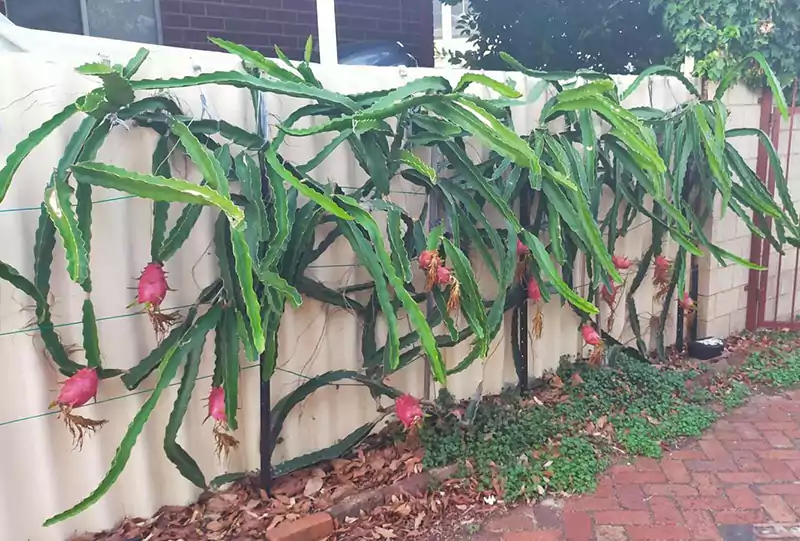
- I use the single-pole trellis to support the dragon fruit plant.
- When the plant grows to 12 inches, insert a bamboo stake or a pole near the plant pot or on the ground.
- Attach the growing shoots to the stick using a wire; do not tie tightly, as this can suffocate the stems.
- Now, as the plant grows, tie it in equal intervals for uniform growth and support.
- Since dragon fruit is a climbing vine, a trellis is necessary to maintain a proper structure, and the plant may be exposed to diseases and infections.
Pruning
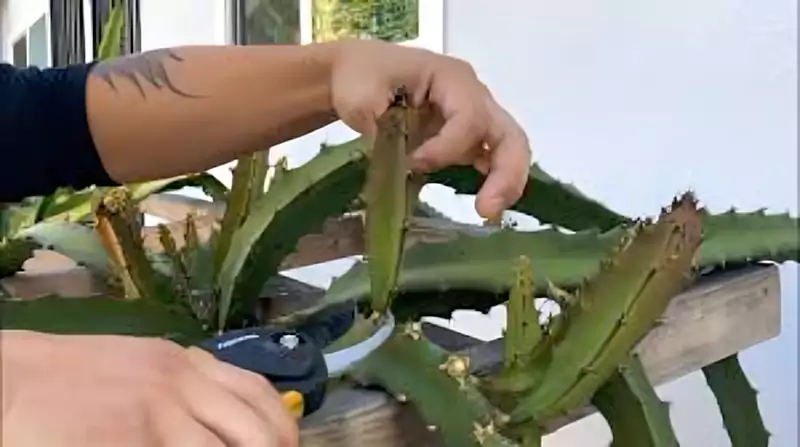
- The best time to prune the dragon fruit plant is late winter, before the new growth appears.
- Using garden scissors and gloves, snip off any sunburnt or dead parts of the plant.
- Many gardeners use this rule of thumb, in which they only let 3 sub-branches remain on the main stem. This helps in better growth and keeps the plant less crowded.
- Be careful of the spikes on the plants, as they can hurt while pruning.
What Are the Different Types of Dragon Fruit to Grow?
There are three major types of dragon fruit, which can be easily classified based on the different colored flesh and the outer body, quite like the types of lettuce.
If you have only known one type, here is a table of 3 different types of dragon fruit consumed around the globe that you must know:
| Image | Description |
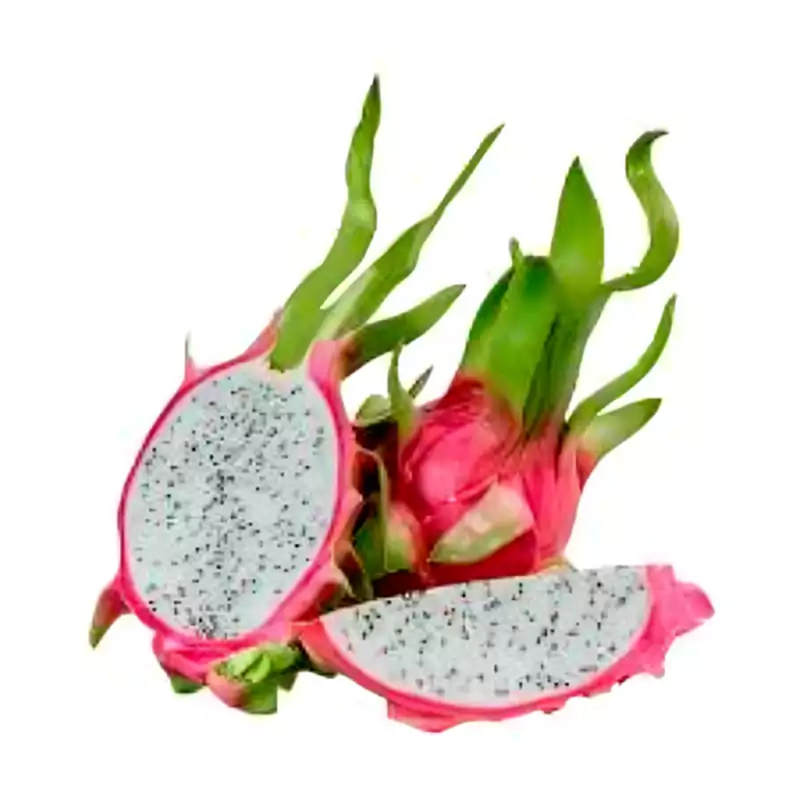 | Dragon fruit Botanical name: Selenicereus undatus Flesh colour: White Taste profile: Mildly sweet Cultivars: Vietnam white and Thomson |
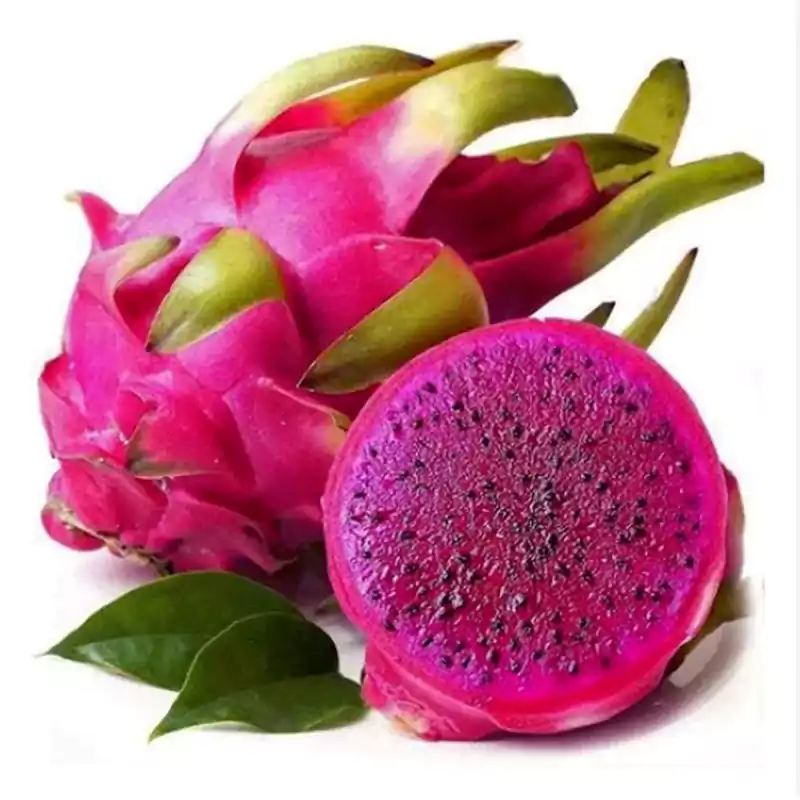 | Red-flesh dragon fruit Botanical name: Selenicereus costaricensis Flesh color: Red Taste profile: Sweeter than others (berry-like) Cultivars: Delight and American Beauty |
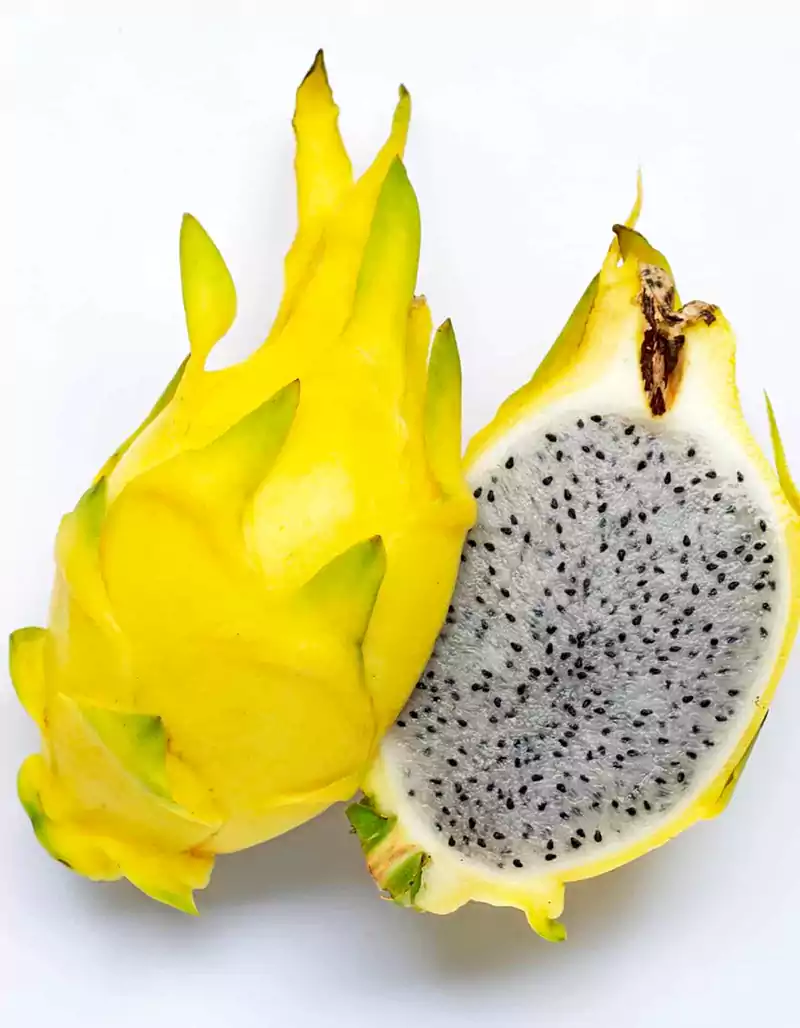 | Yellow dragon fruit Botanical name: Selenicereus megalanthus Flesh color: White Taste profile: Sweet, honey-like flavour Cultivars: Yellow Palora and Colombian Yellow |
Common User Concerns and Solutions for the Dragon Fruit Plant
Dragon fruit takes about 3-5 years to bear fruit, and in this long journey, there are certain care challenges every gardener has to face. While doing my research, I came across so many Reddit queries related to dragon fruit care.
I have listed down a few. Read and explore the simple solutions:

- The main cause of the dark green and mushy leaves is overwatering.
- Stop watering too frequently and let the soil dry out before misting the plant.
- There can be chances of root rot; hence, it is advised to repot the plant in a well-draining pot with a porous soil mix.
- The dragon fruit plant is drought-tolerant and needs to be watered only twice every week in summer or only when the top inch of the soil is dry.
2. I Need Help

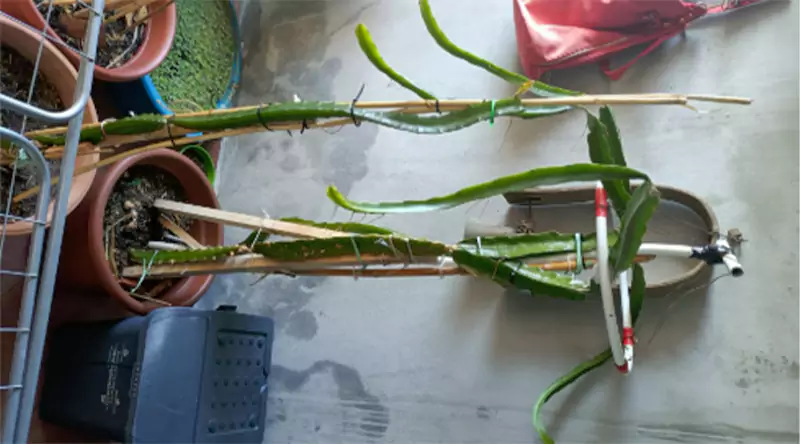

- Firstly, it is completely normal for the dragon fruit plant grown from seeds not to grow flowers for 2 years, as this process can take up to 3 years.
- Although there may be concern of lack of nutrients provided, keep the plant in direct sunlight for 6-8 hours and keep the soil consistently moist.
- Also, prune the unnecessary sub-branches, as they divert the energy from the flower production.

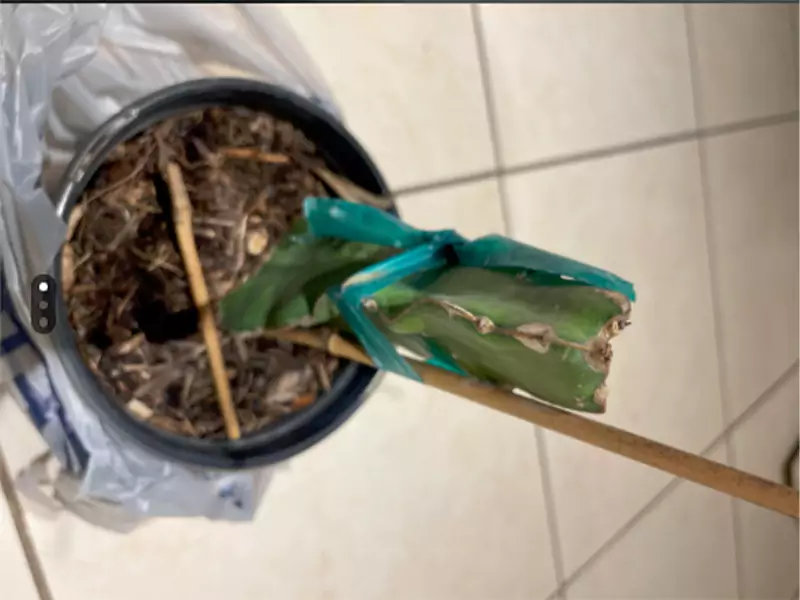
- The stem-cutting in the Reddit query has browning tips that look like a result of root rot.
- However, before discarding the plant, inspect the bottom of the plant for any sign of browning ends.
- If the base of the plant is turning brown or black, with a slimy texture, it is best to throw it away.
- On the contrary, if the base looks fine, you can prune the brown ends and grow it without worry, as sometimes it is common for stored plants to form brown ends.
Lab Research and Findings About the Dragon Fruit
There are endless supplements for weight management that have no strong scientific backing, but did you know dragon fruit, like broccoli, along with being beneficial for skin health and immunity, helps in weight management as well?
If not, take a look at this research paper that I stumbled upon:
| Research summary box 1 Study year: 2024 Aim: To analyse the effect of Dragon fruit extract on metabolic syndrome Sample type:
The concluding results of the study suggest that:
|
Fun Facts About the Dragon Fruit
Not only is the dragon fruit plant unique in its appearance and taste, but it is also home to many fun facts that will blow your mind. So, before you embark upon this interesting journey, take a look at some interesting facts about this tropical fruit:
- The dragon fruit is also known as the “Queen of the Night,” because the flowers only bloom for a short duration at night.
- Apart from the delicious pulp, the peel of the fruit is also used to make tea and jams.
- Dragon fruit is also used as a face mask, as users suggest it helps in managing acne and achieving smooth, even skin.
- Due to the high resemblance to the lotus flower, the Government of Gujarat in India renamed the fruit as “Kamalam” in January 2021, as reported by The Hindu.
- Similar to the Hellebore flower, the dragon fruit is also associated with Scorpio due to its hardy and resilient nature.
Concluding Remarks
The dragon fruit is a unique plant to grow, not only because of its appearance but also because of its distinctive planting method. It was nothing less than a gardening treat to see the plant grow after years of hard work and patience.
For me personally, dragon fruit was a gardening challenge, but over the years, the process became rather simple and hassle-free. Still confused, how to grow dragon fruit? The best way to grow the dragon fruit is to plant it indoors so that you can control the environment accordingly and protect it from the danger of frost.
FAQs
How long does it take to grow the dragon fruit plant?
When to prune the dragon fruit plant?
The best time to prune the dragon fruit plant is in late winter before the new growth emerges.
Is dragon fruit a cactus?
Yes, dragon fruit is a tropical plant that belongs to the cactus family, like the barrel cactus.
How many types of dragon fruit plants are there?
There are three main types of dragon fruits: white-fleshed, red-fleshed, and yellow-skinned fruits, which differ in their taste profiles.
Are dragon fruits grown on trees?
No, dragon fruits are grown as climbing vines along the trellis that can resemble trees, but are not trees.
Sources:
How to grow and care for a dragon tree– BBC Gardeners
Latest Blog