Propagate the shrub by its stem cuttings in the active growing season. For this, take a 6-inch cutting and allow it to be callous for a week. After that, plant it in a well-draining succulent potting mix.
Pencil Cactus Care Guide: Growing Conditions, Propagation and Common Problems
Author
Rashika GuptaLast Update
September 14, 2026
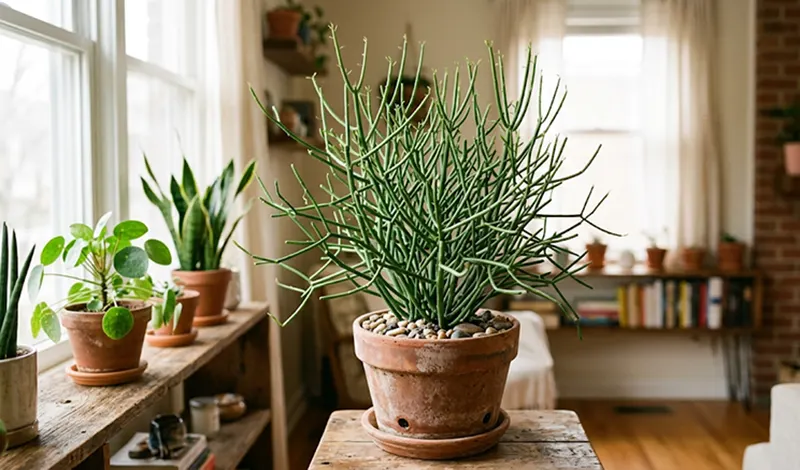
The pencil cactus, also famous as milk bush or sticks on fire, is an amazing succulent plant and not a true cactus. This plant provides the perfect blend of architectural beauty and calming greenery to my indoor space.
Native to Africa and India, the shrub thrives best in sunny spots. Plant enthusiasts specifically love its pencil-thin green branches and bushy structure. Whether you want to grow it as an indoor sculptural piece or an outdoor architectural element, the guide includes everything for you, from pencil cactus care measures, growing conditions, to propagation methods.
Table of Contents:
- Overview of Pencil Cactus: Scientific Classification and Key Characteristics
- What are the Ideal Growing Conditions of Pencil Cactus?
- Essential Pencil Cactus Care Measures
- How to Propagate Pencil Cactus?
- Pests and Diseases and Their Prevention in the Pencil Cactus
- Common User Concerns Regarding Pencil Cactus Care
- Final Thoughts
- FAQs
Overview of Pencil Cactus: Scientific Classification and Key Characteristics
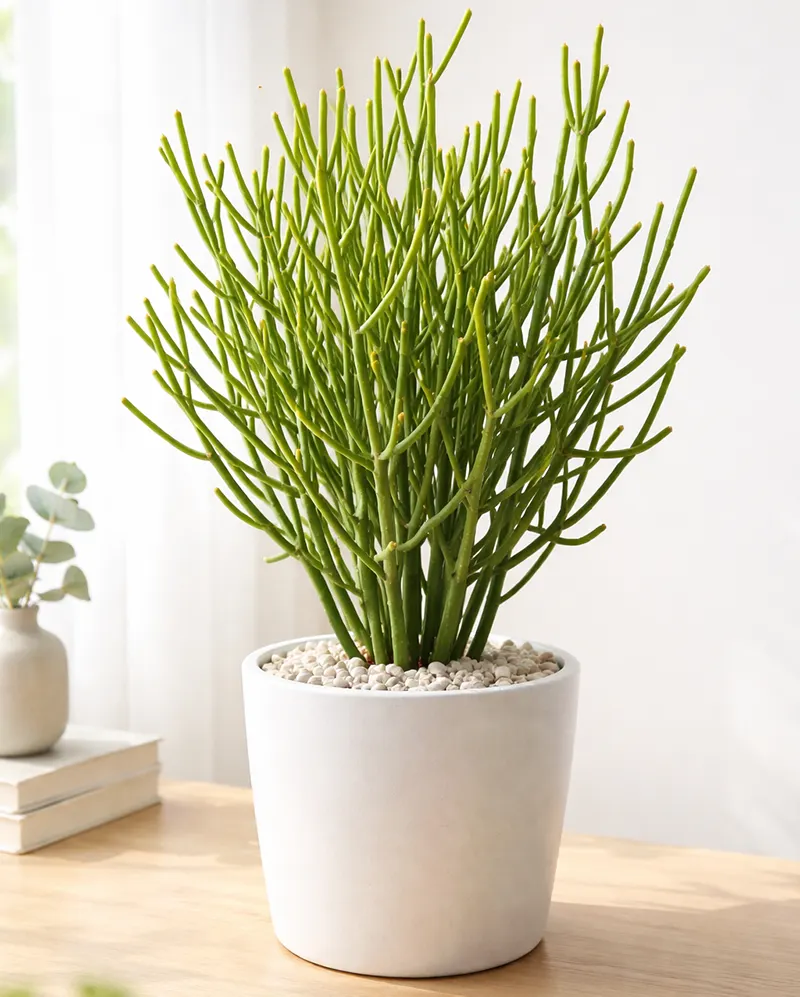
Pencil cactus plant, botanically known as Euphorbia tirucalli, is a low-maintenance succulent. It is incredibly fast-growing and can spread up to 10 feet in ideal growing conditions. The plant typically has green stems, but they can turn red and yellow in bright sunlight and cold conditions. Let’s take a look at its scientific classification and key characteristics before moving on to its propagation methods:
Scientific Classification of Pencil Cactus
| Kingdom | Plantae |
| Order | Malpighiales |
| Family | Euphorbiaceae |
| Genus | Euphorbia |
| Species | E. tirucalli L. |
Key Characteristics of Pencil Cactus
- Growth Rate and Size
Cactus pencil is an incredibly fast-growing succulent that can grow around 20 inches annually. These plants typically reach a height of 6-8 feet indoors and up to 30 feet outdoors. In the ideal conditions, these plants can spread up to 10 feet.
- Colour and Foliage
The plant primarily features green stems, but they can transition to fiery red, orange, and yellow when exposed to bright sun. It is characterised as a leafless plant, though tiny leaves may appear on the new growth that quickly fall off.
- Structure and Flowers
This succulent has a dense, upright branching structure. As the plant matures, the lower stem becomes woody and brown. Furthermore, adding to its beauty, pencil cactus bloom with tiny yellow flowers with red undertones in spring or summer.
- Toxic Sap
When cut, the plant leaks a white caustic sap, which is poisonous and causes skin irritation and temporary blindness. According to ASPCA, the plant is toxic to cats, dogs, and horses due to the sap. Therefore, if you have pets at your home, it is crucial to keep these plants away from furry friends.
Did you know?
The 2017 study by the Asian Pacific Journal of Tropical Biomedicine identifies Euphorbia tirucalli L. (Pencil Cactus) milky latex as medically beneficial. It highlights its uses in ailments like warts, rheumatism, asthma, and cancer while also warning of its severe irritant property.
What are the Ideal Growing Conditions of Pencil Cactus?
Before discussing the pencil cactus care measures, I would like to talk about its ideal growing conditions. This will ensure that the grower’s plant thrives, not merely survives. Cactus pencil plants are the sun worshippers and need intense light to thrive well. In addition to that, the succulent can suffer root rot from overwatering, making sparse watering crucial for its healthy growth.
| Hardiness Zones | USDA zones 10-12 |
| Soil Needs | Prefers a fast-draining potting mix. |
| Sunlight Requirements | Grows best in bright indirect or direct sun. Placing it over a west or south-facing window that receives 4-6 hours of daily sunlight is ideal. |
| Water Intake | It is a highly drought-tolerant plant. Allow the soil to dry out between watering sessions. Water every 2-3 weeks in spring and summer, and even less in winter. |
Also Explore: When to Prune Fruit Trees? Best Pruning Tips With Common Queries and Solutions
Essential Pencil Cactus Care Measures
The pencil plant is low-maintenance and can survive on neglect. If you remain busy all day and want to add an easy-to-care-for houseplant, then this can be a perfect addition for you. Though there are some pencil cactus care essentials that you should follow to support its growth. For instance, keeping it in a warm and dry environment, and repotting it to a larger container every 2-4 years.
Temperature and Humidity
One of the essential tips of pencil cactus care is keeping it in warm and dry environments. The ideal temperature for its optimal growth is 18–29°C. Furthermore, the stick cactus plant does not thrive in high-humidity conditions and is not best suited for areas with high moisture. It is highly susceptible to suffering damage in cold conditions, typically when the temperature drops below 10°C.
Fertilizer
Pencil plant care involves minimal fertilizer during its growing season of spring and summer. Use a balanced water-soluble fertilizer every 4-8 weeks to support its growth. Avoid over-fertilizing, as it can lead to salt buildup and burning of the roots in the plant.
Note: Always wear gloves while handling the plant. Its sap is toxic and can lead to skin irritation.
Pruning
Spring and summer are the ideal times to prune the pencil cactus plant. As it is a fast-growing plant, you need to prune it to control its size, maintain its shape, and propagate it. Use sharp and clean pruners to remove the dead, diseased, and broken branches first.
Avoid cutting more than ⅓ of the plant to prevent shock. Additionally, have damp rags or paper towels ready to wrap around the cut end to prevent bleeding of the sap.
Repotting
The repotting of the pencil plant is best done in its growing season in spring and summer. When young, this shrub doesn’t need to be repotted for some years. Consider repotting it when the plant becomes too top-heavy, typically in 2-4 years. Below are the steps for how I repot it:
- Before initiating the process, it’s important to be careful of its sap. Wear gloves, full sleeves, and eye protection. The sap can cause skin irritation and be dangerous if it gets into the eyes.
- Allow the plant to dry out completely to make it easy to handle. If your plant is too large, consider taking assistance from a second person to manage its heavy and brittle branches.
- Gently remove the plant from its old pot and trim its black, rotten roots using clean scissors.
- Replant it in a one-size larger pot. Fill the remaining space with succulent potting mix.
- Settle the soil properly by pressing on it. Allow the plant to rest for 5-7 days before watering it.
You May Also Read: Calathea Plant: Varieties, Growing Conditions, Features and Care Guide
How to Propagate Pencil Cactus?
As per my experience, the best way of pencil cactus propagation is through stem cuttings. Propagate the shrub in its active growing season of spring and summer. Follow these steps to do it successfully:
- Use sharp shears to cut a 6-inch-long healthy branch. Immediately rinse the cut end in water to stop the sap flow.
- Allow the cutting to dry out in a shaded area for a week to let the cut end become hard (callous). This step is crucial, and skipping it can lead to root rot.
- Insert the hard end into a pot with the right potting mix.
- Keep the soil barely moist and place the pot in bright indirect light.
Pests and Diseases and Their Prevention in the Pencil Cactus
The pencil cactus tree is tough as nails, and it can endure harsh environments and extended droughts. However, conditions like overwatering and poor ventilation can make it susceptible to pests like mealybugs, scale, and spider mites. It can also be affected by diseases, including fungal infections and root rot.
Let’s see them in detail:
Pest Infestations in Pencil Plant
| Pests | Description |
Mealybugs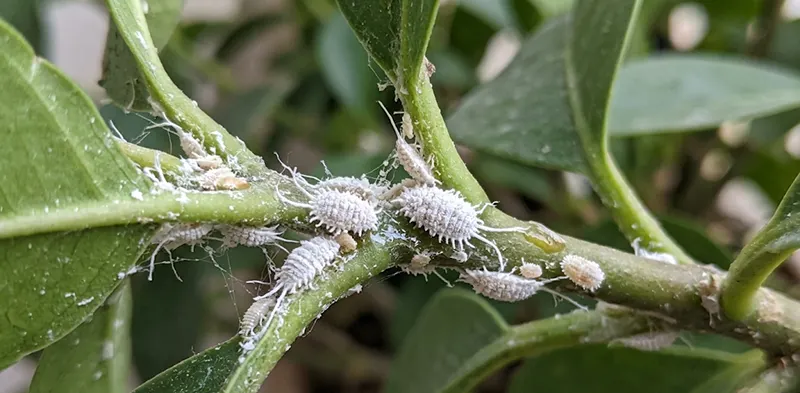 | These are the most common pests in this shrub. They are recognised as white cottony patches in joints and crevices. |
Scale Insects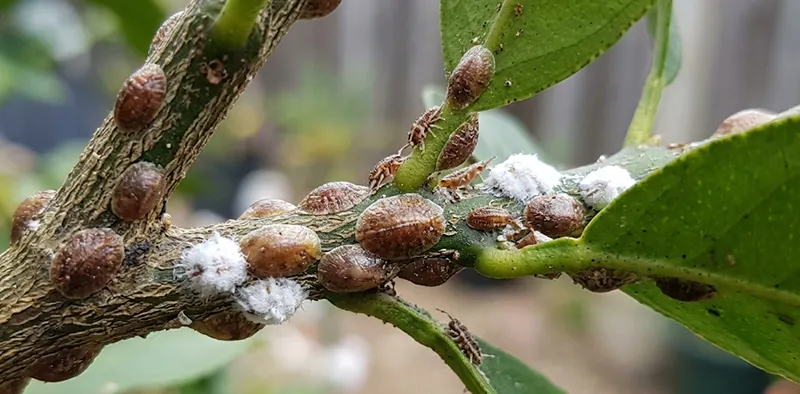 | Small, brown bumps on stems are causing the weakening of the plant. |
Spider Mites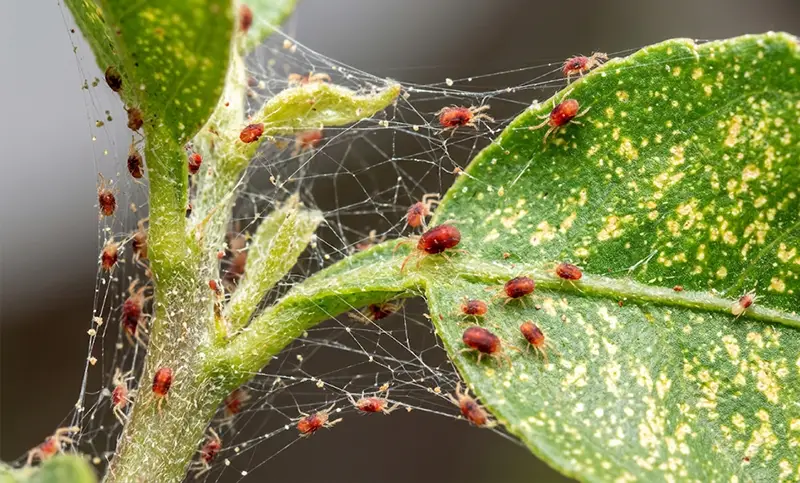 | Tiny pests that are causing webbing, yellowing and wilting branches. |
Aphids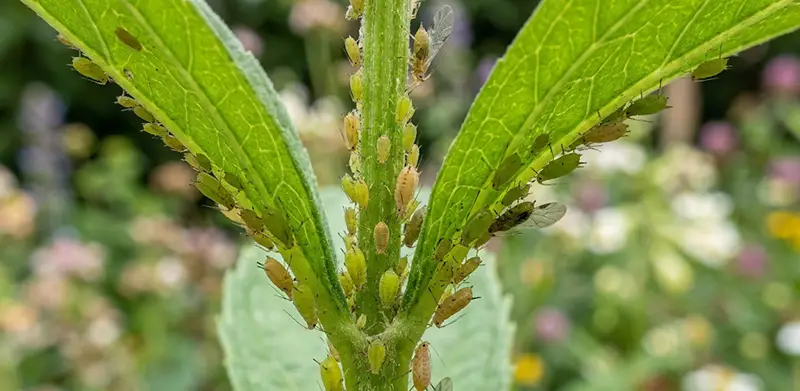 | Small, soft-bodied insects in colours of green, black and brown. They cluster around the new tender growth and leave a sticky residue. |
Common Diseases in the Pencil Plant
| Disease | Description |
| Root Rot | This is the most severe issue, which is caused by overwatering or poor drainage. Its symptoms include yellow stems and a soft base. |
| Fungal Diseases | If the plant is exposed to conditions like high humidity and poor airflow, it can cause fungal infections. This disease is recognisable by dark rust coloured spots on the stems. |
| Yellowing Leaves and Brown Tips | This is usually caused by overwatering and low humidity. The other possible reasons can be nutrient deficiencies and underwatering. |
Prevention and Treatment
- In case of pest infestations, use insecticidal soap, neem oil, or dab the pest with alcohol.
- Ensure good direct light, well-draining soil and proper watering to promote the overall well-being of the plant.
- Provide the plant with required air circulation and avoid overcrowding to reduce fungus and humidity.
Common User Concerns Regarding Pencil Cactus Care
By scrolling Reddit during my research, I got to know the honest, firsthand experience of the planters with the pencil cactus succulent. Some of them were curious about its changing colours and rapid growth. Take a look at their concerns and possible solutions:
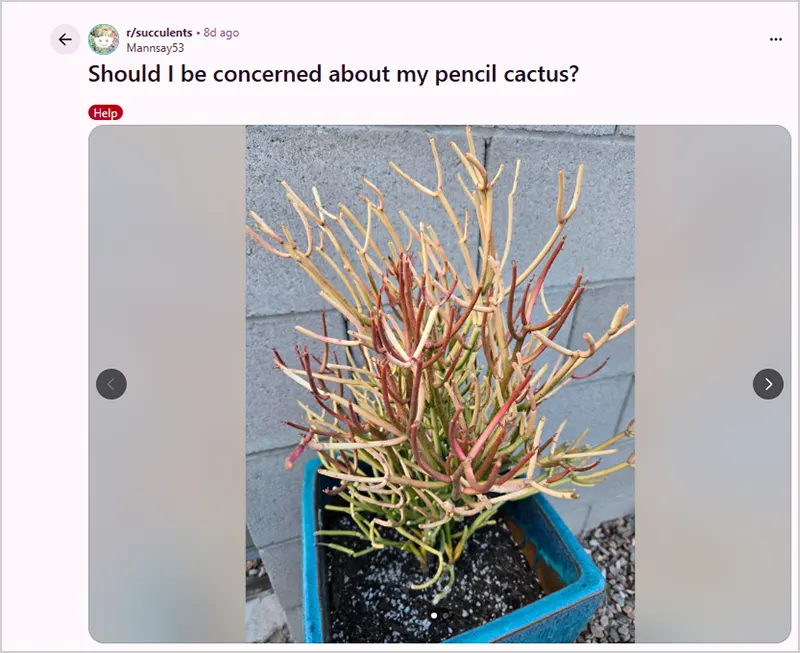
- On Reddit, Mannsay53 asked Should I be concerned about my pencil cactus? He was curious to know about the changing colours of the stems in the succulent.
Solution: The vibrant new colours in red, pink and orange shades on this plant are actually a positive sign of “sun stress”, and there is nothing to worry about. If they are placed in the southwest with a bright sun, they usually transition to different colours rather than just being green.
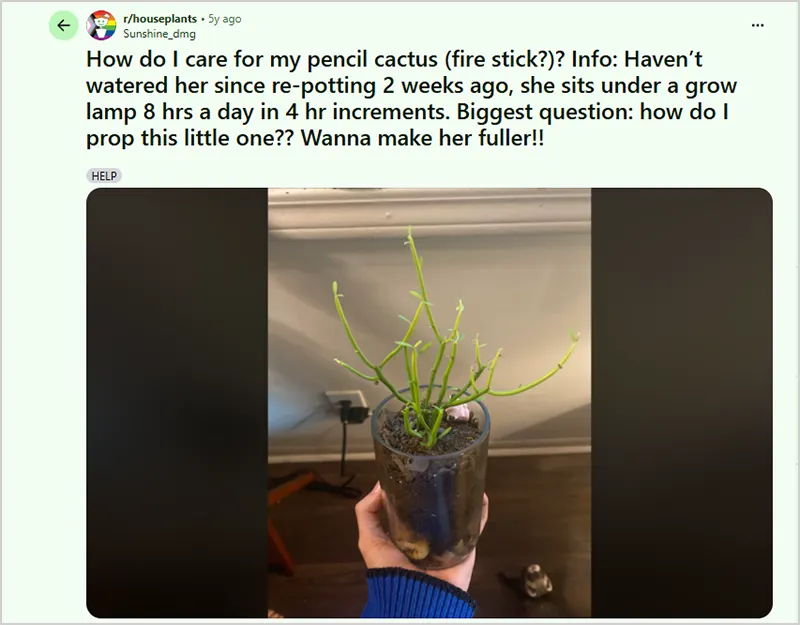
- Sunshine_dmg showed his concern How do I care for my pencil cactus (fire stick?)? Info: Haven’t watered her since re-potting 2 weeks ago, she sits under a grow lamp 8 hrs a day in 4 hr increments. Biggest question: how do I prop this little one?? Wanna make her fuller!!
Solution: Pencil cactus care relies on keeping it in direct light and proper watering, especially after repotting. Therefore, it’s recommended to keep the plant in bright light and let the soil dry out completely between waterings.
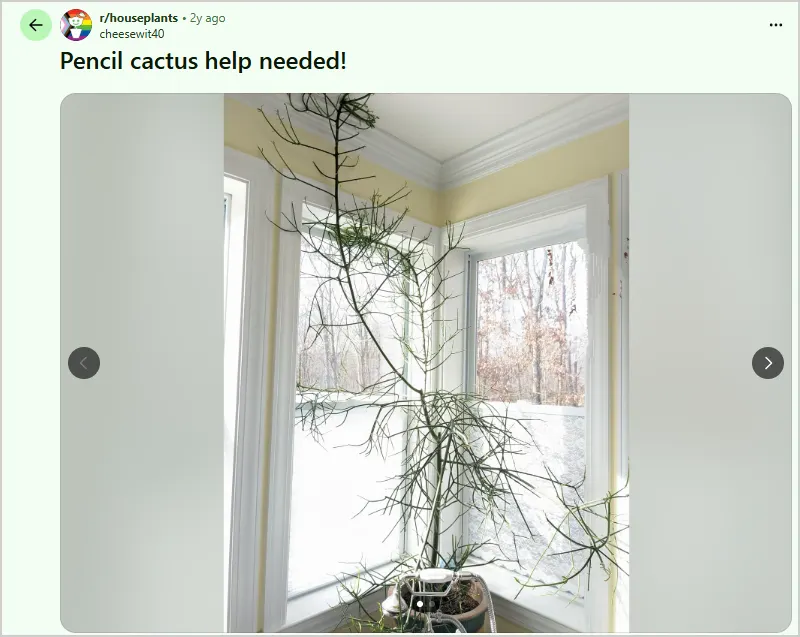
- cheesewit40 was worried about the plant’s growth getting out of control. He wanted to know how and when to prune it: Pencil cactus help needed!
Solution: Late spring to early summer is the ideal time to prune the houseplant. Always wear gloves while handling the plant to protect yourself from its poisonous sap. It responds well to heavy pruning, and you can remove ⅓ of the plant without any second thoughts.
Final Thoughts
The pencil plant is a striking succulent shrub that is highly valued for its minimal aesthetics and architectural beauty. Additionally, it is loved by homeowners and gardeners alike because of its low-maintenance nature. Pencil cactus care is easy and includes primarily proper watering and bright sunlight.
The plant is certainly a “living sculpture” that is perfect to start a garden from scratch. If kept small, it can also work as a beautiful focal point in the indoor spaces. Furthermore, you may also pair them with other plants like the sedum plant, which will create an eye-catching colour contrast!
FAQs
How to propagate a pencil cactus?
Does pencil cactus flower?
Yes! The succulent produces tiny yellow flowers in the spring and summer. They often go unnoticed due to being surrounded by reddish and green bracts.
What is the pencil cactus growth range?
The tree can grow up to 20-30 feet tall and 6-10 feet wide in its outdoor surroundings. When kept as an indoor plant, its growth is limited to 2-6 feet tall and 1-3 feet wide.
Is the pencil plant poisonous?
Yes, pencil cactus is highly poisonous due to containing white milky sap. It can cause skin irritation, eye pain and blistering upon contact.
What to do in pencil cactus care to make it bushier?
Consider pruning the plant’s tips of the branches to encourage its branching growth and bushier appearance.
Sources:
Euphorbia tirucalli– The University of Arizona
Pencil Plant– University of Florida