The cosmos can be planted anytime from spring to summer.
Everything You Need to Know About Cosmos Flower: From Ideal Growing Conditions to Pests & Problems
Author
Cerina TriglavcaninLast Update
September 17, 2026

Cosmos are versatile half-hardy annual or perennial plants known for their ornamental flowers. The flower symbolises order, harmony, peacefulness, and brightness on dark days as it blooms. Cosmos flowers bloom from summer till fall, providing a long-lasting, bright, colourful interest in the garden.
They are known as a self-seeding plant, meaning once the flowers have finished blooming and the plant has produced seeds, the seeds fall onto the ground and do not require human attention to replant them.
Read the article to learn about cosmos flower ideal growing conditions, care tips, growing procedure, and much more.
Table of Contents:
Taxonomy and Ideal Growing Conditions For the Cosmos Flower
Cosmos is native to Mexico, Central America, and Northern South America. The cosmos flower is a popular choice for large-scale planting and enhancing balcony aesthetics. Additionally, the cut flowers are often used in floral designs. For more general information, here is the taxonomic overview and ideal growing conditions of the plant:
| Botanical Name | Cosmos bipinnatus |
| Common Names | Mexican aster, cosmea, sulfur cosmos, or yellow cosmos |
| Kingdom | Plantae |
| Order | Asterales |
| Family | Asteraceae (Compositae) |
| Genus | Cosmos |
| Species | The genus offers about 40 species; some of them are Cosmos bipinnatus (garden cosmos), Cosmos sulphureus (yellow cosmos), and Cosmos atrosanguineus (chocolate cosmos). |
| Native area | Tropical America |
| Bloom period | Summer and fall |
| Hardiness Zone | 2 to 11 USDA Zones |
| Light Requirements | Exposure to full sun |
| Maintenance | Low |
| Type | Annual |
| Characteristics | Showy plant |
| Soil | Well-drained, moist, rich chalky, loamy, or sandy soil with acidic to neutral pH levels. |
| Flower colour | Pink, purple, white, and red |
| Water Requirements | Low to average |
| Mature size | 1 to 6 ft. tall and 1 to 3 ft. wide |
| Fertilizers | Essentially not required |
| Characteristics | Cut flowers, showy |
| Tolerance | Drought |
| Pollinator-friendly | Yes, attracts bees, birds, and butterflies |
Read more: Tradescantia Plant Guide: Taxonomic Overview, Ideal Growing Conditions, Care Tips, & Much More!
How to Grow Cosmos From Seed?
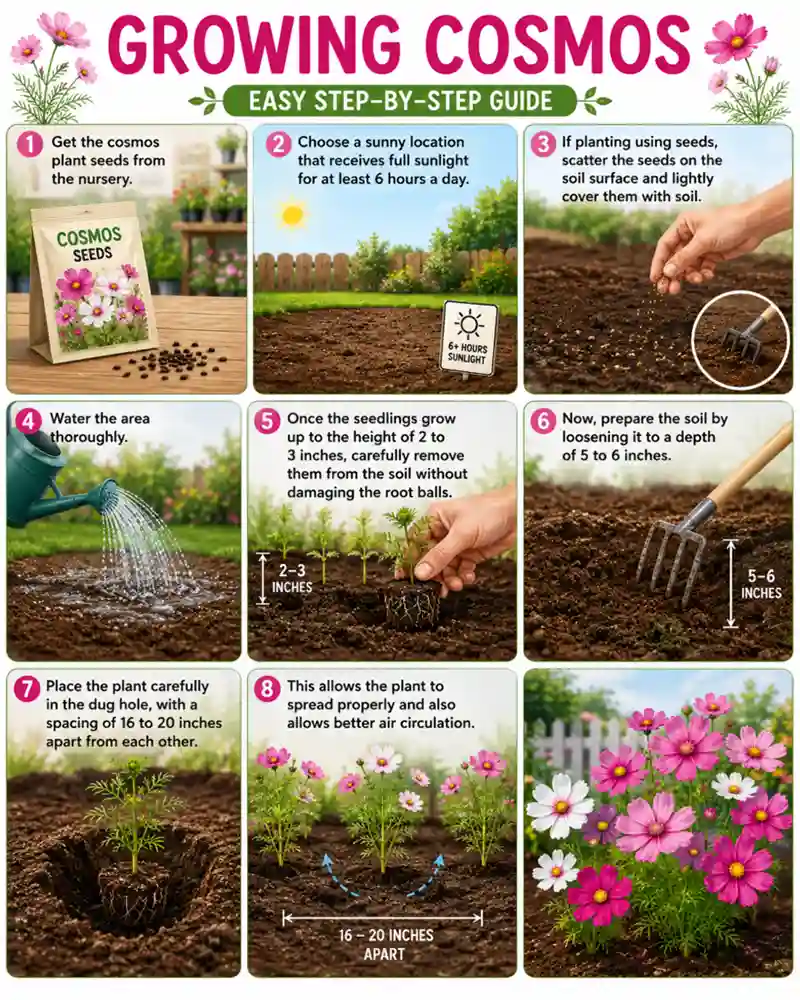
Growing cosmos includes a few simple steps that are mentioned below:
- Get the cosmos plant seeds from the nursery.
- Choose a sunny location that receives full sunlight for at least 6 hours a day.
- If planting using seeds, scatter the seeds on the soil surface and lightly cover them with soil.
- Water the area thoroughly.
- Once the seedlings grow up to the height of 2 to 3 inches, carefully remove them from the soil without damaging the root balls.
- Now, prepare the soil by loosening it to a depth of 5 to 6 inches.
- Place the plant carefully in the dug hole, with a spacing of 16 to 20 inches apart from each other. This allows the plant to spread properly and also allows better air circulation.
Tip If you are planting cosmos in a pot or a container, add all-purpose garden fertiliser every two weeks to promote optimal flowering. You can avoid using fertiliser in the garden.
Read more: How to Grow Rosemary: Planting, Propagation, and Care Tips
Cosmos Flower Care Tips You Should Know
Caring for a plant is one of the most important steps after growing. This helps the plant to thrive longer and bloom healthily. Here are a few care tips to keep your cosmos plant healthy:
- Water the cosmos flower frequently during the growing period. Later, reduce the frequency of watering the plant, as cosmos do not require frequent watering. One thing that helped my plant grow more efficiently was occasional deep watering during hot weather and periods of drought.
- Regular deadheading of the bloomed flowers encourages continuous blooming.
- Use well-drained, not very rich soil to avoid foliage.
- Avoid fertilising the plant unnecessarily in the garden.
- Cosmos beds become weedy as they self-seed. Therefore, the plants require seasonal care like removing flowers before they go to seed.
Did you know?
Cosmos is one of the two October birth flowers.
Read more: How to Grow and Care for Yucca Plants in Indoor and Outdoor Conditions?
Common Pests and Diseases With the Cosmos Flower
Cosmos are resistant to most pests and diseases, but they can be affected by a few of them. Here are some pests and diseases that are associated with them:
| Pest and diseases | Solutions |
Aphids 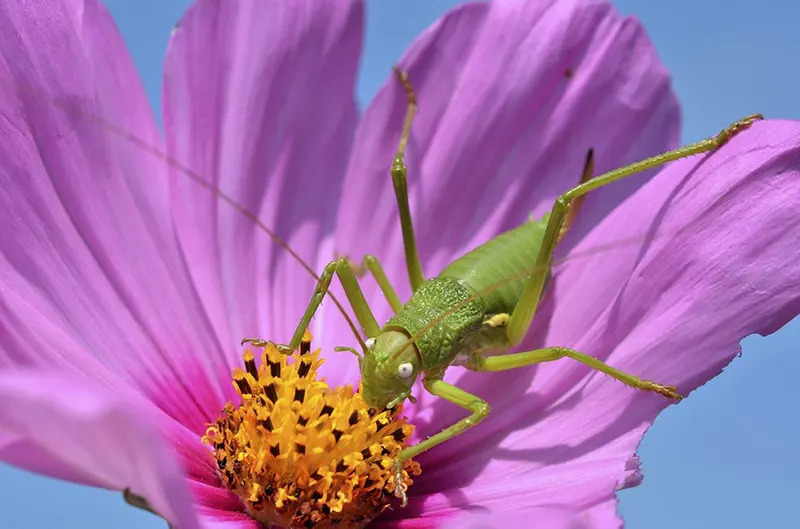 | They can be controlled using neem oil or insecticidal soaps. |
Slugs  | Slugs can eat holes in the leaves and can be controlled by using slug bait or copper tape around the plant base. |
Gray mold 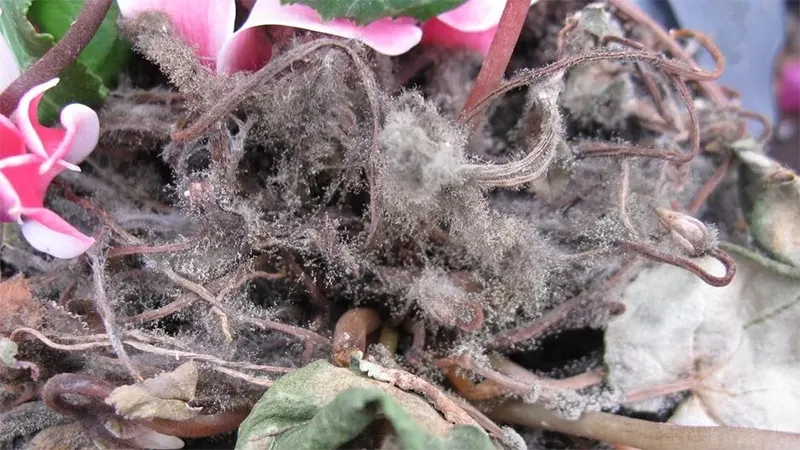 | Gray mold is also known as botrytis blight. It is a fungal disease that appears as brownish-grey spots on the plant. The best way to deal with this is by cutting the infected area and avoiding overhead watering. |
Powdery Mildew 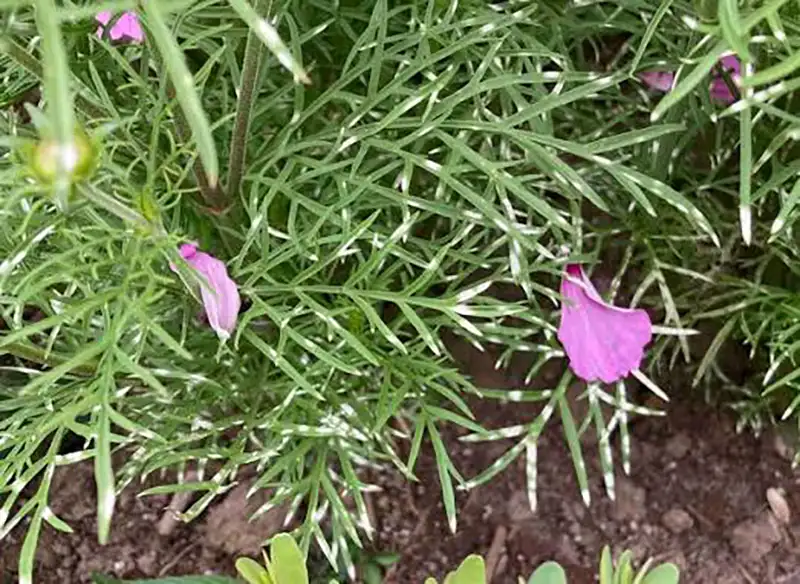 | Powdery mildew is a fungal disease that can appear as a white, powdery coating on the plant leaves. This can be prevented by good air circulation around the plant. |
Read more: Mandevilla Plant Guide: Taxonomic Overview, Ideal Growing Conditions, Care Tips, & Much More!
Takeaways
Cosmos are versatile, easy to grow, and low-maintenance blooming plants. They grow from summer till fall. The plant comes in around 40 species; you can choose your plant from the most famous ones, including Cosmos bipinnatus, Cosmos sulphureus, and Cosmos atrosanguineus.
Just like growing the cosmos, caring for it is also very simple. All you need to do is water the plant deeply once in a while, remove deadheads, and clear flowers from the cosmos bed after the bloom season is over. Next time you plan to grow an aesthetically pleasing or ornamental plant that also attracts pollinators, consider choosing cosmos. It will also provide you with a sense of relief in fall, when most of the plants die, and serve as a source of hope. Happy planting!
FAQs
When to plant cosmos?
Can we plant Cosmos from seed?
Yes, cosmos are generally known as self-seeding, which means the plant grows itself from the seeds that fall on the ground.
Is cosmos annual flower?
Yes, cosmos are known as half-hardy annuals or perennial plants.
When do cosmos flowers bloom?
The cosmos flowers bloom from summer till fall.
In which colours do cosmos bloom?
Cosmos blooms in various shades of red, white, pink, and purple.
Sources
Cosmos: Britannica
Latest Blog