Water the plant when the top 2-3 inches of soil feel dry. Outdoor yuccas need watering every 10-14 days, while indoor plants only require watering every 2-3 weeks.
How to Grow and Care for Yucca Plants in Indoor and Outdoor Conditions?
Author
Annette HirdReviewed By
Cody Allison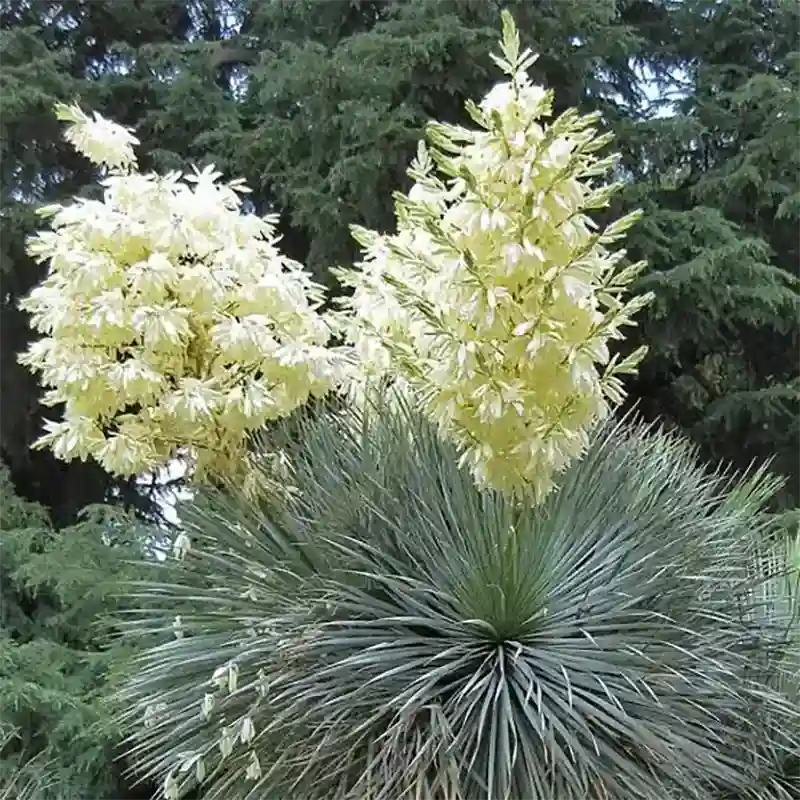
The yucca plant is one stunning evergreen species known for special characteristics like sword-shaped leaves, high tolerance to drought, and a low-maintenance nature. The plant is native to North and Central America and has become a popular choice for both indoor and outdoor decor.
Yucca is a part of the Asparagaceae family and consists of 40 species, each with different characteristics.
Apart from its beauty, the yucca plant is highly valued for its resilience to heat, poor soil, and limited watering. Some species of it can produce clusters of creamy-white flowers that can attract several pollinators, including bees, butterflies, and hummingbirds.
There is a lot to learn about different types of yucca plants, how to grow them, and essential care tips for managing weather changes, pests, and diseases.
Table of Contents:
How to Plant a Yucca Plant
Yucca plants are quite easy to plant and take care of. You just need to take care of the location and proper technique. Proper planting will help the roots develop quickly, reducing the risk of rotting.
Step 1: Select the Right Location
To plant a yucca species, it is important to select a spot that receives 6 to 8 hours of direct sunlight every day. For indoor yucca plants, place them near a south- or west-facing window, where they can receive bright and indirect light.
Step 2: Prepare Well-Draining Soil
This plant dislikes waterlogged soil. Thus, use sandy or loamy soil mixed with coarse sand, gravel, or perlite to maintain drainage. The ideal soil pH is 6.0-7.5; thus, keep it in check by maintaining a record.
Step 3: Dig a Planting Hole
Dig a hole twice as wide as the root, but make sure that it is not as deep as the container. It is advised to avoid planting too deeply because it can engender root diseases.
Step 4: Position the Plant Correctly
Plant the Yucca upright in the hole, allowing the roots to spread gently, and backfill with soil. Press the soil lightly to remove the air pockets.
Step 5: Add Mulch
Apply a thin layer of gravel or decorative stones around the base to retain and conserve the moisture in the plant while allowing proper air passage.
How to Grow a Yucca Plant
Growing a yucca plant is simple, as it is quite adaptable to natural environments. All the plant requires is the right balance of sunlight, watering, and nutrients.
1. Sunlight
The yucca plant grows best in full sunlight. It must receive 6-8 hours of direct sunlight every day. Outdoor plants flourish best in sunny gardens, whereas indoor plants should be placed near south- or west-facing windows or in areas where they can receive adequate natural light.
Limited natural light can result in slower growth, pale leaves, and a stretched or leggy appearance.
2. Watering
Yuccas are highly drought-tolerant and able to store water in their thick stem and roots, making them resistant to dry conditions. Water the plant deeply but infrequently, allowing the soil to dry out completely before watering it again.
In summer: Water every 10-14 days
In Winter: Water every 3-4 weeks
Indoor plants: Water only when the top 2-3 (5-7 cm) inches of soil feel dry.
3. Temperature
Yucca plants grow best in warm conditions, with an ideal temperature range from 18°C to 32°C. They adapt well to typical indoor temperatures and can also tolerate dry and hot weather. Above all, the outdoor plant variety can tolerate temperatures below freezing. But prolonged exposure to excessively wet and cold conditions can damage the roots.
4. Fertilizer
Yuccas are light feeders, meaning they don’t require frequent fertilization. Feed once or twice during the summer using balanced, slow-release, or liquid fertilizer.
Do not fertilize during autumn or winter when they can naturally grow.
Overfertilizing with nitrogen can weaken the foliage growth and affect the overall strength and resilience.
5. Pruning
Regular pruning helps yucca plants stay healthy and attractive. Remove dead, yellowing, or damaged leaves throughout the year to improve the plant’s appearance and reduce the risk of pests and diseases.
After flowering, trim the flower stalk close to the base.
6. Repotting Indoor Yucca
Indoor Yucca plants need repotting every 2-3 years, or whenever the roots become crowded and begin growing through drainage holes or circling inside the pot.
The chosen pot has drainage holes and is slightly larger than the current container.
Different Types of Yucca Plants
As mentioned earlier, Yucca plants have 40 different species. Whereas some varieties are best for indoor settings, others are better suited for outdoor landscapes because of their larger size and high tolerance to harsh weather.
1. Spineless Yuca (Yucca elephantipes)
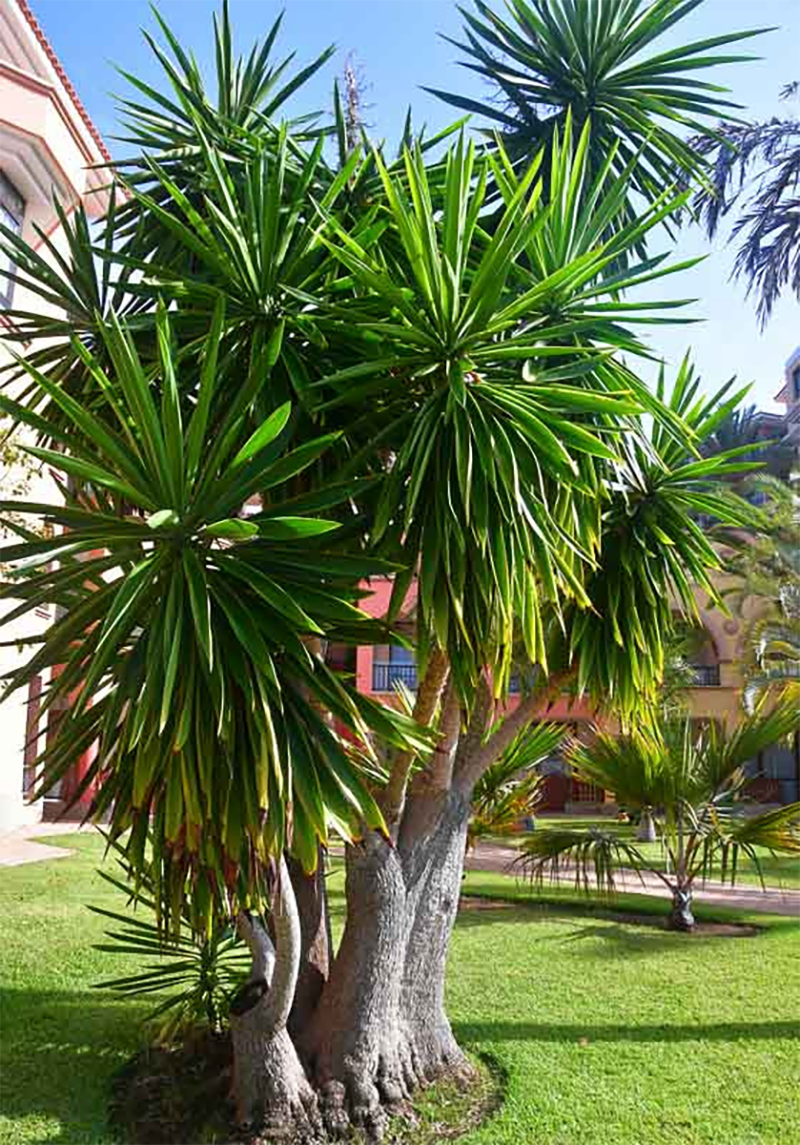
The spineless yucca is the most popular type of yucca. It features thick, cane-like stems topped with soft, sword-shaped green leaves that don’t have sharp edges, making it safer for homes with pets and children. It grows well in the bright indirect sunlight and requires minimal maintenance, making it ideal for beginners.
Best for: Indoor decor, offices, and living rooms.
2. Adam’s Needle (Yucca filamentosa)
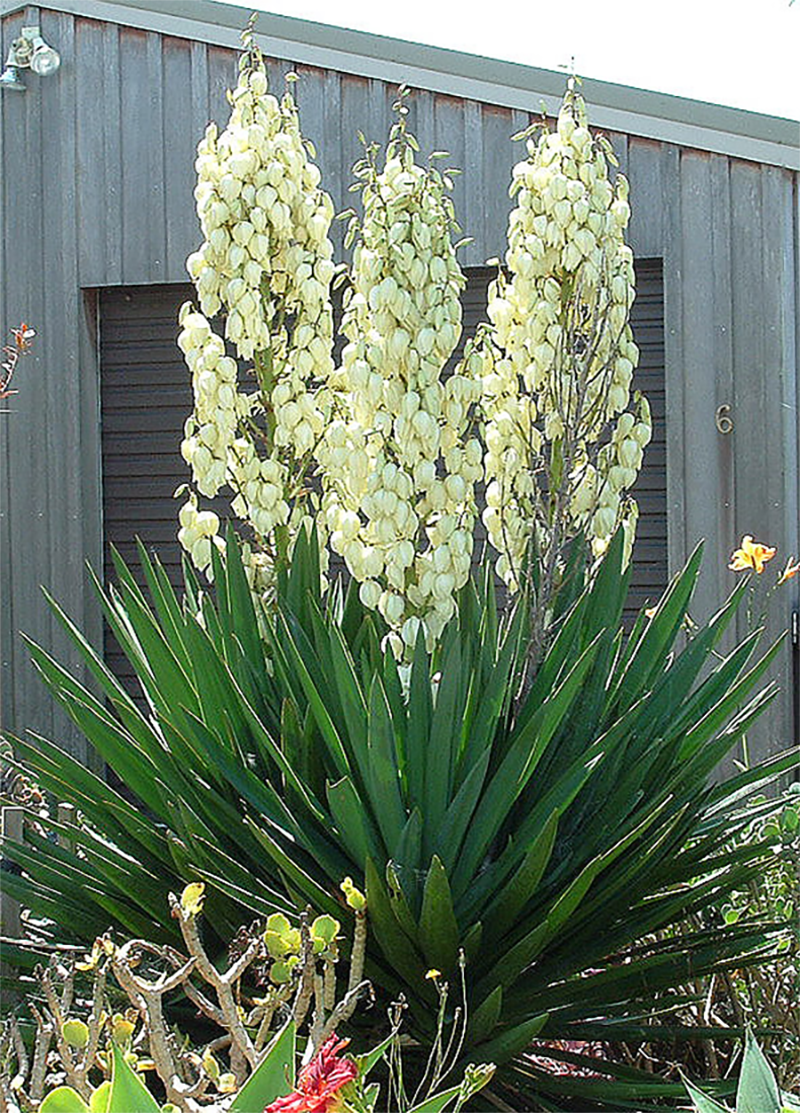
Adam’s Needle is an evergreen shrub that is known for its stiff, blue-green leaves with filaments that contain curly white filaments along the edges. During summer, this yucca plant variant produces tall flower spikes bearing creamy-white bell-shaped flowers.
Best for: Garden borders, xeriscaping, and drought-resistant places.
3. Spanish Bayonet (Yucca aloifolia)
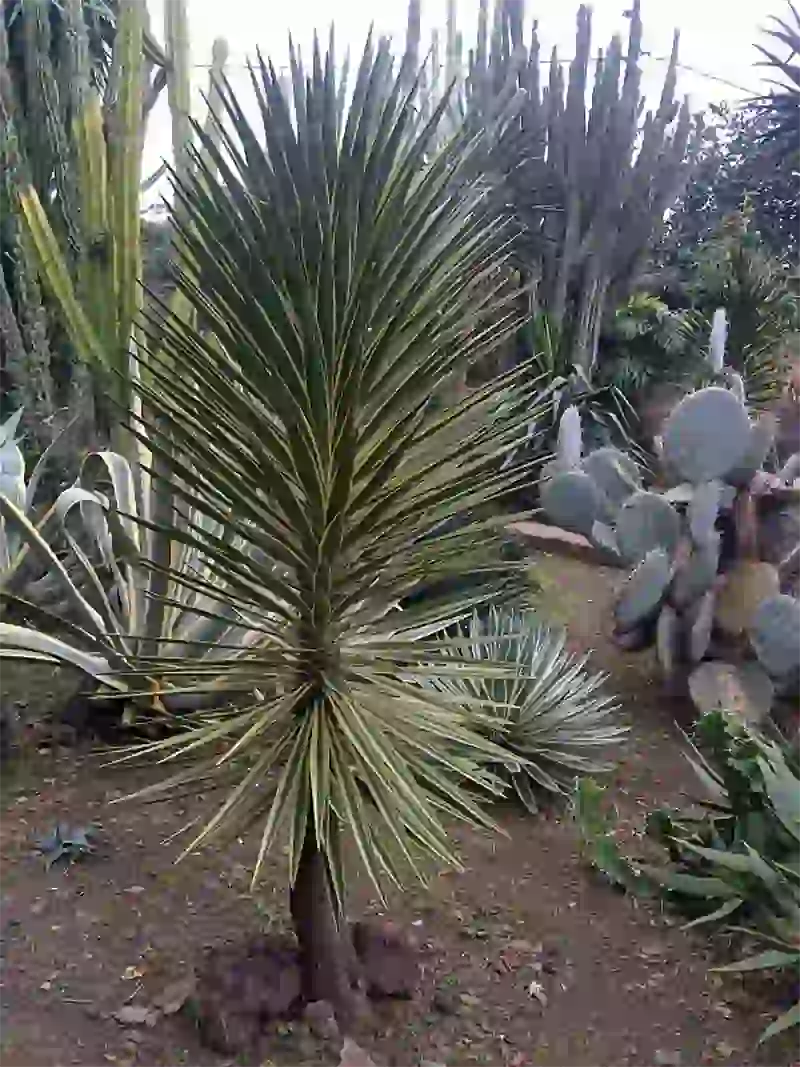
This unique species has quite rigid and pointed leaves with sharp, twig-like tips, justifying its name. It grows into a tree-like structure that blooms with fragrant white flowers during the warmer season.
Best For: Outdoor landscapes and coastal gardens.
4. Soapweed Yucca (Yucca glauca)
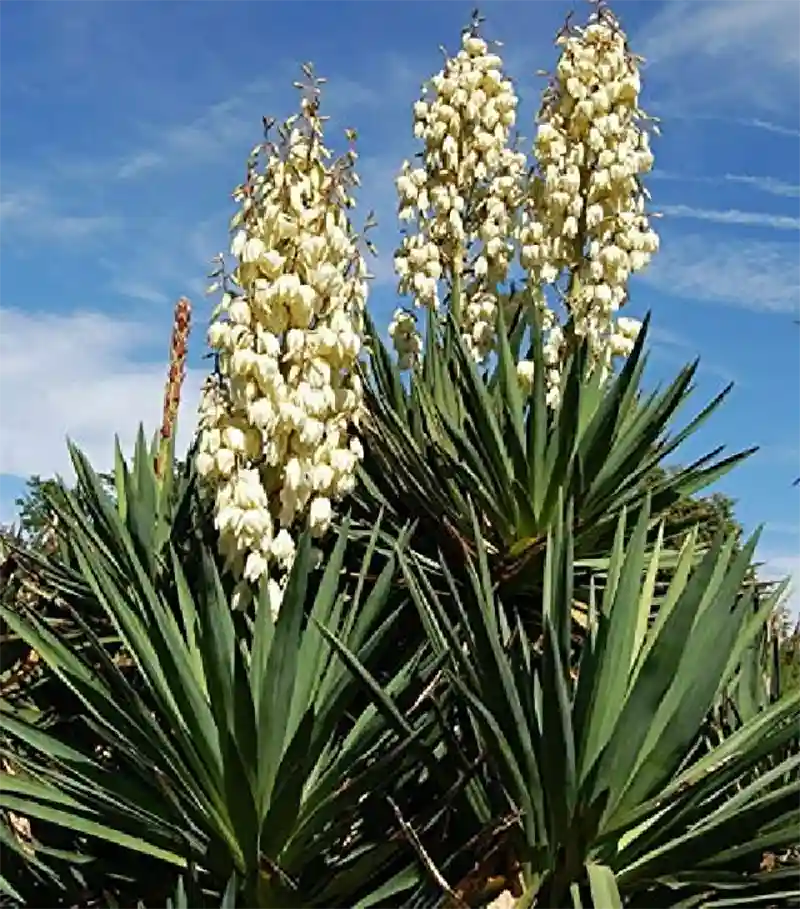
It is a native North American plant with narrow blue-green leaves and develops attractive flower stalks in early summer. The plant is known for its roots, as they are used as natural soap because it contains saponins.
Best For: Dry gardens and prairie landscapes
5. Joshua Tree (Yucca brevifolia)
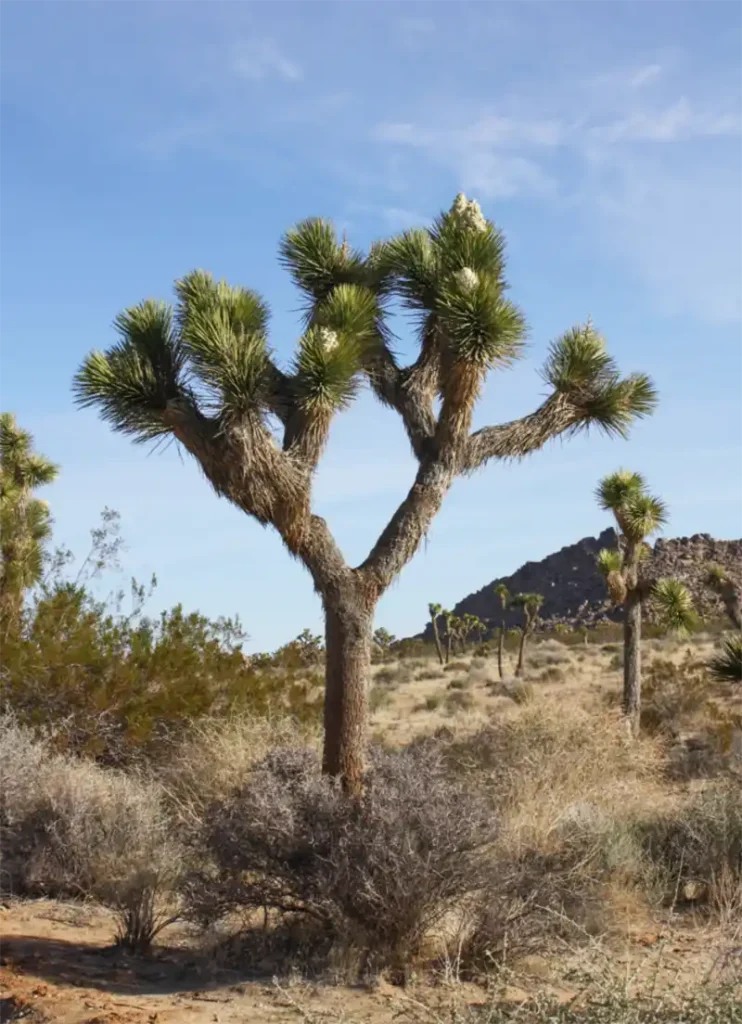
Another iconic yucca species is Joshua Tree, which can grow up to 40 feet tall and lives for hundreds of years. It thrives in desert climates and is known for its twisted branches and dramatic appearances.
Best For: Desert landscapes and botanical collections
6. Red Yucca (Hesperaloe parviflora)
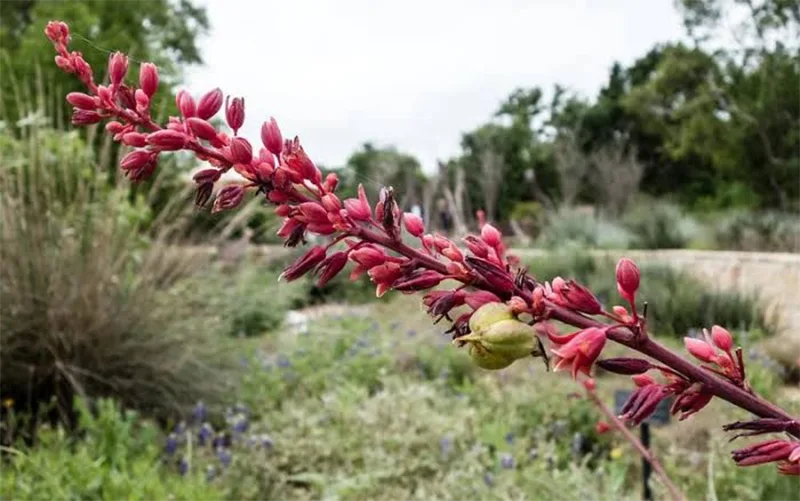
Though it is not a true yucca, red yucca is classified as a yucca because of its similar appearance. It produces long, arching leaves and coral-red tubular flowers that attract pollinators like hummingbirds.
Best For: Decorative places and pollinator gardens
Benefits of the Yucca Plant
Yucca plants provide both ornamental and practical advantages.
1. Improved indoor air quality
This plant can help reduce the airborne dust and contribute to a healthier indoor environment.
2. Highly Drought Tolerant
After establishing the plant, Yucca requires very little water, making it an ideal choice for areas with limited water availability or supply.
3. Low Maintenance
Minimal watering, occasional pruning, and little fertilization make the yucca plant best for busy people.
4. Attractive Landscaping Plant
The overall foliage of the plant is quite attractive and makes spaces like gardens, patios, and entryways look appealing.
5. Prevents Soil Erosion
The deep root system helps stabilize sandy and sloped soils, controlling soil erosion. Thus, it is quite effective in the areas where securing earth is required.
6. Wildlife Friendly
Yucca plants can attract bees, butterflies, and hummingbirds, supporting pollinators. It overall enhances the local ecosystem, making sure it thrives without harm.
7. Traditional Uses
Certain yucca species have been known for their practical benefits, such as making soaps. Ropes, baskets, and herbal preparations.
Pests and Diseases Related to the Yucca Plant
Pests and diseases hardly affect the Yucca plant, as it is hardy and resistant to most of them. Only conditions like excessive moisture, poor air circulation, or inadequate sunlight can make it vulnerable to certain issues.
Common Pests
1. Mealybugs
Mealybugs are small, white, and cotton-like insects that can feed on plant sap. They are mainly found where leaves join the stem and can weaken the plant.
Symptoms:
- White, cottony clusters on leaves and stems
- Yellowing or curling leaves
- Sticky residue on the plant.
Treatment:
- Remove insects with a cotton swab dipped in rubbing alcohol
- Spray the plant with insecticidal soap or neem oil
- Prevent the spread by isolating heavily infected indoor plants.
2. Spider Mites
Spider mites are tiny pests that thrive in warm and dry conditions. They are difficult to see and can leave fine webbing on leaves and suck plant juices.
Symptoms
- Tiny yellow or white spots on leaves
- Fine webbing between leaves
- Dry, brittle foliage
Treatment:
- Increase humidity around indoor plants
- Rinse leaves with warm water to remove mites
- Apply neem oil or miticide
3. Scale Insects
Scale insects appear as small brown and tan bumps that are attached to stems and leaves. They feed on sap and reduce the plant’s vigor.
Symptoms
- Sticky honeydew on leaves
- Yellowing foliage
- Slow or stunted growth
Treatment:
- Gently scrape scales off with soft cloth or fingernails
- Use horticultural oil or insecticidal soap
4. Aphids
Aphids are small green, black, or brown insects that gather on new growth and flower stalks.
Symptoms:
- Curled or distorted leaves
- Sticky residue on foliage
- Reduced plant growth
Treatment
- Spray the plant with a strong stream of water
- Use insecticidal soap or neem oil
- Encourage friendly insects such as ladybugs in outdoor gardens.
Common Diseases
1. Root Rot
Root rot is a common disease that can drastically harm yucca plants and is usually caused by overwatering or poorly draining soil. Once the roots begin to decay, the plant may struggle to absorb water and nutrients.
Symptoms
- Yellowing or drooping leaves
- Soft, mushy roots
- Darkened stem base
- Foul odor from the soil
Treatment
- Water the soil when it is completely dry
- The plant site must have excellent drainage
- Remove the affected roots and repot in fresh, well-draining soil
2. Leaf Spot
Leaf spot is a fungal or bacterial disease that causes dark spots on the leaves, mainly in humid or overly wet conditions.
Symptoms
- Brown, black, or reddish spots on leaves
- Yellow halos surrounding the spots
- Premature leaf drop in severe conditions
Treatment
- Avoid overhead watering
- Improve air circulation
- Remove infected leaves
- Use suitable fungicides
3. Crown Rot
Crown rot occurs when water accumulates around the plant base, causing crown tissue to decay.
Symptoms
- Soft or discolored crown
- Wilting despite moist soil
- Foul smell near the base
Treatment
- Plant it in a raised bed or well-draining soil
- Avoid water collection around the base
- Remove infected plants to prevent disease from spreading
4. Stem Rot
Stem rot is another moisture-related disease that can weaken the plant’s trunk or stem, causing prolonged exposure to wet soil.
Symptoms
- Soft or darkened stem
- Collapsing growth
- Yellow leaves
Treatment
- Reduce watering
- Cut the affected portions using sterilized pruning tools
- Re-pot healthy sections if damage is controlled in time.
Indoor vs. Outdoor Yucca Care Plant
Yucca plants can thrive in both indoor and outdoor conditions. But the care requirements differ for both varieties. Here are the differences that will help you understand the differences so that you can provide the best care to yucca plants.
| Feature | Indoor Yucca | Outdoor Yucca |
| Sunlight | It prefers bright yet indirect sunlight but can tolerate a few hours of direct morning or evening light. Thus, place near a south- or west-facing window for optimal growth. | It requires full sunlight for at least 6 to 8 hours daily. Performs best in open and sunny locations. |
| Watering | Water the plant every 2-3 weeks; this will allow the top 2-3 inches (5-7 cm) of soil to dry properly before the next watering session. Reduce water during winter. | Water it every 10-14 days. Mature plants require watering only during prolonged dry phases, as these plants are highly drought-tolerant. |
| Growth Rate | Moderate growth due to limited light and container size. The new leaves develop during spring and summer. | Generally grows faster with maximum sunlight and unrestricted root space, mainly in warm climates. |
| Height | It can typically reach up to 4-8 feet (1.2-2.4 m) indoors, depending on the variety and size of con | It can grow up to 3-40 feet (1-12 m) depending on the species. There are a few tree-like varieties, such as Joshua Tree, that become much taller. |
| Soil | Requires a well-draining cactus or succulent potting mix with added sand or perlite to control root rot. | Prefers sandy, gravelly, or rocky soil with excellent drainage. Add clay soil to improve drainage. |
Note: Indoor yucca plants need more attention to watering and light levels, whereas the outdoor varieties thrive with minimal care.
Seasonal Care Tips for Yucca Plants
Yucca plants are easy to maintain, but it requires adjustment in care according to season to ensure proper growth and prevent common issues. The watering and feeding needs change throughout the year.
Spring
- Resume regular watering as the temperature rises.
- Apply a balanced fertilizer during the spring
- Repot indoor plants if they have become root-bound
- Remove dead or damaged winter leaves
- Check for pests such as mealybugs and scale insects
Summer
- Water the plant deeply when the soil is dry, especially during the prolonged dry periods.
- Ensure the plant receives plenty of sunlight
- Watch for spider mites, aphids, and other common pests.
- Remove spent flower stalks after blooming
Autumn
- Reduce watering frequency
- Stop fertilizing by late autumn
- Remove dried flower stalks and damaged leaves
- Keep the area clean neat, outdoor plants
Winter
- Water the plant properly, allowing the soil to dry completely
- Protect young outdoor plants from severe frost
- Keep indoor plants away from excessive cold and heat
- Provide as much natural sunlight as possible
Year-Round Care Tips
- Plant yucca in well-draining soil
- Avoid overwatering to prevent root rot
- Provide 6-8 hours of sunlight whenever possible
- Inspect the plant regularly for damaged leaves, pests, and diseases.
Is the Yucca Plant Safe for Pets and Humans?
Yucca plants are generally easy to handle and care for, but they can’t be consumed, as they can have certain side effects for pets and humans.
For Pets
Yucca contains saponins that can be toxic to dogs, cats, and horses if ingested.
Possible side effects and symptoms of consuming the yucca plant are the following:
- Vomiting
- Diarrhea
- Excessive drooling
- Weakness
- Loss of appetite
Thus, it is crucial to keep pets away from curious pets. If a pet ingests the part of a plant and shows the above-listed symptoms, contact the veterinarian immediately.
For Humans
Touching the plant is safe, but the sharp leaves of some species can cause minor cuts or skin irritation. Eating large amounts of this plant is not recommended, as it is not meant for eating and can cause digestive discomfort.
When pruning the sharp-leaved varieties, wear gardening gloves and protective clothing.
Conclusion
Yucca plants are the easiest ornamental plants to grow because of their drought tolerance, striking appearance, and minimal maintenance requirements.
By selecting the right species, following proper techniques, and protecting plants from pests and diseases, yucca plants can become an excellent choice for beginners as well as experienced gardeners.
FAQs
How often should you water a yucca plant?
Does a yucca plant need direct sunlight?
Yes, most yucca plants grow best in full sunlight. Indoor yucca requires bright and indirect light but can tolerate a little direct morning sunlight.
Can yucca plants grow indoors?
Yes, spineless yucca is a popular indoor variety because it can adapt to a container shape and requires little maintenance.
Why are the leaves of a yucca plant turning yellow?
Yellow leaves are commonly caused by overwatering, poor drainage, root rot, insufficient sunlight, or natural aging of older leaves.
How fast do yucca plants grow?
Growth depends on the species and conditions provided. Most indoor yucca grow slowly or moderately, but the outdoor plants grow quite fast in full sun.
Source:
Latest Blog