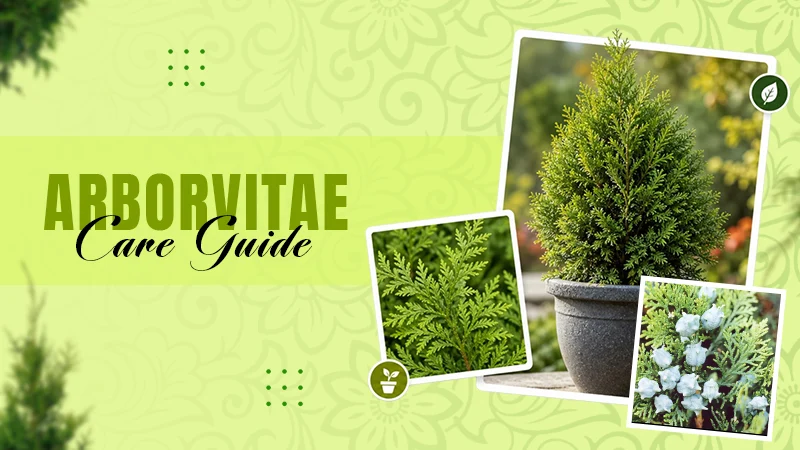
The most popular varieties of Monstera Swiss cheese are Monstera deliciosa, Monstera adansonii, Monstera obliqua, and Monstera dubia.
How to Grow Swiss Cheese Plant: Care Tips, Varieties, Pests, Diseases, & Problems Associated
Author
Rashika GuptaReviewed By
Cody Allison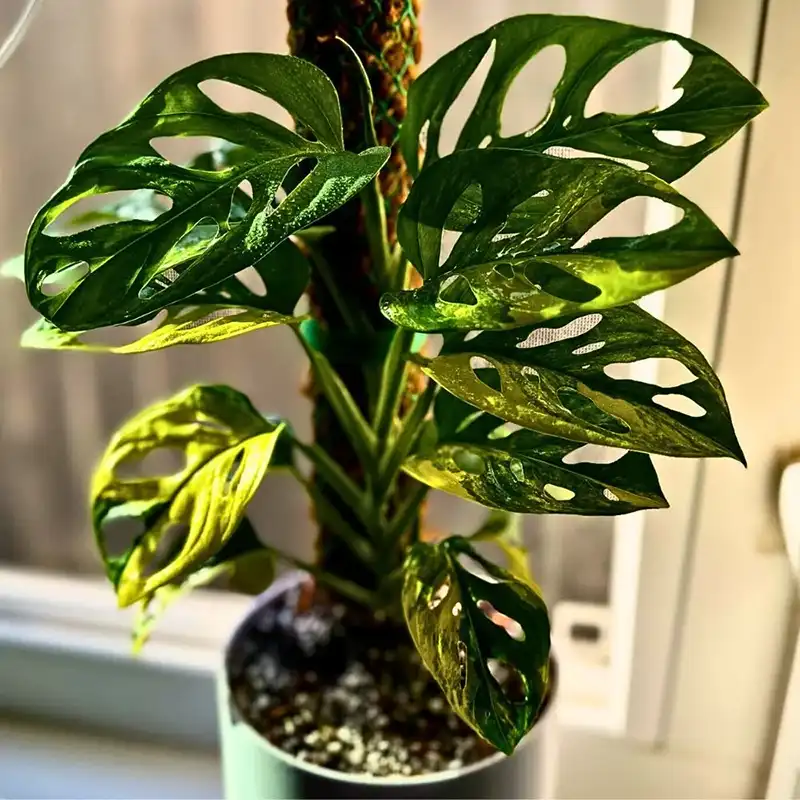
The monstera plant, also known as the Swiss Cheese Plant, is a houseplant often recognised for its unique foliage, low-maintenance, and easy care qualities. It is characterised by its large, glossy, green leaves with distinctive cutouts that resemble Swiss cheese, which gave rise to its common name.
One of the special characteristics of the plant, other than its ornamental value, is that it is also known as an air-purifying plant. It is capable of removing toxins from the environment, such as formaldehyde and benzene.
Read the article to know about the plant’s taxonomy, care tips, ideal growing conditions, and much more.
Table of Contents:
Taxonomy and Ideal Growing Conditions for the Monstera Swiss
Swiss cheese monstera is native to the tropical forests of Central America and South America and belongs to the Arum family. This plant thrives best in warm and humid under-canopy conditions and grows around 8 ft. tall and 3 ft wide, depending on the variety.
Here is the quick taxonomic overview and ideal growing conditions for the Swiss Cheese Plant:
| Botanical name | Monstera spp. |
| Common names | Swiss cheese plant, hurricane plant, cheese plant, five holes plant |
| Kingdom | Plantae |
| Family | Araceae (Arum family) |
| Genus | Monstera |
| Hardiness zones | 10 to 12 USDA Zones |
| Native | Central America and South America |
| Plant type | Perennial |
| Sun exposure | Bright, indirect light |
| Soil | Well-drained, moist soil with neutral to acidic pH levels |
| Water requirement | Moderate |
| Bloom time | Spring (rarely blooms outdoors) |
| Toxicity | Toxic to pets |
Care Tips for Swiss Cheese Plant
The Swiss cheese plant is one of the most commonly found plants indoors because it requires low-maintenance and requires relatively easy care. Here are some care tips that I follow to keep my plant healthy:
- The first thing that keeps your plant growing and healthy is the kind of soil you use. For Swiss cheese plants, use well-drained soil with pH levels between 5.5 and 7.0. You can also use peat-based potting mix that will help to trap moisture in the soil without causing waterlogging that leads to root rot or fungal disease.
- Water your cheese plant regularly whenever required. To check if your plant needs water, look at the soil. If it looks dry, water it deeply, but avoid watering the soil if it still feels wet.
- Swiss cheese plants require structure to climb on. Make sure that you have added a stake or moss pole to the center of the pot.
- Once your plant is well-established, fertilise your plant using balanced houseplant fertiliser with an N-P-K of 5:2:3 during the growing season.
- Pruning your cheese plant lightly and regularly ensures healthier plant growth.
- Check the bottom of the pot every once in a while. If the roots are coming out of the drainage hole, the plant is rootbound or pot-bound, meaning it has grown too large for its container.
- Always check for pests on the undersides of leaves and stems.
- Ensure that the plant’s leaves have plenty of fenestration. It is a symbol of healthy growth. If your plant’s leaves do not get enough fenestration, place it in a brightly lit area that receives indirect sunlight.
- Repot your plant every 2 to 3 years.
Read more: Mandevilla Plant Guide: Taxonomic Overview, Ideal Growing Conditions, Care Tips, & Much More!
Popular Varieties of Swiss Cheese Plant
The Swiss cheese plant belongs to the genus Monstera, which includes around 50+ species. They are easily recognised, iconic, and trending houseplants with unique foliage patterns (holes or fenestrations). Here is the list of my top 5 Swiss cheese monstera recommendations, with their descriptions and pictures:
| Variety and Image | Description |
Monstera deliciosa 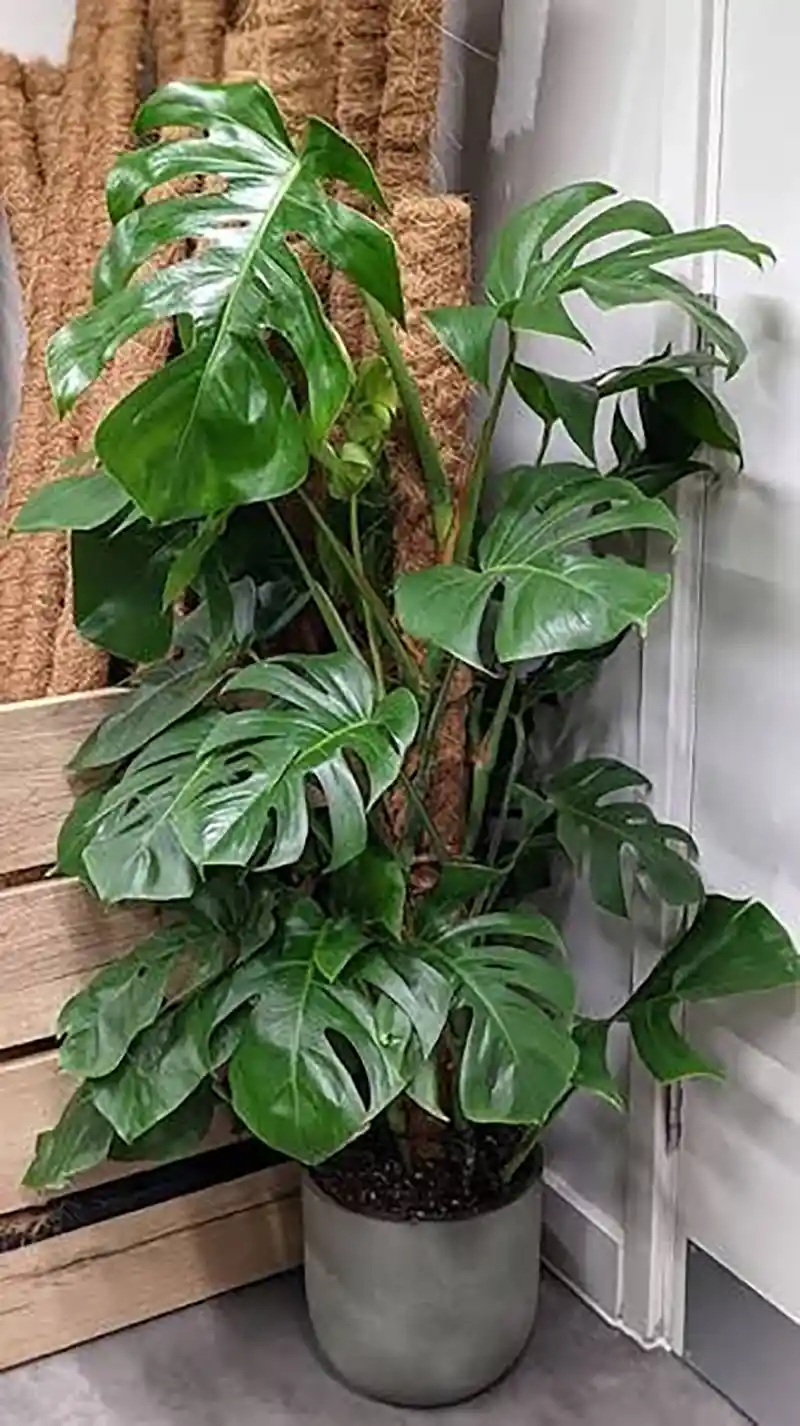 | M. deliciosa is one of the people’s favourite plant varieties with large foliage. It is super easy to grow indoors, and each leaf can grow up to 3 ft. long. The ideal growing conditions for this variety include bright, indirect sunlight with partial shade. With its upward vining growth habit, the plant grows best against a pole. |
Monstera acuminata 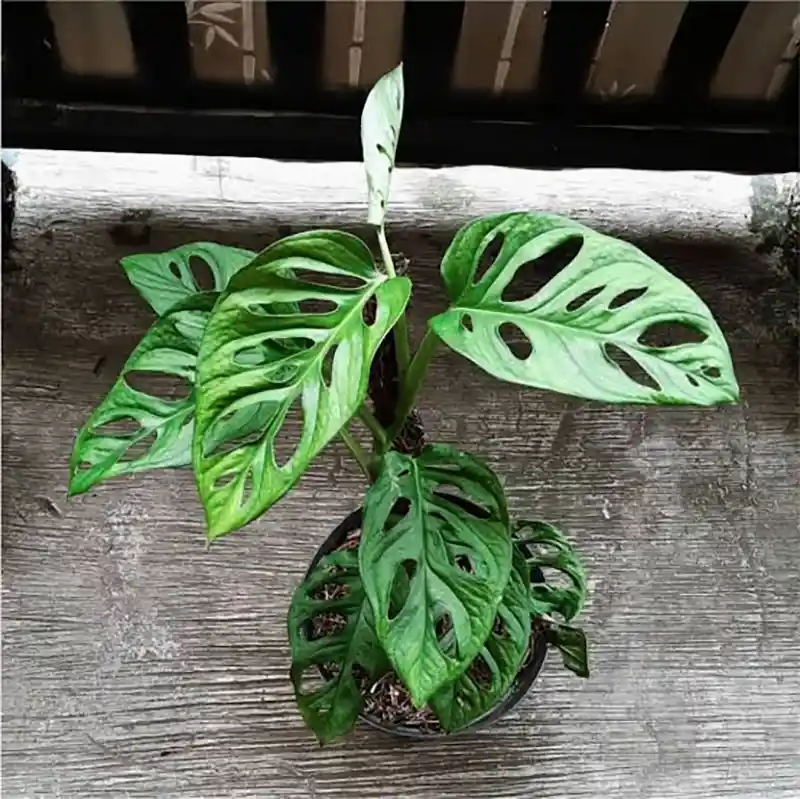 | M. acuminata is one of the rarely found species of monstera. It is a perfect choice for small spaces or for trailing over hanging baskets. The plant has a similar appearance to Swiss cheese but is more compact in height and foliage. If grown outdoors, the plant grows up to 7 ft. tall. |
Monstera adansonii (Swiss Cheese Plant)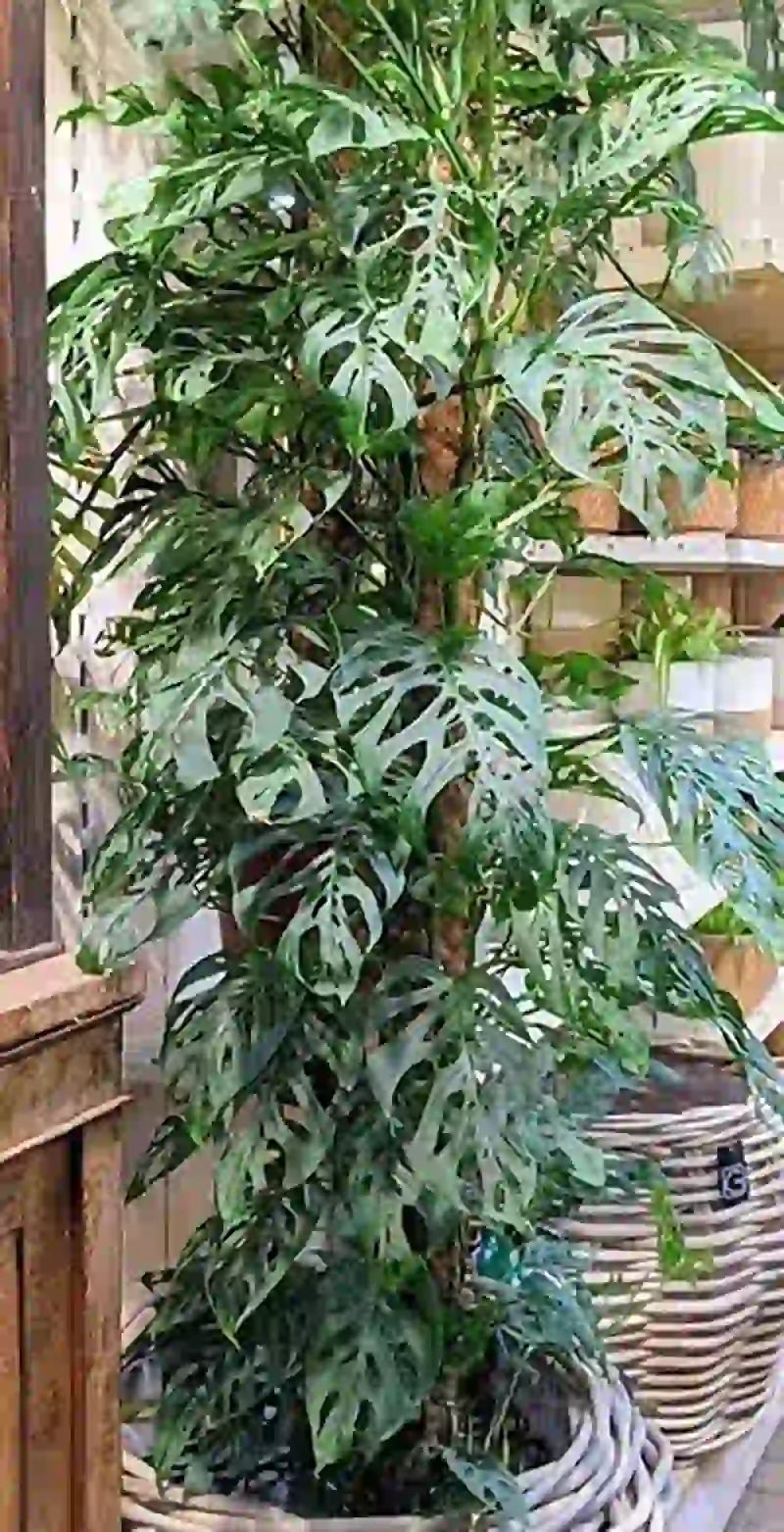 | Swiss cheese plant is the second most popular monstera variety after Monstera deliciosa swiss cheese plant. It grows around 8 ft. tall indoors and has a climbing, fast-developing growth. The plant requires partial sunlight to thrive. |
Monstera dubia 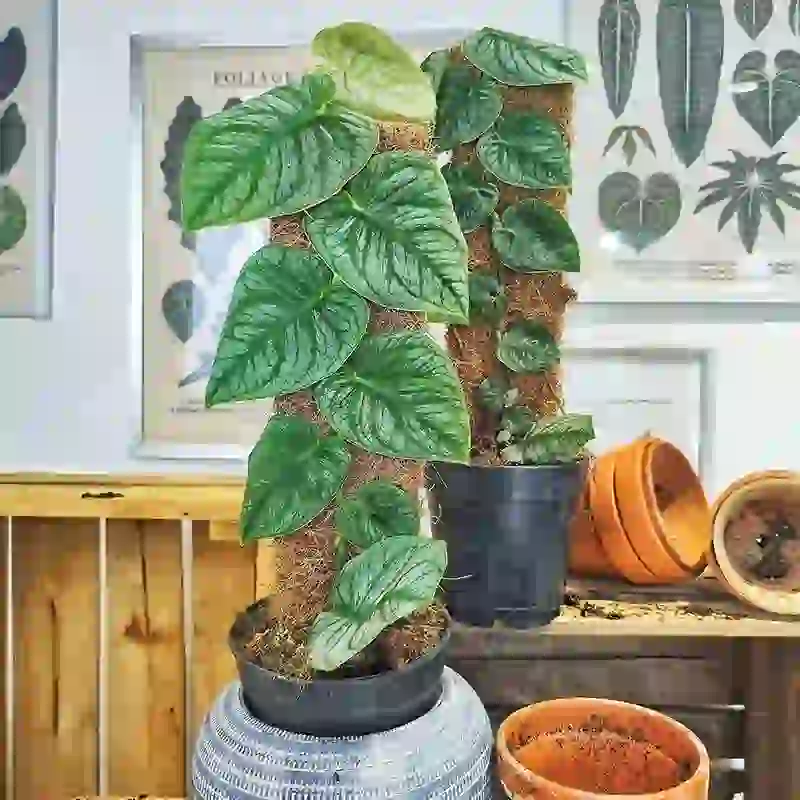 | This lesser-known variety of monstera is most reliable if your space receives low light, as it can survive in low lighting, but bright and indirect light produces more eye-catching variegations. The plant grows up to 3 ft. tall and has a vining habit. |
Monstera obliqua 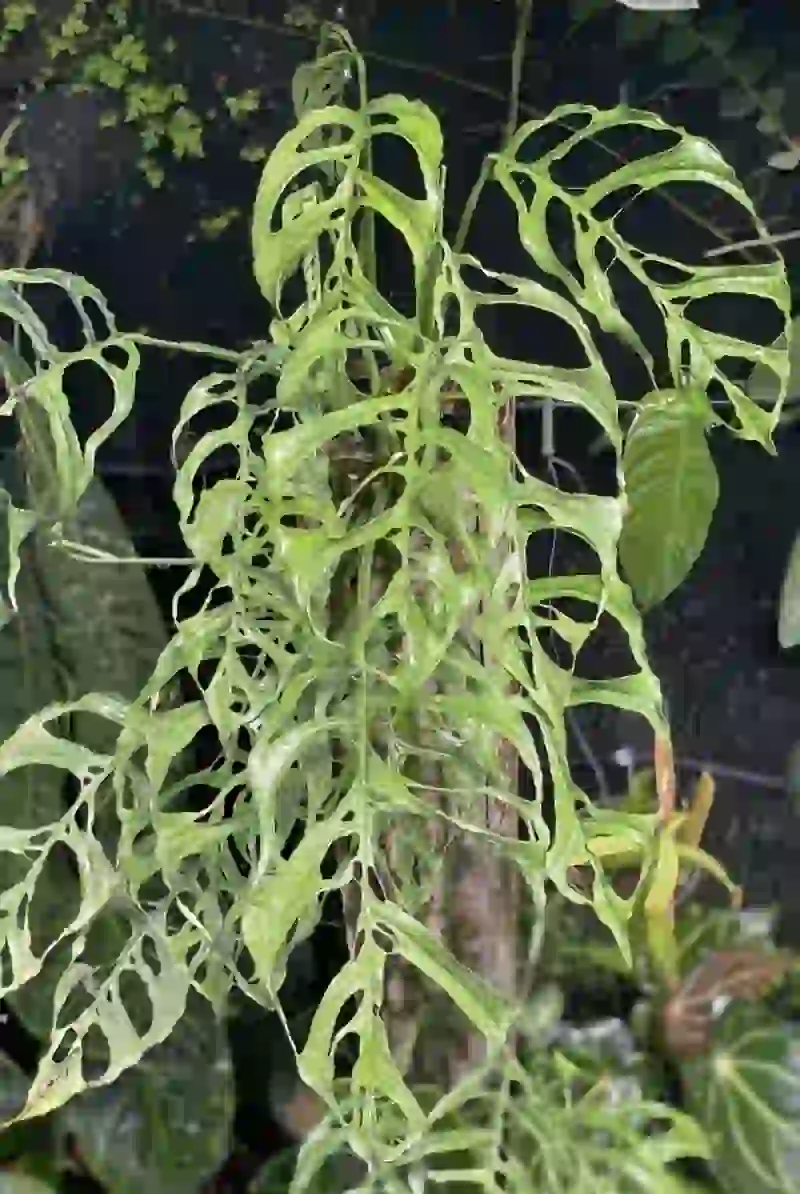 | The obliqua is also known as a unicorn plant and ranks among the rarest species of the Monstera. This plant has extreme fenestration, and the holes can cover around 92 per cent of the leaf. It grows nearly 10 ft. tall outdoors and thrives best in partial sunlight. |
Fact
People often consider the Swiss Cheese Plant a philodendron, but it is not true. The plant belongs to the genus Monstera. The only common point between philodendron and cheese plants is that they belong to the Araceae family.
Read more: How to Grow Schefflera Plant: Care Tips, Propagation Method, Common Pests and Diseases
How to Grow a Monstera Plant Using Stem Cutting?
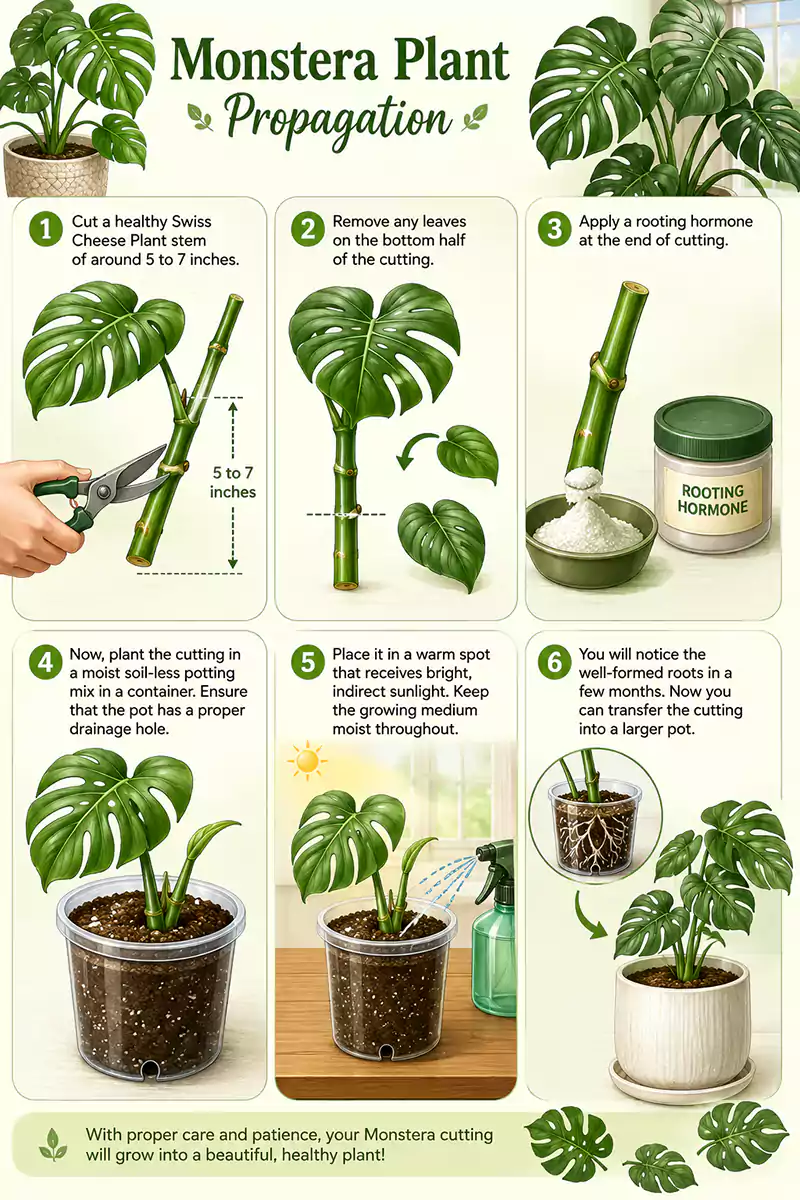
The easiest method of growing the Swiss Cheese Plant is by propagating stem cuttings. This inexpensive way to acquire new plants allows you to utilise the healthy stem that you removed while pruning. Spring is the best time to propagate monster plants. Here are some simple steps:
- Cut a healthy Swiss Cheese Plant stem of around 5 to 7 inches.
- Remove any leaves on the bottom half of the cutting.
- Apply a rooting hormone to the end of the cutting.
- Now, plant the cutting in a moist, soilless potting mix in a container. Ensure that the pot has a proper drainage hole.
- Place it in a warm spot that receives bright, indirect sunlight.
- Keep the growing medium moist throughout.
- You will notice the well-formed roots in a few months. Now you can transfer the cutting into a larger pot.
Aftercare: Keep the soil consistently moist and consider placing the plant in a humid room, as Monstera prefers humidity. Continue to provide the plant with bright, indirect light and nourish the soil with balanced fertilizer.
Did You Know?
In Feng Shui, Monstera is believed to symbolise abundance and good fortune. It is believed that the plant attracts positive energy to your space.
Read more: How to Grow Rosemary: Planting, Propagation, and Care Tips
Common Pests, Diseases, and Problems Associated with Swiss Cheese Plant
Monstera can encounter several pests, diseases, and problems when grown indoors. Below is a list of pests, diseases, and problems associated with the cheese plant along with their solutions:
| Pests, diseases, and problems | Solution |
| Scale and aphids | Scales and aphids commonly attack your plant and cause trouble, such as weakening it. You can simply remove them using a strong spray of water or neem oil. |
| Spider mites | They cause yellow stippling on leaves. They can be cured by increasing humidity or using insecticidal soap. |
| Mealybugs | They look like cottony deposits in leaf axils or undersides. Remove them using alcohol dipped cotton swabs. |
| Root rot | Root rot is caused by overwatering and can be detected by brown roots and yellowing leaves. Ensure that your pot has a proper drainage hole to avoid any waterlogging. |
| Leaf spot | Leaf spot is a fungal infection caused by improper air circulation. You can treat it by improving air circulation, avoiding wetting foliage, and treating it with some organic fungicides. |
| Fenestration not developing | Young plants or mature plants that do not receive enough sunlight may not develop fenestration or holes. Place your plant in a spot with brighter indirect light. |
Tip
During the growing season, when you water your plant more frequently, watch out for fungus gnats. They lay eggs in wet soil and tend to live on the top layer of soil. If you find any, use sticky traps to remove them.
Read more: How to Grow and Care for Yucca Plants in Indoor and Outdoor Conditions?
Takeaways
The cheese plant is a striking houseplant known for its large leaves with unique holes on them. The plant is among one of the best air-purifying houseplants that grow quickly indoors and requires support to climb up. Though the plant is considered to be toxic for pets, it can be placed in areas that aren’t accessible to your pets.
To keep your Swiss cheese plant healthy, use good fertilisers, water it regularly, and place your plant in an area that receives bright, indirect sunlight. These care tips will help your plant thrive for years. Happy planting!
FAQs
What are the different types of Monstera?
Is Swiss cheese philodendron plant?
No, Swiss cheese is not a philodendron plant. The two belong to the same family but have different genera.
What are the common problems associated with cheese plants?
The common problems with Swiss cheese plants are yellowing leaves, root rot, and fenestration not developing.
Sources
Monstera: Britannica