The best time for growing chives is in early spring or in late summer to early fall.
Growing Chives Plants: Care Tips, Ideal Growing Conditions, Taxonomy, Harvesting Tips & Much More
Author
Rashika GuptaReviewed By
Cody Allison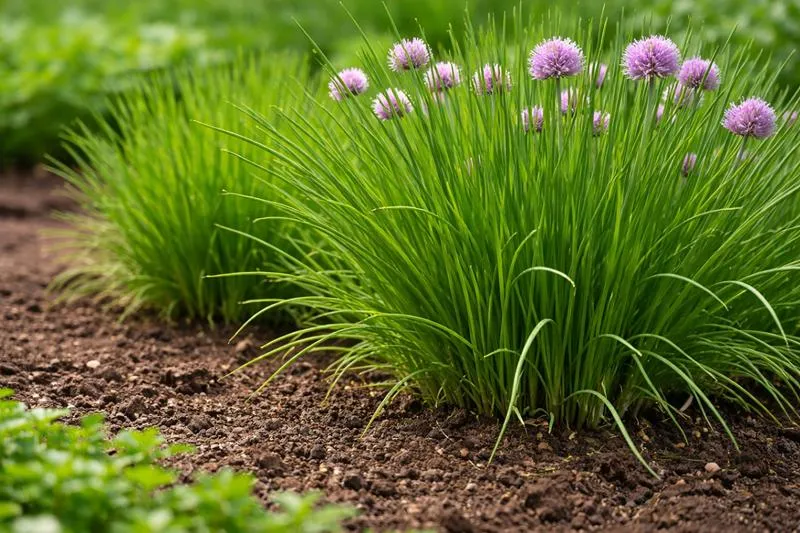
Growing chives is one of the best decisions for gardeners, as the plant can supercharge your garden. Their bold fragrance repels pests and attracts pollinators. They are also known for boosting the flavor and growth of veggies like carrots, cabbage, and tomatoes.
This small perennial herb belongs to the onion family. Chives’ compact roots and upright growth make them a great underplanting and border filler without utilising much space.
Read the article below to know about growing chives, care tips, their benefits, and much more.
Table of Contents:
Taxonomy and Ideal Growing Conditions for Chive Plants
Chives are a cool-season herb that thrives in spring and fall. The herb not only enhances food flavor, but it also attracts pollinators like bees and butterflies. In a mild climate, the plant might remain green, but they die in winter and regrow in spring. This perennial is also known as a natural insect repellent and can deter pests like aphids, snails, slugs, and Japanese beetles. For a quick taxonomic overview and ideal growing conditions, have a glance at the table given below:
| Botanical name | Allium schoenoprasum |
| Kingdom | Plantae |
| Order | Asparagales |
| Family | Amaryllidaceae |
| Genus | Allium |
| Species | The main culinary chive species are Allium schoenoprasum (common chives), Allium tuberosum (garlic chives), Allium nutans (Siberian chives), and Allium ledebourianum (Giant Siberian chives) |
| Native area | Temperate regions of Europe, Asia, and North America |
| Hardiness | 3 to 9 USDA Zones |
| Light Requirements | Full sun for at least 6 to 8 hours a day |
| Maintenance | Low |
| Plant type | Perennials |
| Soil | Rich, well-drained, loose loamy soil that can retain moisture and not become soggy or waterlogged |
| Water Requirements | Average |
| Mature size | 12 to 18 inches tall and10 to 18 inches wide, dense clumps |
| Fertilizers | Balanced, nitrogen-rich fertiliser |
| Toxicity | Safe for both humans and pets |
| Tolerance | Drought |
Did you know?
Chives, or Allium schoenoprasum, are members of the onion family, but there is another variety of chives known as Allium tuberosum, which is also known as garlic chives, and is closely related to garlic, and are most popular choices for home gardens.
Read more: Lyposingrass or Lemongrass: A Herbaceous Perennial Guide
Care Tips for Chive Plants
Caring for chive plants is relatively easy, as the plant can retain itself in drought conditions and also survive in partial sunlight. But here are some care tips that helped my chive plant thrive. These are:
- Keep the soil consistently moist during the dry spells. Make sure that you avoid overwatering the plant to prevent it from root rot.
- If you have planted chives in a container, there are more possibilities that it will dry out faster. Therefore, you must water the plant regularly. Also, make sure that the container has a proper drainage hole to avoid waterlogging.
- Avoid too much fertilisation because chives are not heavy feeders. Use balanced fertilizer in early spring and midseason if required.
- Adding a layer of compost around the plant base helps in lush growth.
- Trim the leaves regularly to encourage new shoots and delay flowering.
- Remove deadhead blooms to extend the plant’s productivity. It also prevents self-seeding.
- Mulching around the plant base in fall helps roots to insulate in colder regions.
Read more: Pravi Celer Guide: Taxonomy, Ideal Growing Conditions, & Much More
How to Grow Chives?
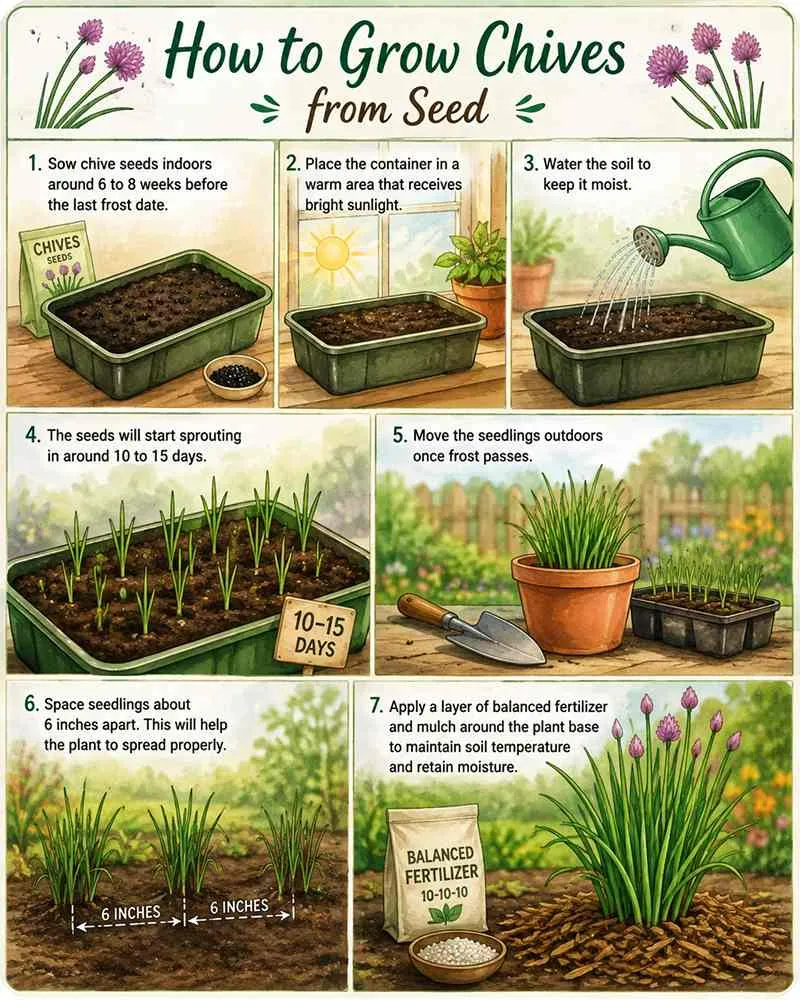
Chives can be easily grown from seeds. Here are simple steps to grow chives from seed:
- Sow chive seeds indoors around 6 to 8 weeks before the last frost date.
- Place the container in a warm area that receives bright sunlight.
- Water the soil to keep it moist.
- The seeds will start sprouting in around 10 to 15 days.
- Move the seedlings outdoors once frost passes.
- Space seedlings about 6 inches apart. This will help the plant to spread properly.
- Apply a layer of balanced fertilizer and mulch around the plant base to maintain soil temperature and retain moisture.
How to Propagate Chives
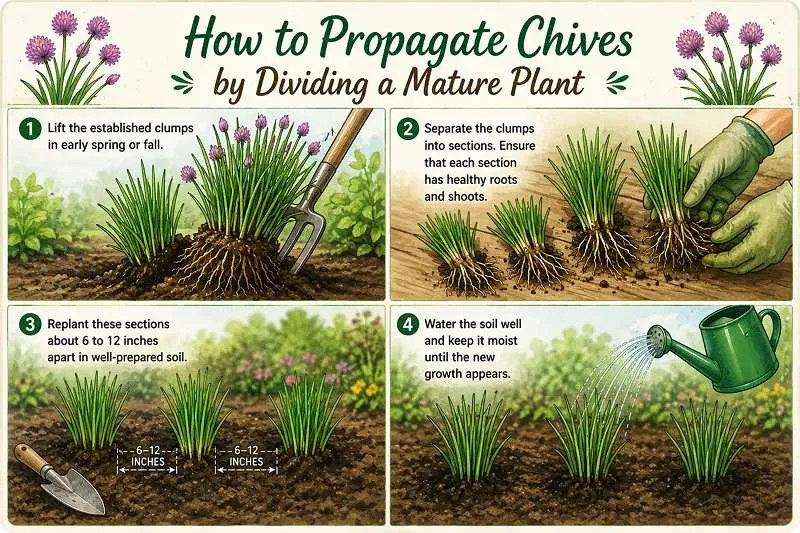
Chives can be propagated by dividing the mature plant. This also helps the plant thrive for a longer period. Here are the steps you need to follow to propagate chives by dividing a mature plant:
- Lift the established clumps in early spring or fall.
- Separate the clumps into sections. Ensure that each section has healthy roots and shoots.
- Replant these sections about 6 to 12 inches apart in well-prepared soil.
- Water the soil well and keep it moist until the new growth appears.
How to Harvest Chives so it Keeps Growing?
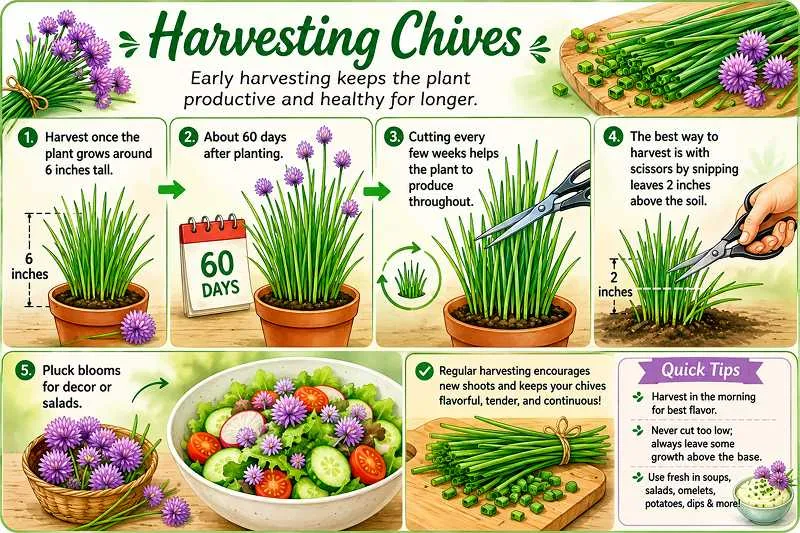
When we talk about harvesting chives, everyone has their plans. Something that has worked best for me was early harvesting. I harvested my plant once it grew around 6 inches tall, about 60 days after planting. Cutting every few weeks helps the plant to produce throughout. The best way to harvest is with scissors by snipping leaves 2 inches above the soil. Pluck blooms for decor or salads.
Tip
If you want to preserve chive leaves, chop and freeze them in ice cube trays using oil or water.
Read more: Koriandri: Taxonomy, Ideal Growing Conditions, and Care Tips
Best and Worst Chive Plant Companions
Companion plants are an essential part of planting, as they protect the atmosphere and prevent plants from being attacked by pests and diseases. It is very important to pair the right plants together because sometimes pairing two opposite plants together can cause damage.
The best companion plants for chives include vegetables like carrots, broccoli, cabbage, celery, and lettuce; fruits and flowers like strawberries, tomatoes, apples, marigolds, and nasturtiums; and herbs like parsley, dill, and basil. These plants, fruits, vegetables, and herbs work as pest repellents, attract pollinators, and prevent diseases.
The worst companions for chives include beans and peas because chives may inhibit growth in legumes.
Read more: How To Grow Mint Indoors? From Cultivation to Care Guide and Popular Recipes
Common Pests and Diseases Associated with Chive Plants
Certain pests and diseases can attack your chive plant. Below is a list of them along with the solutions:
| Pests and diseases | Solutions |
| Bulb rots | It is a fungal disease triggered by wet soil and poor drainage. In such cases, avoid watering the plant for a few days and ensure that if you have planted chives in a container, it has a drainage hole. |
| Mildew | Mildew is a fungal disease that can slow down plant growth. It can be cured by placing the plant in a sunnier spot, improving air circulation, and watering overhead. |
| Rust | Rust is another fungal disease that can be identified as yellow or white spots on the upper leaves. They cause leaf distortion and defoliation. You can prevent rust by dusting your plant with sulfur, avoiding watering the leaves, and spacing your plants properly for good air circulation. |
| Onion fly | Onion fly, or onion maggot, is a pest that attacks your plant by laying eggs in the soil or at the plant base. They cause rotting, turn chives yellow, and wilt. You can prevent them by using pesticides like neem oil and handpicking the eggs. |
| Fungal leaf spots | Fungal leaf spot, or gray mold, appears as fuzzy mold on leaves and flowers. It can be controlled by pruning damaged sections and ensuring good ventilation. |
Read more: When to Prune Fruit Trees? Best Pruning Tips With Common Queries and Solutions
Takeaways
Chives can be one of the best additions to your kitchen garden, indoor spaces, and balcony. They don’t only work as an ornament but have many benefits, like it is known as a natural repellent to pests and attract pollinators. There are also multiple health benefits of chives, as they were traditionally used as a medicinal herb for digestion and immunity. They are also a good source of vitamin A and C, along with potassium and calcium.
Next season, if you want to eat chives, grow them instead of buying them from the supermarket. The homegrown chives will be organic and much more flavourful.
Happy growing!
FAQs
When to plant chives?
How to plant chives?
Chives can be planted from seeds or small plant clumps in soil that gets full sunlight.
Can we grow chives in garden?
Yes, chives can be easily grown in the garden. They are tough, low-care perennial plants grown well in garden beds, borders, or pots.
Do chives spread?
Yes, chives do spread, but they are slow growers.
How to harvest chives so it keeps growing?
The best way to harvest chives is by cutting the leaves down to about 2 inches above the soil line using a sharp pair of scissors or a knife. Never pull the stems and avoid cutting them below the crown.
Do chives need full sun?
Yes, chives grow best in full and direct sunlight for at least 6 to 8 hours a day.
What is the best soil for chives?
Chives thrive best in rich, well-drained, loose loamy soil packed with organic matter.
How do you store chives?
The best way to store chives is by placing unwashed chives in a small glass container with about an inch of water. Loosely cover them with a plastic bag and refrigerate for up to 3 weeks.
When to plant chives seeds?
The best way to plant chive seeds is by starting indoors around 6 to 8 weeks before your last spring frost or directly sowing them outdoors between early and mid-spring.
Are chives perennials?
Yes, chives are hardy, clump-forming perennials.
Sources
Chive: Britannica