Shasta daisies bloom from June to September, i.e., from summer till fall.
How to Grow and Care for Flowering Daisy Plants?
Author
Nicola Baldwin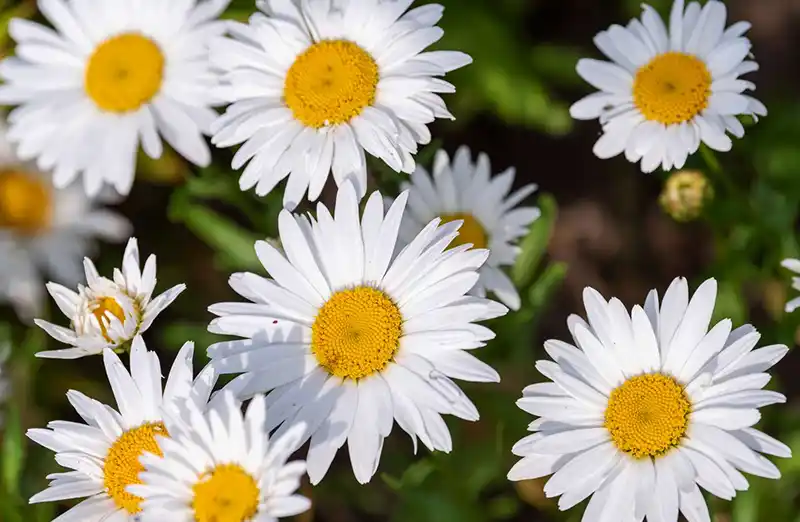
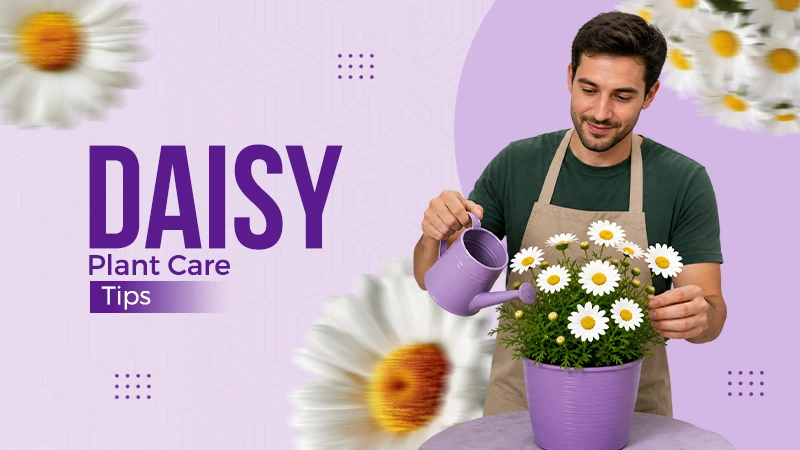
Shasta daisy plants are short-lived perennials that are hybrid plants. They bloom large flowers in white colour that attract local pollinators, enhance garden aesthetics, and are easily grown.
The plant belongs to the Aster family and is known to resemble oxeye daisies that are native to Asia and Europe. Shasta daisies grow in 3 popular varieties, namely ‘Becky’, ‘Crazy Daisy’, and ‘Snow Lady’.
Read the article to learn how to grow and care for flowering daisy plants, along with their taxonomy, ideal growing conditions, popular varieties, and tattoo ideas.
Table of Contents:
Shasta Daisy Plant Taxonomy and Ideal Growing Conditions
Shasta daisies are short-lived perennials that grow back every year. The plant is not native to any particular country, but belongs to the Asteraceae family. It requires full sunlight with partial shade for at least 5 hours a day, regular watering, and well-draining soil. The plant blooms in a beautiful white colour with a yellow, bulb-like structure in between. It attracts pollinators like bees and butterflies, but is toxic to pets.
To know more about shasta daisy taxonomy and ideal growing conditions, look at the table below:
| Botanical name | Leucanthemum x superbum |
| Common name | Daisy, Shasta daisy |
| Kingdom | Plantae |
| Order | Asterales |
| Family | Asteraceae (daisy or sunflower family) |
| Genus | Leucanthemum (oxeye daisies) |
| Native area | Hybrid, not native to any particular region |
| Season of interest | Spring to fall |
| Hardiness | 5 to 9 USDA Zones |
| Light Requirements | Full sunlight with partial shade |
| Maintenance | Low |
| Type | Herbaceous perennial |
| Flower colour | White |
| Soil | Well-drained, loamy, moist soil with neutral pH levels |
| Water Requirements | Regular |
| Mature size | 3 to 9 inches tall and 1 to 2 inches wide |
| Fertilizers | Once a year in spring |
| Special characteristic | Attracts butterflies |
| Tolerant | Drought-tolerant |
| Toxicity | Toxic to pets |
Read more: French Tarragon: Taxonomy, Ideal Growing Conditions, Care Tips, Pests & Problems.
Essential Shasta Daisies Care and Maintenance Tips
Daisies are generally easy to maintain and do not require much attention. While growing them, you need to be careful about the location, soil, and fertilisation. Here are some of the essential care and maintenance tips for Shasta daisy plants that I follow for healthy, large blooms:
- Choose a location that gets direct sunlight and partial afternoon shade for planting daisies.
- Make sure that the soil is rich in nutrients, is well-draining, moist, and has neutral pH levels. Avoid areas with soggy soil.
- Water the soil every once in a while to keep it evenly moist.
- Fertilise the soil once every year during spring for more blooms. Using balanced, slow-release fertilisers is recommended.
- If you do not want to use fertilizer, add organic compost. This will be more beneficial for pollinators and insects that are healthy for the plant to be around.
- Generally, daisies are not prone to pests, but in case you spot any, use a strong spray of water or neem oil.
- Deadhead the spent flowers; this helps encourage a longer bloom period.
- After the blooming season ends, cut back stems just above the leaves at the base of the plant. This might help the short-lived perennial to thrive longer.
Did you know?
Shasta daisies are one of the most popular and people’s favourite flowering plants in America for decades.
Read more: Philodendron Prince of Orange: Benefits, Growing Process, and Care Tips
How to Grow Shasta Daisy Perennial?
Growing shasta daisy from seed isn’t a great idea because it is a hybrid, and the seeds may revert to the parent species. Also, you will have to wait a longer period for the blooms. The best way to grow a Shasta daisy plant is by propagation.
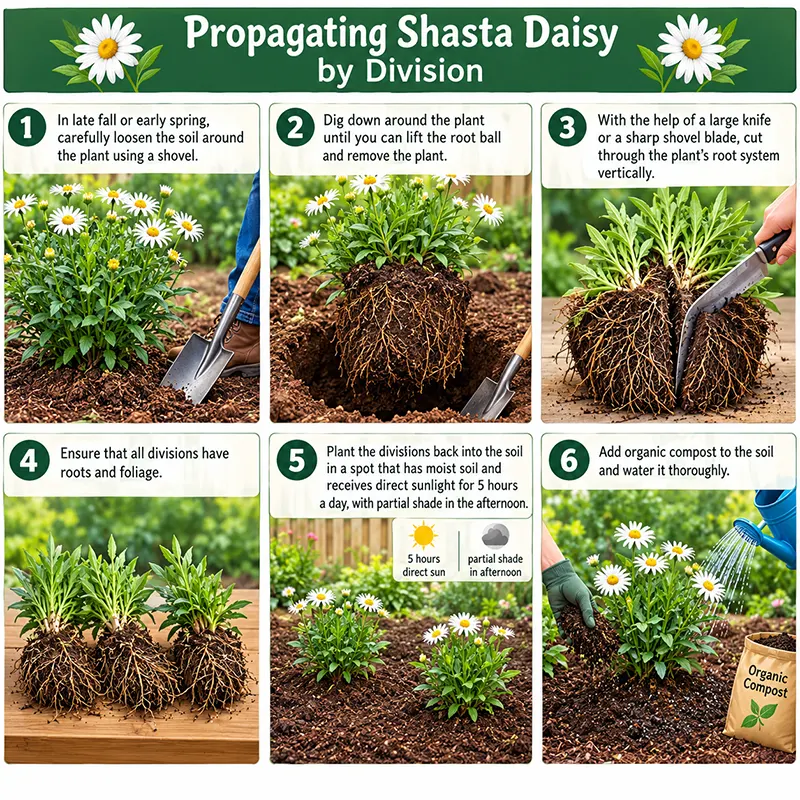
Here are a few common and easy steps that you can follow to propagate a Shasta daisy plant by dividing a mature plant:
- In late fall or early spring, carefully loosen the soil around the plant using a shovel.
- Dig down around the plant until you can lift the root ball and remove the plant.
- With the help of a large knife or a sharp shovel blade, cut through the plant’s root system vertically.
- Ensure that all divisions have roots and foliage.
- Plant the divisions back into the soil in a spot that has moist soil and receives direct sunlight for 5 hours a day, with partial shade in the afternoon.
- Add organic compost to the soil and water it thoroughly.
Read more: Coreopsis Flower: How to Grow, Major Types, and Taxonomy of Cheerful Tickseed
Popular Shasta Daisy Varieties
There are 3 popular Shasta daisy varieties among gardeners. These are Becky, Snow Lady, and Crazy Daisy. Below are their description and images:
| Variety and image | Description |
‘Becky’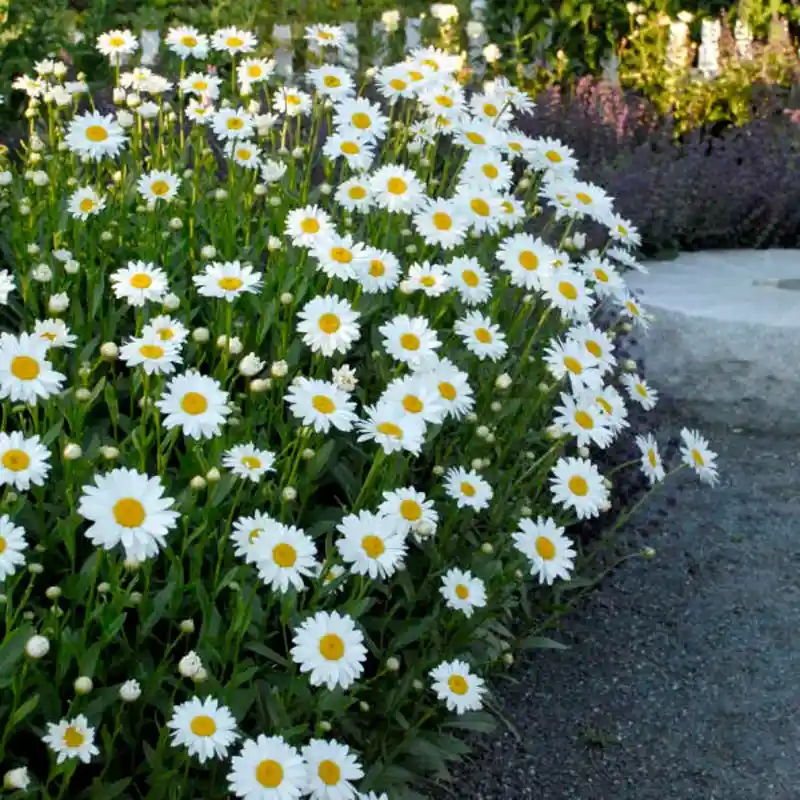 | It is a large variety that grows up to 4 ft tall and is sturdy enough not to need staking. It is resistant to the plant disease Phytophthora. |
‘Snow Lady’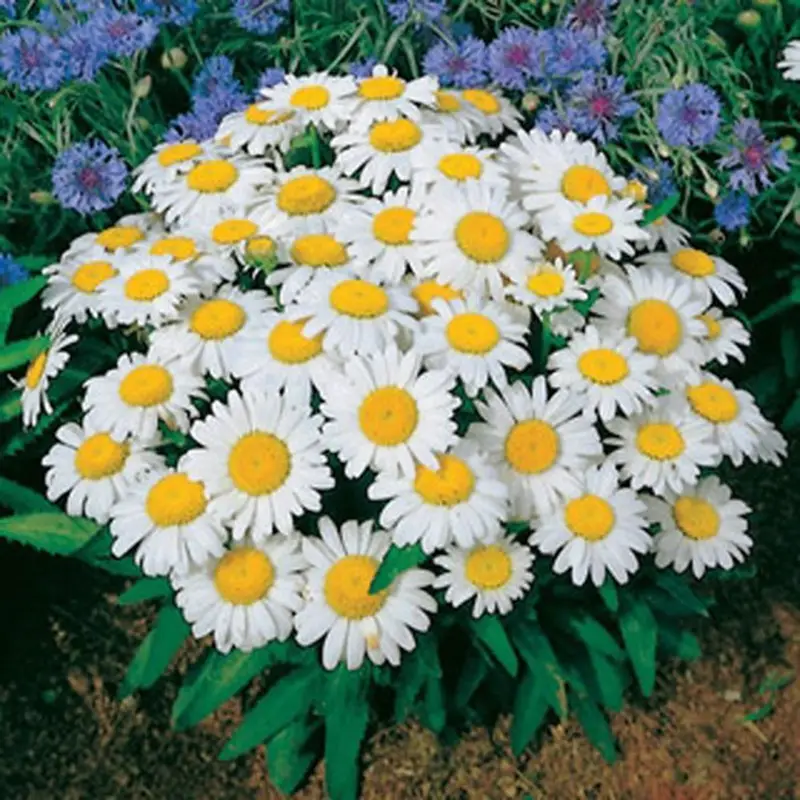 | They are dwarf cultivars that grow around 9 to 12 inches tall and produce abundant blooms. The only drawback of this species is that they show poor resistance to leaf spot. |
‘Crazy Daisy’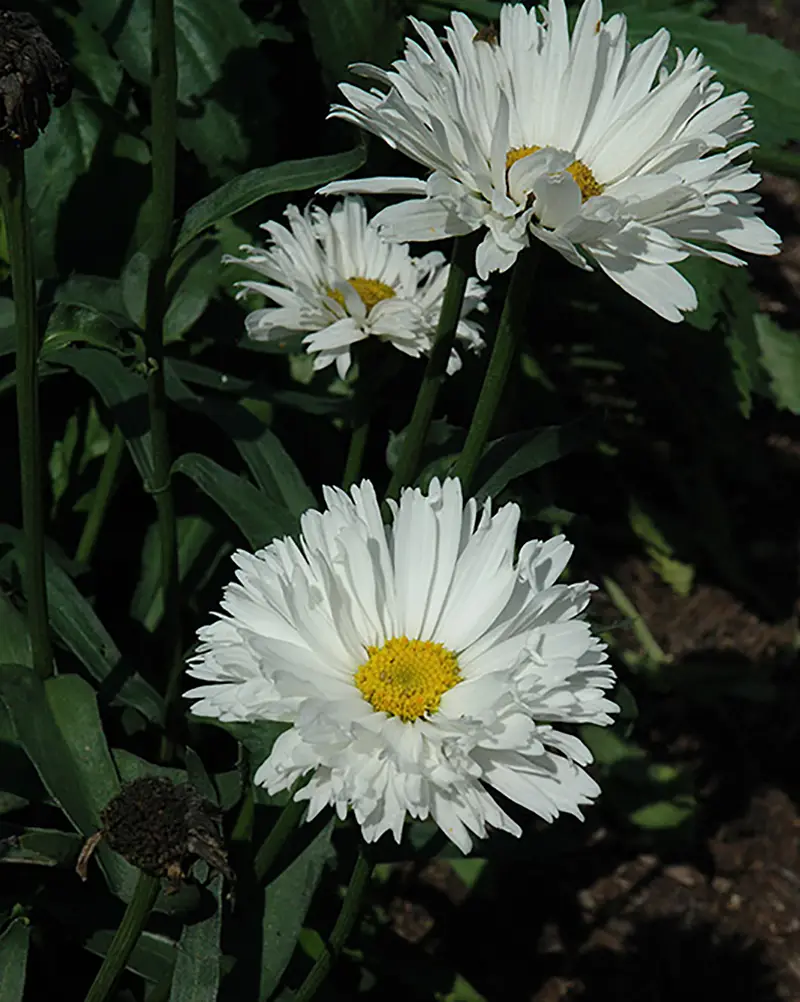 | It is a medium-growing variety that shoots up to 30 inches. It is known for its double blooms with twisty and frilly petals. |
Read more: 23 Best Tall Flowers for Your Garden: Top Varieties & Care Guide
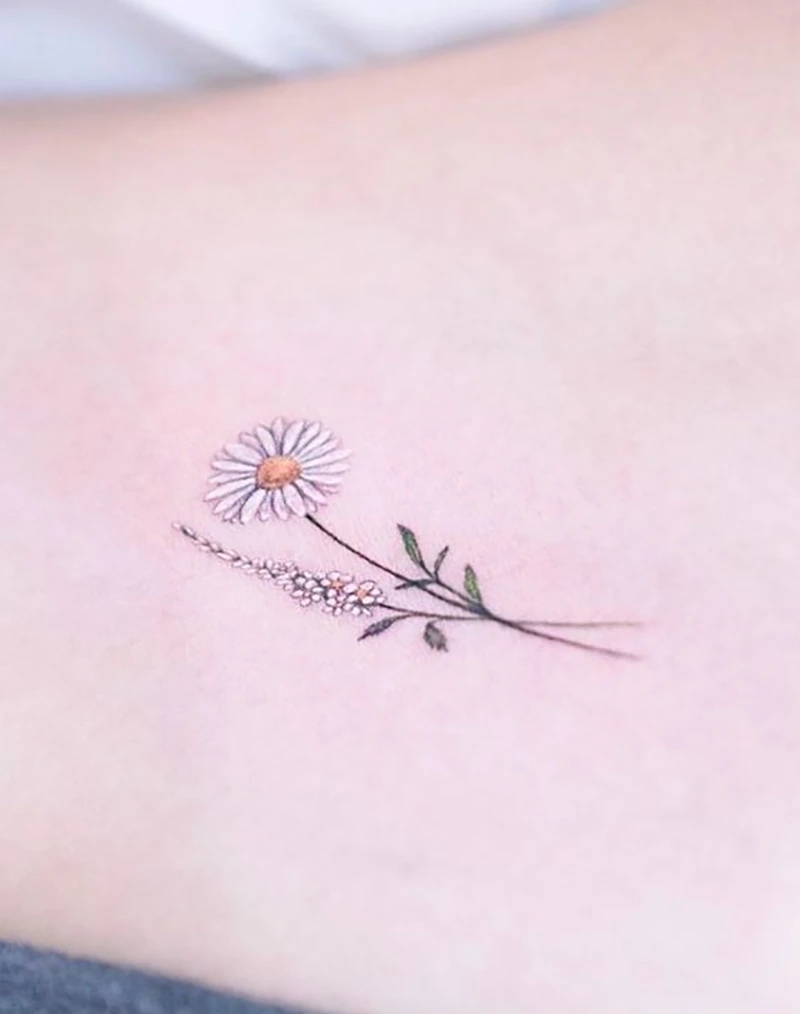
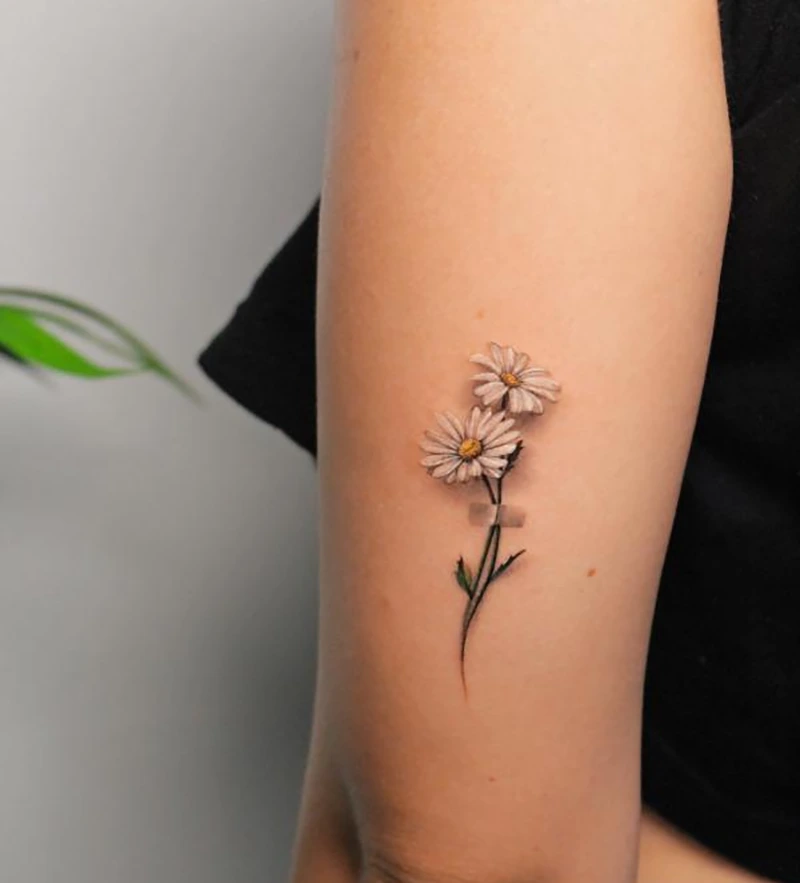
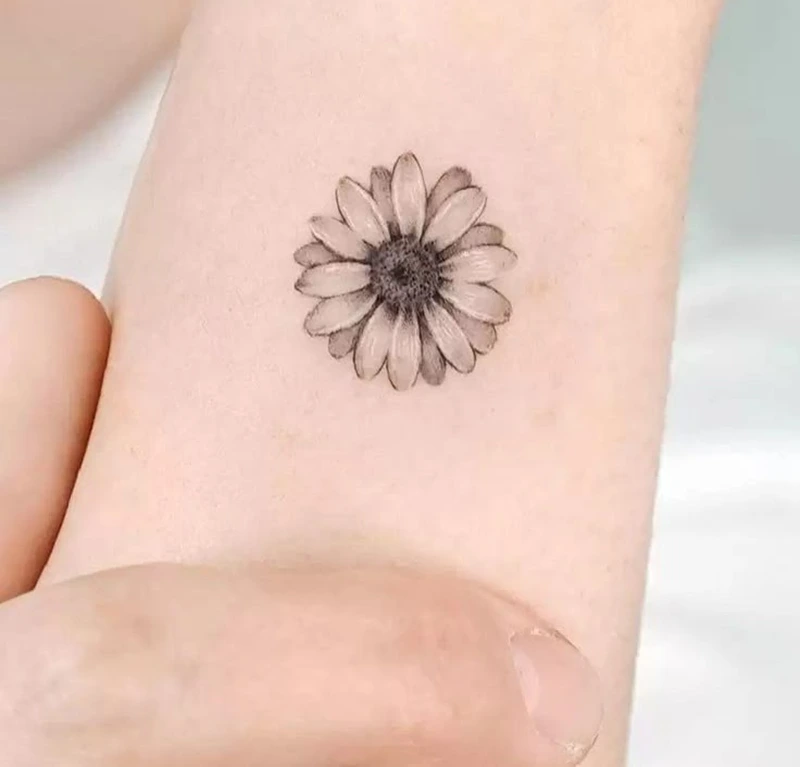
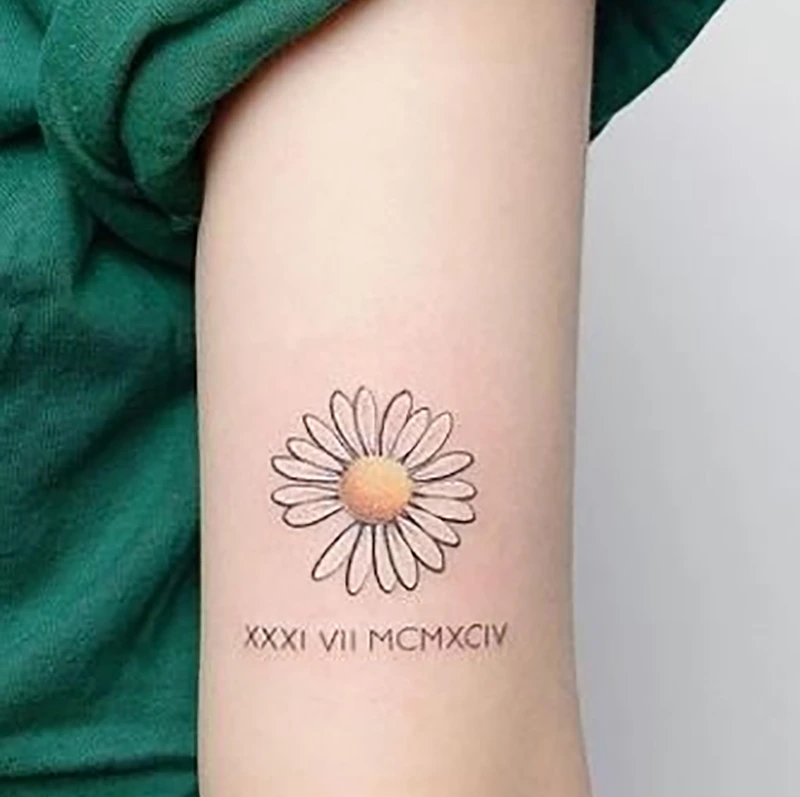
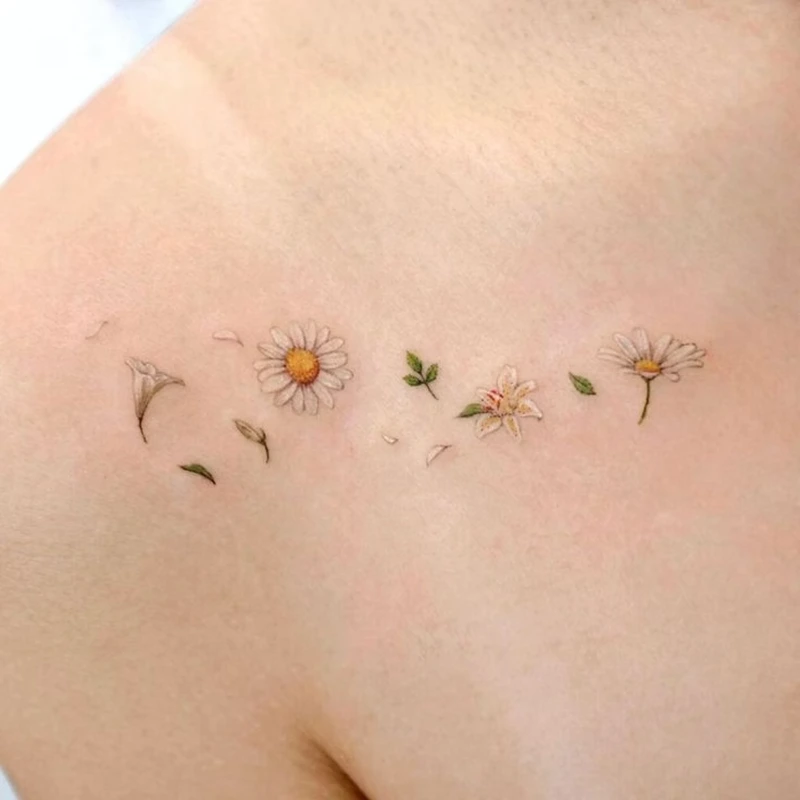
Flowers Shasta Daisy Tattoo Ideas
Daisies are among the most common and pop culture favourite tattoos. This is because daisies carry the symbol of peace, purity, innocence, new beginnings, hope, and love. They are also one of the two April birth flowers. Here are some tattoo ideas that you might like to get inked:
Read more: 20+ Mexican Flowers: Explore the Culture and Floral Heritage of Mexico
Takeaways
Shasta daisies are hybrid, short-lived perennials that bloom from summer till fall. The plant can be easily grown using propagation rather than sowing seeds. It also takes around two seasons for the first bloom to appear if planted using seeds. Therefore, it is preferable to grow the plant by propagation.
Daisies are usually easy to care for and low-maintenance plants, but make sure that you are planting them in an area that receives sunlight for 5 hours and partial afternoon shade. The plant loves its soil to be constantly moist, but it can survive drought.
The best part of planting flowering daisy plants is that they are hardly attacked by pests and diseases so you do not have to care for plant wilt. In late fall or early spring, you can try propagating your plant and witness beautiful blooms by late summer.
Happy planting!
FAQs
When do Shasta daisies bloom?
Are Shasta daisies perennials?
Yes, Shasta daisies are herbaceous short-lived perennials.
Do daisies come back every year?
Yes, some varieties of daisies come back every year because they are perennial flowers. Some of the popular varieties are oxeye daisies, black-eyed Susans, and Shasta daisies.
What is shasta daisy height?
Shasta daisies typically grow around 1 to 3 ft tall, while some hybrid varieties can grow up to 4 ft tall.
Sources
Shasta daisy: Britannica
Leucanthemum superbum: iNaturalist