Some blue flowering plants are Virginia bluebell, larkspur, iris, aster, bluebeard, and felicia daisy.
Blue Flowering Shrubs To Enhance Your Garden’s Look
Author
Rashika GuptaReviewed By
Cody Allison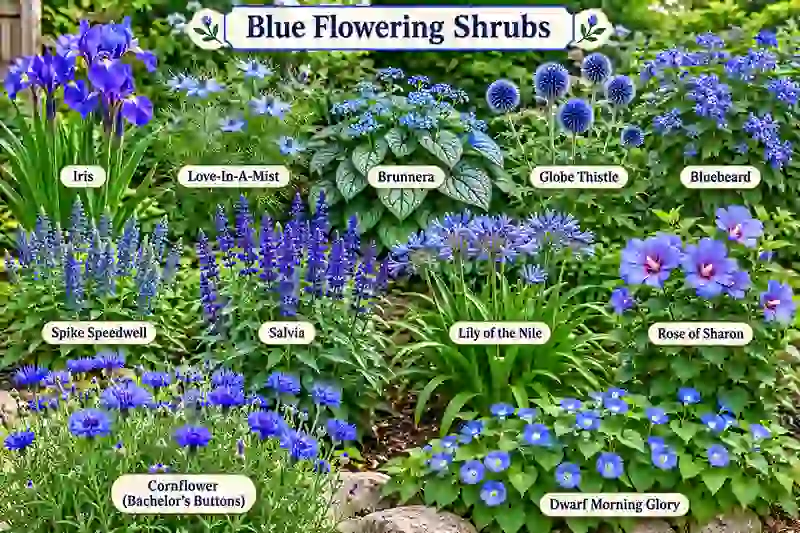
Blue colour holds a significant meaning in nature. The colour symbolises freedom, peace, tranquility, hope, wisdom, honesty, trust, and loyalty, as do blue flowers. From soft pastel petals to deep royal shades, blue flowers have their own unique beauty and standards.
Blue flowers hold a significant place in literature and other philosophies. From poets to authors, all have used this coloured flower to symbolise depth and nature’s beauty.
Read the article to learn about 16 amazing blue flowering shrubs.
Table of Contents:
10 Blue Flowering Shrubs
Blue shrubs for landscape are a great addition because they not only add a pop of colour but also carry deep meanings. Here is the list of 10 blue flowering shrubs, their descriptions, taxonomy, and ideal growing conditions:
1. Iris
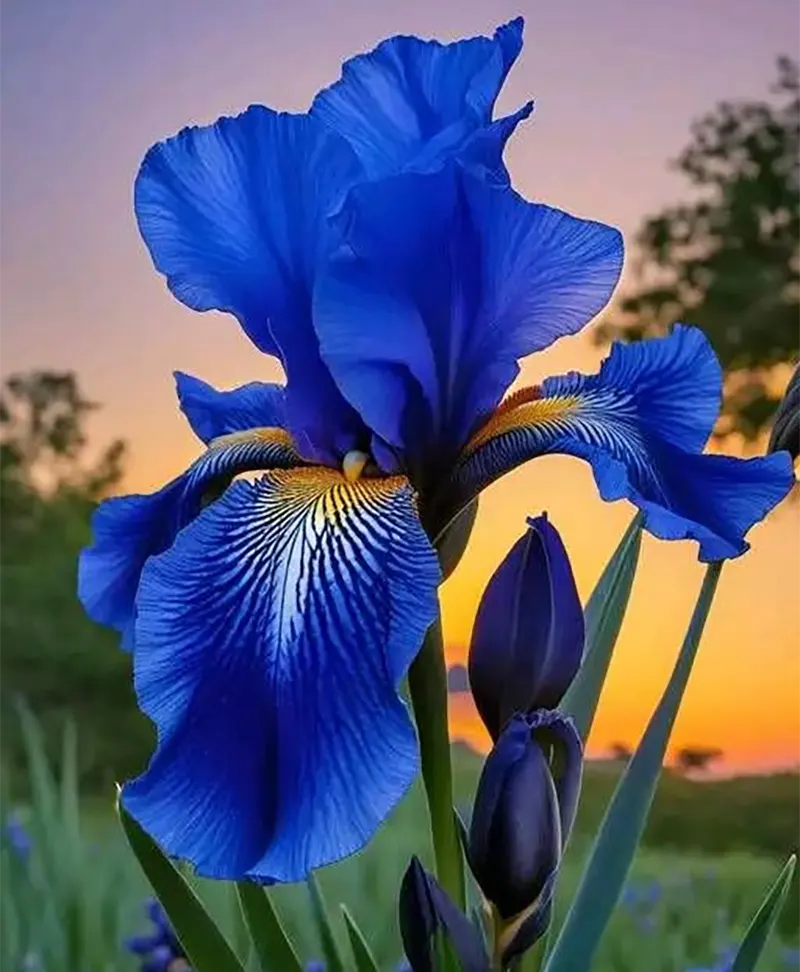
Iris is a striking perennial flower known for its sword-like leaves and vibrant blooms. The plant is cultivated for its deep blue flowers that are widely used by native Americans for treating burns, wounds, and swellings. The plant is also a great addition for the people who want to attract local pollinators to their gardens.
Look at the table below to learn about the Iris plant taxonomy and ideal growing conditions:
| Botanical name | Iris germanica |
| Common name | Blue suede shoes |
| Kingdom | Plantae |
| Order | Asparagales |
| Family | Iridaceae |
| Genus | Iris Tourn. Ex L. |
| Native area | North America |
| Season of interest | Mid to late spring and late summer |
| Hardiness | 5 to 9 USDA Zones |
| Light Requirements | Full sunlight for at least 6 to 8 hours a day |
| Maintenance | Low |
| Type | Perennial |
| Soil | Rich, well-draining loam, sandy, or clay mixes with slightly acidic pH levels between 6.5 and 6.8 |
| Water Requirements | Moderate |
| Fertilizers | Fertilise the plant every spring with low-nitrogen fertiliser in the ratio of 6:10:10 |
2. Gentian
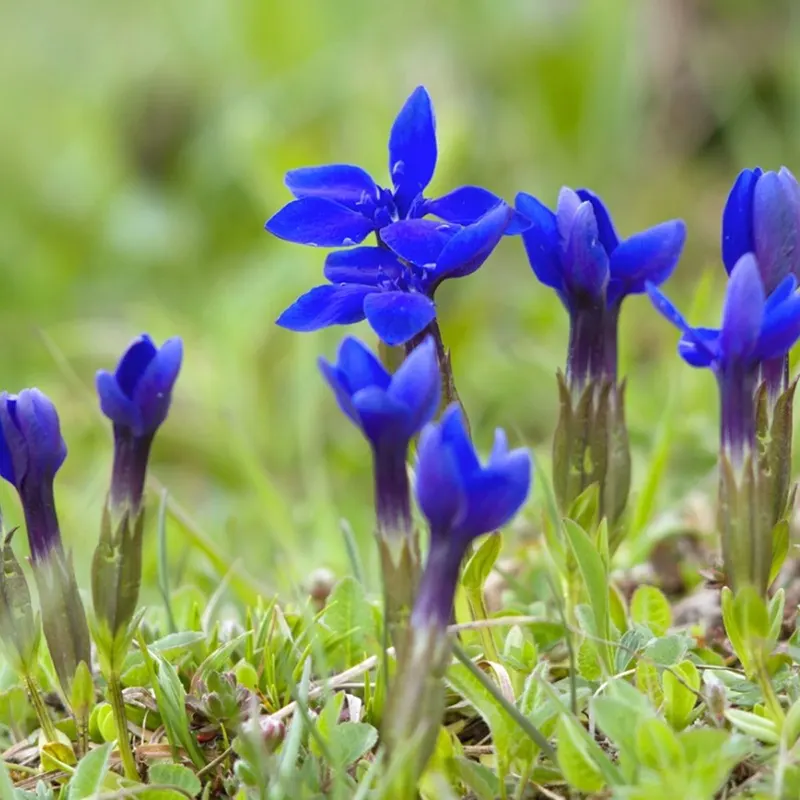
Gentian, also known as Lisianthus, is a flowering plant, often cultivated for its flowers that bloom in hues of blue, purple, white, pink, cream, and occasionally yellow. They are tender perennials or biennials, often grown as annuals. They grow up to 3 ft. tall, adding texture to the landscape. The plant comes in wide varieties, including ‘Balboa’, ‘Flamenco,’ ‘Maurine,’ ‘Sapphire Pink Rim’, and ‘Echo Blue’.
Look at the table below to learn about the plant’s taxonomy and ideal growing conditions:
| Botanical name | Gentian hybrid |
| Common name | True blue, gentian |
| Kingdom | Plantae |
| Order | Gentianales |
| Family | Gentianaceae |
| Genus | Gentiana |
| Native area | North America |
| Season of interest | Midsummer, early fall |
| Hardiness | 8 to 10 USDA Zones |
| Light Requirements | Full morning sunlight with partial shade in the afternoon |
| Maintenance | Low |
| Type | Perennial, showy |
| Soil | Humus-rich, moist, well-draining soil with acidic pH levels |
| Water Requirements | Regular |
| Fertilizers | Regularly with flowering fertiliser |
3. Love-In-A-Mist
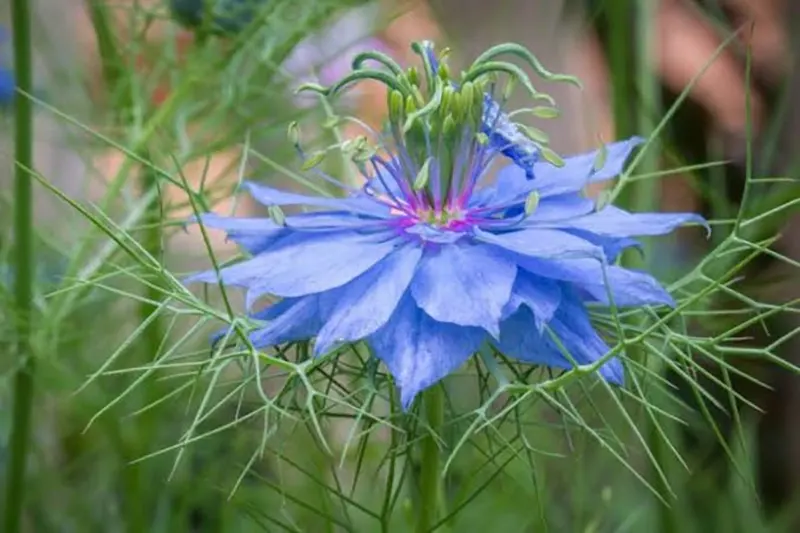
Love-in-a-mist has a unique swirl of airy bracts and delicate foliage. The plant is popular among gardeners for its aesthetic appeal. The best time to plant it is in the spring or fall.
Look at the table below to learn about the Nigella plant taxonomy and ideal growing conditions:
| Botanical name | Nigella damascena |
| Common name | Love-in-a-mist |
| Kingdom | Plantae |
| Order | Ranunculales |
| Family | Ranunculaceae (Buttercup family) |
| Genus | Nigella |
| Native area | Europe, Africa, Asia |
| Season of interest | Spring, early summer |
| Hardiness | 2 to 11 USDA Zones |
| Light Requirements | Full sunlight |
| Maintenance | Low |
| Type | Annual |
| Soil | Fertile to average soil, loose, well-draining soil with acidic or neutral pH levels between 6.0 and 7.5 |
| Water Requirements | Moderate |
| Fertilizers | Once a month |
| Toxicity | Toxic to pets and humans |
4. Brunnera
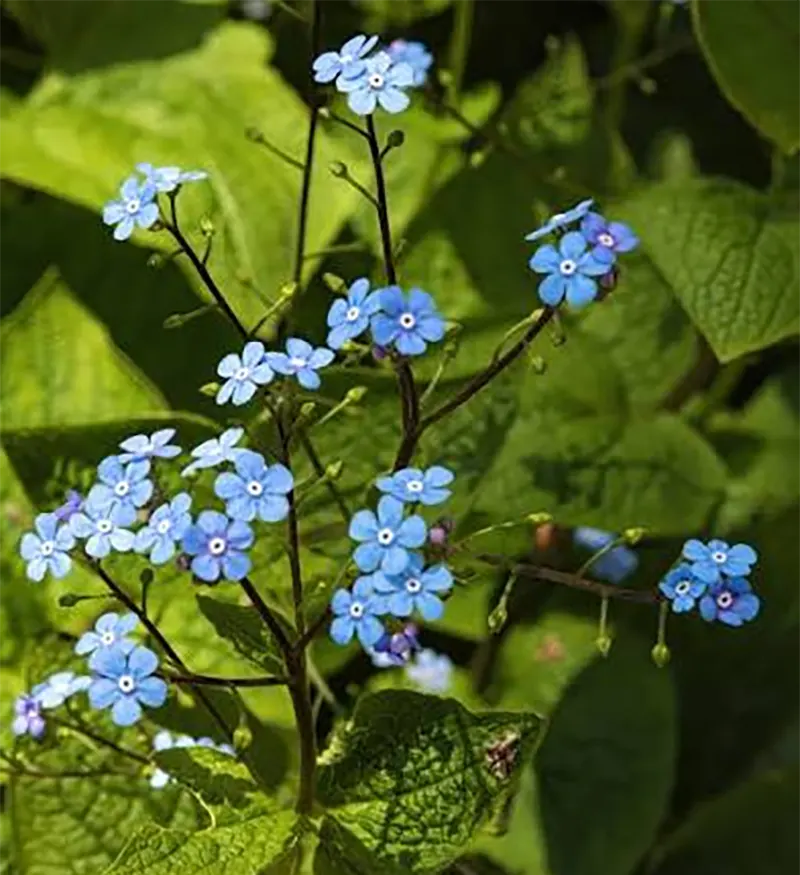
Brunnera is a long-lasting perennial that blooms for around 4 weeks and spreads from rhizomatous roots. It is generally transplanted from potted plants in early spring and needs low maintenance. They are best planted for ground cover, shade gardens, and woodland settings.
Look at the table below to learn about the Brunnera plant’s taxonomy and ideal growing conditions:
| Botanical name | Brunnera macrophylla |
| Common name | ‘Jack Frost’ Siberian Bugloss |
| Kingdom | Plantae |
| Order | Boraginales |
| Family | Boraginaceae |
| Genus | Burnnera |
| Native area | Europe, Asia |
| Season of interest | Spring, summer |
| Hardiness | 3 to 8 USDA Zones |
| Light Requirements | Partial indirect sunlight |
| Maintenance | Low |
| Type | Perennial |
| Soil | Well-draining, moist soil with acidic, neutral, or alkaline pH levels |
| Water Requirements | Regularly water the new plant. Once established, reduce the frequency of watering |
| Fertilizers | Only required if the soil is poor |
5. Globe Thistle
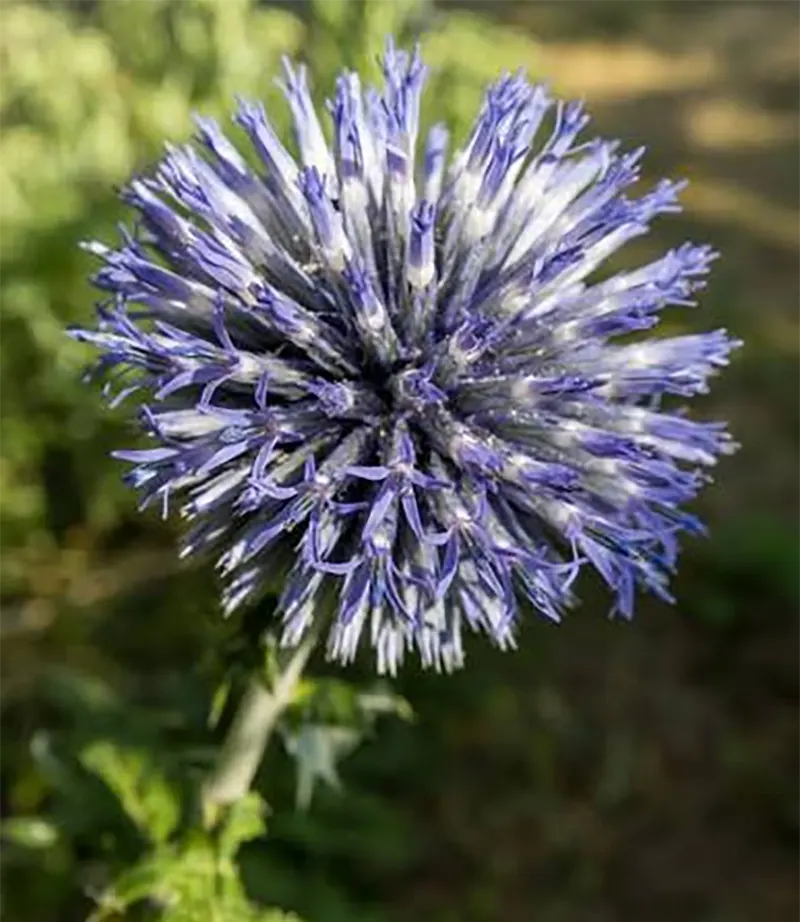
Globe thistle is a fast-growing perennial that requires no care or attention. The plant can survive in poor and dry soil, but it requires full sunlight for at least 6 hours a day. The plant is appreciated for its unique flowers that bloom in spherical shapes in hues of blue, purple, or white. This plant is best for border gardens and helps attract pollinators like bees and butterflies.
Look at the table below to learn about the globe thistle’s taxonomy and ideal growing conditions:
| Botanical name | Echinops spp. |
| Common name | Blue glow globe thistle |
| Kingdom | Plantae |
| Order | Asterales |
| Family | Asteraceae (Daisy, Sunflower, or composite family) |
| Genus | Echinops |
| Native area | Asia, Europe |
| Season of interest | Summer, fall |
| Hardiness | 4 to 9 USDA zones |
| Light Requirements | Full direct sunlight |
| Maintenance | Low |
| Type | Perennial |
| Soil | Well-drained soil with slightly acidic pH levels. Tip: Avoid using clay soil because it can kill the plant |
| Water Requirements | Average |
| Fertilizers | Not required |
6. Delphinium
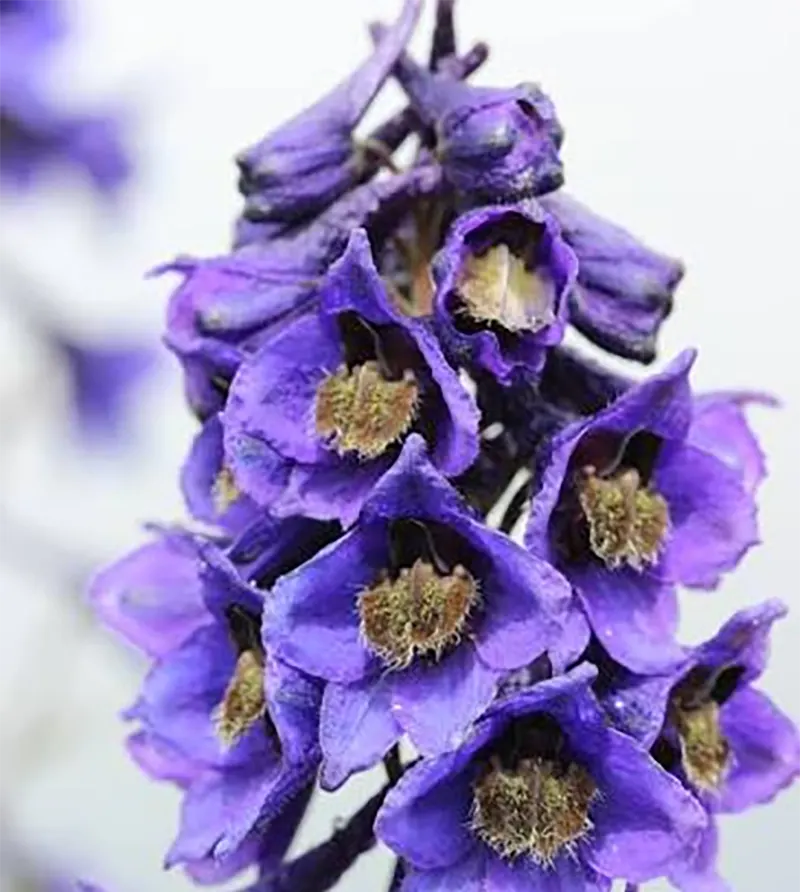
Delphinium, commonly known as larkspur, is a tall, stately herbaceous perennial that blooms in clusters. The plant grows up to 6 ft. tall, depending on the variety. It blooms from June to July in shades of blue, deep blue, light sky blue, and other bright colours. The plant is toxic if ingested by pets or humans. Therefore, one must stay alert if they have pets and kids around. The plant is one of the two July birth flowers.
To know about larkspur taxonomy and ideal growing conditions, look at the table below:
| Botanical name | Delphinium grandiflorum |
| Common name | Summer cloud delphinium, larkspur |
| Kingdom | Plantae |
| Order | Ranunculales (buttercups, poppies, and allies) |
| Family | Ranunculaceae |
| Genus | Delphinium (Larkspur) |
| Native area | Northern Hemisphere and high-altitude regions of Tropical Africa |
| Season of interest | Late spring, summer |
| Hardiness | 3 to 9 USDA Zones |
| Light Requirements | Full sunlight |
| Maintenance | Low |
| Type | Perennial |
| Soil | Moist, fertile, well-drained soil with acidic, neutral, or alkaline pH levels |
| Water Requirements | Average |
| Fertilizers | Balanced, slow-release fertiliser in growing season |
7. Bluebeard
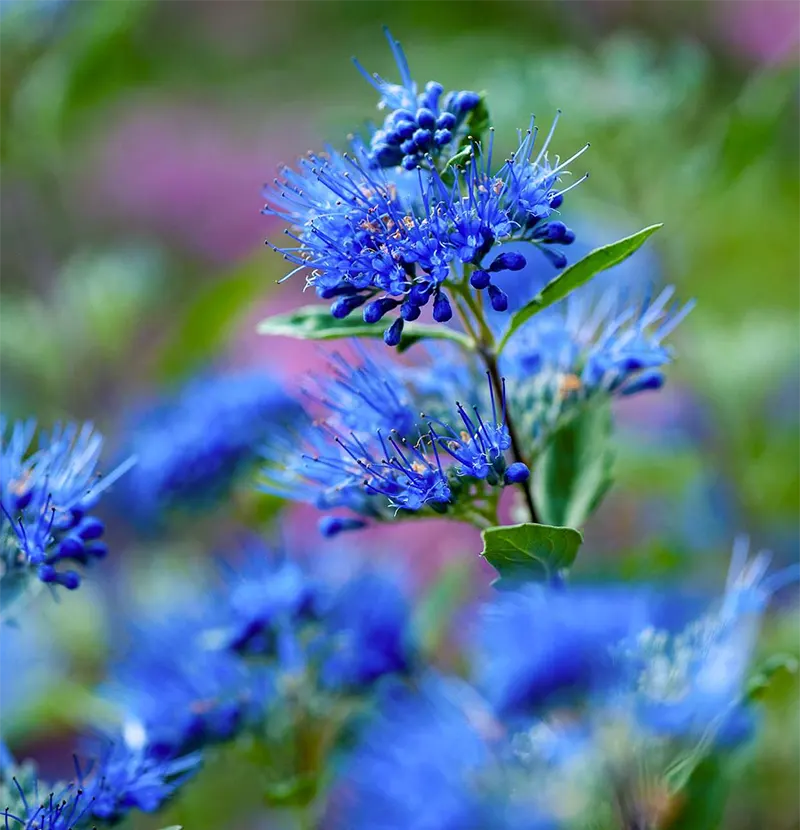
Bluebeard is among the few plants that produce genuinely blue flowers. It is an accidental hybrid of C. incana and C. mongholica. The plant is cultivated for its compact size and gray foliage that complements the blue blooms. The plant is either grown as a deciduous shrub or a woody perennial, depending on the climate and location.
Look at the table below to know about its taxonomy and ideal growing conditions:
| Botanical name | Caryopteris x clandonensis |
| Common name | Beyond midnight bluebeard, blue mist |
| Kingdom | Plantae |
| Order | Lamiales |
| Family | Lamiaceae (Mint family) |
| Genus | Caryopteris Bunge |
| Native area | Asia |
| Season of interest | Midsummer, fall |
| Hardiness | 5 to 9 USDA Zones |
| Light Requirements | Full sunlight |
| Maintenance | Low |
| Type | Shrub |
| Soil | Well-drained, moist soil with neutral pH levels |
| Water Requirements | While growing, water the plant regularly. Once established, they become drought-tolerant |
| Fertilizers | Use organic compost instead of chemical fertilisers |
8. Virginia bluebells
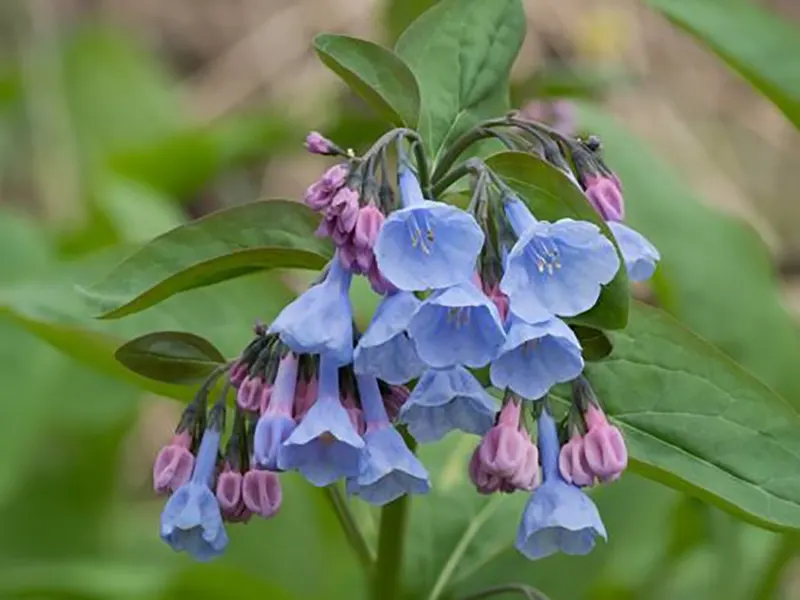
Virginia bluebells are delicate, seasonal plants that thrive in indirect sunlight. While planting bluebells, one must be aware of the spacing between the plants; plant them at least 14 to 20 inches apart from each other. This helps the spreading plant grow properly and ensures good air circulation.
Look at the table below to learn about its taxonomy and ideal growing conditions:
| Botanical name | Mertensia virginica |
| Common name | Virginia bluebells |
| Kingdom | Plantae |
| Order | Boraginales |
| Family | Boraginaceae (Borage or forget-me-not family) |
| Genus | Mertensia (Bluebells) |
| Native area | North America |
| Season of interest | Spring |
| Hardiness | 3 to 8 USDA Zones |
| Light Requirements | Indirect sunlight |
| Maintenance | Low |
| Type | Perennial |
| Soil | Moist sandy or clay soil with neutral pH levels |
| Water Requirements | Regular |
| Fertilizers | Around 10 days before planting, use balanced fertilizers in a ratio of 10:10:10 |
9. Aster
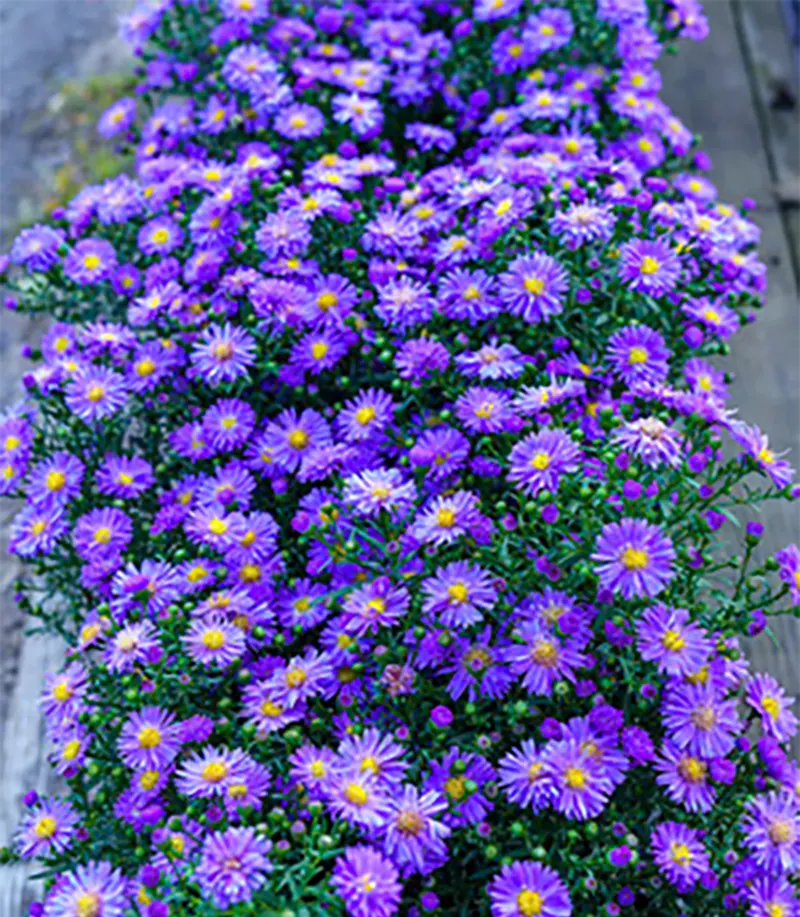
Blue asters are one of my favourite perennial flowering plants due to their low-maintenance quality. The plant blooms from August to October and is generally used in decor. These aesthetic flowers also add liveliness to your landscape in the blooming season. Aster is one of the two September birth flower.
Look at the table below to learn about aster’s taxonomy and ideal growing conditions:
| Botanical name | Stokesia hybrid |
| Common name | Aster, peachie’s pick, Stokes’ aster |
| Kingdom | Plantae |
| Order | Asterales |
| Family | Asteraceae |
| Native area | North America |
| Season of interest | Late summer, fall |
| Hardiness | 5 to 9 USDA Zones |
| Light Requirements | Full direct sunlight |
| Maintenance | Low |
| Type | Perennial |
| Soil | Well-drained loamy soil with neutral to slightly acidic pH levels |
| Water Requirements | Regular |
| Fertilizers | Moderate feeders |
10. Spike Speedwell
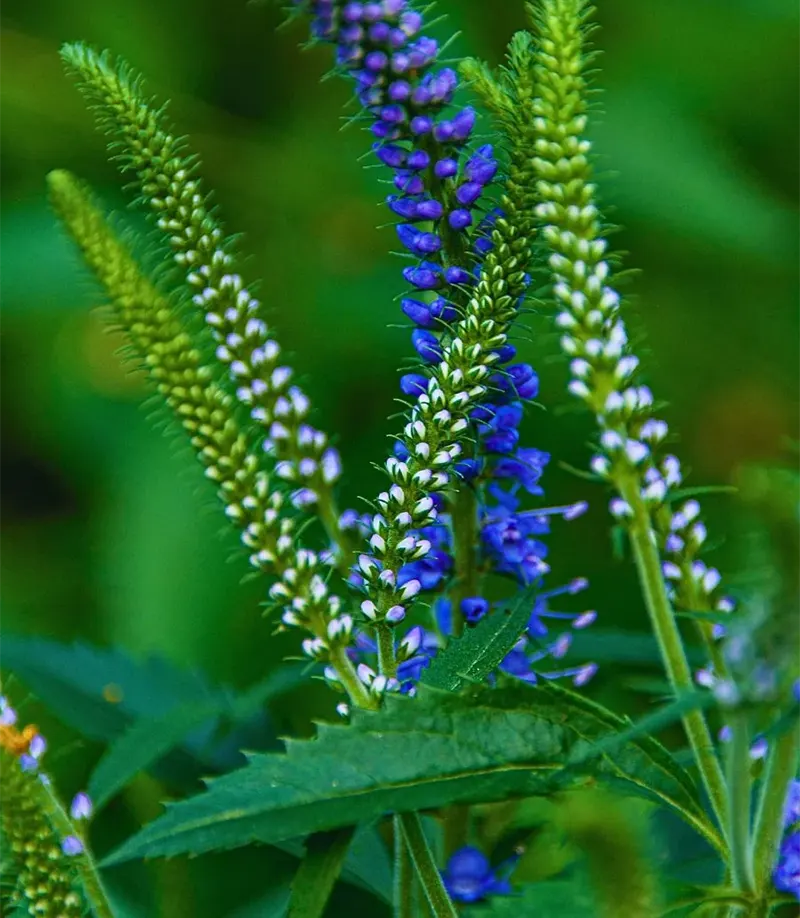
Veronica is a robust genus of flowering plants that includes more than 500 species. This perennial plant is easy to grow and does not require much attention. It is cultivated for its spikes that bloom with long-lasting flowers and grows up to 6 ft. tall depending on the variety.
Look at the table below to learn more about the plant’s taxonomy and ideal growing conditions:
| Botanical name | Veronica hybrid |
| Common name | Magic show ‘Wizard of Ahhs’, spike speedwell |
| Kingdom | Plantae |
| Order | Lamiales |
| Family | Plantaginaceae |
| Genus | Veronica L. |
| Native area | Asia, Europe |
| Season of interest | Summer, fall |
| Hardiness | 3 to 9 USDA Zones |
| Light Requirements | Full sunlight |
| Maintenance | Low |
| Type | Perennial |
| Soil | Well-drained loamy soil with neutral pH levels |
| Water Requirements | Water regularly while the plant is young. Once established, they become drought-tolerant |
| Fertilizers | Rarely required |
Read more: 25 Best Hummingbird Flowers: Trumpet Vine, Beardtongue, Lantana and More
6 Bonus Shrubs with Blue Flowers
While blue flowers add elegance and depth to nature, they are also pollinator-friendly and help attract pollinators like bees, hummingbirds, and butterflies. Here is the list of 6 shrubs with blue flowers that attract gardeners:
| Shrub name and Image | Description |
Salvia 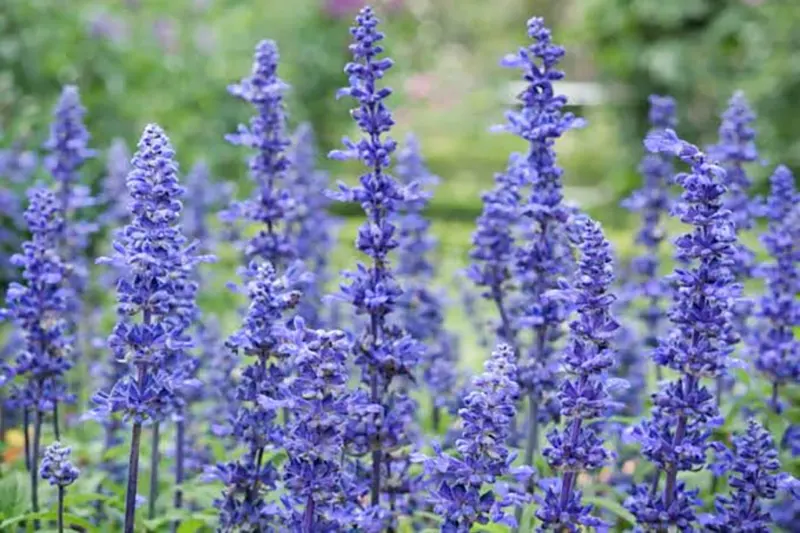 |
|
Lily of the Nile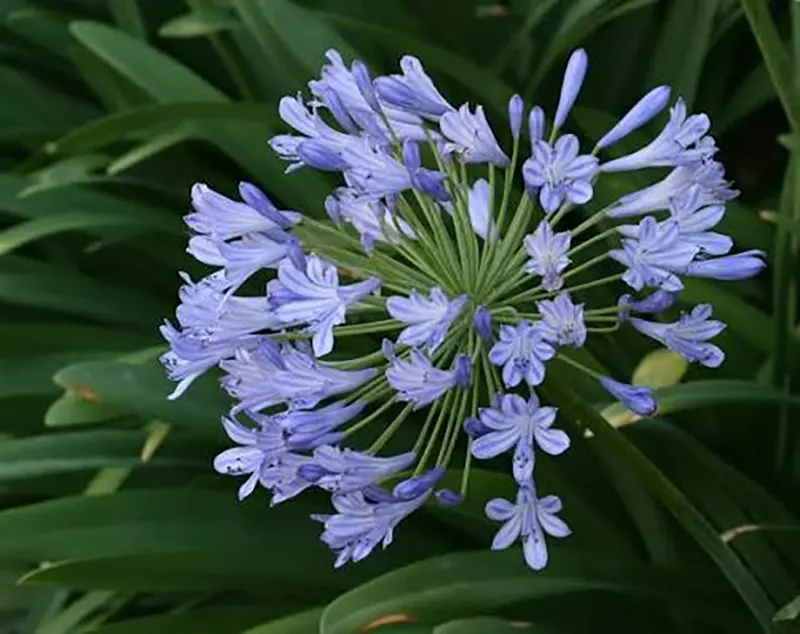 |
|
Rose of Sharon 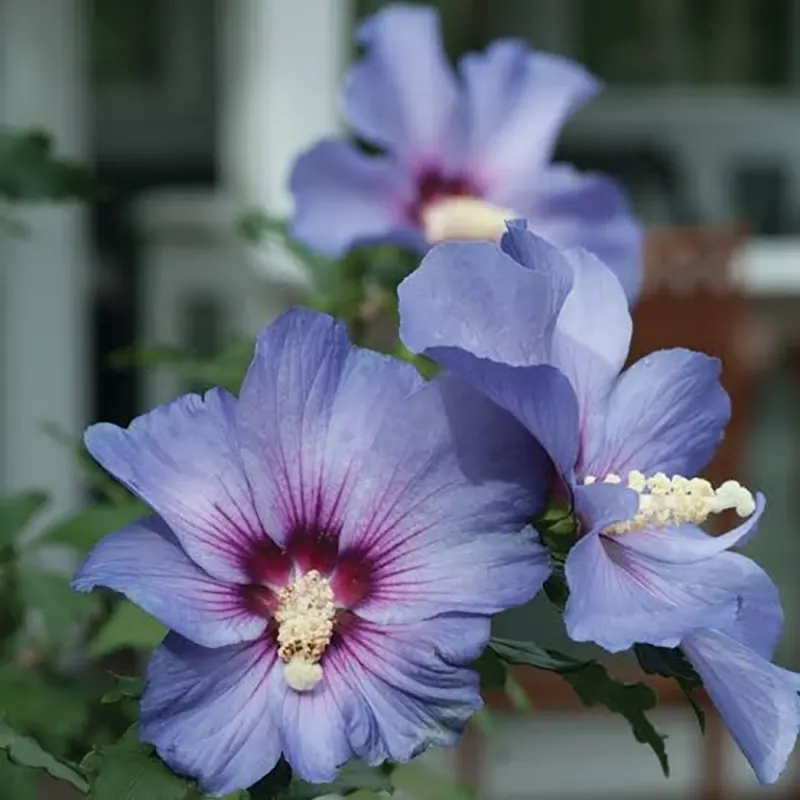 |
|
Cornflower (bachelor’s buttons)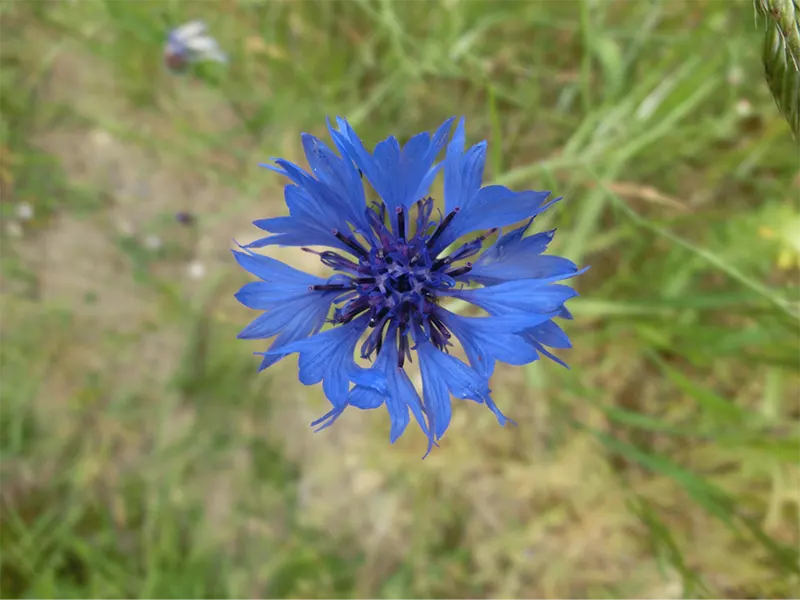 |
|
Dwarf Morning Glory 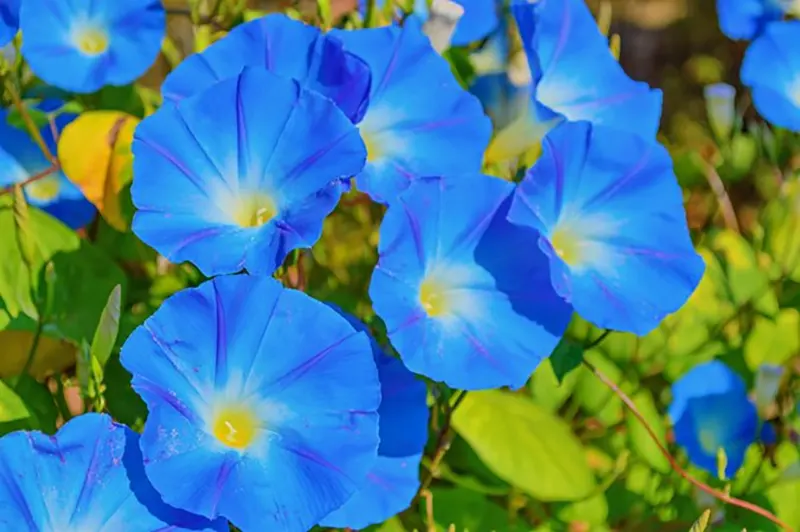 |
|
Felicia Daisy 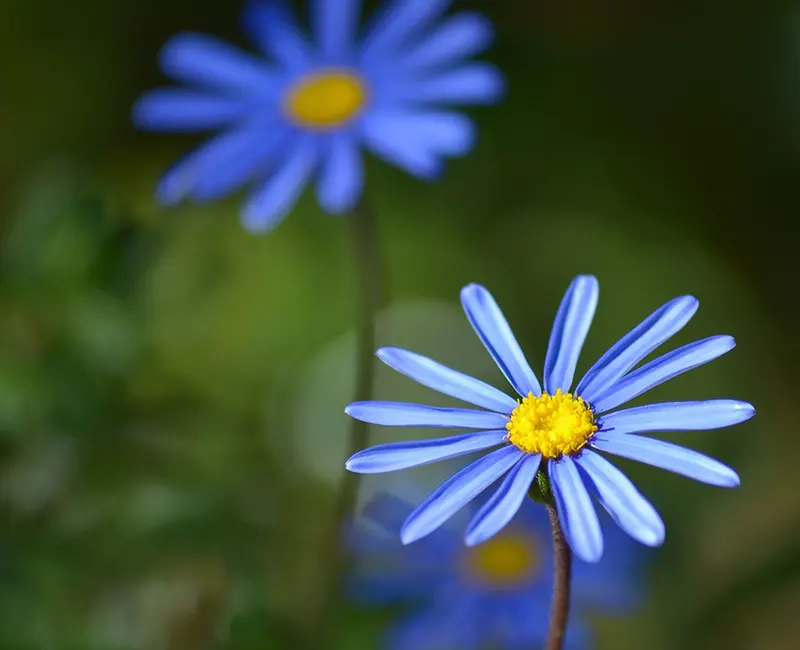 |
|
Read more: What is Gomphrena, Its Care Tips, Ideal Growing Conditions, and Growing Process
Takeaways
With the depth that blue colour symbolises, each blue flower is unique in its own way. They enhance the landscape, and some of them even attract local pollinators like bees, butterflies, and hummingbirds.
Some of gardeners’ favourite blue flowering shrubs include aster, bluebeard, Virginia bluebell, larkspur, iris, and gentian. If you want to add colours to your garden or indoor spaces, you can definitely rely on this list of 16 blue flowering shrubs that are easy to grow and require low maintenance.
Happy planting.
FAQs
Name some blue flowering shrubs.
What does a blue flower symbolise?
Blue flowers symbolise trust, hope, calm, peace, loyalty, and deep and steady love.
Which blue flower depicts love?
Bluebell, forget-me-not, blue rose, iris, bachelor’s button, and hydrangea are some of the blue flowers that symbolise deep and steady love.
Latest Blog