Virginia Sweetspire is native to North America.
Virginia Sweetspire: Planting, Care Tips, and Growing Process Explained
Author
Annette HirdReviewed By
Cody Allison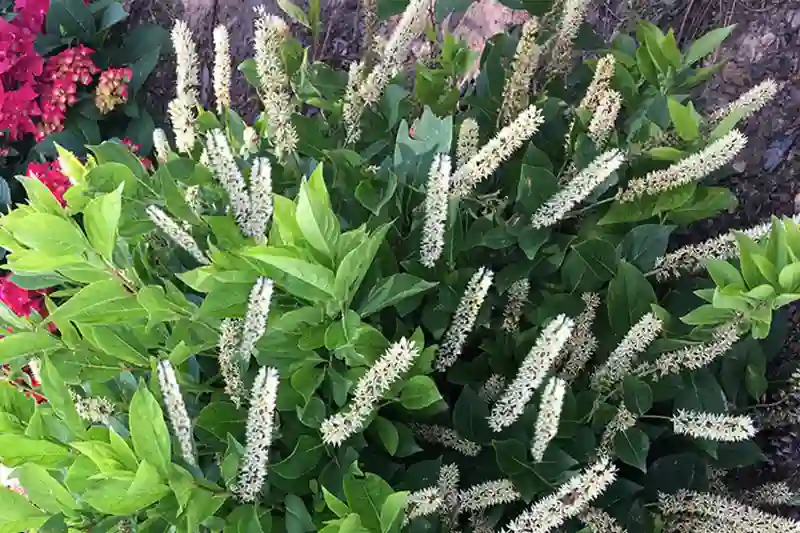
Virginia Sweetspire is a fragrant flowering variety that blooms white. The plant is versatile because of its attractive foliage that turns burgundy in fall, fitting into almost every landscape. This attractive plant is often cultivated to fill gaps between other tall-growing plants.
The plant has various varieties that are popular among gardeners. Some of them are ‘Henry’s Garnet’, ‘Mertol’, ‘Sprich’, ‘Scentlandia’, and ‘Sarah’s Eve’. These varieties are best planted with Black Chokeberry, Coral Bells, and Wild Ginger.
Read the article to learn about Virginia Sweetspire taxonomy, ideal growing conditions, care tips, the growing process, and more.
Table of Contents:
Virginia Sweetspire Plant Taxonomy and Ideal Growing Conditions
Virginia sweetspire, also known as Virginia willow, is a deciduous shrub that blooms white in summer. The plant typically grows around 4 to 8 ft. tall and wide. It is native to North America and needs full morning sun with partial afternoon shade. The plant can adapt to its location and tolerate poorly drained soil with temporary flooding.
Look at the table below to learn about its botanical overview and ideal growing conditions:
| Botanical name | Itea virginica |
| Common name | Virginia sweetspire, Virginia willow |
| Kingdom | Plantae |
| Order | Saxifragales |
| Family | Iteaceae |
| Genus | Itea |
| Native area | North America |
| Season of interest | Summer |
| Hardiness | 5 to 9 USDA Zones |
| Light Requirements | Full sunlight with partial shade |
| Maintenance | Low |
| Type | Deciduous shrub, fragrant, showy |
| Flower colour | White |
| Soil | Well-drained, moist soil with slightly acidic pH levels |
| Water Requirements | Regular watering while growing up. Once established, deeply water the plant once every 10 days. |
| Mature size | 4 to 8 ft tall and wide |
| Fertilizers | In spring with balanced granular fertiliser |
| Toxicity | Non-toxic to pets and humans |
| Tolerant | Short drought period, clay soil, erosion, heavy shade |
Read more: 20 Stunning Flowers That Start With the Letter P (With Pictures & Facts)
Essential Virginia Sweetspire Care Tips
Sweetspire is an extremely easy-to-care-for plant that does not require your attention. The plant is adaptable to most of the weather conditions and can spread widely if not pruned timely. Here are some essential care tips that include proper plant growing location, watering, fertilisation, etc. These are:
- Virginia sweetspire must be planted in a location that receives direct sunlight for at least 6 hours a day in winter. The plant must be protected from harsh summer afternoon sunlight. It grows well in shaded areas, but that reduces the chances of blooms and affects foliage fall colour.
- The ideal soil for planting Virginia sweetspire Itea is moist, well-draining, humusy soil with high organic matter and slightly acidic pH levels between 5.0 and 6.5. However, the plant can adapt to poor, clay soil.
- Water the plant consistently while it is young. Once the plant establishes, reduce the watering frequency because Virginia sweetspire Itea can tolerate occasional droughts. The best way to water it is by deeply watering the plant once every week. During hot summer days, you can water the plant twice a week, if required.
- Apply a layer of mulch around the plant base. Make sure it does not cover the plant base entirely and is around 3 to 4 inches. This will help maintain soil temperature, suppress weeds, and keep the soil evenly moist for a longer time.
- Remove the damaged plant stems in spring; this will help the plant to grow healthily and ensure proper air circulation.
- Pruning suckers helps prevent the unwanted spread of the plant. Do it every once in a while. Make sure to cut the underground portion of the sucker while removing it.
- Make sure to provide proper spacing of around 12 to 20 inches between two plants.
- Use balanced granular fertiliser mixed into the soil every spring. You do not need to feed the plant additionally throughout the year.
- If you are planting Virginia sweetspire itea in a container, make sure that it has a proper drainage hole for the removal of excess water and good air circulation. Also, use high-quality potting mix while planting them.
Did you know?
Virginia Sweetspire blooms throughout the summer till fall. Its flowers have a pleasant, sweet smell.
Read more: Coneflower: How to Grow This Perennial Wildflower?
How to Identify Virginia Sweetspire?
Though people can easily identify the Virginia sweetspire plant, here are some specific characteristics of it:
- The plant bears tiny, fragrant flowers in a floral spike that is around 4 to 8 inches long.
- The virginia sweetspike fruit looks like a small woody capsule.
- The plant has green, oval leaves on the stem with finely toothed edges. These leaves turn burgundy, red, orange, and gold in fall.
- Sweetspire Virginia’s stems are green or reddish-purple. When exposed to the sun, they turn completely reddish.
Read more: Straw Flower: Planting, Growing and Harvesting Explained
How to Grow and Propagate Virginia Sweetspire?
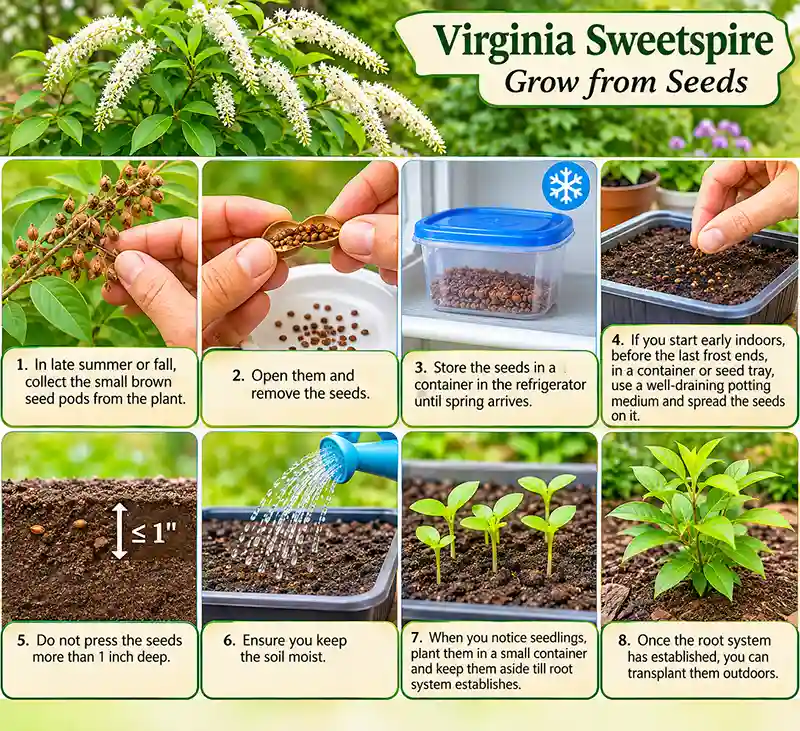
Virginia sweetspire can be easily grown using seeds. Here are the steps that I follow to plant it:
- In late summer or fall, collect the small brown seed pods from the plant.
- Open them and remove the seeds.
- Store the seeds in a container in the refrigerator until spring arrives.
- If you start early indoors, before the last frost ends, in a container or seed tray, use a well-draining potting medium and spread the seeds on it.
- Do not press the seeds more than 1 inch deep.
- Ensure you keep the soil moist.
- When you notice seedlings, plant them in a small container and keep them aside till the root system establishes.
- Once the root system has established, you can transplant them outdoors.
How to Propagate Itea Virginica?
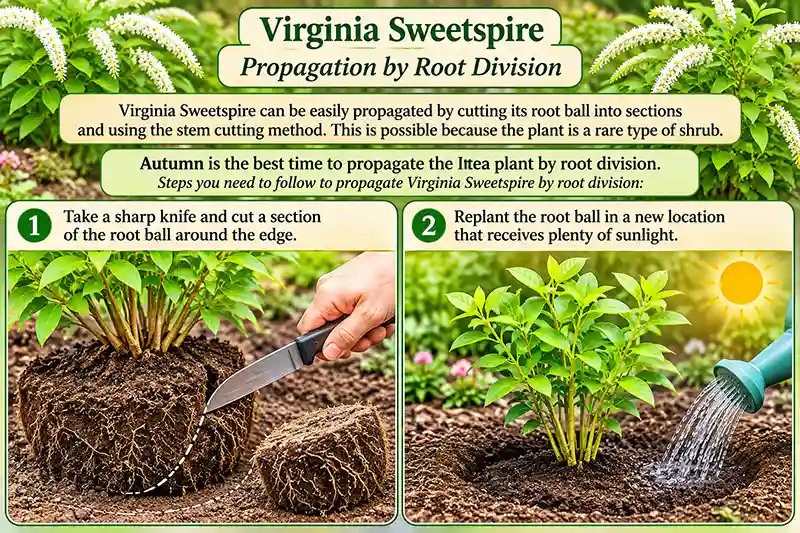
Virginia Sweetspire can be easily propagated by cutting its root ball into sections and using the stem cutting method. This is possible because the plant is a rare type of shrub.
Autumn is the best time to propagate the Itea plant by root division. Steps you need to follow to propagate Virginia Sweetspire by root division:
- Take a sharp knife and cut a section of the root ball around the edge.
- Replant the root ball in a new location that receives plenty of sunlight.
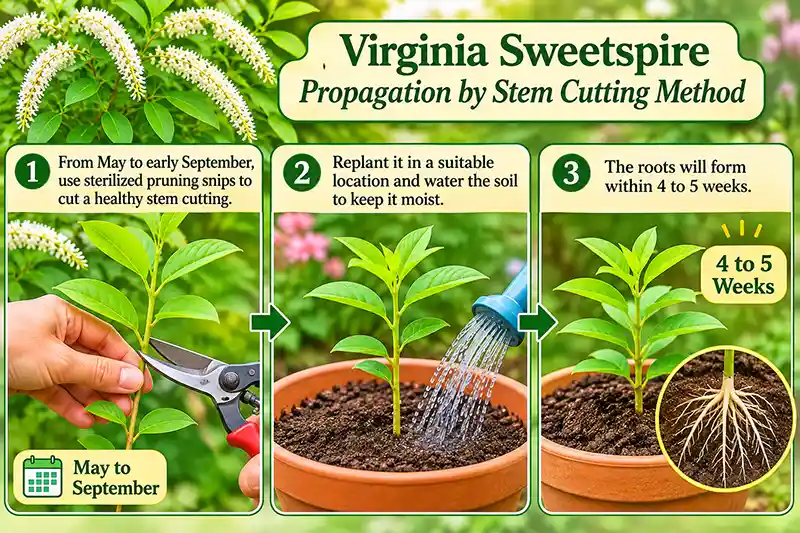
Steps you need to follow to propagate Virginia Sweetspire by stem cutting method:
- From May to early September, use sterilized pruning snips to cut a healthy stem.
- Replant it in a suitable location and water the soil to keep it moist.
- The roots will form within 4 to 5 weeks.
Read more: Moonflowers: Planting, Care Measures and Propagation Explained
Pests and Problems Associated With Virginia Sweetspire
Generally, there are no serious pests that can attack your plant. This is because of the hardy nature of the plant. However, it might develop some diseases or develop some problems. Here is the list of common problems and diseases associated with the Virginia Sweetspire plant:
| Common problems and diseases | Solution |
| Flea beetles or leaf spot | Flea beetles or leaf spots might appear as brown spots on the plant leaves. To get rid of them, use neem oil or other organic fungicides like baking soda solution, copper fungicide, or pyrethroids. |
| Chlorosis | This is one of the common problems associated with the Virginia willow plant. This can happen when the soil pH levels are above 7.0. It results in a lack of chlorophyll and, in some cases, even kills the plant. To reverse this problem, make sure to keep the soil acidic. Add acidic materials like sawdust or leaves to the soil if required. |
| Leaves turning yellow | This is another common problem that might appear in your plant. It is because of a lack of chlorophyll that usually happens when the plant is not exposed to sunlight for a longer time. To avoid such conditions, ensure that you plant your Virginia sweetspire plant in direct sunlight. |
Read more: Alocasia Plant Guide: Benefits, Care Measures, Common Problems, and More
Takeaways
Virginia sweetspire is one of the gardeners’ favorite plants because it requires no attention or special care. The plant is usually cultivated for its white, fragrant, tiny blooms that grow in a spike.
In ideal conditions, Virginia sweet-spire thrives for 40 years. Be careful about the location, soil, and water of the plant every 10 days. Avoid planting it indoors because that might cause common problems like yellowing leaves.
If you are planning to plant Virginia Sweetspire, the best time to start seeds indoors is 4 weeks before the frost ends and propagate it in the autumn.
Happy planting!
FAQs
Virginia Sweetspire is native to which place?
Is Sweetspire Virginia an evergreen plant?
No, Sweetspire Virginia is a deciduous shrub.
What soil is most suitable for Virginia Sweetspire?
The most suitable soil for Virginia Sweetspire is well-drained, moist, and humusy soil with slightly acidic pH levels between 5.0 and 6.5.
Sources
Virginia Sweetspire: iNaturalist
Latest Blog