The best time to plant vinca flowers outdoors is after the last frost has passed. You can start indoors early, around 4 to 6 weeks before the arrival of spring.
Vinca Flower: Varieties, Growing and Caring Guide
Author
Cerina TriglavcaninReviewed By
Cody Allison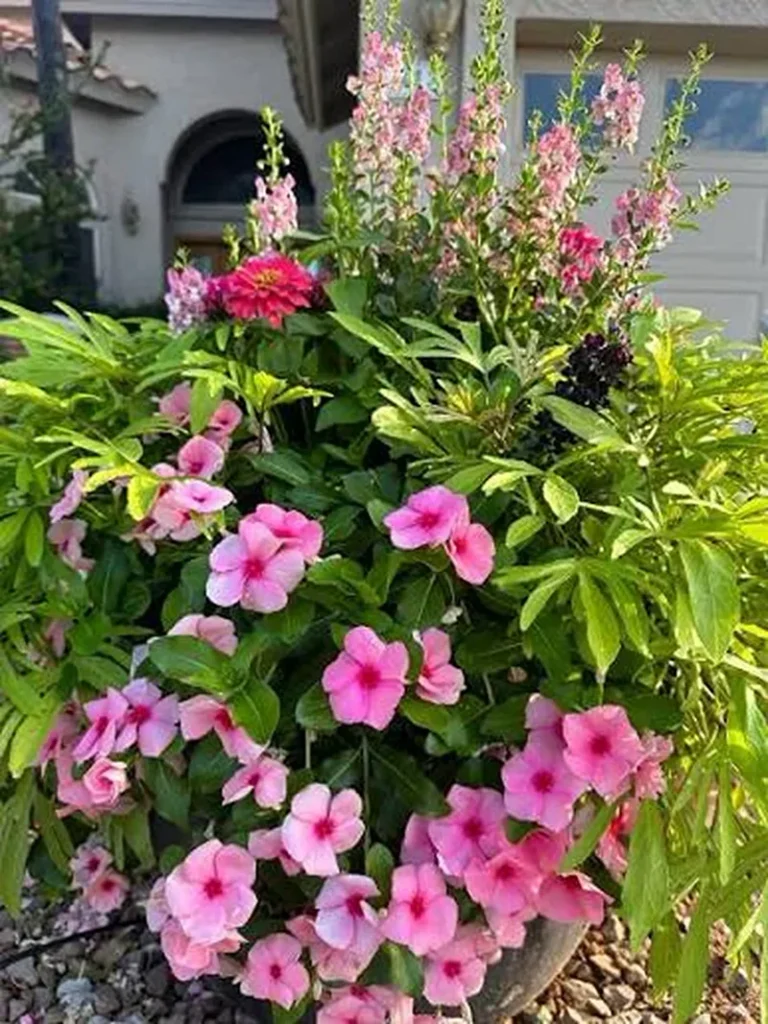
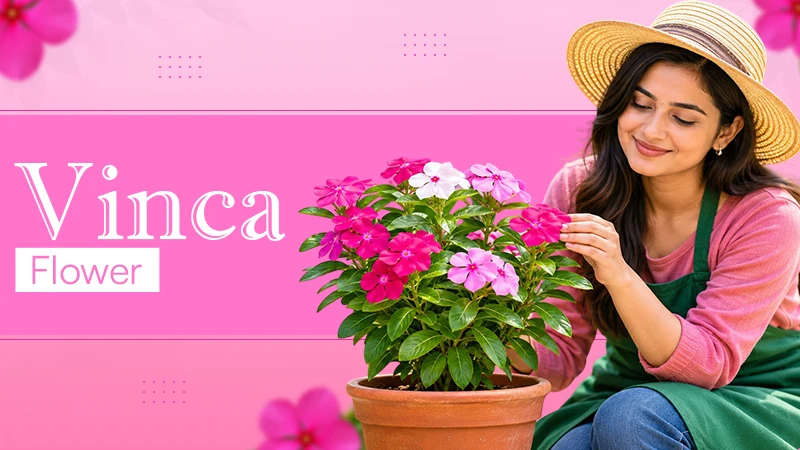
The vinca plant is a tropical perennial that is grown as an annual flowering plant that blooms almost throughout spring, summer, and fall. The flower blooms in hues of pink, red, and white with dark green and leathery foliage.
It is one of the low-maintenance plants that can be grown carefree and is pollinator-friendly. These evergreen perennials are best grown in landscapes for their aesthetic and colourful blooms that enhance your garden’s look and are long-lasting.
Read the article to learn about Vinca flower taxonomy, ideal growing conditions, care tips, growing process, and much more.
Table of Contents:
Vinca Plant Taxonomy and Ideal Growing Conditions
Vinca plant, commonly known as Sadabahar or Madagascar periwinkle, is a true woody-stemmed, herbaceous perennial and annual, tender perennial. This showy plant belongs to the Apocynaceae (Dogbane) family and is native to Africa. It is cultivated for its ornamental flowers and, according to NIH, offers some medicinal properties, but it is also considered toxic to pets and humans; therefore, one must consult a doctor before consuming it.
The plant thrives in direct sunlight with partial shade in the afternoon, and requires sandy or loamy soil with slightly acidic to neutral pH levels and moderate watering. Look at the table below to learn more about the vinca plant taxonomy and ideal growing conditions:
| Botanical name | Catharanthus roseus |
| Common name | Madagascar periwinkle, sadabahar, annual vinca, rosy periwinkle |
| Kingdom | Plantae |
| Order | Gentianales |
| Family | Apocynaceae |
| Genus | Vinca (Periwinkles) |
| Native area | Africa |
| Season of interest | Spring, summer, fall |
| Hardiness | 9 to 11 USDA zones |
| Light Requirements | Full, direct sunlight with partial shade |
| Maintenance | Low |
| Type | Annual, herbaceous perennial, showy |
| Flower colour | Pink, white, red, bi-colour |
| Soil | Sandy, loamy, well-draining soil with slightly acidic to neutral pH levels. |
| Water Requirements | Moderate |
| Mature size | Up to 20 inches tall and wide |
| Fertilizers | Not a heavy feeder |
| Toxicity | Toxic to pets and humans |
| Tolerant | Drought-tolerant |
Read more: Areca Palm Guide: Taxonomy, Ideal Growing Conditions, Care Tips, & Much More
How to Care for a Flowering Vinca Plant?
Caring for any plant is an essential step that keeps it healthy and blooming. But this is not the case with a vinca plant. They are adaptable to their surroundings, but you need to choose the correct location and water the plant regularly during the established period. Here are some care tips that I follow for fuller blooms:
- Plant vinca flowers in full sunlight with partial afternoon shade.
- Too much shade can cause weaker roots and a leggy plant.
- Make sure that the soil is well-draining and sandy with slightly acidic to neutral pH levels between 6.0 and 7.0. If the soil is heavy, add compost to it before planting vincas.
- In case you are planting vinca in a pot, make sure it has a proper drainage hole and is wide enough to let the roots establish.
- Watering vinca is tricky. When the plant is young, water it regularly once the top layer of soil dries.
- Once the plant is established, water it moderately to average because too much watering can cause root rot.
- Tip: Vinca thrives in dry soil.
- The plant is not frost tolerant; therefore, avoid planting it while the temperature is cold outdoors. In such cases, you can start early and plant vinca indoors.
- If you have planted vinca flowers in a container, bring them indoors during winter. This will help annual vinca plants survive in cold weather.
- Use compost or slow-release fertiliser at the time of planting. Avoid fertilising the plant regularly.
Did you know?
The vinca flowers symbolise everlasting love, friendship, purity, and remembrance.Read more: Kalanchoe: Growth, Care, and Facts About This Succulent Houseplant
How to Grow and Propagate a Vinca Flower?
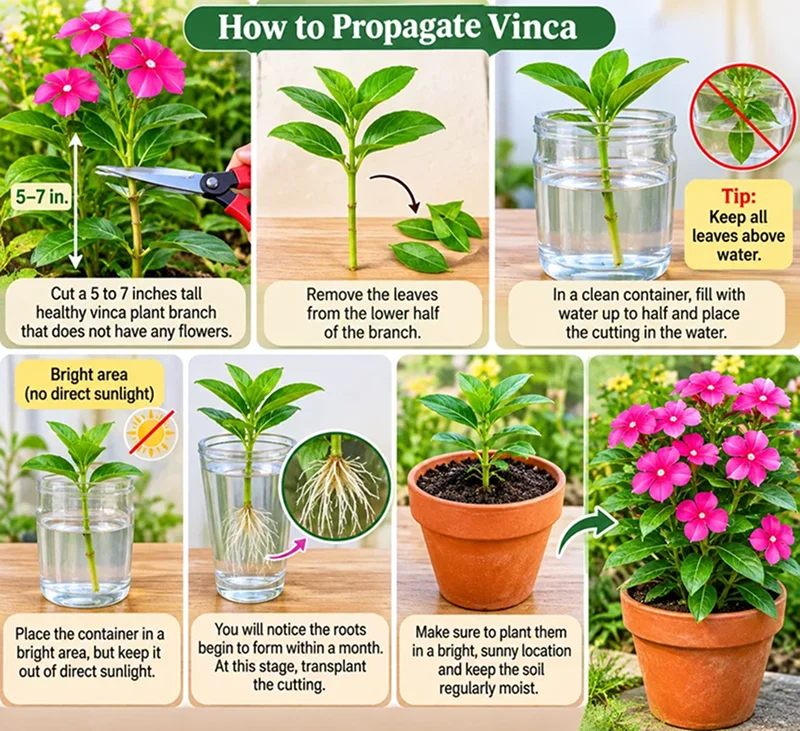
Growing and propagating a vinca plant is an easy process. But one needs to be careful while propagating the vinca plant because certain plant varieties are protected by a plant patent or trademark, which makes it illegal to propagate the vinca plant in any form. If that is not the case, here are a few simple steps that you need to follow to propagate vinca:
- Cut a 5- to 7-inch-tall healthy Vinca plant branch that does not have any flowers.
- Remove the leaves from the lower half of the branch.
- In a clean container, fill with water up to half and place the cutting in the water.
Tip: 1. Make sure that there are no leaves submerged in water.
2. Change the water every few days.
- Place the container in a bright area, but keep it out of direct sunlight.
- You will notice the roots begin to form within a month. At this stage, you can transplant the cutting to the desired location.
- Make sure to plant them in a bright, sunny location and keep the soil regularly moist.
How to Grow Vinca Plant from Seeds?
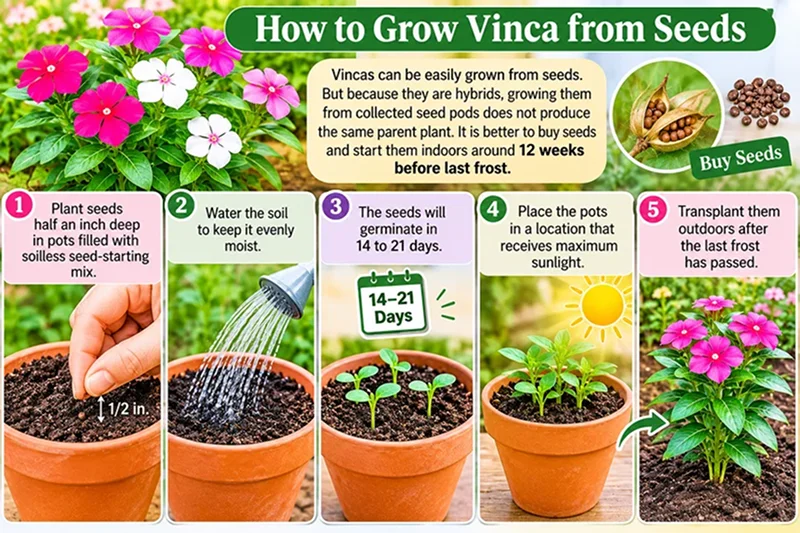
Vincas can be easily grown from seeds. But because they are hybrids, growing them from collected seed pods does not produce the same parent plant. It is better to buy seeds and start them indoors around 12 weeks before last frost. Here are the steps you need to follow:
- Plant seeds half an inch deep in pots filled with soilless seed-starting mix.
- Water the soil to keep it evenly moist.
- The seeds will germinate in 14 to 21 days.
- Place the pots in a location that receives maximum sunlight.
- Transplant them outdoors after the last frost has passed.
Read more: Polka Dot Plant Care: Explore Some Quick Fixes and Expert-Backed Advice For a Blooming Plant!
Pests and Diseases Associated With the Flowering Vinca Plant
The vinca plant does not suffer from serious problems or diseases. Yet here is the list of possible problems, diseases, and pests that might attack your plant:
| Pests, problems, and diseases | Solution |
| Snails and slugs | Snails and slugs are common pests that attack the vinca plant. To get rid of them, you can either handpick them or use a strong jet of water. |
| Brown spots | Brown spots are caused by damp conditions and lack of airflow. This causes fungal infection. To avoid brown spots, make sure that there is proper spacing between two plants and trim away all affected leaves. |
| Yellow wilted leaves | Yellow wilted leaves are a sign of overwatering. Only water the plant when the top layer of the soil dries out completely. |
Read more: Peony Flower Guide: Taxonomy, Ideal Growing Conditions, Growing Process, Care Tips
Popular Vinca Plant Varieties
Several varieties of annual vinca grow in various sizes and bloom at different times. Here are some of the most popular types of vinca plants, along with their description and images:
| Popular varieties and image | Description |
‘Cora XDR’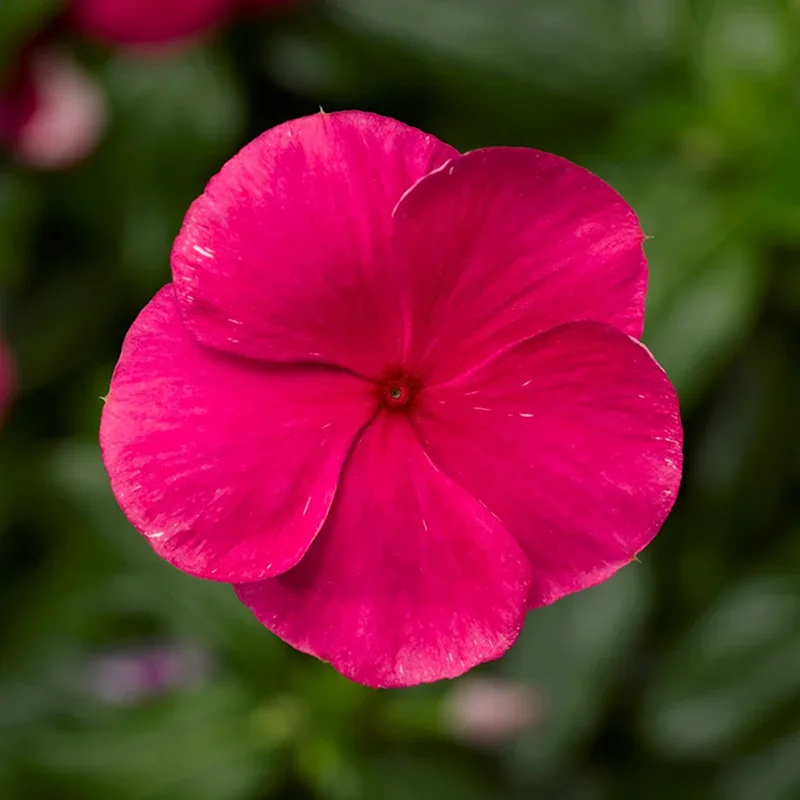 | This is a large variety with an upright, mounding growth habit. The plant grows around 15 to 18 inches tall and spreads up to 20 inches. |
‘Mediterranean’ 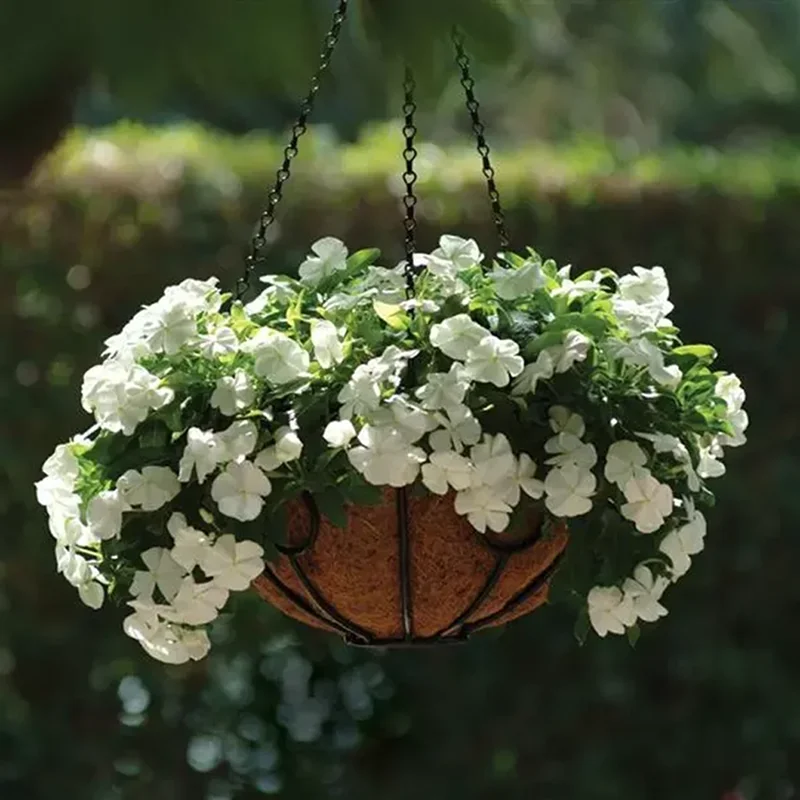 | This is a compact variety that grows only 6 inches and spreads up to 2 ft. The plant is most suitable for hanging baskets and windows. |
‘Pacifica’ 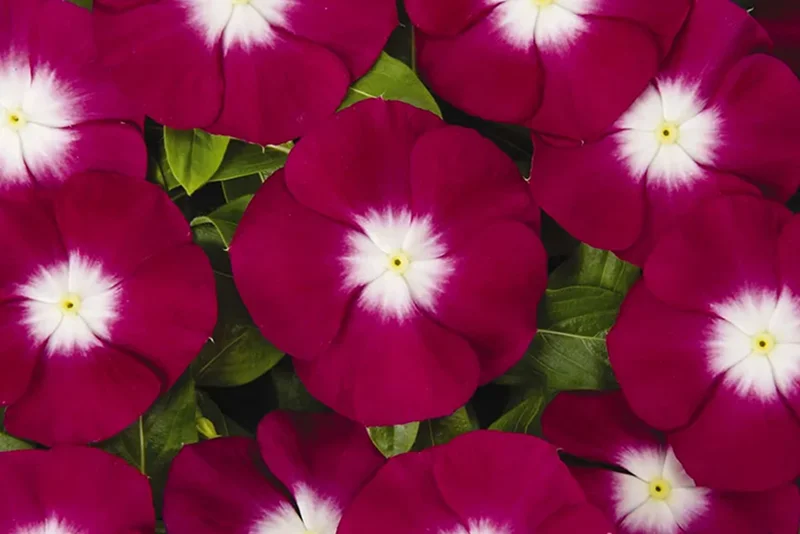 | Pacifica grows up to 14 inches tall with 2-inch-wide flowers. They bloom in hues of pink and red with bright green foliage. |
‘Mega bloom’ 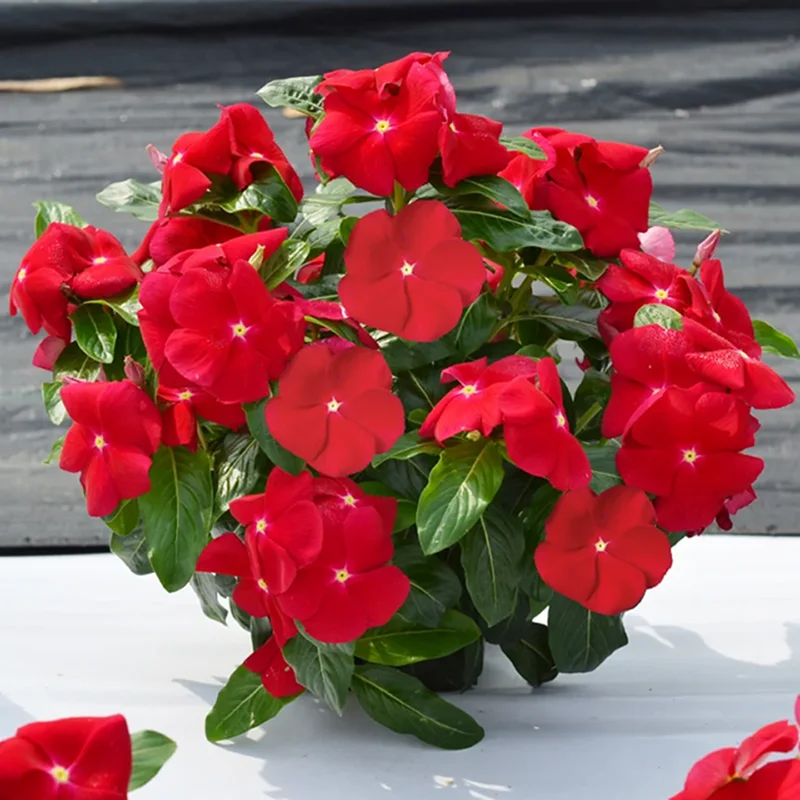 | Mega bloom is an annual Vinca hybrid that has one of the largest flowers. The plant typically grows around 8 to 10 inches tall and 10 to 12 inches wide. |
‘Titan’ 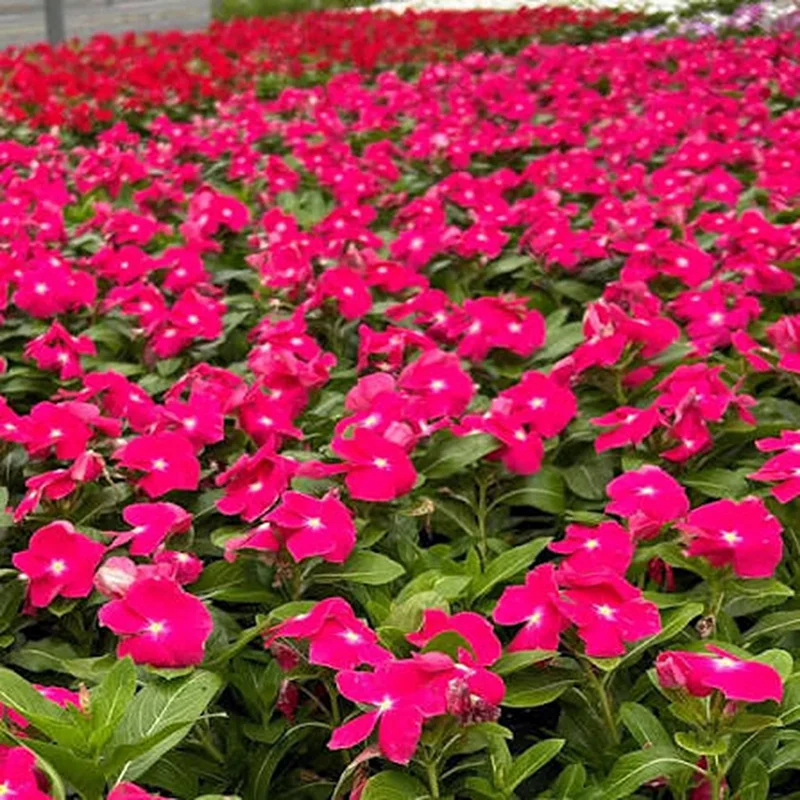 | Titan grows up to 14 to 16 inches tall and spreads up to 12 inches. They are heat tolerant and have strong branches with large flowers. |
‘Stardust’ 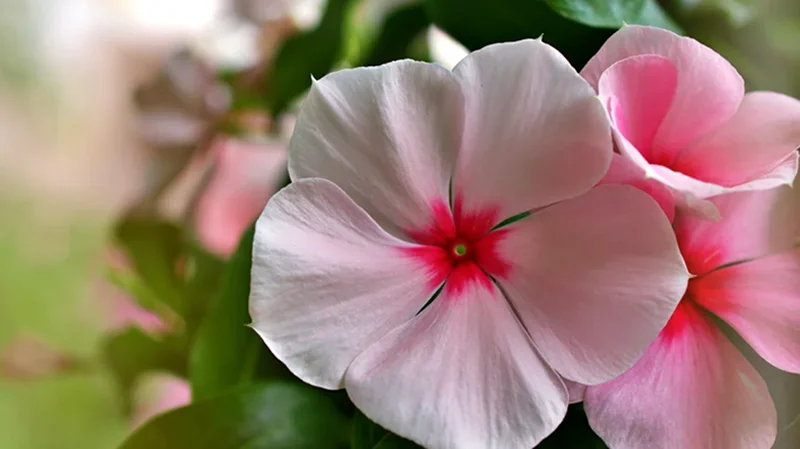 | Stardust is an AAS bedding plant winner. It grows around 16 inches tall and wide. |
Read more: Dahlia Flowers: How to Plant This Versatile Herbaceous Bloom?
Takeaways
The five-petaled vinca flowers are fuss-free and do not require much care and attention. These low-maintenance plants are hardy and adaptable to a wide range of soil and weather conditions. They are also pollinator-friendly and attract local pollinators like bees, hummingbirds, and butterflies.
Vinca also has some health benefits. As per NIH, Madagascar periwinkle is an alkaloid-abundant plant and is used in medicines used to treat cancer. Avoid consuming it directly without consulting a doctor.
Whether you are a beginner or pro gardener, this is your sign to plant vinca flowers. You can use this article as a manual to begin gardening these beautiful flowering plants.
Happy planting!
FAQs
What is the best time to plant vinca flowers?
Do vinca flowers need direct sunlight?
Yes, vinca flowers thrive in direct sunlight. But it is also important to protect the plant from harsh summer afternoon sun.
Does vinca require regular watering?
Vinca plants require regular watering while the plant is established. Once established, the plant becomes drought-tolerant and does not like soggy soil.
How often should I fertilise a vinca plant?
Apply slow-release granular fertilizer or compost at the time of planting. Avoid fertilising the plant frequently because it leads to foliage growth and reduces blooms.
Sources
Periwinkles: iNaturalist
Periwinkle: Britannica
Latest Blog