Yes, but only after making a fine powder out of them and then adding the powder to your drinks.
Date Palms: Growing, Care, Types, and Common Problems
Author
Annette HirdLast Update
April 19, 2026
Just look at the date palm fruit; almost everyone wants this delicious fruit-bearing tree in their garden. But, instead of all the best efforts put forth, you always come to witness the death of the young date, which was just yesterday dancing in the sun!
Date-bearing palms aren’t species that would grow everywhere with minimal care. Rather, it is a species that needs the right climate and intensive care for optimal growth and maximum fruit.
From prerequisites to whatever you have done wrong, I have tried to cover everything out of my own data-tree-growing experiences below. It is not that hard to grow and eat dates from your own tree when you know the trick.
Table of Contents:
- Basic Information About Date Palms
- Which Climate Is Best for Date Palms?
- How Do I Plant Date Palms the Right Way?
- How Do I Care for a Date Palm So It Actually Fruits?
- What are the Best Types of Date Palms?
- Are Date Palms and Palm Trees the Same Thing?
- When Will My Date Palm Start Producing Fruit?
- Which Diseases Are Common in Date Trees & How to Prevent Them?
- Wrapping Up
- FAQs
Basic Information About Date Palms
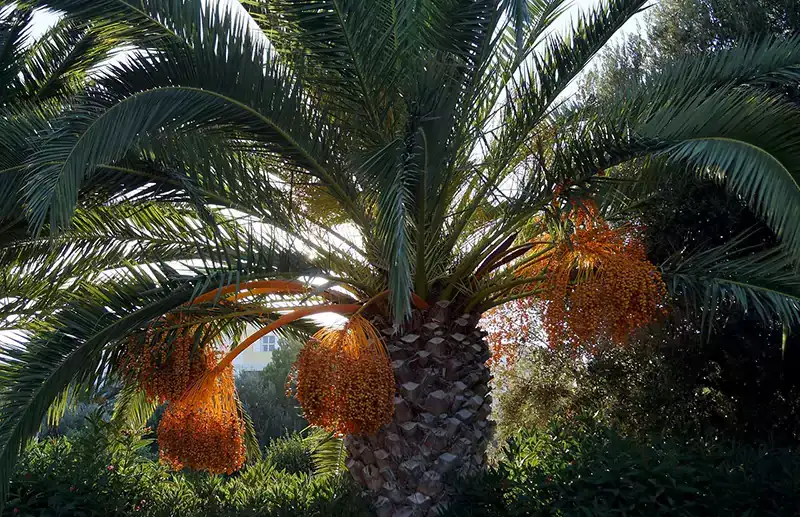
The date palm has a huge structure, making it the most desirable plant outside the multi-million-dollar mansions. This plant not only offers decorative assistance with its large presence but also mouthwatering & heavenly delicious berry-sized fruit, known as dates. Consider the table below for basic but crucial information regarding the date trees.
| Common Name | Date Palm |
| Botanical Name | Phoenix dactylifera |
| Family | Arecaceae |
| Plant Type | Tree |
| Mature Size | 50–80 ft. tall, 20–40 ft. wide |
| Sun Exposure | Full Sun |
| Soil Type | Sandy, loamy, well-drained soil required |
| Soil PH | Acidic, neutral, & alkaline |
| Bloom Time | Spring |
| Hardiness Zones | 8–11 (USDA) |
| Native Area (where do dates grow?) | Africa, Asia |
Let’s move further and learn how to grow and take good care of the dates.
Also Read: Best 25 Winter Plants to Maintain Your Garden Aesthetics in Cold
Which Climate Is Best for Date Palms?
Date trees only thrive in hot and arid climates where the summer days aren’t just long but scorching as well. To be precise, the ideal climate is 85–105 °F or 29–40 °C. Additionally, the palm prefers low humidity and minimum rain during the ripening time. So, if your climate is anywhere near these conditions, you can plant a date palm in your locality or area; otherwise, there is no chance your date tree is going to survive for a bright future.
How Do I Plant Date Palms the Right Way?
If you ask, “Where do dates grow?”, date palms are typically found in African and Asian regions, thanks to the favorable climate conditions.
| So, the first aspect of the right planting technique is to find out if your locality fulfills this climate criterion or not. Furthermore, the best time to plant a date palm is early spring or fall, which is the best time of the year, as per the root activation. |
There are two ways of growing date trees, such as:
- Growing dates from seeds.
- Planting a date palm via offshoots.
The following sections elaborate on these points in detail.
1. How to Grow Dates from Seeds?
Here, I am going to tell you how to grow date palms from seeds. So, if you have some date pits, you can put them to good use. The process only involves key actions such as removing, rinsing, soaking, germinating, and transplanting!
- Removing: Peel the fruit away from the dates and collect all the pits. You might want to wear gloves to keep your nails clean, as this can become a messy task, especially with fresh dates (not the dried ones).
- Rinsing: Wash the date seeds clearly before proceeding to the soaking part.
- Soaking: Once rinsed, soak the date pits in fresh and uncontaminated water for at least 48 hours. It allows the hard shells to soften and makes it easier for the unmanifested plants to sprout out faster.
- Germinating: Next, there comes the germinating task. To help the soaked pits germinate faster, wrap them in wet paper towels before placing each wrap in a Ziploc bag. After 6–8 weeks, you will see sprouts coming out. However, don’t forget to check the moisture level in the towel every now and then. And, if necessary, replace the dry towel with a freshly moist one.
- Transplanting: Once sprouts have developed, take them out of the bag and plant each sprouted pit into a container with fast-draining cactus or palm soil. Take the pit and just place it inside the soil in such a way that it can peep out and isn’t deeply buried, as the latter would kill the young seedlings.
After the 5th step, once each seedling has converted into a better-established plant, it is time to transplant it into the ground outside under the open sky for complete growth. That is how to grow a date palm from a seed.
2. How to Plant a Date Palm from Offshoots?
It is very easy to learn how to grow a date palm from offshoots without date pits. The process involves, in brief:
- Separating an offshoot.
- Planting the offshoot.
- Keeping soil moist.
- Caring for the plant.
That is pretty simple. The steps are explained below, as the way I personally go through each one!
- Identification: Offshoots grow at the base of a date palm tree trunk. So, the first action that I take is to identify a healthy kid growing out of my mama date tree!
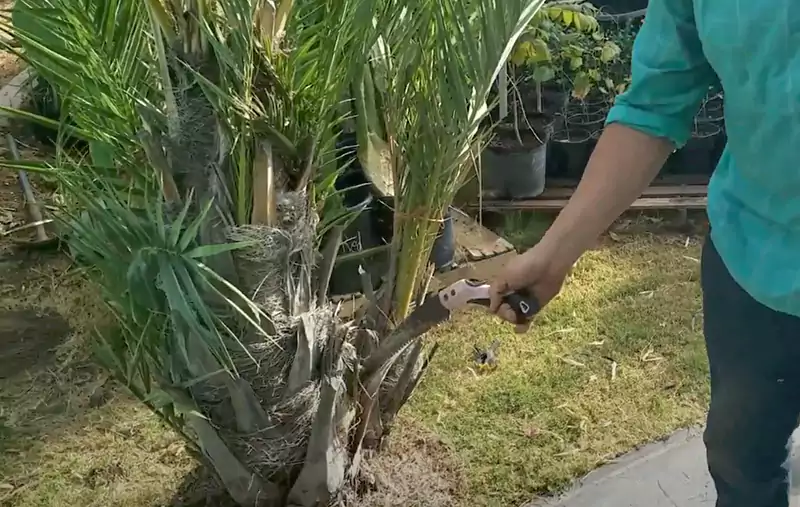
- Separation: The second step is to separate the offshoot from the parent date palm carefully with the help of a sharp cutter or a working saw. You want to take with you as many roots as possible. That is the most crucial aspect that I never miss out on personally.
Difference of Opinion: Many people like to carry out this separation step by hand because they like to spend extended hours on end in the garden. I also love to spend time in the garden, but not when I have a means to speed up the work and boost productivity! 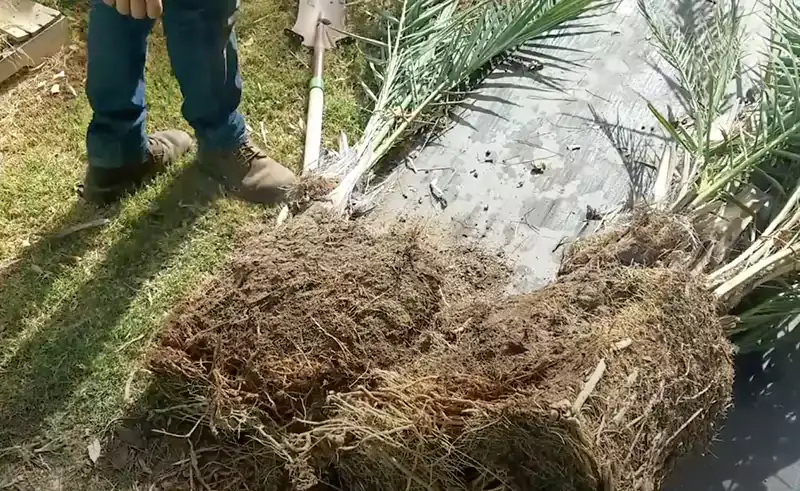
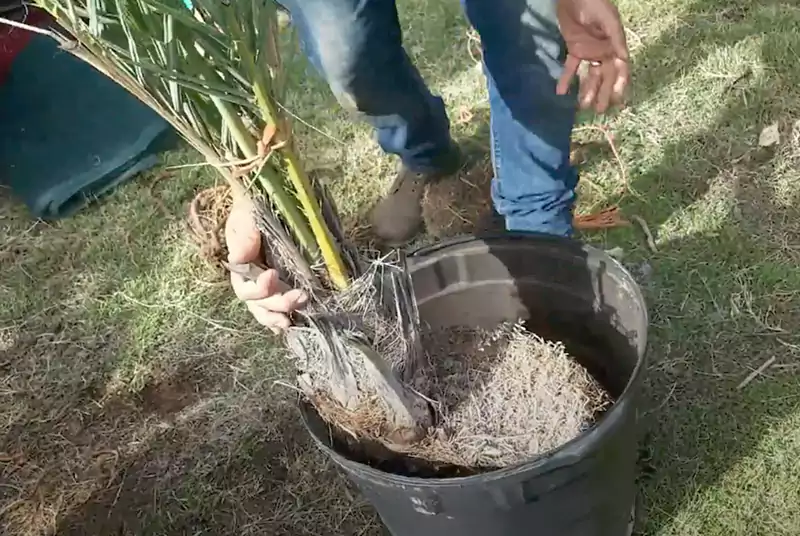
- Planting: Once the offshoot has been carefully severed or detached, it is time to take it to a well-accommodating container. I always prefer taking a biodegradable pot so that it can be directly transferred to the ground soil without removal when the offshoot becomes pretty established and needs to be transferred to the ground to allow it to grow to the fullest.
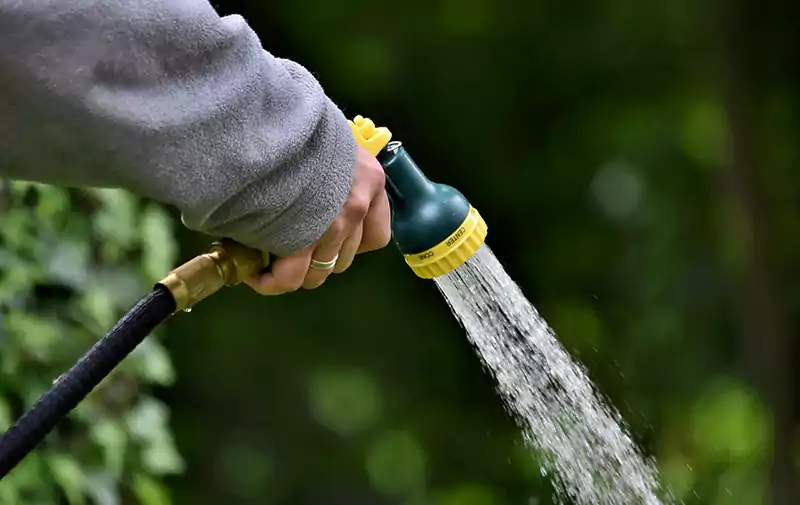
- Moisture: Now, at this stage, I add a sufficient amount of water so that the soil gets evenly moist. Make sure that the pot/container provides an effective drainage hole at the bottom. Otherwise, it will become soggy, inhibiting the proper growth of the young date palm.
- Care: Finally, ensure that the shoot gets full sunlight with regular soil moisture and protection from harsh weather conditions. Until it has been transferred to the ground, you will have to be extra careful. For example, when it is raining torrentially outside, never forget the pot outside, as it can lead to excessive water retention and rotting problems.
That is how another date palm can be grown out of the parent, well-established palm tree! If you are planning to elevate your curb appeal, consider growing tall flowers around the fully-grown palm trees for added attractiveness.
Note: When transferring a potted date palm to the ground, make sure that you dig a hole wide and deep enough to accommodate all the root network well. Next, always plant date palms on the ground, normally 8 to 10 meters (26 to 33 feet) apart for the uninterrupted growth of the canopy.
Also Read: Gladiolus Flower: Symbolism, Types, and Care Guide for the Vibrant Sword Lily
How Do I Care for a Date Palm So It Actually Fruits?
The best care I provide to my date trees is simple: ensure all the essentials, and you are bound to get plenty of dates in the harvest season.
| In short, my care practices involve the right techniques related to pruning, potting, winter protection, transferring, watering, sunlight, soil, humidity, fertilizing, and pollination. |
- Pruning: When I grow a date palm tree from an offshoot, I make sure that no damaged or diseased fronds are carried forward. And, extra and detached roots are removed carefully before potting.
Next, once the plant has been transferred to the ground and it has grown to the fullest, I always remove suckers or offshoots, if any, so I don’t want to use them for another generation of date trees. This helps the established tree focus only on providing essential nutrients to its parts: trunk, leaves, and—most importantly, delicious date fruits.
- Potting: Always choose a container that is large enough to accommodate the roots of an offshoot and is also equipped with proper bottom drainage points, i.e., holes on the bottom. The same also follows when planting a date palm from a sprouted pit.
- Winter Protection: During the potted growth, it is important to take special care on particularly cold winter days. I bring the young date palms and Sedum plant indoors and provide a controlled temperature for optimal growth. However, there is no need to worry when the days become persistently colder than the young date palms are supposed to tolerate!
- Transferring (or moving): Only move your sprouted pits outdoors from the pots when they have grown up to the point of hard leaves and strong roots. The early spring or fall is the best time for fastest acclimatization and optimal root activation after transfer.
- Watering: I stick to a very simple watering plan. In summer, I keep it to every two weeks, while it is once a month in winter. However, the quantity differs as per the size of the date palm, spoil type, weather conditions, etc. Always provide deep watering, as it is a giant elephant in the Kingdom Plantae.
- Sunlight: I always transfer a potted date palm to a site where full and direct sunlight is available, at least 6 to 8 hours! It is very important for full growth and abundant production during the harvesting season.
- Soil: Being a gardener, I always put great emphasis on the selection of the right quality of soil. Date palms always need a well-draining soil on top of everything! It doesn’t matter if the soil is sandy or even slightly acidic.
- Humidity: Date trees prefer hot, dry, and sunny conditions with low humidity so that they can produce the maximum harvest. The ideal climate condition is 85–105 °F or 29–40 °C. So, make sure that you only grow your plant in a region, keeping in mind the USDA hardiness zone of 8 to 11.
- Fertilizing: I always provide my young potted as well as outdoor-established date plants with quality manure, the best organic fertilizer. However, if you want to, you can also use commercial fertilizers.
- Pollination: If you are planning to grow a big colony of palms, pollination strategy also matters: the more date trees, the higher the number of fruit of the date palm! So, always keep the ratio of 1 male:6 females in your garden for effective pollination.
As it has been mentioned, the best time to grow a date plant or transfer a young one to the appropriate ground is in early spring or even fall. Thus, in that case, if feasible, you can also consider planting fall flowers in your garden to make it look attractive even at the bottom.
What are the Best Types of Date Palms?
There are more than one type of date palm species. The most popular ones, namely, are Barhi, Deglet Noor, Fard, and Dayri. Learn about their produce below.
- Barhi: The fruit can be eaten right from the tree tops.
- Deglet Noor: This tree provides the honey-like, golden produce!
- Fard: This is the species that provides us with the dark brown dates, which are easily available in the market.
- Dayri: Here, the fruit is long in appearance, and dates change color from red to brown to ultimately black over time.
Note: The barhi species here doesn’t just handle the humidity better but also fruits earlier. Early harvest means benefiting from the high-demand & low-supply situation in the marketplace.
Are Date Palms and Palm Trees the Same Thing?
No, they are not the same. A date palm is a specific variety of palm tree, which provides the fruit of dates to the world, while other palm trees don’t produce dates. In other words, the “Palm Tree” phrase refers to a large tree family, scientifically known as Arecaceae, under which “Date Palm” is a specific species or variety that is known to produce the fruit of dates.
Also Read: 20+ Mexican Flowers: Explore the Culture and Floral Heritage of Mexico
When Will My Date Palm Start Producing Fruit?
| Most of my trees started to produce fruit within 3 to 10 years, depending on several factors, such as species, soil quality, climate conditions, etc. |
Whether you have grown a tree from an offshoot or a seed is also a key consideration, as it directly affects the juvenile period (the time a date palm tree takes to produce fruit). Much like planning for a Coreopsis Flower, this period varies from one variety to another. The most popular date palm species, as mentioned above, are discussed below.
| Species | Juvenile Period | |
| Seed Germination | Offshoot Propagation | |
| 1. Barhi | 7 to 9 Years | 3 to 4 Years |
| 2. Deglet Noor | 7 to 10 Years | 4 to 5 Years |
| 3. Fard | 7 to 8 Years | 3 to 4 Years |
| 4. Dayri | 4 to 8 Years | 3 to 4 Years |
Which Diseases Are Common in Date Trees & How to Prevent Them?
| Most commonly, date-producing palm trees suffer from Bayoud, Red Palm Weevil, Black Scorch, Fruit Rot, Shot Holes, and Leaf Spot Diseases. However, these can be easily prevented with the help of proper sanitation, tool sterilization used for pruning, eliminating instances of waterlogging, and pest control services. |
Consider the following table, listing common diseases with symptoms and prevention.
| S. No. | Common Disease | Image | Symptoms | Prevention |
| 1. | Bayoud | 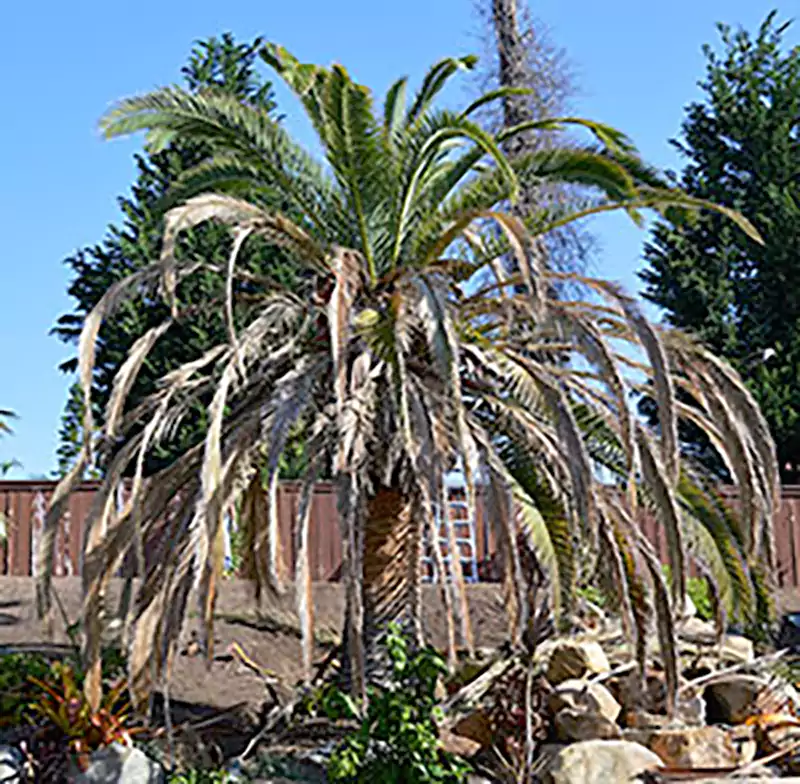 | -Yellowing/browning of older leaves – Progressive drying – Wilting leaves | – Use resistant varieties. – Disinfect pruning tools with alcohol. – Remove and burn infected leaves and parts. – Use beneficial fungi in the soil, like AMF (Arbuscular Mycorrhizal). |
| 2. | Red Palm Weevil | 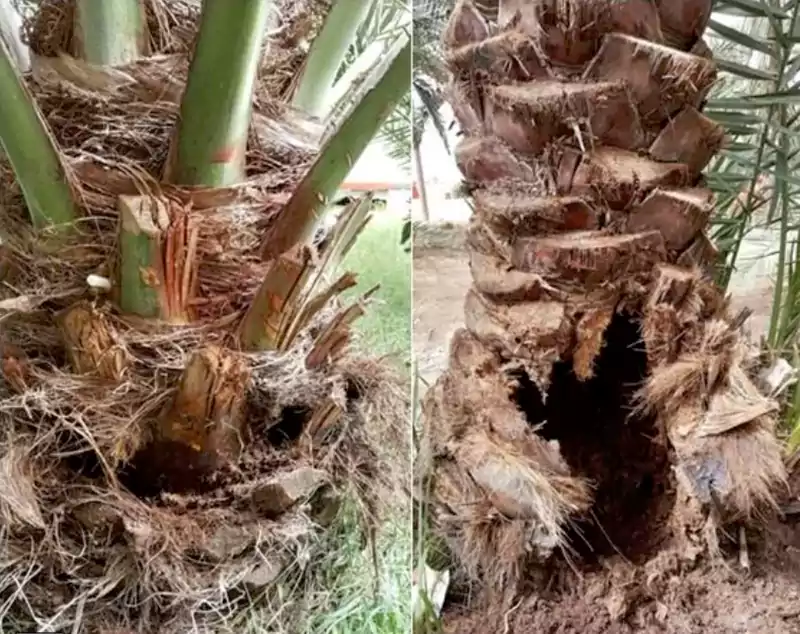 | – Small circular holes on the truck – Chewed fibers – Lopsided or uneven crown growth | – Avoid unnecessary cutting. – Cover fresh cuts quickly after cutting. – Remove dead fronds and offshoots. – Use insecticides with professional help. |
| 3. | Black Scorch | 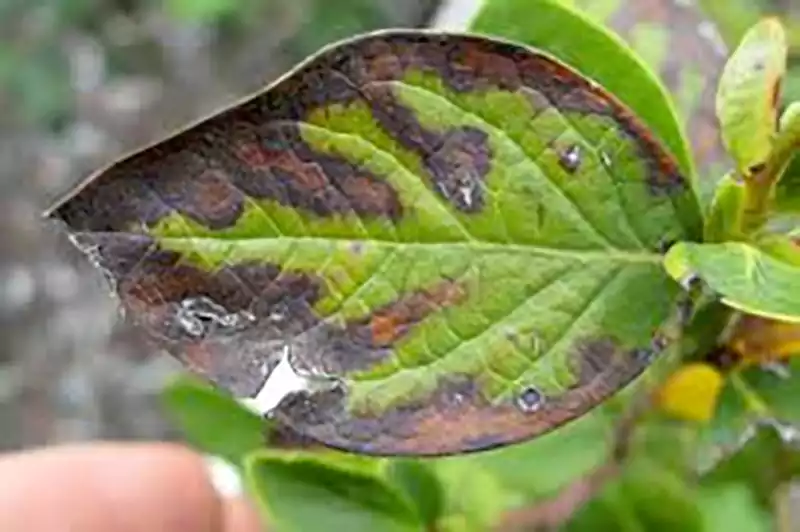 | – Dark spots on leaves – Browning and blackening of the trunk – Sudden decline or death | – Disinfect pruning tools. – Avoid unnecessary cutting or covering fresh cuts with sulfur powder. – Follow good irrigation and fertilization rules. |
| 4. | Fruit Rot | 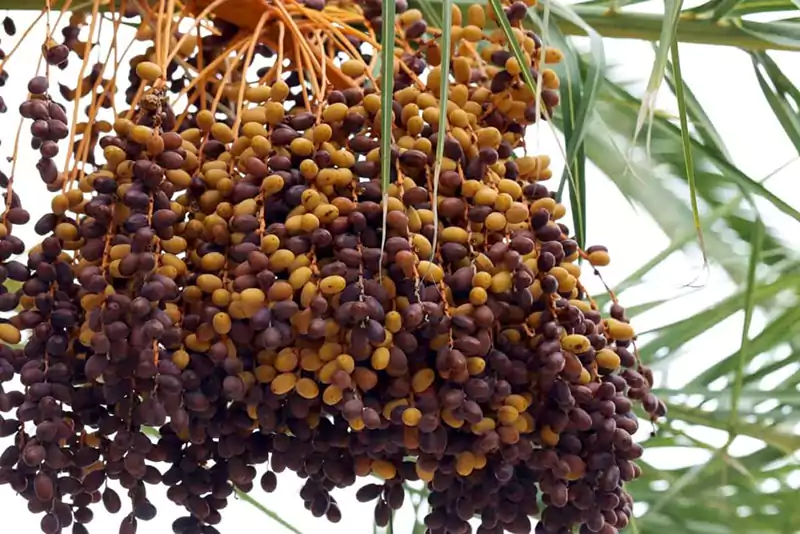 | – Dark, soft lesions on fruit surfaces – Internal fruit decay – Foul odor from the fruit interior, like rotting | – Use a resistant variety. – Apply fungicide sprays. – Remove infected parts in early stages and burn them all. |
| 5. | Shot Holes | 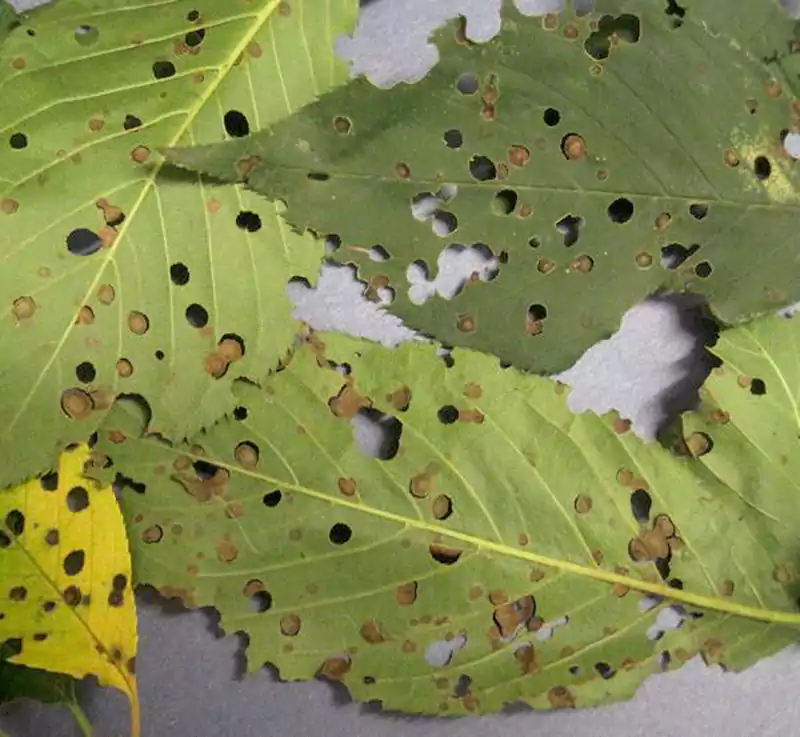 | – Reddish spots on new leaves – Such spots on leaves grow over time before becoming holes, also called shot holes – Finally, leaves drop to the ground heavily | – Provide enough water regularly. – Pay attention to fertilizing and manure to prevent malnutrition. – Prune the canopy properly to let the air flow in abundance. |
| 6. | Leaf Spots | 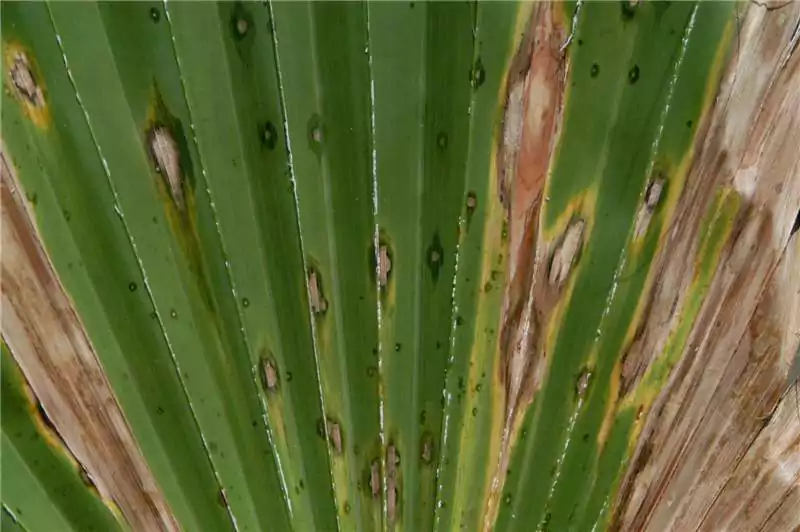 | – Tiny leaf spots – Water-soaked lesions – Black dots | – Avoid watering the canopy. – Maintain enough air flow in the canopy with mindful pruning – Ensure essentials like manure, water, sun, winter protection, etc., especially for the young potted date tree. |
Also Read: 25 Best Hummingbird Flowers: Trumpet Vine, Beardtongue, Lantana and More
Wrapping Up
- The date palm is a type of palm tree, which is known for producing the mouth-watering date fruit.
- This palm tree species has a wide variety and often thrives in hot and arid climates with temperatures varying between 85°F and 105°F or 29°C and 40°C.
- Date-producing palms just don’t survive harsh winter conditions. Typically, they require a USDA hardiness zone of 8–11, as these trees are native to Africa and Asia.
- Under controlled environments, many species can be grown with intensive care, producing disease-free dates. However, the option comes with a high production cost.
FAQs
Are date pits edible?
How long will it take me to grow Medjool dates?
It will approximately take 4 to 8 years when growing from an offshoot and over 10 years with the seed germination method.
Can I grow date trees indoors?
Yes, smaller and ornamental varieties can be grown indoors.
What is a date palm tree used for?
Its trunk is used as timber. The midribs are often used for basketry, hand-made crafts, or simply as a fuel. And, ultimately, fruits are sold in the market for the end-users or businesses for further processing.
Can I eat date fruit every day?
Yes, as they are rich in essential nutrients, thus making themselves the perfect snack to binge on every day.
Latest Blog