Pumpkin fruit typically takes around 3 to 4 months or 90 to 120 days to mature.
Pumpkin Plant Guide: Taxonomy, Ideal Growing Conditions, Care Tips, Growing Process & Much More
Author
Annette HirdLast Update
September 30, 2026
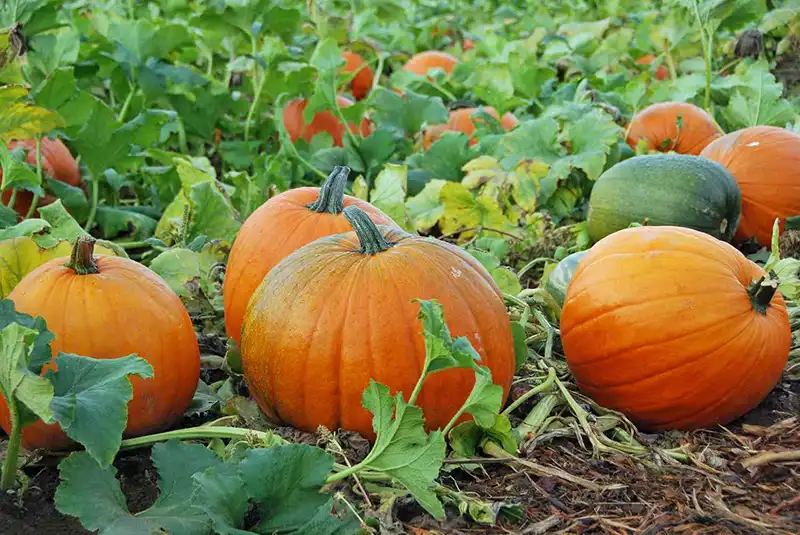
Pumpkins are a versatile annual crop that is full of nutrients and is also popularly used for decorations. It is also known as pollinator-friendly because pumpkins cannot pollinate on their own; they require pollinators like bees and butterflies that carry sticky pollen from the male blossoms to the female blossoms. Without this process, the unpollinated female flowers turn yellow and close up.
Pumpkins are often yellowish to orange in colour and have woody, hard, ridged, and angled stems. The fruit matures in early autumn and can be stored for months under the right conditions.
Read the article to learn more about the pumpkin plant growing procedure, care tips, taxonomy, ideal growing conditions, and much more.
Table of Contents:
How to Plant Pumpkins?
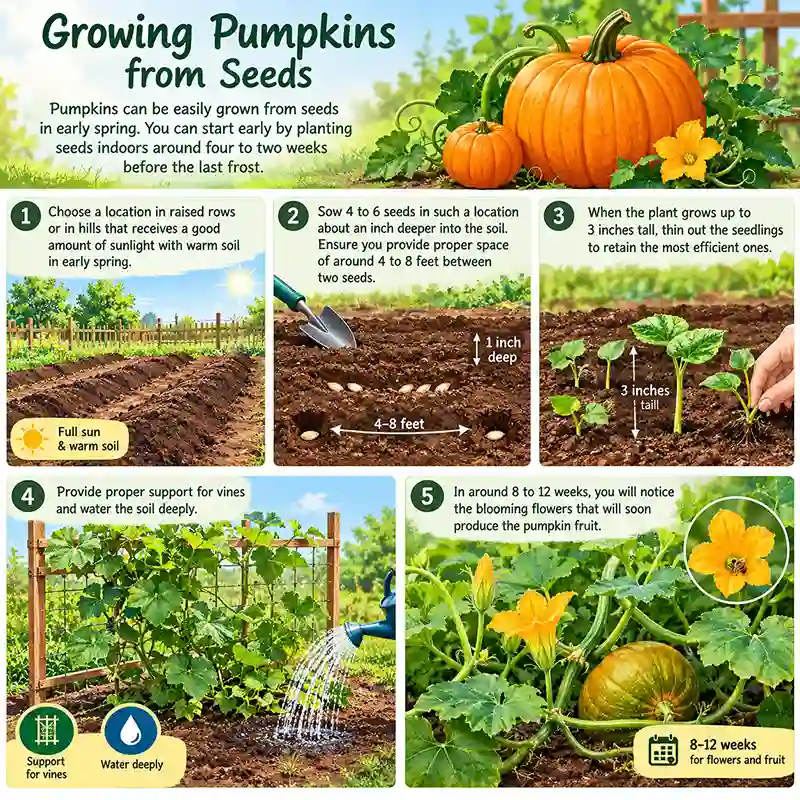
Pumpkins can be easily grown from seeds in early spring. You can start early by planting seeds indoors around four to two weeks before the last frost. Here are the steps involved in planting pumpkins using seeds.
- Choose a location in raised rows or in hills that receives a good amount of sunlight with warm soil in early spring.
- Sow 4 to 6 seeds in such a location about an inch deep in the soil. Ensure you provide proper space of around 4 to 8 feet between two seeds.
- When the plant grows up to 3 inches tall, thin out the seedlings to retain the most efficient ones.
- Provide proper support for vines and water the soil deeply.
- In around 8 to 12 weeks, you will notice the blooming flowers that will soon produce the pumpkin fruit.
When To Harvest Pumpkins?
Pumpkins take a long season to grow. The fruit matures in around 90 to 120 days. To harvest your pumpkin fruit, wait until the colour is uniform and the shell does not dent when pressed with a fingernail. At this point, the vine starts to dry out and shrivel. That is the peak time to harvest pumpkin.
Quick tip
Take a piece of wooden board and place it under the pumpkin. This will prevent it from rotting while it matures.
Did you know?
Pumpkin seeds, pulp, and rind (skin) are rich in vitamins, minerals, dietary fiber, and phytochemicals.
Read more: Watermelon Plant Guide: Care Tips, Growing Steps, Health Benefits, & Much More
Pumpkin Plant Taxonomy and Ideal Growing Conditions
Pumpkin belongs to the Cucurbitaceae family and is native to the southern United States and North America. The plant is heat- and drought-tolerant and requires low maintenance. It thrives under full sun and needs soil with slightly acidic pH levels. This non-toxic fruit typically blooms in bright orange and yellow flowers about 8 to 12 weeks after planting, roughly around mid-summer.
Have a glance at the table below for a quick taxonomic overview and ideal growing conditions of pumpkin vines:
| Botanical name | Cucurbita pepo |
| Common name | Pumpkin, kaddu, calabaza, winter or autumn squash |
| Kingdom | Plantae |
| Order | Cucurbitales |
| Family | Cucurbitaceae (Gourd family) |
| Genus | Cucurbita |
| Native area | Southern United States, North America, specifically Northeastern Mexico |
| Season of interest | Spring to autumn |
| Hardiness | 3 to 10 USDA Zones |
| Light Requirements | Full sunlight |
| Maintenance | Low |
| Type | Annual vine |
| Flower colour | Yellow and orange |
| Soil | Well-drained, aerated soil with a slightly acidic pH level above 5.5. The ideal pH level is between 6 and 7.5. |
| Water Requirements | Moderate |
| Mature size | 4 to 8 kg or more, depending on the variety |
| Fertilizers | Balanced fertiliser |
| Toxicity | Non-toxic for humans and pets |
| Tolerant | Heat and moderate drought conditions |
Did you know?
- The largest pumpkin variety is C. maxima, which weighs around 34 kg or 75 pounds.
- The most massive pumpkins ever grown have exceeded 1278 kg, or 2817 pounds.
Read more: Ground Cherry Plant Growing Guide: Care, Harvest and Uses
Essential Pumpkin Vine Care Tips
One of the essential parts of growing pumpkins is to choose the correct location, soil, and water it appropriately. It is also important to store them properly to prevent them from rotting. Here are some of the essential care tips that I follow before and after planting pumpkins:
- Choose a location with full sunlight for at least 6 hours a day.
- Try to slightly turn the pumpkins once a week to keep their growth symmetrical. Make sure that you do it very gently.
- Go for a location that has rich, loam, well-drained soil with slightly acidic pH levels between 6 and 7. You can add organic compost or peat moss to the soil.
- Water the vines once a week to keep the soil moist, especially when the plant is blooming and setting fruit. It is recommended to use the drip irrigation method. Avoid overhead watering.
- Since pumpkins are heavy feeders, use high nitrogen fertiliser when the plant is around 1 foot tall to support foliage growth. Later, switch to high phosphorus and potassium fertiliser to support fruit development.
- To store the pumpkins, ensure that they are mature and fully yellow. Store them in a cool, dry, and dark place. Immature pumpkins can rot if you try storing them.
- To store pumpkin seeds, remove the pulp and wash the seeds. Place them out in the sun to dry properly for a day or two. Once they are fully dried, store them in a paper bag, envelope, or an airtight container. You can either roast them and eat them or save them for planting next season.
Did you know?
Pumpkin fruit is widely used for Halloween decoration in some places. It is known as a jack-o’-lantern, where the interior of the pumpkin is scraped, and a light is inserted to make it shine. The specific variety chosen for this is C. pepo, or the common field pumpkin.
Read more: How to Grow Romaine Lettuce, Its Care Tips, Taxonomy, Pests and Problems Associated, & Much More
Pests and Problems Associated With Pumpkin Plants
Pumpkins are prone to attracting many pests and problems. Below is the complete list of pests and problems associated with pumpkin plants, along with the solutions:
| Pests and problems | Solution |
| Bugs and beetles | Bugs often attack young plants, causing them to wilt and die. You can hand-pick them or their eggs if you witness them. Beetles eat the leaves and make holes in them, causing them to turn yellow and wilt. By using row covers and hand-picking them, you can get rid of beetles. |
| Powdery mildew | It is the most common disease of pumpkins caused by fungal spores in the soil. It is very difficult to get rid of it. |
| Anthracnose | It is a fungal disease that causes dark, sunken lesions on the leaves and also affects the fruit. To get rid of it, remove any damaged plant parts and keep the ground free of debris. Tip: Avoid planting pumpkins in the same locations for two to three years. |
Read more: How to Grow Dragon Fruit? Learn to Grow this Unique Tropical Fruit
Best and Worst Pumpkin Vine Companions
Companion planting is an organic way of preventing pests and diseases from attacking your plant, attracting pollinators, enhancing nutrient uptake, and increasing crop production.
Some of the best pumpkin companions include dill, borage, sunflowers, lovage, chamomile, oregano, green beans, peas, spinach, rutabaga, corn, marigold, and nasturtium. These herbs, vegetables, and flowering plants add nutrients to the soil, help remove pests and diseases, and attract beneficial insects and pollinators.
The worst companions are generally those that are from the same family, as they take away all the nutrients from the soil and are also prone to attract similar pests and diseases. Some of the worst companions for pumpkin plants are fennel, sweet potato, potato, cucumber, and gourd.
Read more: When to Prune Fruit Trees? Best Pruning Tips With Common Queries and Solutions
Takeaways
The pumpkin plant is an annual, slow-growing vine that takes around 90 to 120 days to mature. Its fruit is used widely to make different curries, soups, veggies, and is also used as a decoration. The fruit is rich in vitamins and minerals, and almost every part of the plant is edible, including seeds that are rich in calcium.
Pumpkin vines might require your little attention to stay protected from pests and diseases, but you can get rid of this responsibility by pairing them with the most suitable companions like dill, oregano, marigolds, sunflowers, and radish. Make sure that you do not plant them with plants belonging to the same family.
Store them in a cool, dry place and enjoy them even when the season is over.
Happy planting and harvesting!
FAQs
How long do pumpkins take to grow?
How can I grow pumpkins?
You can grow pumpkins easily using pumpkin seeds.
When do you plant pumpkins?
The best time to plant pumpkin seeds is in spring, or you can start early indoors.
When to pick pumpkins?
The best time to pick pumpkins is when the vine dies back, the stem turns hard and woody, and the fruit skin becomes tough.
Are Pumpkins Fruit?
Yes, pumpkins are considered to be fruit among certain varieties of squash.
Sources
Pumpkin: Britannica
Latest Blog