You can plant romaine lettuce by using seeds in cool weather, under direct sunlight for 6 to 8 hours a day.
How to Grow Romaine Lettuce, Its Care Tips, Taxonomy, Pests and Problems Associated, & Much More
Author
Annette HirdLast Update
September 17, 2026
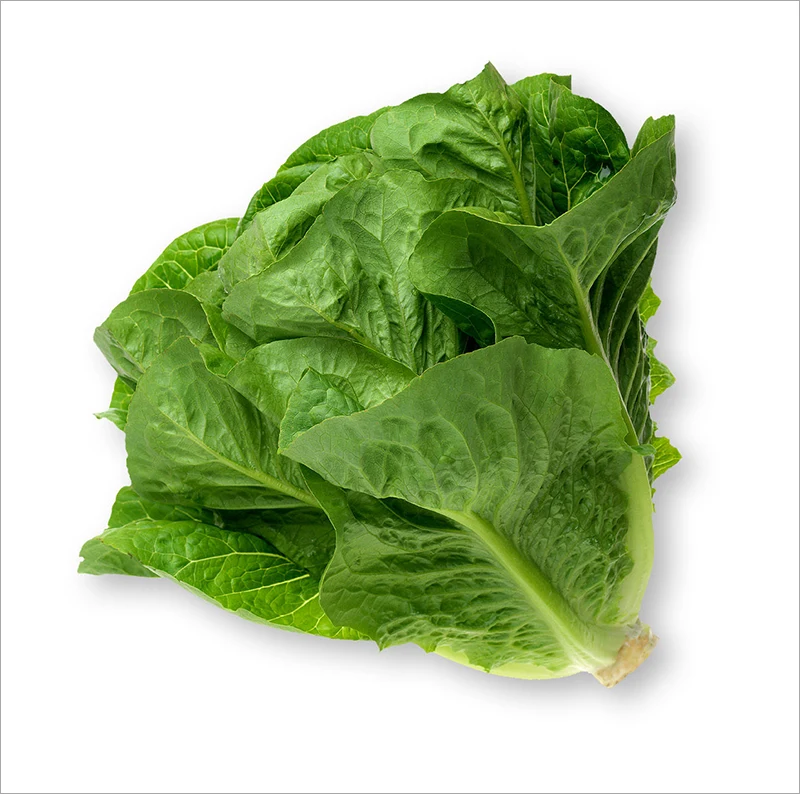
Romaine lettuce, or cos lettuce, is a popular variety of garden lettuce that is widely used to make raw salads. This cool-season annual completes its life cycle in a single growing season and is usually harvested before the hot weather arrives.
This low-maintenance, beginner-friendly crop thrives in containers and small kitchen gardens and also does not require your regular attention. Read the article to learn how to grow romaine lettuce, its taxonomy, benefits, pests and problems associated with it, and much more.
Table of Contents:
How to Grow Romaine Lettuce?
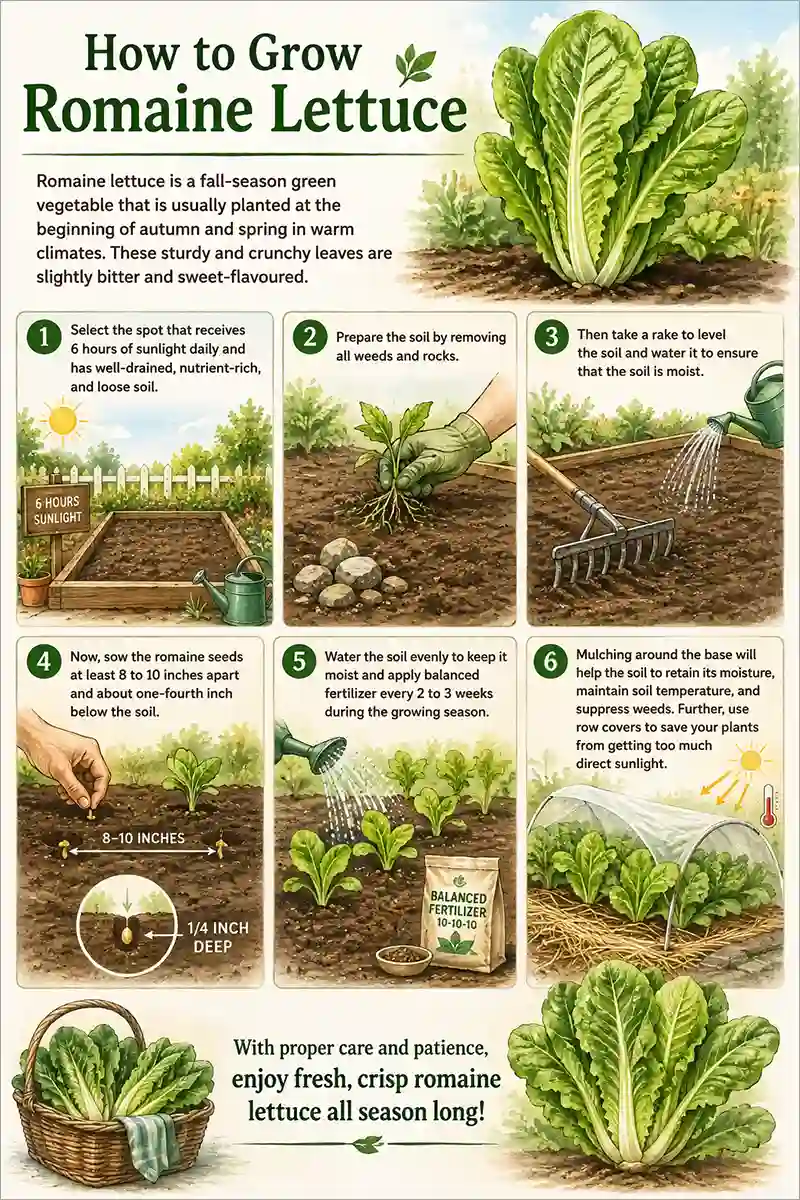
Romaine lettuce is a fall-season green vegetable that is usually planted at the beginning of autumn and spring in warm climates. These sturdy and crunchy leaves are slightly bitter and sweet-flavoured. Here is how to grow romaine lettuce:
- Select the spot that receives 6 hours of sunlight daily and has well-drained, nutrient-rich, and loose soil.
- Prepare the soil by removing all weeds and rocks.
- Then take a rake to level the soil and water it to ensure that the soil is moist.
- Now, sow the romaine seeds at least 8 to 10 inches apart and about one-fourth inch below the soil.
- Water the soil evenly to keep it moist and apply balanced fertilizer every 2 to 3 weeks during the growing season.
- Mulching around the base will help the soil to retain its moisture, maintain soil temperature, and suppress weeds. Further, use row covers to save your plants from getting too much direct sunlight.
Quick tips
- Consider planting companion plants like chives and garlic between your lettuce plants to control pests.
- Sow additional seeds every 3 weeks for continuous harvest.
How to Regrow Romaine Lettuce
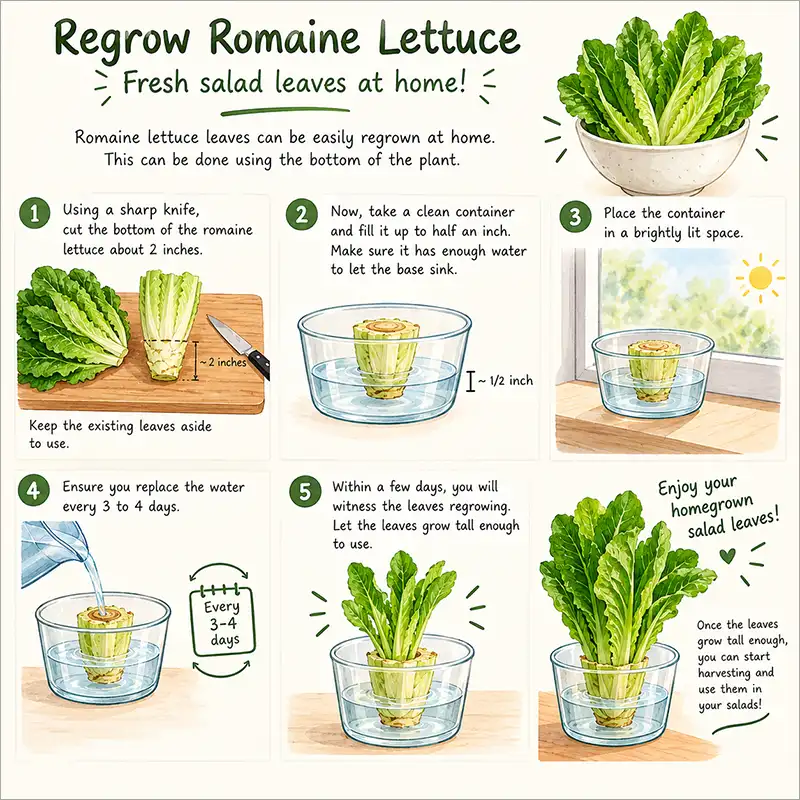
Romaine lettuce leaves can be easily regrown at home. This can be done using the bottom of the plant. Follow the following steps to grow your own salad leaves at home:
- Using a sharp knife, cut the bottom of the romaine lettuce about 2 inches. Keep the existing leaves aside to use.
- Now, take a clean container and fill it up to half an inch. Make sure it has enough water to let the base sink.
- Place the container in a brightly lit space.
- Ensure you replace the water every 3 to 4 days.
- Within a few days, you will witness the leaves regrowing. Let the leaves grow tall enough to use.
Harvesting and Storing Romaine Lettuce
The best time to harvest lettuce is in the morning when the leaves are full-size, tender, and young. Try to harvest the leaves when they are tender because as they grow older, the taste gets bitter and woody. Keep harvesting outer layers before they mature so that the centre leaves keep growing.
Tip
Use a sharp knife to harvest the lettuce leaves.
To store the leaves, use a loose plastic bag, place the dried leaves in it, and place it into the refrigerator for up to 10 days. Make sure that no leaves are wet with water.
Did you know?
Romaine lettuce is around 90 per cent water and is known to be one of the most nutritious among all the varieties. Other nutritious varieties are butterhead, red leaf, and green leaf.
Read more: 15 Beautiful Hawaiian Flowers and Their Unique Features
Romaine Lettuce Taxonomy and Ideal Growing Conditions
Romaine lettuce belongs to the Asteraceae family and is native to the Mediterranean region and the Middle East. It thrives best under full sunlight, requires loamy and sandy soil with acidic pH levels, and moderate watering. For more general information, here is the taxonomic overview and ideal growing conditions of the plant:
| Botanical name | Lactuca sativa ssp. longifolia |
| Common names | Romaine lettuce, cos lettuce |
| Kingdom | Plantae |
| Order | Asterales (Daisy and sunflower order) |
| Family | Asteraceae (Daisy, aster, or sunflower family) |
| Genus | Lactuca (lettuce genus) |
| Species | L. sativa (garden lettuce) |
| Native area | Mediterranean region and Middle East |
| Season of interest | Spring, winter, and fall |
| Hardiness | 2 to 11 USDA Zones |
| Light Requirements | Full sunlight for 6 to 8 hours daily |
| Maintenance | Low |
| Type | Annual |
| Soil | Rich, loose, and well-drained loamy or sandy soil with slightly acidic pH levels between 6.0 and 6.5 |
| Water Requirements | Moderate |
| Mature size | 12 to 20 inches tall and 6 to 12 inches wide |
| Tolerant | More heat tolerant than other varieties of lettuce |
| Fertilizers | Heavy feeder; use balanced, nitrogen-leaning fertiliser every 2 to 3 weeks |
| Toxicity | Non-toxic for both pets and humans |
Did you know?
The name longifolia literally translates to long-leaved. This refers to the distinctively shaped leaves of romaine lettuce when compared to round-headed varieties like iceberg or butterhead.
Read more: Growing Plants Indoors, Outdoors, and in Small Spaces
Essential Romaine Lettuce Care Tips
After growing lettuce, it becomes essential to keep an eye on your plant for its healthy growth. Here are some essential care tips that I followed to keep my salad leaves growing healthily:
- Prefer a location that receives direct sunlight.
- Ensure that the soil is loose, well-drained, and nutrient-rich.
- Make sure to water the plant regularly because lettuce does not like its soil to dry out completely.
- Mulch around the plant base to suppress weeds, maintain moisture, and maintain soil temperature.
- Fertilise the soil with balanced nitrogen fertiliser every 3 to 4 weeks.
- Ensure that there is a proper gap between two saplings.
Read more: Ground Cherry Plant Growing Guide: Care, Harvest and Uses
Benefits and Nutritional Value in Romaine Lettuce
Romaine lettuce is a low-calorie, nutritious food that contains multiple vitamins and minerals. These nutrients support the immune system, maintain bone health, help in weight management, and build good tissues in the body. Below is the list of nutrients and their value in 1 cup of raw shredded romaine lettuce:
| Nutrient | Value |
| Calories | 8 |
| Carbohydrates | 1.5 g |
| Fiber | 1 g |
| Protein | 0.6 g |
| Total fat | 0.1 g |
Recipe
I personally love romaine lettuce in my salads. Here is my favourite recipe that takes only 15 to 20 minutes to prepare:
Take different fruits and veggies like romaine lettuce, cherry tomatoes, avocado, bell pepper, onion, olives, and cucumber. Chop them and add olive oil, black pepper, and salt. Now add fresh cream and cheese to it along with a dash of chilli oil. Mix well, and it is ready to eat.
On certain days, I prefer to add tofu to my salad for some extra protein and flavor.
Read more: April Birth Flower Guide: Meaning, Symbolism, Daisy vs Sweet Pea, Best Gift Ideas & Much More
Best and Worst Romaine Lettuce Companions
In order to thrive, the plant grows much more healthily in a good environment that is created by planting fruits, vegetables, herbs, and flowers that share the same kind of surroundings. For romaine lettuce, the best companions are chives, garlic, beetroots, turnips, strawberries, dill, basil, marigolds, carrots, peas, cilantro, radish, mint, eggplant, and onions. These plants help lettuce repel pests like aphids and thrips and also share the same requirements for water, soil, and sunlight.
The worst plants to grow with lettuce are cabbage, broccoli, fennel, kale, and celery, as they belong to the same family and are prone to similar pests and problems. Further, they also compete with lettuce for nutrients and prevent its seeds from germinating.
Pests and Problems Associated With Romaine Lettuce
When paired with the wrong plants, romaine lettuce can attract many pests and problems. Below is a list of pests and problems associated with the romaine lettuce plant, along with their solutions:
| Pests and problems | Solution |
| Aphids and cutworms | These are the most common pests that might attack your plant. Aphids leave sticky honeydew, and cutworms wilt your plant. You can remove them with a strong water spray, or use an organic pesticide like neem oil. Growing the right companion plants helps in reducing the risk of pests on your plant. |
| Earwigs | They make small holes in leaves and stems. You can treat them by creating a trap by placing tuna filled with fish oil and sinking it into the soil. |
| Lettuce mosaic virus | It might occur as green mottling or brown spots in the leaves and can be cured by destroying the infected plants. |
Read more: Rutabaga Guide: Care Tips, Taxonomy, Growing Steps, Ideal Growing Conditions, & Much More!
Takeaways
Romaine lettuce is one of the gardeners’ favourite salad leaves to grow because it is low-maintenance and does not ask for too much attention. The plant thrives in both gardens and containers if provided proper care, such as direct sunlight, regular watering, and rich soil with acidic pH levels.
Next fall or spring, you can try growing your own lettuce at home, which will not only give your garden a beautiful look but will also provide you with 100 per cent of satisfaction in what you are consuming.
Happy planting.
FAQs
How to plant romaine lettuce?
How long does it take romaine lettuce to grow?
Romaine lettuce takes around 50 to 90 days to grow from seeds into a mature, ready-to-harvest plant.
How to regrow lettuce?
Lettuce can be easily regrown at home by placing the leftover stem base in a shallow container of water. Make sure to place it in a sunny spot.
When to plant romaine lettuce?
The best time to plant romaine lettuce seeds is in early spring or late summer.
Is romaine lettuce perennial?
No, romaine lettuce is not a perennial, but it is a cool-season annual.
Sources
Romaine Lettuce: iNaturalist
Latest Blog