Not all, but many patented plants can not be grown for personal or commercial uses. Hence, always check before planting.
How to Grow a Rose Bush From Cuttings?: The Easy Propagating Tips for the Perennial Shrub
Author
Claire DouglasReviewed By
Cody Allison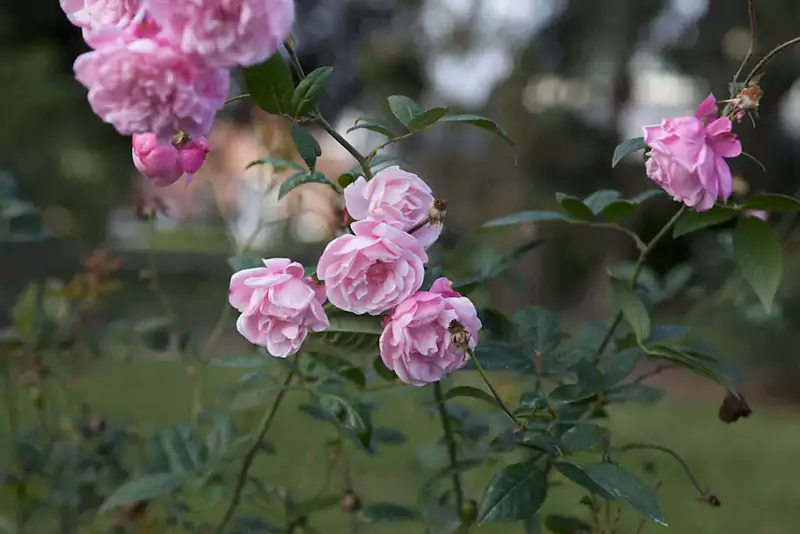
Growing a rose bush is always an interesting gardening project, more so because roses, as a flower, have always been celebrated and associated with beauty and love. Honestly, planting roses also evokes similar feelings, and that makes growing worthwhile for me.
Learning how to grow a rose bush from cuttings has helped me add the vibrance and fragrance of this perennial flower to my garden, which I also use for other decorative purposes.
Additionally, these shrubs are extremely low-maintenance, pet-friendly and fragrant, which is a cherry on top.
Dive in as this immersive exploration of the planting and care guide is all you need to grow a rose bush at home.
Table of Contents:
- What is a Rose Bush? A Perennial Flowering Shrub
- What are the Ideal Growing Conditions to Grow a Rose Bush?
- How to Grow a Rose Bush From Cuttings?
- How to Care for the Rose Cutting Plants?
- Why are Rose Cuttings Better than Seed Planting?
- Rose Flower Benefits: Scientific Research and Findings
- Interesting Facts About the Rose Bushes
- Concluding Remarks
- FAQs
What is a Rose Bush? A Perennial Flowering Shrub
Part of the Rosaceae family, the rose is a perennial deciduous plant shrub native to Asia(most varieties) that flowers in vibrant colours of white, pink, and red all year long.
Mostly grown for their ornamental value and cuttings, like the Baby breath flowers, roses also make for an elegant garden walkway or border plants.
Along with being a beautiful and hardy spring-flowering shrub, the rose can also be grown in the form of climbing vines and small container plants, which makes it versatile for all sorts of landscaping styles.
If roses have not entered your gardens yet, come along as I explore the low-effort guide of how to grow a rose bush from cuttings, with more interesting insights, but before that, have a look at the taxonomy of roses for a better start.
 | |
| Botanical name | Rosa |
| Kingdom | Plantae |
| Division | Magnoliophyta |
| Class | Magnoliopsida |
| Order | Rosales |
| Family | Rosaceae Juss. |
| Genus | Rosa L. |
What are the Ideal Growing Conditions to Grow a Rose Bush?
The best way to grow a rose is by using the rose bush cuttings, same as the bleeding heart plant. It is way more reliable and faster than seeds, which can be a tedious process. Although growing the rose bush from a cutting is easy, here are the ideal growing requirements for the best results:
| Sunlight | 6 hours of direct sunlight, some varieties need afternoon shade. ( Indirect sunlight initially) |
| Soil Type | Well-draining loamy soil pH- 6.0- 7.0 |
| Water requirements | 1-2 times weekly |
| Planting time | Early spring |
| Fertiliser | 10-10-10 all-purpose balanced fertiliser (heavy feeders) |
How to Grow a Rose Bush From Cuttings?
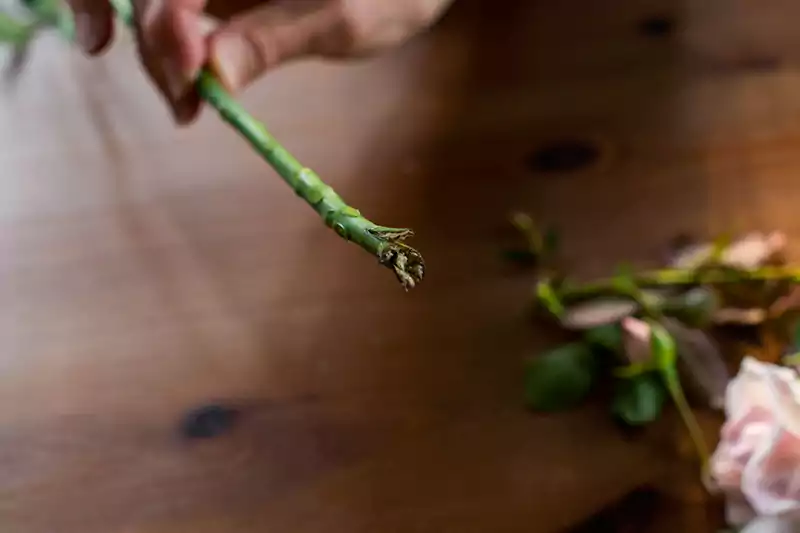
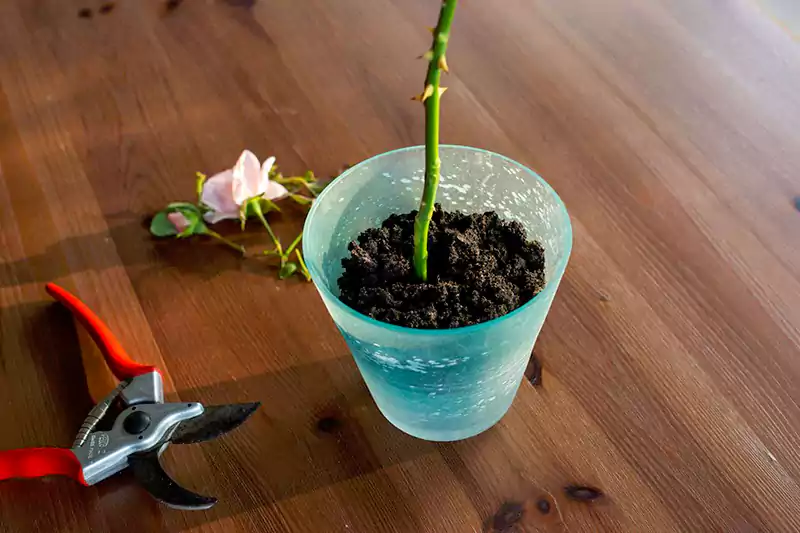
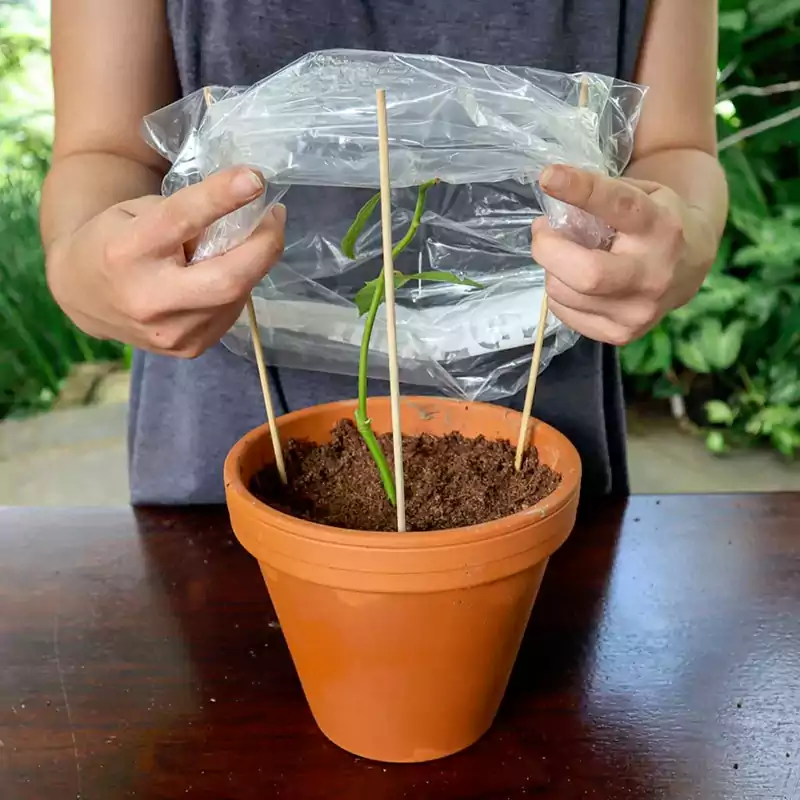
Growing a rose bush from a cutting should start indoors first and then be transplanted outdoors later. I personally think this gives me better control over the plant and works better than planting outdoors directly.
Here is a step-by-step guide on how to grow cuttings from a rose bush:
| Image | Step |
 |
|
 |
|
 |
|
 |
|
 |
|
 |
|
How to Care for the Rose Cutting Plants?
Rose cutting once established is really easy to maintain, but they are heavy-feeders, unlike the peperomia plant and require regular fertilisation to maintain healthy blooming.
After learning how to propagate rose cutting, take a look at their easy care guide for the best care:
- Prepare a well-draining soil mix with perlite for good aeration and drainage. Soil is more crucial than it is credited for.
- Feed the plant with a slow-release balanced liquid fertiliser( 10-10-10) NPK once a month after planting, and repeat it every 3 weeks. Avoid adding plant food to the soil before root formation.
- Beware of pests that can harm the plants in the initial stage. Go through this table for a better analysis:
Name Image Description Aphids 
- Small green and pink insects called aphids feed on the fluid of leaves and cause yellowing of leaves.
- Treat them with insecticidal soap or water treatment.
Spider Mites 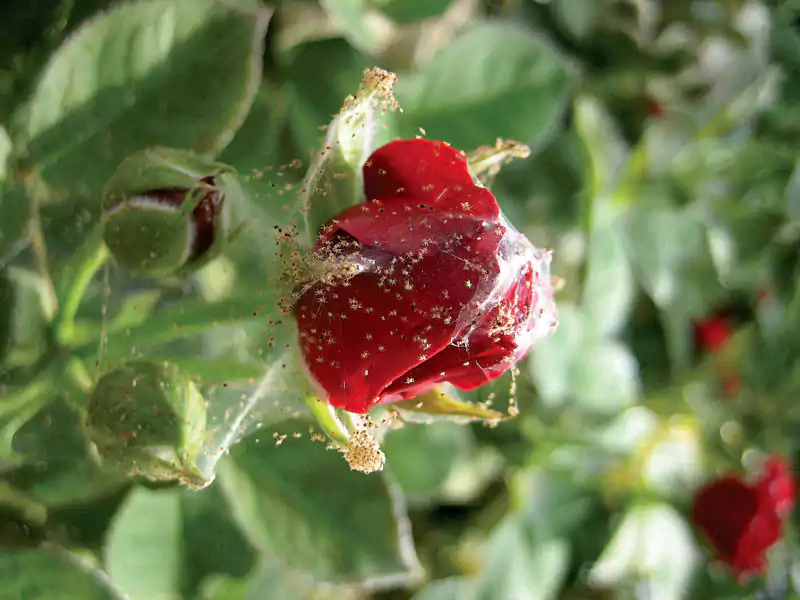
- Spider mites form spider webs around the leaves and cause browning of flower petals and leaves.
- Again, insecticidal soap or Neem oil are effective solution for the same.
Japanese Beetles 
- Japanese beetles are quite visible brown insects that feed on the leaves and eat all the vegetation out of the plant in a few days.
- As they are comparatively bigger than other pests, you can handpick and throw them in soapy water.
Thrips 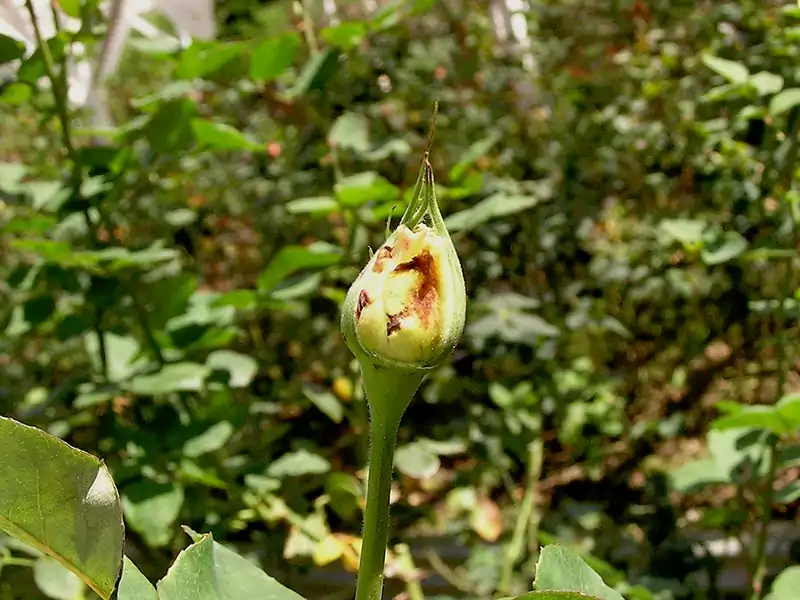
- Thrips are extremely small insects that can cause deformed plant growth.
- Spray an insecticidal soap or neem oil to treat them.
Why are Rose Cuttings Better than Seed Planting?
Propagating rose cuttings with stem cuttings is preferred over seeds, and as much as this is a personal choice, the results vary drastically.
As someone who has tried both methods, let me share the pros and cons of these alternatives and make this decision easier for you.
| Stem Cuttings | Seeds |
|
|
|
|
|
It can be said, conclusively, that rose bush cuttings are the best way to propagate roses, as they offer reliability and faster growth.
Also Read: How Do Pineapples Grow: Planting, Care, and More About this Tropical Treasure
Rose Flower Benefits: Scientific Research and Findings
Roses have been a centre of culinary and medicinal uses for many years, and it would be safe to say that enough research has been done for it to be a large part of our daily lives.
Go through this summarised version of research on the benefits of rose petal extracts for the skin, as rose is popularly used in many skin care products:
| Research summary box Study year: 2023 Sample type: Rose petal extracts Aim: To analyse the skin anti-inflammatory activity of the rose petal extracts. Key findings: The rose petal extracts were analysed for their protection against UV rays. Here are the observations:
Source: National Centre of Biotechnology Information |
Interesting Facts About the Rose Bushes
Roses do not have thorns; they are just epidermis grown out of the stem. Not only this, there are so many fun insights you might be missing out on, and therefore, I have this list of curated fun facts about roses.
Read and find out the significance of roses beyond the symbol of love:
- Along with the honeysuckle flower, roses are identified as a June birth flower, symbolising love and passion.
- It is considered less effective to grow roses using the cuttings of the bouquet roses.
- June 12 is celebrated as National Red Rose Day in the US.
- According to the ASPCA, roses are non-toxic for pets. So, now my cat can adore it too!
- Many of the black rose lovers might not like it, but there is no true black rose. The one named so is a shade of deep purple which looks closer to black.
- Some patented varieties are illegal to grow, both for personal and commercial uses, without prior permission. Always cross-check the list of patented plants before planting.
Concluding Remarks
Gardens shine differently with roses, the colours, vibe and fragrance are unmatched and having my own rose shrub is better than buying the best set of bouquets.
I learnt how to grow a rose bush from cuttings, and it started to seem way easier than I imagined it would be. The only concern lies in finding out if the variety is not patented, and the rest is all simple, from planting to care.
Go ahead and grow your own rose bush this spring, and I can assure you would not regret a moment of this journey.
Happy Gardening!
FAQs
Is it illegal to grow a rose bush from a cutting?
Can the rose cutting root on water?
Yes, a rose can establish roots in water. Although it is not preferred a lot due to the lack of essential nutrients for plant development.
How to cut roses to grow?
Take the stems of a healthy plant and cut them at a 45-degree angle just below a set of leaves using a pruner.
Why are stem cuttings more reliable than seeds?
Rose stem cuttings are much more reliable than seeds, as the root development is much faster and more reliable.
How long does it take for the rose cutting to grow?
Stem cuttings take about 1-2 months to grow and 2 years to mature into a full-grown plant.
Sources:
How to take rose cuttings– BBC Gardener
Latest Blog