Onions can be grown from seeds or from onions themselves.
How to Grow Onions at Home: A Complete Guide With Care Tips, Ideal Growing Conditions, & Much More
Author
Rashika GuptaReviewed By
Cody Allison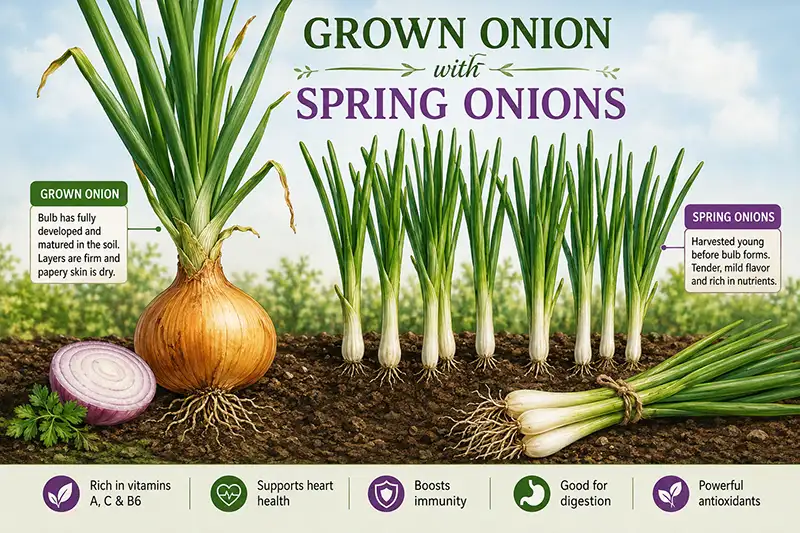
Onions are among the most common vegetables in every household. They are among the most rewarding veggies to grow if you make your own salsas, pickles, and other essential food goodies. The sweet, sharp, red, white, or yellow onions are the easiest to grow and care for.
The onions belong to the Amaryllidaceae family and are part of the genus Allium that includes garlic, leeks, and chives.
Read the article to learn about how to grow onions, their care tips, pests and problems associated with them, and much more.
Table of Contents:
How to Grow Onions?
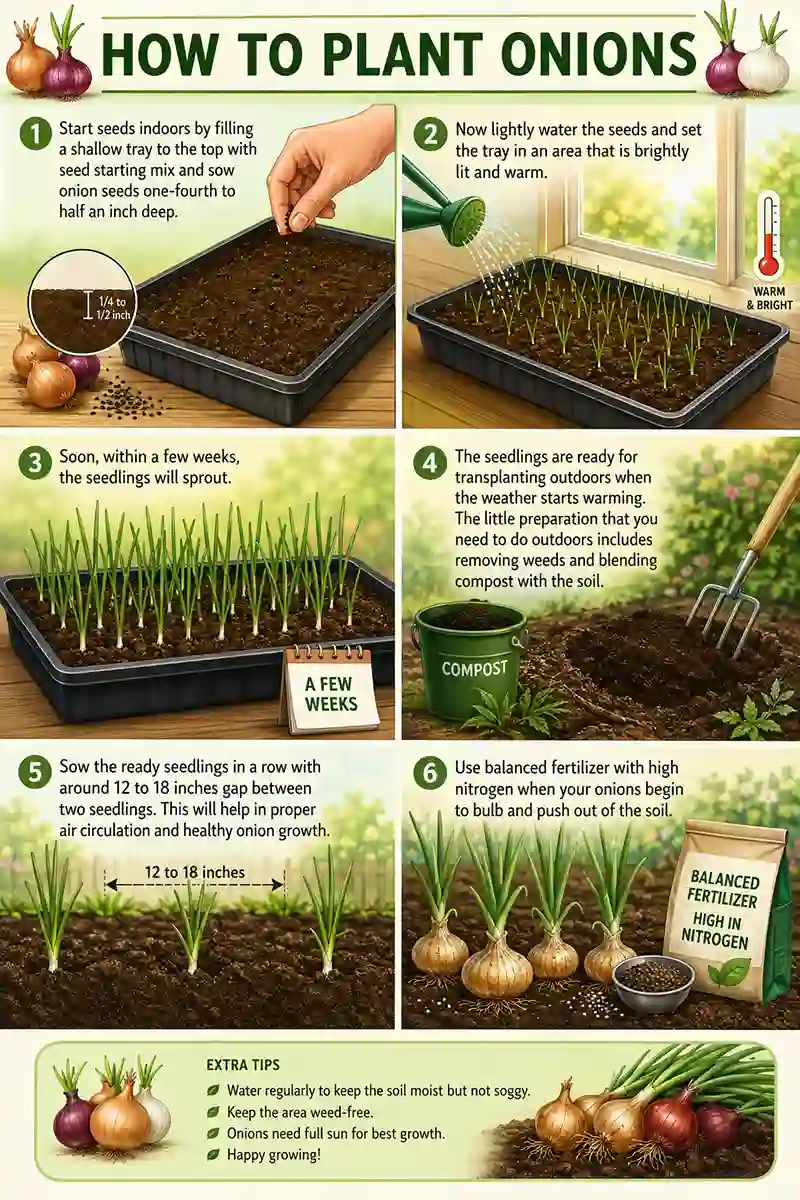
People are often confused about how to grow onions from seed. Generally, onions are planted using seeds or seedlings without much drama and fuss. Here are some simple steps involved in planting onion seeds:
- Start seeds indoors by filling a shallow tray to the top with seed-starting mix and sow onion seeds one-fourth to half an inch deep.
- Now lightly water the seeds and set the tray in an area that is brightly lit and warm.
- Soon, within a few weeks, the seedlings will sprout.
- The seedlings are ready for transplanting outdoors when the weather starts warming.
- The little preparation that you need to do outdoors includes removing weeds and blending compost with the soil.
- Sow the ready seedlings in a row with around a 12- to 18-inch gap between two seedlings. This will help in proper air circulation and healthy onion growth.
- Use balanced fertilizer with high nitrogen when your onions begin to bulb and push out of the soil.
Growing Onions From Onion
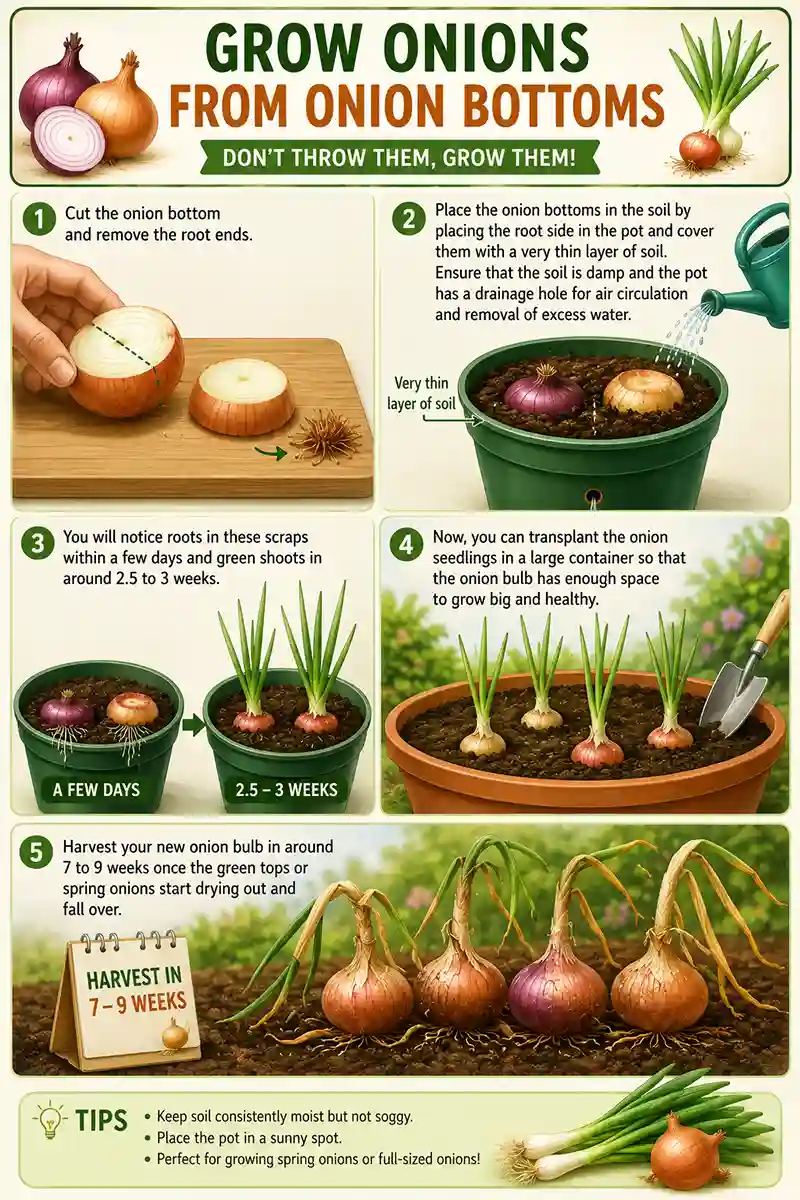
Did you know we can grow onions using onion bottoms that we usually discard? I tried it once, and here are the steps that I followed:
- Cut the onion bottom and remove the root ends.
- Place the onion bottoms in the soil by placing the root side in the pot and cover them with a very thin layer of soil. Ensure that the soil is damp and the pot has a drainage hole for air circulation and removal of excess water.
- You will notice roots in these scraps within a few days and green shoots in around 2.5 to 3 weeks.
- Now, you can transplant the onion seedlings in a large container so that the onion bulb has enough space to grow big and healthy.
- Harvest your new onion bulb in around 7 to 9 weeks once the green tops or spring onions start drying out and fall over.
Fun facts
- Onions were worshiped in ancient Egypt as they were seen as a symbol of eternal life.
- People once believed that eating a whole onion before bed cured colds by morning, while placing a sliced onion on the sole of people’s feet could draw out fever.
Read more: How to Grow Basil? Learn How to Plant This Culinary Herb in your Garden
Onions’ Taxonomy and Ideal Growing Conditions
Onion is a vegetable that is a widely cultivated species of the genus Allium. They are often served as a raw vegetable or part of prepared savoury dishes and can also be used to make pickles and chutneys. This biennial or annual vegetable typically grows around 7 to 18 inches with leaves that are flattened and fan-shaped.
Here is the quick taxonomic overview and ideal growing conditions for onions:
| Botanical name | Allium cepa |
| Common names | Onion or bulb onion |
| Kingdom | Plantae |
| Family | Amaryllidaceae |
| Genus | Allium |
| Hardiness zones | 3 to 10 USDA Zones |
| Native | Central and Southwestern Asia |
| Plant type | Annual, biennial |
| Sun exposure | Bright, direct light |
| Soil | Well-drained, loose soil with neutral to acidic pH levels |
| Water requirement | Moderate |
| Bloom time | Late spring or early summer |
| Fertilisation | Heavy feeders |
Read more: Koriandri: Taxonomy, Ideal Growing Conditions, and Care Tips
How to Care for Onions?
Though onions are an easy-to-grow vegetable that requires minimal attention, here are certain things that you need to look at while and after planting onions:
- Onions need full sun and should not be planted in an area that is overshadowed by other plants and vegetables.
- Make sure that the soil you are using to plant onions is well-drained and loose, with neutral to slightly acidic pH levels.
- Onions require regular watering. Therefore, ensure that you water your seedlings once every week and increase the frequency of watering the plant in summer or during hot spells.
- Mulching around the plant base helps in maintaining the soil temperature. I also noticed that after mulching, the plant required less watering.
- Onions are known to be heavy feeders. Use balanced, organic liquid or granular fertiliser once every few weeks for big bulbs.
- Make sure that you harvest your onions in dry weather and store them in a space that has proper air circulation. This will help prevent the onions from rotting in storage.
- Be cautious that you do not overcrowd or grow onions in poorly draining conditions. This causes fungal diseases and can also lead to white rot.
Tips
- Onions that send up flowers must be immediately harvested. Flowering is the sign that the bulbs have stopped growing.
- Onions harvested after flowering should be used right away rather than stored, as they can rot and spoil other stored onions.
Read more: Foenegriek: Benefits, Growing Tips, and Ideal Growing Conditions
Benefits of Consuming Onions
Many people consume onions just for their flavours without being aware of their health benefits. Here are some of the health benefits of eating onions:
- Onions are considered to be a nutrient-dense vegetable. It is packed with vitamin C, potassium, fiber, and antioxidants.
- Onions are rich in prebiotics like fructooligosaccharides and inulin that are beneficial for gut bacteria and help strengthen gut health, immunity, and digestion.
- There are certain studies in animals that suggest that onions help regulate blood sugar levels and support bone density. However, there are no confirmed studies in humans.
Did you know?
When you cut an onion, it makes you cry because it breaks open cells that release enzymes that mix with sulfur-rich amino acids.
Read more: Yam Vs Sweet Potato: Discover the Difference Between Yam And Sweet Potato
Pests and Problems Associated with Onions
Onions have sulfur-like compounds that naturally repel many pests, yet there are certain pests and problems associated with onions. Here is the list of pests and problems with onions along with their solutions:
| Pests and problems | Solution |
| Thrips | They are tiny sap-sucking insects that attack many plants. To remove thrips, cover onion crops with floating row covers and use organic insecticidal soaps weekly. |
| Onion maggots | They affect onions during rain. Like thrips, they can be prevented by covering newly planted onions with row covers. If there are many onion maggots, the best way is to harvest all onions. |
| Poor bulbs | This may occur if onions are grown too close and aren’t provided with enough nutrients. It is important to provide proper spacing while planting the onion. Tip: Choose a location that receives bright and direct sunlight. |
| Yellowing leaves | Yellowing leaves are an indicator of nutrient deficiencies or watering problems. Use rich compost and water the plant regularly to avoid these issues. Yellowing leaves also indicate the harvest time. |
Read more: Celery Plant: How to Grow This Nutritious Herbaceous Vegetable?
Takeaways
Onions are herbaceous biennial plants grown for their edible bulbs and green leaves, often called spring onions. This vegetable has many health benefits, including improving gut health, reducing inflammation, and regulating blood sugar. They can be easily grown in kitchen gardens and are one of gardeners’ favourite vegetables to grow.
Next time you are planning to grow onions at home, start early spring indoors and later transplant them outdoors in warm weather.
Happy planting!
FAQs
How Do Onions Grow?
When to plant Onions?
The best time to plant onions is in early spring or 4 to 6 weeks before last frost. Start seeding indoors and later transplant them outdoors in warm weather.
Are raw onions good for health?
Onions are considered beneficial for health as they contain folic acid and fiber that help your body make new healthy cells.
How to store onions?
Onions must be stored in a dry, cool, and well-ventilated place. This helps them to stay healthy for a longer period of time.
Sources
Common Onion: iNaturalist
Onion: Britannica